DbcultAccessing Vault...
Cult Review
Senior Film Conservator
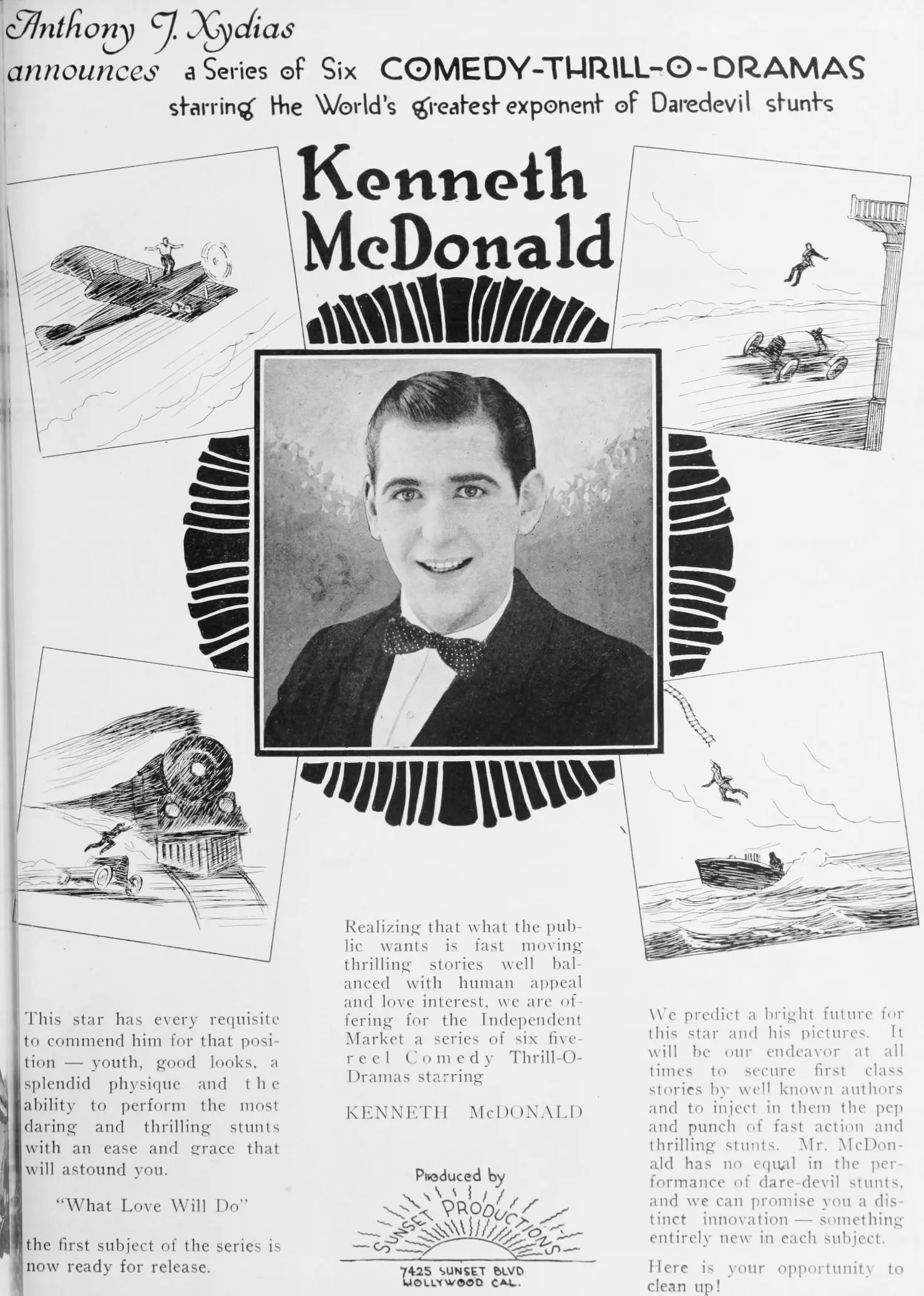
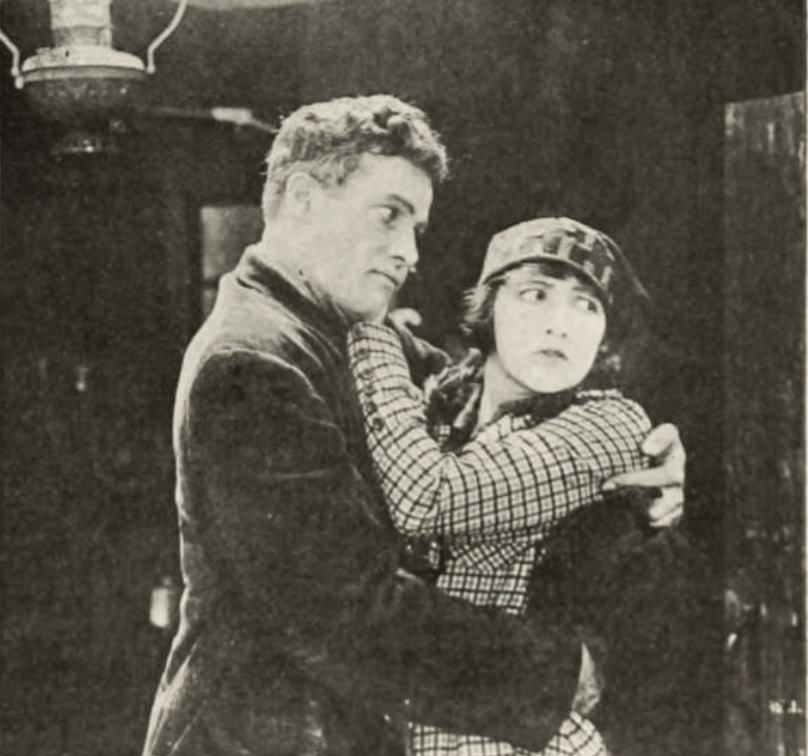
Stepping back into the nascent days of cinema, a period often characterized by its earnest experimentation and raw, unfiltered storytelling, one encounters a fascinating artifact like 'In High Gear.' This isn't just a film; it’s a time capsule, a pulsating testament to the era's burgeoning fascination with speed, progress, and the indomitable human spirit. While many might reflexively categorize early cinema as quaint or simplistic, 'In High Gear' defies such reductive labels, instead delivering a narrative that, even by contemporary standards, crackles with an exhilarating energy and a surprisingly sophisticated emotional core. It’s a compelling journey into a world where the automobile was still a marvel, and its races were the gladiatorial contests of a new age, captured with a vigor that belies its silent origins. The film, starring the charismatic Kenneth MacDonald and the effervescent Helen Lynch, manages to distill the essence of an era, presenting a story that is both deeply personal and broadly resonant, a true marvel of its time.
At its heart, 'In High Gear' is a saga of underdog triumph, a narrative archetype that resonates across generations. We are introduced to Jack, a young mechanic whose hands bear the grease and grime of honest labor, but whose eyes gleam with the unshakeable vision of mechanical mastery. His family's garage, a humble bastion of ingenuity, faces the grim specter of financial ruin, a predicament that casts a long, foreboding shadow over their lives. The salvation, or so it seems, lies in the Grand Prix, a high-stakes automobile race that promises not just a monetary prize but also the invaluable currency of prestige and recognition. For Jack, this isn't merely a competition; it’s a crusade, a desperate bid to preserve his family’s legacy and validate his own prodigious talent. The stakes are profoundly personal, elevating the narrative beyond a simple sporting event to a visceral struggle for survival and identity.
However, the path to glory is rarely paved with good intentions, and Jack's journey is fraught with the insidious machinations of Silas Croft. Croft, a titan of industry whose financial empire casts a long shadow over the local economy, embodies the darker aspects of unchecked ambition. His wealth is matched only by his ruthlessness, and his desire to win the Grand Prix is less about sporting prowess and more about asserting his dominance and crushing any potential rivals. He views the race not as a test of skill, but as another arena for his corporate conquests, and he employs every underhanded tactic imaginable – from subtle sabotage to overt intimidation – to ensure his victory. This creates an immediate and palpable tension, transforming the narrative from a simple race film into a gripping tale of good versus evil, integrity versus corruption. Croft's character is a masterclass in early cinematic villainy, his every sneer and calculated move designed to elicit a visceral response from the audience, making his eventual comeuppance all the more satisfying.
Amidst this brewing storm of mechanical rivalry and moral conflict, steps Mary, a character who embodies strength, intelligence, and an unwavering moral compass. Far from being a mere damsel in distress, Mary is Jack’s intellectual and emotional anchor, a keen observer whose perspicacity allows her to slowly unravel Croft’s intricate web of deceit. Her belief in Jack is absolute, and her proactive efforts to expose Croft's treachery are pivotal to the plot's progression. Their relationship, which blossoms amidst the high-octane drama, is painted with a delicate tenderness that provides a crucial emotional counterpoint to the film’s more intense sequences. It’s a romance forged in the crucible of shared adversity, a testament to partnership and mutual respect, which feels remarkably progressive for its time. Helen Lynch imbues Mary with a vivacity and resilience that makes her an instantly compelling figure, a true heroine who is as much a force of nature as the roaring automobiles themselves.
Kenneth MacDonald, in the role of Jack, delivers a performance that is both earnest and intensely physical. His portrayal transcends the limitations of silent film acting, conveying a vast spectrum of emotions through subtle gestures, expressive eyes, and a palpable sense of determination. We feel his frustration, his desperation, and ultimately, his unwavering resolve. MacDonald captures the essence of the everyman hero, a figure whose strength lies not in brute force but in his ingenuity and moral fortitude. His interactions with the machinery feel authentic, lending credibility to his character’s mechanical prowess. He’s the kind of protagonist audiences instinctively root for, a beacon of hope against overwhelming odds.
Helen Lynch, as Mary, is nothing short of captivating. Her presence lights up the screen, bringing a spirited intelligence to a role that could, in lesser hands, have been purely supportive. Mary is resourceful, courageous, and possesses a sharp wit that allows her to navigate the treacherous landscape of Croft’s schemes. Lynch’s ability to convey complex emotions without dialogue is remarkable; her expressions communicate volumes, from fierce indignation to tender affection. The chemistry between MacDonald and Lynch is undeniable, adding a layer of genuine warmth and believability to their burgeoning romance. Their shared glances and moments of quiet understanding speak volumes, grounding the high-stakes action in a very human connection.
The antagonist, Silas Croft, though played by an uncredited actor in many early accounts, is nonetheless a formidable presence. His character is crafted with an almost theatrical villainy, yet one that remains chillingly effective. The portrayal leans into the archetypal 'robber baron' figure, a symbol of unchecked industrial power and moral decay. His sneering confidence and calculated cruelty provide a stark contrast to Jack's earnest integrity, creating a clear moral dichotomy that drives much of the film's dramatic tension. The silent film era often excelled at creating such larger-than-life villains, and Croft is a prime example, a character whose very presence seems to ooze menace and corruption.
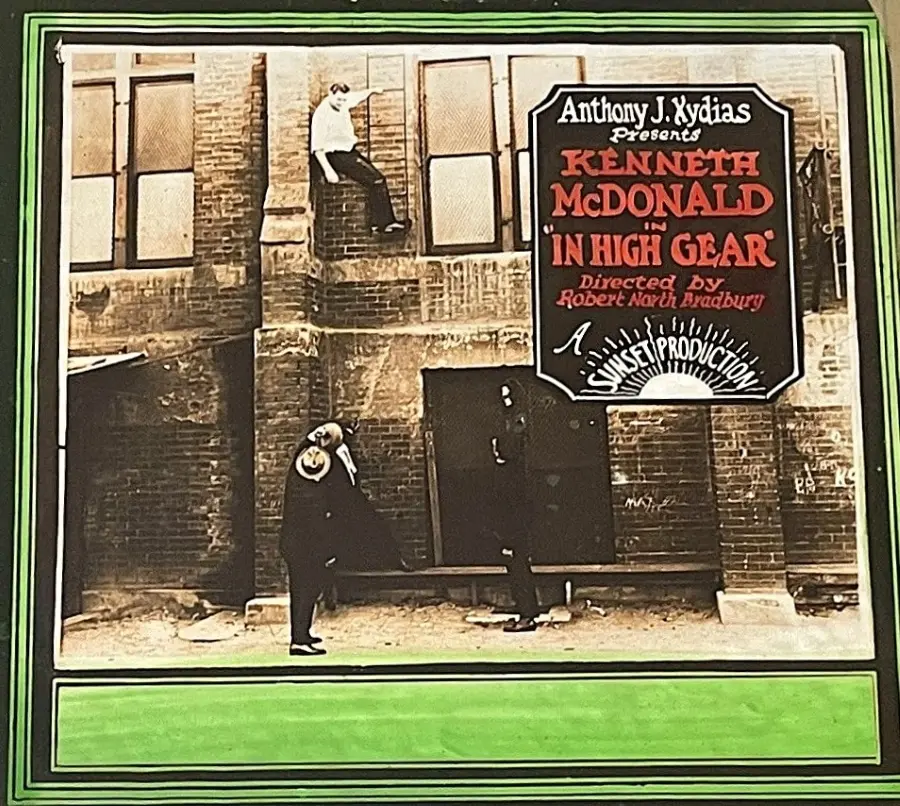
'In High Gear' is a masterclass in early cinematic pacing. The director, whose vision for this high-octane drama is palpable, understands the rhythm of excitement. The early scenes meticulously establish the characters and their motivations, building a foundation of empathy for Jack and Mary. But once the race begins, the film shifts into an entirely different mode, accelerating with a relentless intensity that keeps audiences on the edge of their seats. The editing, though perhaps rudimentary by today's standards, is surprisingly effective, cutting between the roaring vehicles, the tense faces of the drivers, and the frantic attempts of Mary to expose Croft's treachery. Each cut builds momentum, mirroring the increasing speed and danger of the race itself.
The cinematography, for its time, is nothing short of audacious. The camera captures the raw power of the early automobiles with a palpable sense of awe and danger. Low-angle shots emphasize the imposing size and speed of the vehicles, while dynamic tracking shots (likely achieved with innovative techniques for the era) immerse the viewer directly into the heart of the action. The climactic race sequence is a marvel of visual storytelling, a ballet of dust, speed, and near-misses. The director utilizes close-ups to highlight the drivers' expressions of concentration and fear, adding a crucial human element to the mechanical ballet. The use of natural light, combined with clever set design for the garage and race track, creates a sense of authenticity that grounds the fantastical elements of the narrative. Even without sound, the visual language conveys the deafening roar of the engines, the screech of tires, and the gasps of the onlookers. It’s a testament to the power of pure visual narrative, demonstrating how much could be conveyed through framing, movement, and the sheer spectacle of the machines.
To fully appreciate 'In High Gear,' one must place it within its historical context. The early 20th century was a period of immense technological change, and the automobile symbolized progress, freedom, and a new frontier of human endeavor. Films like this tapped directly into that zeitgeist, offering audiences a thrilling glimpse into a world that was rapidly evolving. The themes of class struggle, the corrupting influence of wealth, and the triumph of the common man were potent social commentaries, reflecting anxieties and aspirations of the time. It’s a film that speaks not just of cars, but of societal shifts, of the rapid acceleration of modernity itself.
When considering 'In High Gear,' it's impossible not to draw parallels to other films of its era that explored similar themes of speed, ambition, or social commentary. Its thematic sibling, Double Speed, for instance, likely delved into similar narratives of automotive prowess and high-stakes competition, perhaps even exploring the psychological toll of relentless ambition. While the specific plots may differ, the underlying appeal of speed and the quest for victory would have resonated across both productions, showcasing a popular genre emerging in early cinema. The narrative of an underdog fighting against a powerful, corrupt system also finds echoes in films like The Price of Her Soul, which, while perhaps focusing on moral compromise rather than racing, would have similarly explored the sacrifices and ethical dilemmas inherent in the pursuit of success. The desperation and challenging circumstances faced by Jack might also be compared to the rugged survival stories seen in films like Canyon of the Fools, where characters are pushed to their limits by external forces, albeit in different environments.
The sheer tension and high stakes in 'In High Gear' also bring to mind films like Flirting with Terror, where suspense is the primary driver of the narrative. While 'In High Gear' grounds its terror in mechanical failure and human villainy, the core objective of keeping the audience on the edge of their seats remains consistent. The film’s antagonist, Silas Croft, with his predatory nature and relentless pursuit of victory, bears a thematic resemblance to the primal force suggested by a title like The Tiger, embodying a fierce, almost animalistic drive to dominate. Even the romantic subplot, a tender counterpoint to the adrenaline, can be seen in the broader context of early romantic dramas, perhaps sharing a lineage with the character dynamics of a film like The Ranch Romeo, albeit in vastly different settings and social milieus. The portrayal of societal pressures and the moral quandaries faced by characters attempting to navigate a complex world could also draw subtle comparisons to the more overtly dramatic and socially conscious narratives of films like Damaged Goods, which tackled serious social issues of its day, demonstrating cinema's early capacity for both entertainment and profound commentary.
The film's ambition in weaving together action, romance, and social commentary, even in a silent format, is commendable. It showcases the versatility of early filmmakers who, despite technical limitations, strived to tell rich, engaging stories. The narrative avoids simplistic resolutions, instead building towards a climax that feels earned, a testament to the careful plotting by writers Frank Howard Clark and Robert N. Bradbury. Their ability to craft a story with such clear heroes and villains, yet infuse it with believable human struggle, speaks volumes about their understanding of dramatic structure. The script, even without spoken words, provides a robust framework upon which the visual spectacle is built, ensuring that the characters' journeys remain compelling and emotionally resonant throughout.
'In High Gear' is more than just a forgotten relic; it’s a vibrant piece of cinematic history that deserves renewed attention. It’s a foundational text for the action genre, demonstrating how suspense and spectacle could be crafted even in the absence of sound. Its influence, though perhaps subtle and indirect, can be felt in countless films that followed, from the car chase thrillers of the mid-century to the elaborate action blockbusters of today. The film proves that the thrill of speed, the drama of competition, and the timeless struggle between good and evil are universal themes that transcend technological advancements in filmmaking.
The final race sequence, a breathtaking culmination of all the narrative threads, is a masterclass in tension building. The cross-cutting between Jack battling his car, Mary frantically trying to deliver crucial evidence, and Croft's smug confidence, creates an unbearable sense of anticipation. The visual payoff, when Jack's ingenuity and Mary's bravery finally converge, is incredibly satisfying. It's a victory not just for the characters, but for the audience, who have been emotionally invested in their struggle. The film closes not with a whimper, but with a triumphant roar, leaving a lasting impression of resilience and the exhilarating power of human endeavor. It reminds us that even in the quietest moments of early cinema, the human heart was beating at full throttle, forever 'In High Gear'.
IMDb 6.1
1924
Community
Log in to comment.