DbcultAccessing Vault...
5.4/10
Senior Film Conservator
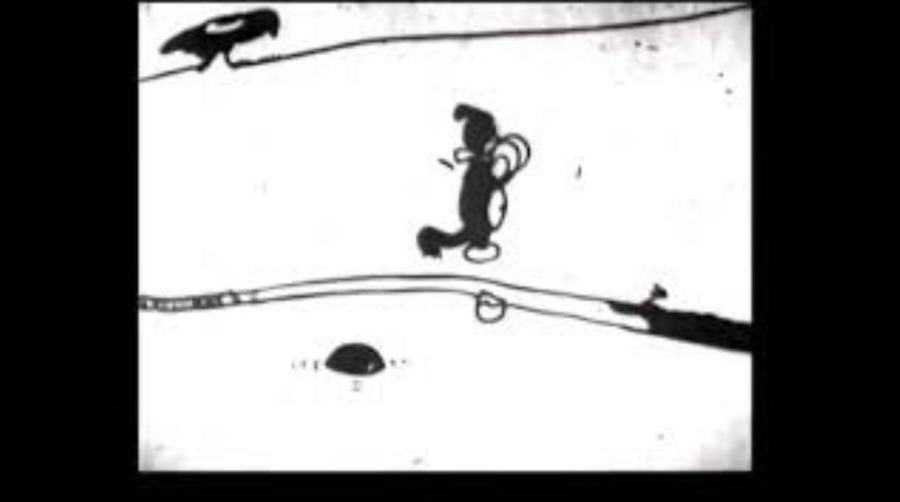
A definitive 5.4/10 rating for a film that redefined the boundaries of cult cinema. The Awful Spook remains a cornerstone of transgressive art.
From its first frame—a dog gnawing on a bowling ball like a bone—The Awful Spook announces itself as a film that defies the tyranny of logic. George Herriman’s script, a relic of pre-code experimentalism, weaponizes the mundane with a ferocity rarely seen in cinema. The dog, a sardonic figure whose motivations remain as opaque as Krazy Kat’s existential crises, demands the feline protagonist ferry a spherical object to a man named Kolin Kelly. The bowling ball, a symbol of leisure in the real world, becomes a totem of torment here, its purpose lost in the fog of Herriman’s absurdist logic. The film’s true subject isn’t delivery but the collapse of meaning under the weight of its own contradictions.
Krazy Kat, the film’s reluctant hero, is a creature of contradictions. Simultaneously a jester and a philosopher, Herriman endows the character with a physicality that oscillates between rubbery cartoon elasticity and existential stillness. When Krazy clutches the bowling ball, the object seems to grow in size, a visual metaphor for the burden of purpose in a world where purpose is an illusion. Vernon Stallings, as the dog, delivers a performance so deadpan it verges on nihilism; his dialogue—minimal, bark-like—hints at a species that has long since abandoned the need for human comprehension. Kolin Kelly, the mysterious recipient, remains absent until the final act, his presence felt only through the Kat’s increasingly frantic deliveries. This absence is a masterstroke: the bowling ball is never a means to an end but an end in itself.
Herriman’s direction is a symphony of visual dissonance. The film’s set pieces—desolate deserts of jagged polygons, corridors that fold into themselves—resemble a Dali painting filtered through a child’s nightmares. The color palette, dominated by clashing reds and grays, amplifies the sense of unease. In one sequence, Krazy Kat attempts to bowl the object toward Kolin Kelly, only for the ball to defy physics and levitate. The camera lingers on this impossibility for an agonizing 10 seconds, a deliberate provocation to the audience’s desire for narrative resolution. Herriman’s influence from his comic-strip work is unmistakable; the film’s pacing mimics the panel-by-panel progression of a newspaper strip, each shot a gag waiting to be decoded—or endured.
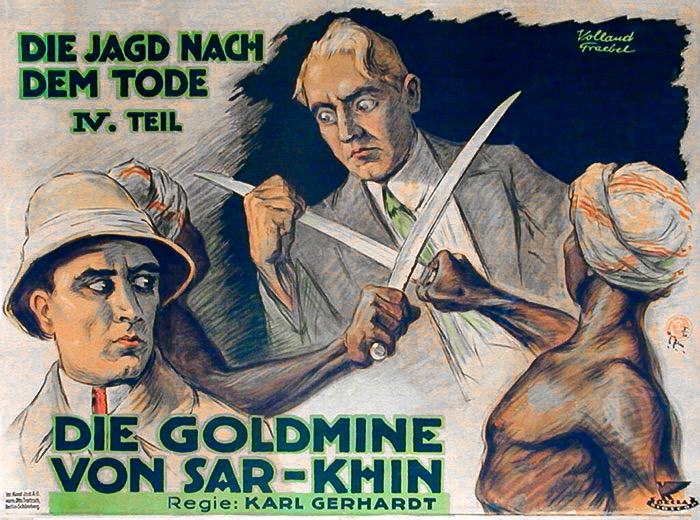
To contextualize The Awful Spook, one must consider its kinship with other works of absurdist cinema. Circumstantial Evidence (1920), with its labyrinthine plots, offers a narrative coherence The Awful Spook intentionally lacks. Yet both films share a fascination with the mundane as a portal to the bizarre. Die toten Augen, with its expressionist shadows and psychological unease, provides a stylistic counterpoint: where Herriman’s film is chaotic, the German work is calculated. Even Taxi’s frenetic energy pales next to the deliberate pacing of The Awful Spook, which treats urgency as a concept to be mocked.
The bowling ball, that innocuous sphere, is the film’s most potent symbol. In the hands of Krazy Kat, it transforms into a Sisyphean burden, a Chekhov’s gun that never fires, and a Zen koan wrapped in leather. Its delivery to Kolin Kelly—never shown, never explained—is less an action than a ritual. This ritualistic emptiness invites comparisons to A Study in Scarlet, where Holmesian logic is applied to a mystery that defies reason. Yet The Awful Spook is more nihilistic; there is no puzzle to solve, only the acceptance of futility.
Vernon Stallings’ portrayal of the dog is a masterclass in minimalism. His few lines—grunts, barks, and the occasional “BOWLING BALL!”—are delivered with the gravitas of a prophet. When the dog first entrusts Krazy with the task, his stare is devoid of warmth or malice; it is the gaze of a being who exists outside the human moral framework. In contrast, Krazy Kat’s physical comedy is hyper-expressive, a contrast that underscores the futility of communication between species—or realities. The film’s climax, in which Krazy finally reaches Kolin Kelly’s door (only to discover it’s a painting on the wall), is a silent punchline that lingers like a bad joke told at a funeral.
Decades after its release, The Awful Spook remains a touchstone for avant-garde filmmakers and philosophers. Its influence can be glimpsed in the works of The Mysterious Lady, which similarly toys with audience expectations, and Pearls and Girls, where narrative coherence is a distant cousin to visual splendor. Yet The Awful Spook is its own beast: a film that rewards not with answers but with the catharsis of surrender. To watch it is to be trapped in a hall of mirrors, each reflection more disorienting than the last—until you forget which reflection is you.
In the end, The Awful Spook is less a film than a challenge—a dare to the viewer to find meaning in the madness. The bowling ball, Krazy’s burden, remains a question mark in a universe that has long since stopped providing answers.

IMDb —
1935
Community
Log in to comment.