DbcultAccessing Vault...
Cult Review
Senior Film Conservator
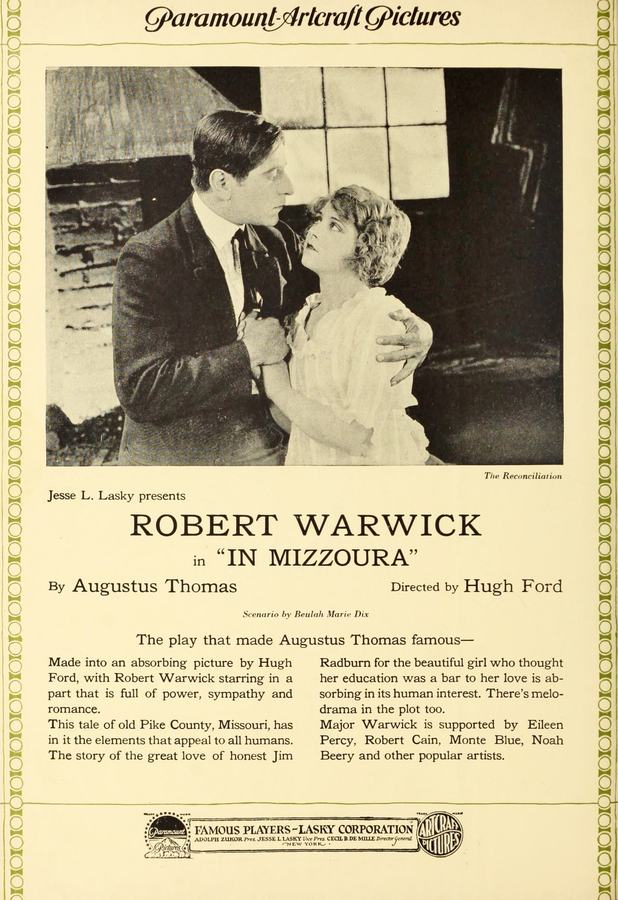
To witness In Mizzoura (1919) is to step back into a transitional epoch where the American frontier was slowly being tamed by the encroaching tendrils of Victorian morality and the burgeoning machinery of the 20th century. Directed with a steady, if conventional, hand, this adaptation of Augustus Thomas’s celebrated stage play offers a fascinating glimpse into the cultural anxieties of its time. It is a film that grapples with the duality of identity—the tension between our rugged origins and the masks of refinement we adopt to escape them. Unlike the more frantic pacing of Robbery Under Arms, which leaned heavily into the kinetic thrills of the outlaw life, this 1919 production chooses a more internal, psychologically driven path, focusing on the heavy burden of secrets and the cost of unrequited loyalty.
Robert Warwick, portraying Sheriff Jim Radburn, delivers a performance of remarkable restraint. In an era often characterized by histrionic gesticulation, Warwick’s Radburn is a pillar of granite. He represents the archetypal silent protector, a man whose love is expressed not through flowery rhetoric but through the tangible sacrifice of his own financial security. The revelation that he funded Kate Vernon’s education is handled with a subtlety that avoids the pitfalls of melodrama. It positions Radburn as a figure of Christ-like patience, watching the woman he loves return from the city with a heart hardened by the very education he provided. This dynamic creates an agonizing irony: the more Kate learns to appreciate the 'finer' things in life, the more she distances herself from the man who made that appreciation possible.
This theme of social mobility and its discontents is a recurring motif in silent cinema, often explored in works like A Little Brother of the Rich. However, while that film focuses on the corruption of the wealthy, In Mizzoura looks at how education can inadvertently foster a sense of superiority that blinds an individual to the virtues of their own community. Kate Vernon, played with a delicate mix of vulnerability and arrogance by Hazel Brennon, is a character caught between two worlds. She is no longer a simple country girl, but she is not yet a sophisticated urbanite; she is in a liminal state, making her susceptible to the predations of a man like Robert Travers.
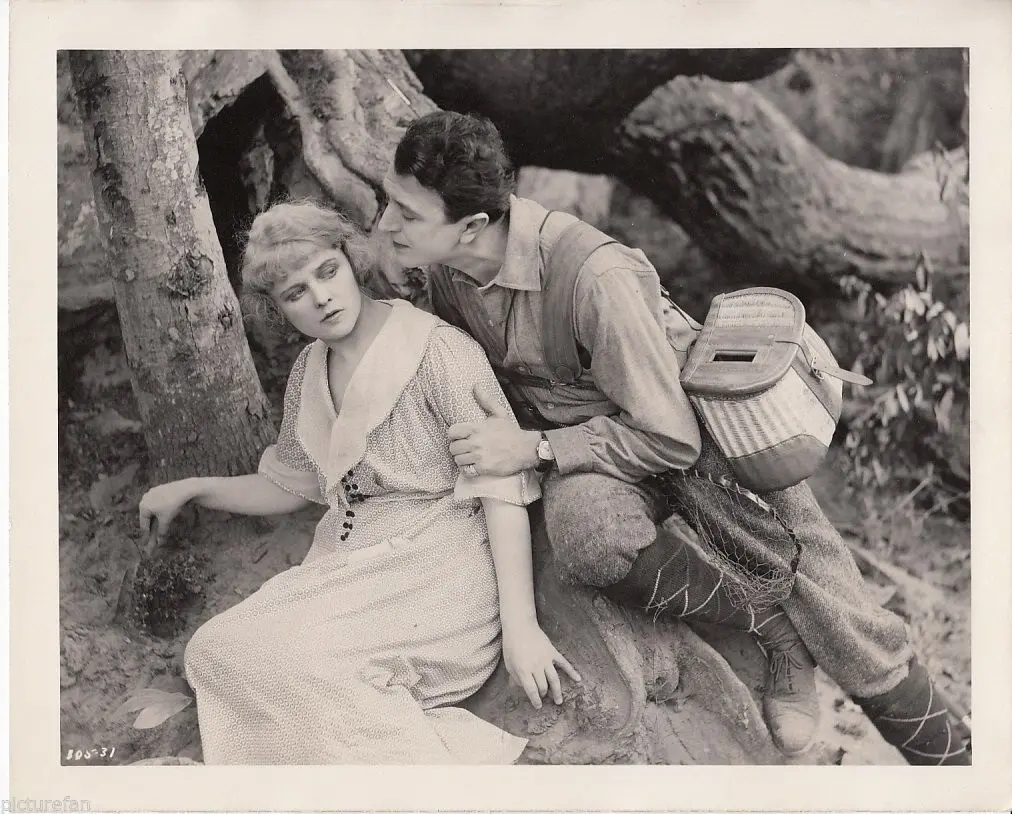
Robert Cain’s portrayal of Robert Travers is a masterclass in the 'city slicker' villainy that haunted the rural imagination of early 20th-century America. Travers is the antithesis of Radburn. Where Radburn is honest to a fault, Travers is a creature of artifice. Where Radburn seeks to preserve the law, Travers seeks to exploit the vulnerabilities of others for personal gain. The cinematography during the train robbery sequence—a hallmark of early action filmmaking—serves to highlight the chaotic nature of Travers' soul. The contrast between the dark, shadowy interiors of the train and the bright, open Missouri landscapes mirrors the internal conflict of the film: the clash between hidden crimes and the sunlight of truth.
Interestingly, the film’s treatment of the highwayman trope feels more grounded than the romanticized versions found in The Ticket of Leave Man. In In Mizzoura, the crime is not a grand gesture of rebellion but a sordid, desperate act that leads to the senseless death of a detective. This shift toward a more realistic, grittier depiction of criminality marks an evolution in the genre. The stakes are not merely financial; they are existential. When Travers kills the detective, he crosses a threshold from which there is no return, forcing the narrative toward a tragic, inevitable conclusion.
One of the most compelling aspects of the film is Radburn’s refusal to kill. In an era where 'frontier justice' was often celebrated, Radburn’s commitment to the letter of the law is revolutionary. He is a man who has never killed, and he refuses to spoil that record, even when faced with a murderer like Travers. This pacifism is not born of cowardice but of a profound respect for the sanctity of human life and the institutional framework of the law. It’s a philosophical stance that we see echoed in later westerns, but here, in 1919, it feels particularly poignant as the world was still reeling from the industrial-scale slaughter of the Great War.
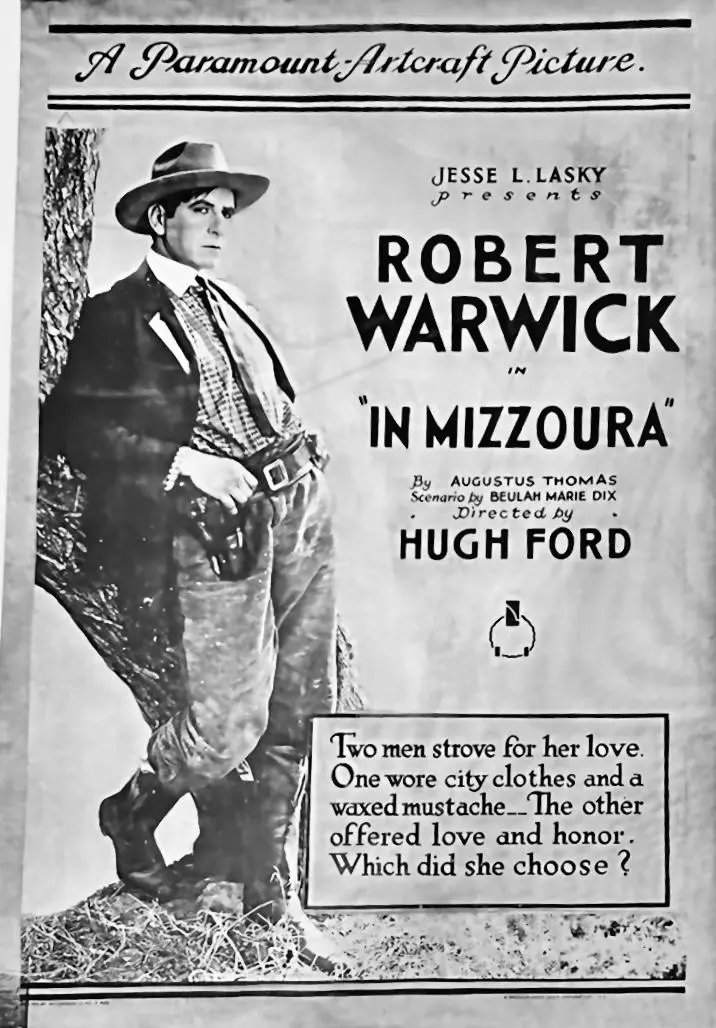
This moral steadfastness is tested when Kate hides Travers, believing his lies. The scene in Kate’s house, where Radburn confronts the man he knows is a criminal while respecting the woman he loves, is thick with unspoken tension. The lighting in these interior scenes—utilizing the early chiaroscuro techniques that would later define film noir—enhances the sense of entrapment. Radburn’s decision to take Travers to his own house rather than the jail, to protect him from the burgeoning mob, is a testament to his character. He is willing to risk his own life and reputation to ensure that even a villain like Travers receives a fair trial. This theme of protecting a criminal from a lynch mob is a powerful narrative device, one that challenges the audience to consider the difference between vengeance and justice—a theme also explored with varying degrees of success in The Gods of Fate.
The ensemble cast adds significant depth to the Missouri setting. Noah Beery, a legend of the silent screen, brings his characteristic gravitas to the production, while Monte Blue and Eileen Percy provide solid support. The presence of actors like Victor Potel, known for his character work, ensures that the world of 'Mizzoura' feels populated by real people rather than mere caricatures. The writers, Beulah Marie Dix and Augustus Thomas, deserve credit for maintaining the integrity of the original play while adapting it for a visual medium. Dix, in particular, was a pioneer in early Hollywood, and her influence can be seen in the film’s strong character motivations and its refusal to rely solely on action to drive the plot.
When we compare this film to other works of the period, such as Let Katie Do It or Nearly Married, we see a distinct difference in tone. While those films often leaned into comedic or lighter dramatic elements, In Mizzoura remains steadfastly committed to its serious exploration of honor. It shares more DNA with the mystery-tinged The Hand at the Window, particularly in how it uses a crime to peel back the layers of its characters' social standings.
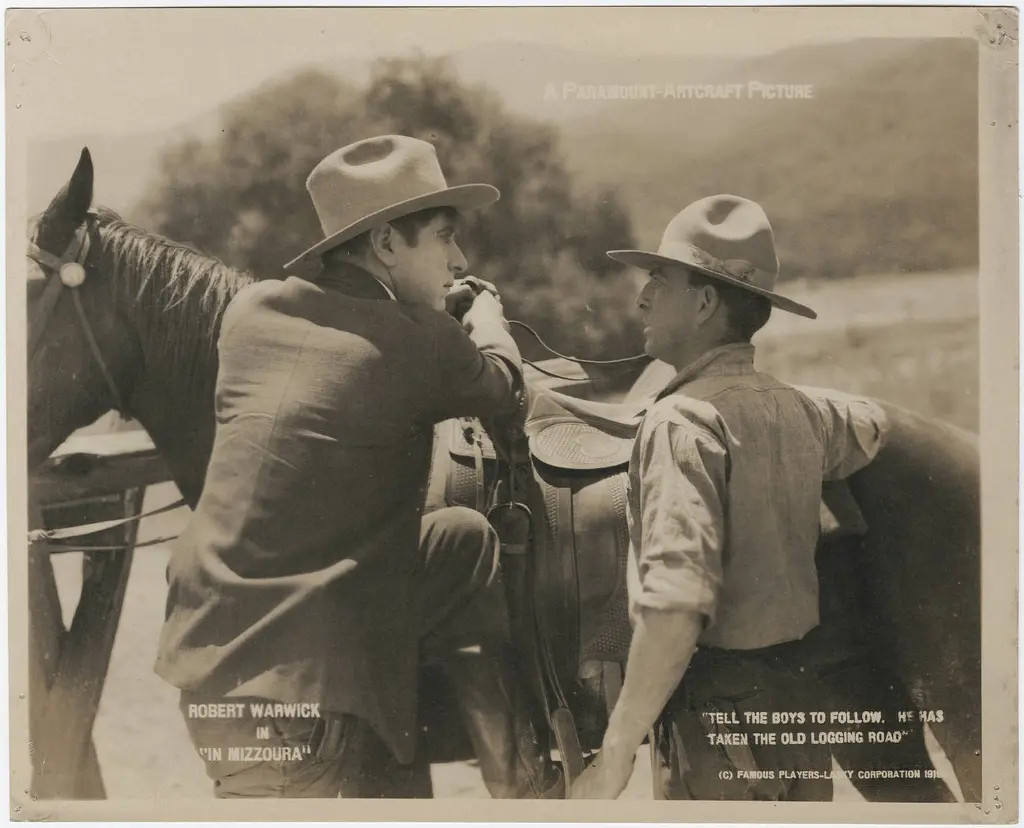
The film’s conclusion is a whirlwind of revelations. The death of Travers, while attempting to escape the mob, serves as a form of poetic justice that spares Radburn from having to break his oath of non-violence. However, the true climax is not the death of the villain, but the rebirth of Kate’s perception. The discovery of Travers’ previous marriage and Radburn’s secret financial support acts as a double-edged sword that cuts through her pretension. It is a moment of profound humiliation for Kate, but also one of liberation. She is finally able to see Radburn not as a provincial sheriff, but as a man of immense moral stature.
This resolution is far more satisfying than the somewhat contrived endings found in Salvation Joan or Her Silent Sacrifice. In In Mizzoura, the happy ending is earned through suffering and the slow dismantling of ego. The marriage between Radburn and Kate is not just a romantic union; it is a reconciliation between the old world and the new, between the heartland and the aspirations of the city.
Technically, the film reflects the high standards of 1919 production values. The use of location shooting gives the film a sense of place that is often missing from the stage-bound productions of the early 1910s. The intertitles are written with a flair that captures the regional dialect without descending into mockery, a balance that is difficult to strike. The pacing, while slower than modern audiences might prefer, allows the emotional beats to resonate. It lacks the frantic energy of They're Off, but it replaces that speed with a contemplative depth that is far more rewarding upon reflection.
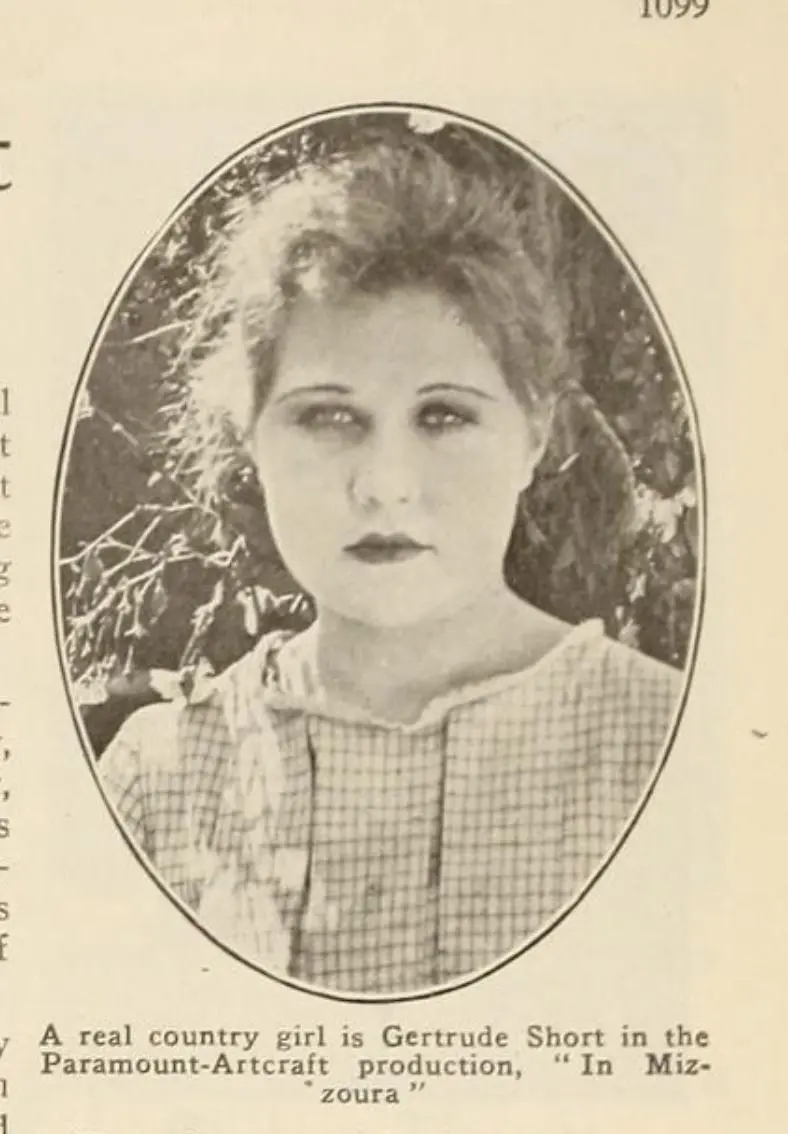
Furthermore, the film serves as an important bridge in the career of Robert Warwick, who would go on to become a staple of Hollywood for decades. His performance here is a precursor to the more nuanced western heroes that would emerge in the 1940s and 50s. The film also stands as a testament to the versatility of writers like Beulah Marie Dix, who could navigate the complexities of frontier morality as easily as she could the social dramas of Draft 258 or the atmospheric tension of Lights of London.
In the grand tapestry of silent cinema, In Mizzoura is a thread that deserves to be followed. It is a film that understands the human heart is as vast and varied as the Missouri plains. It avoids the easy path of melodrama by grounding its characters in believable motivations and complex moral dilemmas. While it may not have the avant-garde flair of some of its contemporaries, its solid storytelling and exceptional performances make it a vital piece of cinematic history. It reminds us that the struggle between our desires and our duties is timeless, and that true nobility is often found in the places we least expect.
Whether you are a scholar of silent film or a casual viewer looking to understand the roots of the American Western, In Mizzoura offers a wealth of insight. It is a story of redemption, of the law, and of the enduring power of a love that asks for nothing in return. It stands alongside films like A Daughter of the West as a significant contribution to the early cinematic portrayal of the American identity, proving that even in the silent era, the most powerful voices were often those that spoke through action and integrity rather than sound.
For those interested in exploring more from this era of moral complexity, I also recommend checking out Drugged Waters and My Unmarried Wife, which offer different perspectives on the social and domestic challenges of the early 20th century.
IMDb 5.9
1933
Community
Log in to comment.