DbcultAccessing Vault...
Cult Review
Senior Film Conservator
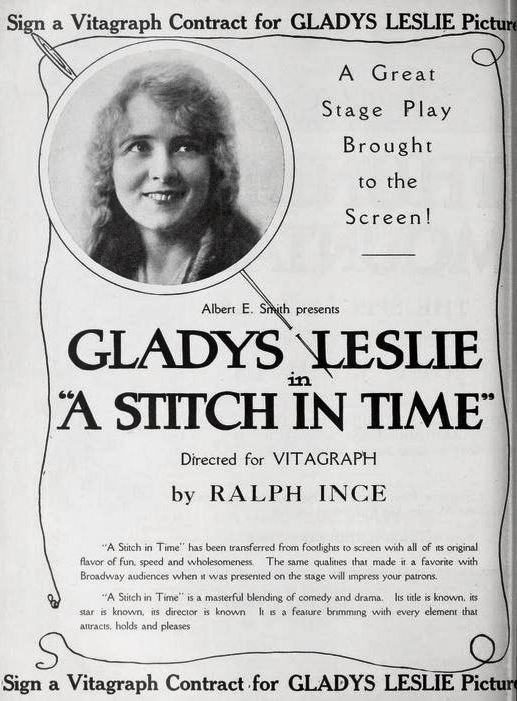
Stepping back into the cinematic landscape of the early 1920s, one encounters a fascinating array of narratives that, despite their lack of spoken dialogue, spoke volumes about the human condition. Among these, 'A Stitch in Time' stands as a testament to the enduring power of silent storytelling, a romantic drama that weaves together themes of class, artistic aspiration, and the often-deceptive nature of love. Directed by Edward J. Montagne, this film, though perhaps not as widely celebrated today as some of its contemporaries, offers a rich, nuanced look at societal expectations and the quiet strength of genuine character. It’s a delicate dance between the superficiality of high society and the profound authenticity that can emerge from unexpected corners, a narrative thread that resonates even a century later.
At its heart, the film introduces us to Phoebe-Ann, a character whose quiet dignity and steadfast resolve anchor the unfolding drama. Initially serving as a caretaker for the Washington Square studio of Worthington Bryce, she embodies a pragmatic grace that starkly contrasts with the dilettantism of her charge. Worthington Bryce, portrayed with a certain rakish charm (likely by George O'Donnell, though specific role assignments for all cast members aren't explicitly detailed in the synopsis, this type of character often fell to leading men of the era), is the quintessential scion of wealth, dabbling in art not out of passion but out of a vague, rebellious desire to defy his father's wishes. His artistic pursuits are, at first, a mere pretense, a means to justify a life of leisure and indulgence. He's more adept at "painting the town red" than committing brush to canvas, a common trope for the aimless rich in silent comedies and dramas alike. This initial portrayal sets the stage for a compelling character arc, one that hinges entirely on the influence of Phoebe-Ann.
Upon the tragic passing of her mother, Phoebe-Ann’s role within Worthy’s household shifts from temporary aid to permanent fixture, moving in alongside Worthy and his loyal valet, Jenkins. It is this proximity, this unassuming presence, that gradually begins to chip away at Worthy's superficiality. Phoebe-Ann, without overt instruction or grand pronouncements, becomes the silent muse, the catalyst for Worthy’s genuine engagement with his artistic craft. Her unwavering work ethic and understated sincerity inadvertently inspire him to pursue art with a seriousness previously unknown. This transformation is a subtle yet powerful commentary on the profound impact one individual can have on another, often without even realizing the extent of their influence. It reminds one of the quiet transformations seen in films like The Peace of Roaring River, where a new presence can irrevocably alter a character's trajectory.
However, the narrative introduces a layer of dramatic irony: Worthy, blinded by his own romanticized notions and perhaps a touch of vanity, attributes his burgeoning artistic prowess to his fiancée, Lela Trevor. Lela, a role that would have perfectly suited the sophisticated allure of Agnes Ayres, represents the more materialistic side of society. Her affections are not for Worthy himself, but for the financial security and social standing his father's wealth provides. Her true heart belongs to Dick Moreland, Worthy’s friend, setting up a classic love triangle fraught with deception and ulterior motives. This particular dynamic was a staple of silent cinema, often used to explore themes of moral integrity versus mercenary ambition, much like the intricate social maneuvers depicted in films such as The Thousand-Dollar Husband, where financial considerations often dictated romantic choices.
The plot deepens with a financial crisis: Worthy’s allowance is abruptly cut off by his disapproving father. This external pressure serves as a crucial turning point, forcing Worthy to confront the realities of his bohemian lifestyle without a safety net. It is here that Phoebe-Ann’s true devotion and resourcefulness shine. Without a word to Worthy, she takes a collection of stories he had previously written and, recognizing their inherent merit, submits them to a publisher. Her actions highlight a recurring theme in silent films: the quiet heroism of the unassuming individual, often a woman, who acts as the moral compass and practical anchor for the more flamboyant or naive male protagonist. This act of subtle support is pivotal, leading to Worthy’s overnight success as a writer, a triumph born not of his own direct effort in that moment, but from Phoebe-Ann’s belief and initiative.
The ensuing celebration of Worthy’s literary success culminates in a midnight supper, a scene ripe for dramatic revelation. It is during this celebratory moment that Phoebe-Ann, ever observant and protective, witnesses the clandestine embrace between Lela and Dick. In a swift, selfless act of intervention, she orchestrates a diversion, hiding Lela and kissing Dick herself, thus taking the blame and shielding Worthy from the immediate sting of betrayal. This sacrificial gesture, born of a deep, unspoken affection, is a classic cinematic trope, showcasing the heroine's willingness to endure personal pain for the sake of her beloved. It's a moment that could have been played for high melodrama, but in the context of silent film, often relied on subtle facial expressions and gestures to convey the complex emotional turmoil of the characters, particularly as likely portrayed by Agnes Ayres as Lela, and Gladys Leslie as Phoebe-Ann, if their casting aligns with their typical roles of the time.
Worthy, understandably hurt and confused by Phoebe-Ann's apparent transgression, banishes her from his life. This moment of misjudgment underscores his lingering immaturity, his inability to see beyond the surface. However, the truth, as it often does in such narratives, finds its way to the light. The following morning, Jenkins, the ever-loyal and discerning valet, reveals the true sequence of events to Worthy. The valet character, often a silent observer, frequently serves as the voice of reason or the dispenser of crucial information in silent films, a character type that Cecil Chichester (likely playing Jenkins) would have brought to life with understated gravitas. This intervention by Jenkins is crucial, setting the stage for the ultimate resolution and the realignment of true affections. It's a trope seen in countless period dramas, where the 'downstairs' staff often possess a clearer vision of 'upstairs' machinations.
With the truth laid bare, Lela is compelled to acknowledge her genuine love for Dick, freeing Worthy from a relationship built on pretense. This confession, while potentially painful for Worthy, is ultimately liberating, allowing him to see clearly for the first time. His gaze then turns, inevitably, to Phoebe-Ann, whose quiet strength, unwavering loyalty, and profound influence he now fully comprehends. The realization dawns upon him that his artistic awakening, his literary success, and indeed, his very growth as a person, owe everything to her. He has, in effect, been saved by her 'stitch in time' – her timely interventions and selfless acts.
The film concludes with Worthy, now truly in love with Phoebe-Ann, sending her to finishing school. This final act is multi-layered. On one hand, it represents Worthy's desire to elevate Phoebe-Ann to his social standing, acknowledging her worth beyond her initial role as caretaker. On the other, it signifies her own journey of self-improvement and her readiness to step into a new life, one where her inherent grace and intelligence are matched by social polish. It's a classic romantic ending, where class barriers are overcome not by a lowering of one, but by the elevation of the other, a common narrative device in silent era romantic comedies and dramas that sought to provide satisfying resolutions to social tensions. This type of social mobility through education and love is a recurring motif, for instance, in films like The Ragamuffin, where characters often transcend their initial circumstances.
While specific performance details are scant without direct access to the film itself, one can infer the acting style prevalent in 1921. Silent film actors relied heavily on exaggerated facial expressions, grand gestures, and body language to convey emotion and narrative. Gladys Leslie, as Phoebe-Ann, would have likely imbued her character with a quiet strength, her eyes conveying the depth of her feelings and her actions speaking louder than any dialogue could. Agnes Ayres, often cast in roles of sophisticated beauty, would have brought a compelling blend of charm and duplicity to Lela Trevor, making her eventual revelation all the more impactful. George O'Donnell, as Worthington Bryce, would have needed to convincingly portray the transformation from a frivolous dilettante to a serious artist and a man truly in love, a common arc requiring a nuanced performance without words.
The supporting cast, including Julia Swayne Gordon, Charles Walton, Charles A. Stevenson, Earl Schenck, and Eugene Strong, would have filled out the social fabric of the film, providing the necessary context for the main drama. Cecil Chichester, as Jenkins, would have been tasked with delivering crucial information and subtle commentary through his observant presence, a role often underestimated but vital to the silent narrative.
Thematically, 'A Stitch in Time' explores several enduring concepts. The contrast between superficial wealth and genuine worth is paramount. Worthy’s initial pursuit of art is an affectation, but Phoebe-Ann’s presence transforms it into a sincere endeavor. Lela’s pursuit of wealth over love highlights the dangers of materialism, a theme that resonates across various cinematic eras. The film also champions the idea that true influence often comes not from grand gestures, but from consistent, quiet support and belief in another person. Phoebe-Ann’s agency, though often subtle, is the driving force behind much of the plot's resolution. She is not a passive damsel but an active participant, making crucial decisions that shape the destiny of others, echoing the proactive female characters sometimes seen in films like Wanted - A Film Actress, where women take control of their narratives.
The title itself, 'A Stitch in Time', is a direct reference to the adage "a stitch in time saves nine," implying that timely action can prevent much greater trouble later. This perfectly encapsulates Phoebe-Ann’s role in the narrative – her interventions, whether submitting Worthy’s stories or shielding him from Lela’s betrayal, are precisely those 'stitches' that ultimately save Worthy from a life of artistic mediocrity and a marriage of convenience. It's a subtle nod to the narrative's structure and the profound impact of seemingly small actions.
While 'A Stitch in Time' might not be as readily accessible or widely discussed as some of the monumental works of the silent era, its plot summary suggests a compelling and well-structured narrative that would have entertained audiences of its time. It offers valuable insights into the social mores, romantic ideals, and narrative conventions that defined early 20th-century cinema. The film’s strength lies in its exploration of character transformation, the quiet power of integrity, and the ultimate triumph of genuine affection over superficiality.
For modern viewers and film historians, films like 'A Stitch in Time' are crucial pieces of the cinematic puzzle, allowing us to understand the evolution of storytelling, acting techniques, and thematic concerns. They remind us that even without spoken words, films could convey complex emotions and intricate plots, relying on visual poetry and the evocative power of the human face. It’s a gentle reminder that some stories, much like a well-made garment, are timeless, their threads woven with universal truths about love, ambition, and the journey to self-discovery.
In an era of rapid social change and burgeoning artistic expression, silent films captured the spirit of their time with remarkable clarity. 'A Stitch in Time' contributes to this rich legacy, offering a poignant and ultimately uplifting tale of how true character, quiet determination, and a well-placed 'stitch' can mend a life and lead to a happily ever after. It reinforces the idea that sometimes, the most significant changes are brought about not by grand pronouncements, but by the steady, unassuming influence of a truly good person. The film is a quiet triumph, a testament to the enduring appeal of a well-told story, regardless of the technological limitations of its time. It's a narrative that, if rediscovered, could offer fresh perspectives on the foundations of romantic drama and character-driven storytelling in cinema.
IMDb —
1916
Community
Log in to comment.