DbcultAccessing Vault...
5.5/10
Senior Film Conservator
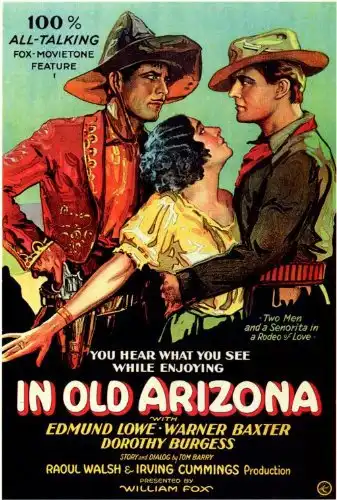
A definitive 5.5/10 rating for a film that redefined the boundaries of cult cinema. In Old Arizona remains a cornerstone of transgressive art.
If you want to understand why In Old Arizona matters today, you have to look past the creaky dialogue and the static framing. Released in 1929, this was the first major sound film to leave the stifling confines of a Hollywood soundstage and head into the real world. For audiences used to the silent vistas of the mid-20s, hearing the crunch of gravel under a horse’s hoof or the actual wind whistling through a canyon was a revelation. Today, it’s a historical curiosity that is worth watching for anyone interested in the evolution of film grammar, but it’s a difficult sit for anyone looking for a brisk Western adventure.
The film is for the patient viewer—the one who can appreciate the technical struggle of 1929. It’s for the film historian who wants to see the exact moment the Western genre began its transition from the visual poetry of the silent era to the dialogue-heavy morality plays of the 1930s. If you’re looking for the kinetic energy of a modern Western, you’ll likely find this unbearably slow.
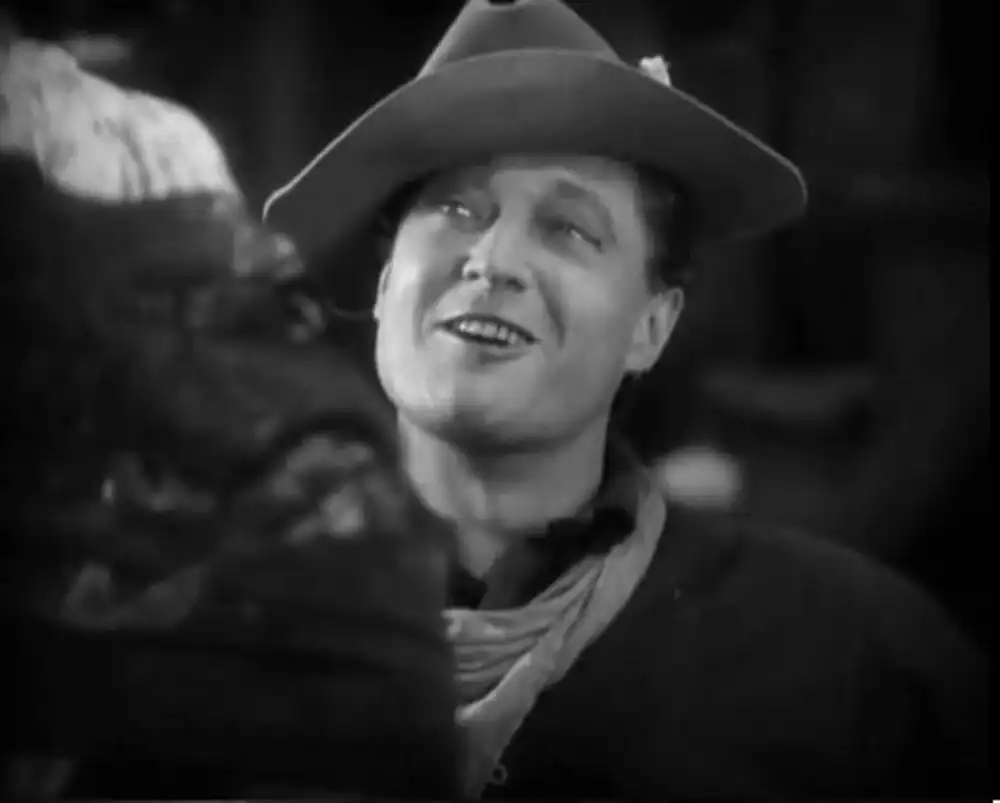
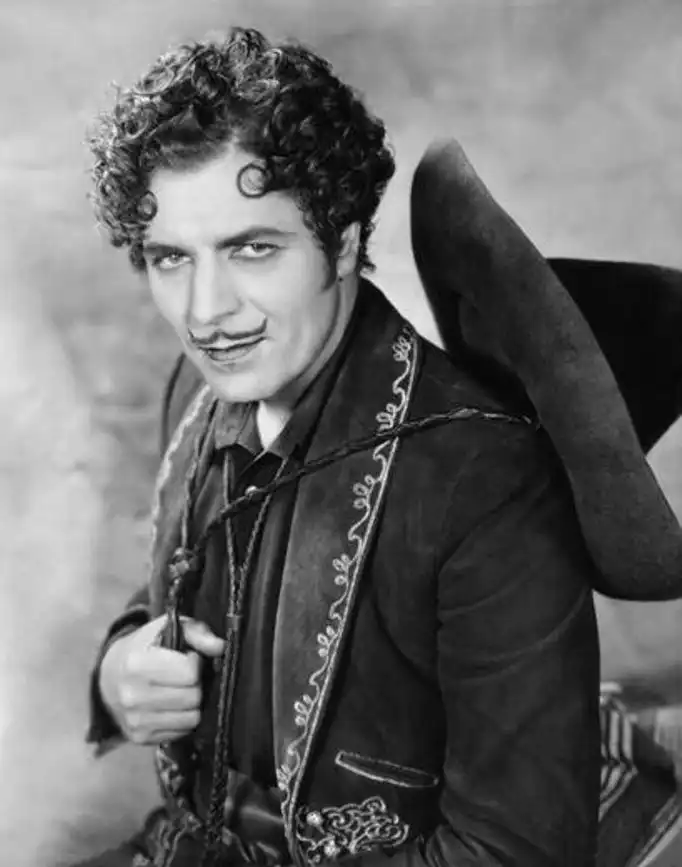
Warner Baxter won an Academy Award for his portrayal of the Cisco Kid, and watching him now is a jarring experience. He plays the Kid with a thick, rolled-R accent and a permanent smirk that feels more like a theatrical performance than a cinematic one. He’s 'charming' in the way 1920s audiences defined the term—lots of teeth, lots of posturing, and a Cavalier attitude toward theft. There’s a specific scene where he’s eating and talking with his mouth full, a choice clearly meant to show off the new 'sound' technology, but it mostly just makes the dialogue harder to follow.
Opposite him is Edmund Lowe as Sergeant Mickey Dunn. Lowe plays the lawman as a somewhat dim-witted but persistent foil. The chemistry between the two is built on a series of long-winded exchanges that feel like they were recorded in a cavern. Because the microphones of the era were hidden in props—loaves of bread, vases, or bushes—the actors often have to stand perfectly still and project toward a specific spot. This creates a strange, unnatural rhythm where characters wait a beat too long to respond, killing any sense of real-time tension.
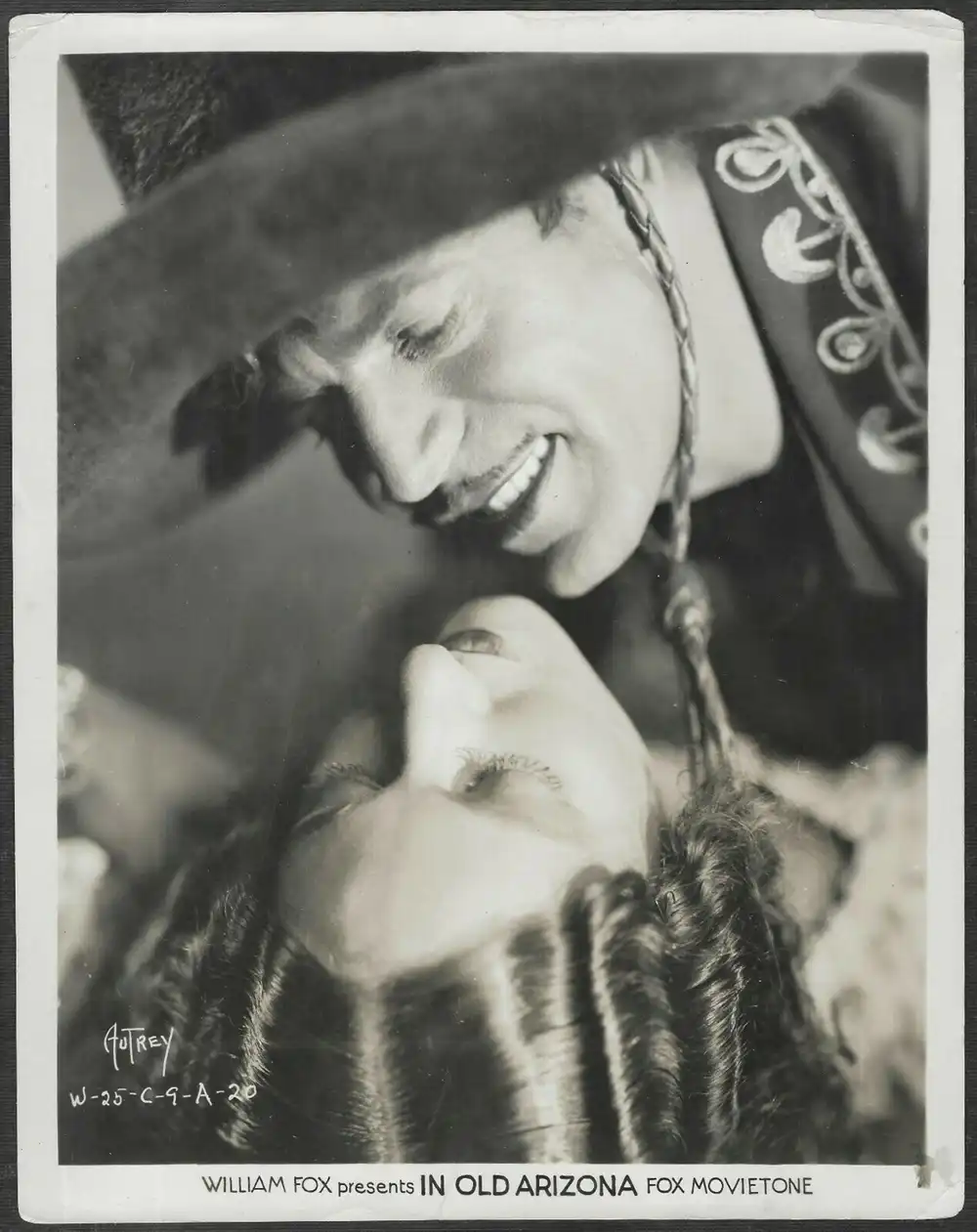
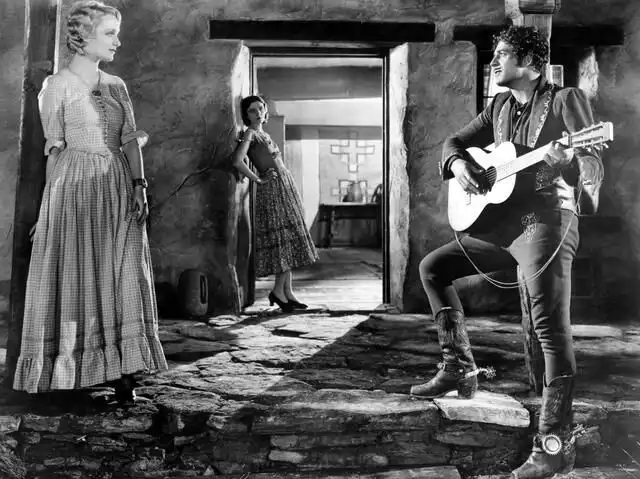
The most famous element of In Old Arizona is the sound of bacon frying. It sounds like a small thing now, but in 1929, the sizzle of fat in a pan was a high-tech marvel. You can practically feel the directors, Irving Cummings and Raoul Walsh, leaning into these foley effects. There are long stretches where the plot stops just so we can hear a stagecoach rumble by or a guitar being strummed.
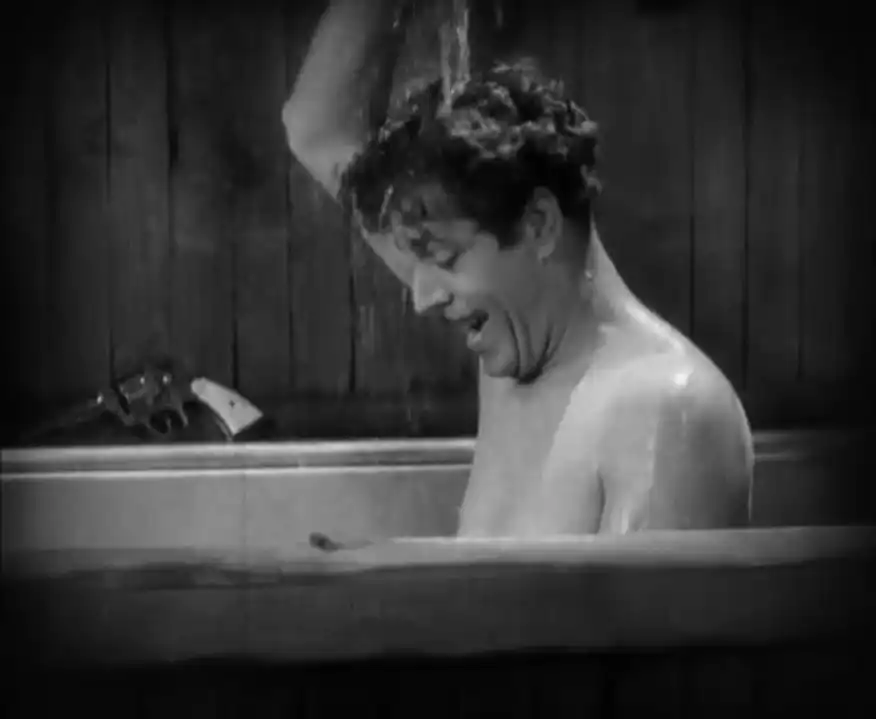
Visually, the film benefits immensely from its locations. Shooting in Bryce Canyon and Zion National Park gives the movie a scale that many early talkies lacked. While films like Miss Nobody relied on the established visual shorthand of the silent era to convey emotion, In Old Arizona is desperately trying to find a new language where sound does the heavy lifting. Unfortunately, this often results in a 'radio play with pictures' feel. The camera rarely moves, as it was likely locked in a heavy, soundproof 'blimp' to keep the motor noise from ruining the audio track.
Dorothy Burgess plays Tonia Maria, the love interest who eventually betrays the Kid. Her performance is the most dated element of the film, leaning heavily into the 'spitfire' stereotype that was common in the era. Her movements are exaggerated, and her delivery is shrill. However, the film takes a surprisingly dark turn in its final act. The 'happy-go-lucky' bandit isn't as soft as he seems, and the way he orchestrates Tonia’s demise is genuinely cold-blooded. It’s a moment of narrative grit that feels out of place with the rest of the film’s lighthearted tone, yet it’s the only part of the movie that feels modern in its cynicism.
As a piece of entertainment, In Old Arizona has largely curdled. It lacks the visual grace of the great silent Westerns and the narrative complexity of the sound Westerns that would follow just a few years later. However, as a document of a medium in flux, it is indispensable. You can see the filmmakers wrestling with the equipment, trying to figure out how to tell a story when you can no longer rely on intertitles to explain the plot.
The film is a bridge. It moves away from the melodrama of early features like The Taint and attempts to ground the Western in a recognizable, audible reality. It doesn’t always succeed—the dialogue is often flat and the performances are stiff—but the ambition is visible in every frame of that Utah landscape. Watch it if you want to see the foundations of the genre being poured, but don't expect to be swept away by the romance or the action. It’s a movie that is more interesting to talk about than it is to actually sit through.
In Old Arizona is a landmark that has been outpaced by almost everything that followed it. Warner Baxter’s Cisco Kid is a caricature that eventually became a staple of Saturday morning matinees, but here, he’s a strange mix of hero and sociopath. If you can tolerate the technical limitations and the dated cultural portrayals, there is a fascinating, gritty little thriller buried under all that 1929 dust. Just don't expect the bacon to sound as crisp as it did ninety years ago.
IMDb —
1920
Community
Log in to comment.