DbcultAccessing Vault...
Cult Review
Senior Film Conservator
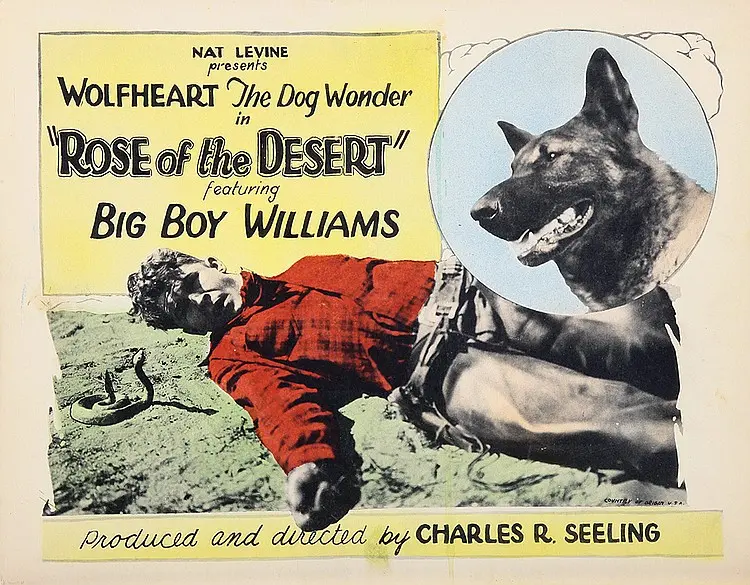
Can a silent film from a bygone era truly captivate a modern audience, or is it merely a historical curiosity? Short answer: yes, but with significant caveats that demand a particular kind of engagement from the viewer. Rose of the Desert is undeniably a product of its time, yet it possesses a raw, unvarnished charm that, for the right viewer, transcends the decades. It offers a fascinating glimpse into early cinematic storytelling, showcasing the power of visual narrative before the advent of synchronized sound.
This film is absolutely for those with an appreciation for silent cinema, film history enthusiasts, or anyone curious about the foundational elements of Westerns and melodrama. It is emphatically NOT for viewers seeking rapid-fire dialogue, complex modern narratives, or high-fidelity visual effects. If you demand immediate gratification or struggle with the slower, more deliberate pace of early filmmaking, Rose of the Desert will likely test your patience.
At its core, Rose of the Desert works because it taps into timeless themes of resilience, survival, and the human connection to the land. The stark beauty of the desert landscape, even in black and white, becomes a character in itself, mirroring the internal struggles of its inhabitants. Betsy Ann Hisle, as the titular 'Rose,' delivers a performance that, while adhering to the dramatic conventions of the era, conveys a genuine spirit of defiance and vulnerability. Her wide-eyed determination as she navigates the arid expanses, often alone save for her canine companion, is genuinely compelling. Guinn 'Big Boy' Williams, a stalwart of early Westerns, brings a rugged authenticity to his role, his stoic gaze and physical presence grounding the more melodramatic elements of the plot.
However, this film fails because its narrative, while strong in its foundational premise, occasionally succumbs to the less nuanced storytelling tropes of the 1920s. Character motivations can sometimes feel simplistic, and the villains are often painted with broad, unambiguous strokes. The pacing, by modern standards, can feel languid, demanding a degree of patience that many contemporary viewers may not possess. The reliance on intertitles, while a necessary component of silent film, occasionally disrupts the visual flow, pulling the audience out of the immediate action to absorb exposition or dialogue.
You should watch it if you are prepared to meet the film on its own terms, willing to appreciate the craft of visual storytelling and the emotive power of silent acting. It’s an exercise in cinematic archaeology, rewarding those who can look beyond superficial differences to find the emotional core beneath. This isn’t just a film; it’s a living document of where cinema came from.
The direction in Rose of the Desert, while not groundbreaking, is certainly effective for its period. The director understands the visual language of the Western, utilizing sweeping long shots to establish the vast, indifferent beauty of the desert and tight close-ups to capture the raw emotions flickering across the actors' faces. There’s a particular sequence where Hisle’s character, Mary, discovers her water source has been sabotaged; the camera lingers on her face, transitioning from confusion to dawning horror, a moment that relies solely on her expressive capabilities and the director's judicious framing. It's a testament to the power of silent cinema that such moments can still resonate without a single spoken word.
Cinematography, too, plays a crucial role. The film makes excellent use of natural light, capturing the harsh glare of the sun and the long, dramatic shadows it casts across the landscape. The black and white palette, far from being a limitation, enhances the starkness of the environment, giving it an almost painterly quality. One striking shot, for instance, frames Wolfheart, the loyal dog, silhouetted against a vast, empty horizon, a visual metaphor for the isolation and loyalty at the heart of the story. This isn't just about recording events; it's about evoking mood and atmosphere through light and shadow.
Pacing is where modern viewers might find the biggest challenge. Silent films often embraced a more deliberate rhythm, allowing scenes to unfold with a measured grace that is largely absent in today's fast-cut cinema. While some might interpret this as slow, it can also be seen as an invitation to truly immerse oneself in the visual narrative, to observe the nuances of performance and setting. The film builds its tension gradually, letting the quiet desperation of Mary's situation slowly escalate before the more overt conflicts arise. It’s a slow burn, but one that eventually ignites.
Betsy Ann Hisle's portrayal of Mary is the emotional anchor of Rose of the Desert. She embodies the archetype of the frontier woman – resilient, resourceful, but also deeply vulnerable. Her performance relies heavily on exaggerated facial expressions and body language, typical of the era, yet she manages to imbue Mary with a surprising depth. There's a particular scene where she confronts the land baron, her small frame radiating a fierce indignation that belies her physical stature. It’s a powerful, silent declaration of independence.
Guinn 'Big Boy' Williams, with his imposing physique and weathered features, provides the perfect foil. He's the strong, silent type, his actions speaking louder than any intertitle could. His interactions with Hisle are charged with an unspoken understanding, a subtle dance of respect and burgeoning affection that feels surprisingly modern in its understated nature. Williams’s ability to convey protection and quiet admiration through mere glances is a highlight. The true star, however, isn’t Hisle or Williams, but the sheer, unforgiving expanse of the desert itself, a character more profound and demanding than any human. Its silent dominance shapes every choice, every struggle, and every triumph.
And then there's Wolfheart the Dog. Animal actors in silent films often stole scenes, and Wolfheart is no exception. His loyalty and intelligence are portrayed with a charming naturalism that provides moments of levity and genuine emotional connection. His timely interventions, though a classic trope of the Western genre, never feel forced; they simply underscore the bond between Mary and her faithful companion. The animal's performance feels utterly authentic, a testament to effective animal training and direction.
The film's narrative strengths lie in its clear-cut moral compass and its focus on the individual's struggle against overwhelming odds. It's a classic good-versus-evil tale, but one elevated by the harsh, realistic setting. The conflict with the land baron, a stock villain perhaps, is made more palpable by the tangible threat he poses to Mary's very livelihood. This isn't abstract greed; it's a direct assault on her ability to survive.
However, the narrative occasionally stumbles into predictable territory. The introduction of Peggy O'Day's character, while adding a potential layer of romantic complication or secondary conflict, feels somewhat underdeveloped. Her motivations aren't always as clear or as deeply explored as those of Mary or John, leaving her feeling a bit like a plot device rather than a fully fleshed-out individual. This is a common pitfall of early cinema, where character depth was often sacrificed for narrative expediency or clear-cut archetypes. While the film works, it’s flawed.
Many dismiss silent cinema as a relic, but 'Rose of the Desert' proves that emotional resonance transcends dialogue, making a strong case for revisiting these foundational works. It's an experience, not just a viewing.
Yes, Rose of the Desert is worth watching today, particularly for those interested in film history, the Western genre, or the art of silent storytelling. It offers a valuable window into the origins of cinematic narrative and performance. The film's raw emotional core, its beautiful cinematography, and the compelling performances (especially from Betsy Ann Hisle and Wolfheart) make it more than just an academic exercise. It's an immersive dive into a bygone era, demanding patience but rewarding it with a unique viewing experience. Don't expect a modern blockbuster; expect a historical gem.
Rose of the Desert is not a film for everyone, nor does it pretend to be. It is a historical artifact that, with patience and an open mind, blossoms into a surprisingly engaging experience. Its strengths lie in its visual storytelling, the raw power of its setting, and the compelling performances that manage to convey deep emotion without a single uttered word. While its pacing and narrative conventions are firmly rooted in its era, these very qualities offer a unique insight into the foundations of cinematic art. For those willing to venture into the silent past, this film offers a journey worth taking, a testament to the enduring power of simple, honest storytelling. It’s a film that demands you lean in, but rewards your effort with a quiet, resonant beauty. It’s a minor classic, certainly, but one that deserves its moment in the spotlight for those who seek it out.
IMDb 7.6
1923
Community
Log in to comment.