DbcultAccessing Vault...
2.1/10
Senior Film Conservator
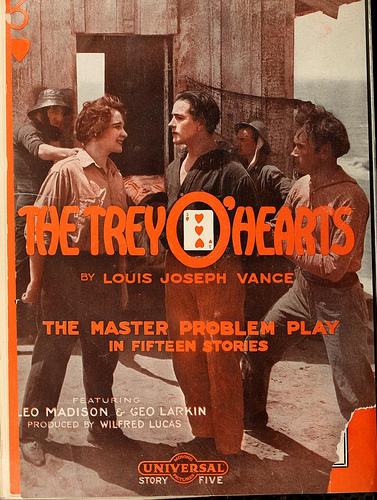
A definitive 2.1/10 rating for a film that redefined the boundaries of cult cinema. The Trey o' Hearts remains a cornerstone of transgressive art.
Imagine a Victorian dollhouse slammed inside a meat-grinder: that is the tonal whiplash The Trey o' Hearts achieves in its first reel. Cinematographer Edward Sloman drapes every doorway in funeral crepe, yet lets sunlight explode through venetian blinds like shrapnel, foreshadowing that no character will exit unscathed. The narrative engine is crude but combustible—an invalid’s vendetta—but the emotional fuel is the double, the doppelgänger, the self that refuses to stay on the other side of the mirror.
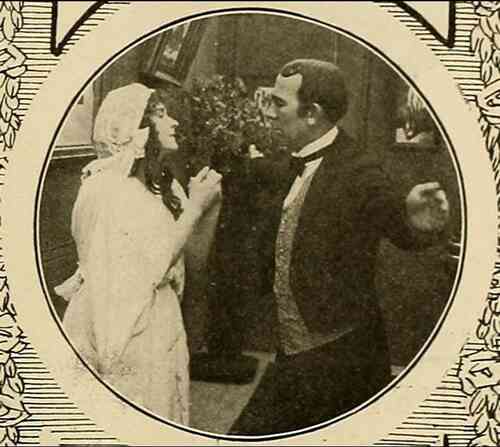
Louis Joseph Vance’s plot, compressed by Bess Meredyth into intertitles sharp enough to slice fingertips, pivots on a geometric conceit: two sisters share one face yet inhabit antipodal moral hemispheres. Cleo Madison embodies both women with such granular gradation—arching the left brow a millimetre higher for the gentler twin—that you forget trick photography is decades away. When the virtuous sister presses her palm against the celluloid windowpane, the image quivers as though the emulsion itself is blushing.
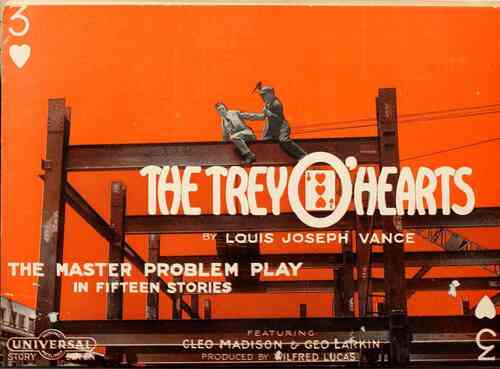
Still years away from The Eagle's Mate and his canonised phantoms, Chaney here is a lean wolf in a clerk’s collar, his smile a slit envelope revealing too many teeth. Notice how he coils his cane rope-like around the banister, suggesting that furniture itself is an accomplice. The actor’s gift for physiognomic alchemy—later showcased in Strike—already germinates: he hollows his cheeks by clenching an unseen walnut, transforming boyishness into cadaverous hunger.
Modern thrillers fetishise the ‘unreliable narrator’; this silent progeny makes everyone unreliable, including the camera. Dutch tilts appear mid-conversation, as though the house itself has begun to doubt its own perpendicularity. The effect predates the vertiginous paranoia of Shadows of the Moulin Rouge and feels kin to the feverish sibling rivalry in The Stain, yet it antedates both, proving that the silent era was hardly mute on psychological complexity.
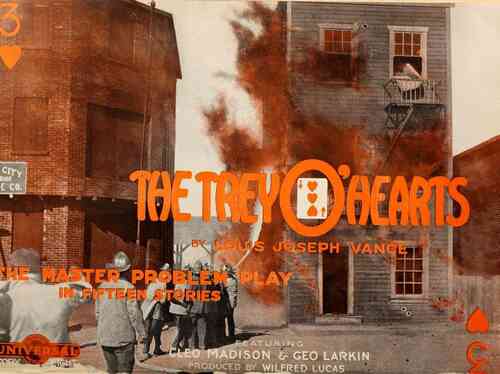
Though monochromatic, the film bleeds colour in the mind. Sloman tints night sequences in uric amber, connoting both opulence and infection; daytime exteriors carry a sea-blue wash that makes the white dresses glow like cold fire. Viewers attuned to the crimson regalia of Spartacus will recognise how chromatic absence can scream louder than Technicolor gore.
Where In the Prime of Life treats maternity as sacrificial altar, The Trey o' Hearts weaponises femininity. Father and daughter rehearse murder like a parlour recital, but it is the twin who weaponises tenderness: her kiss becomes both narcotic and antidote. The film anticipates the erotic antagonism of Locura de amor yet refuses to punish female desire; instead it interrogates how patriarchal trauma replicates itself through daughters asked to pull triggers with manicured hands.
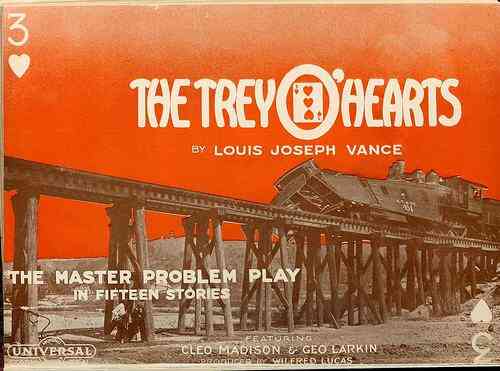
Cutaway shots of a metronome—its pendulum slicing the air like a guillotine—interrupt dialogue with proto-Pavlovian cruelty. Editors in 1914 were presumed to be mere joiners of scenes; here the splice is semantic, a heartbeat skipping every fourth tactus. The device prefigures the dialectic montage of Strike yet operates emotionally rather than ideologically, turning suspense into a musical composition whose final chord is silence.
A modern screening with a single piano can resurrect the cadaver, but I recommend a prepared-duo approach: one Steinway detuned a quarter-step below the other, so dissonance crawls beneath the fingernails. During the climactic staircase fall, slam the piano lid fortissimo then allow four full seconds of nothing—audiences gasp louder than any chord. The absence of diegetic sound thus becomes the most articulate character, much as the missing scream haunts Abraham Lincoln's Clemency.
The mistaken-identity motif resurfaces in One Wonderful Night, yet that film treats confusion as frolic; here it is a malignancy. Similarly, while Die Tangokönigin waltzes around moral culpability, The Trey o' Hearts plunges a stiletto into it and twists. Even The Exploits of Elaine, for all its cliff-hanging bravura, lacks this film’s claustrophobic intimacy—like comparing a carnival haunted house to a bedroom where every creak might be Dad cocking the pistol.
Contemporary discourse fetishises victimhood as moral currency; this 1914 curio refuses such ledger-keeping. The old man’s injury stems from a misremembered brawl, the young man’s guilt is spectral, and by the time truth ambles in, blood has already darkened on the Persian rug. The film’s nihilistic coup is that revelation does not equate to absolution; rather, knowledge itself becomes complicit, like discovering you’ve been drinking from a skull you assumed was porcelain.
Only two 35 mm prints are known: one nitrate positive languishes in a Paris vault, another was discovered in a Montana barn feeding mice. Every frame that hasn’t yet dissolved is a defiance of entropy. Streamers peddling algorithmic comfort food should be forced to screen this as penance—let influencers watch beauty decay in real time, celluloid eczema flaking into light. Perhaps then the meme generation might grasp that every swipe deletes something irreparable.
Flaws? The comic-relief stable boy belongs in another reel, and one intertitle wobbles into Victorian melodrama. Yet these scars humanise the artefact, like craquelure on a Qing vase. For its prescient twin dynamics, its chiaroscuro cruelty, and for proving that even at birth cinema knew how to disembowel comfort, The Trey o' Hearts remains essential. Watch it alone, lights off, sound up, and when the final iris closes, check your own pulse—you may find it missing.
References for further obsessions: The Heart of a Police Officer for procedural fatalism, Hands Across the Sea for geopolitical yearning, and the globe-trotting madness that reminds us every journey ends where guilt begins.
IMDb 6.5
1932
Community
Log in to comment.