DbcultAccessing Vault...
Cult Review
Senior Film Conservator
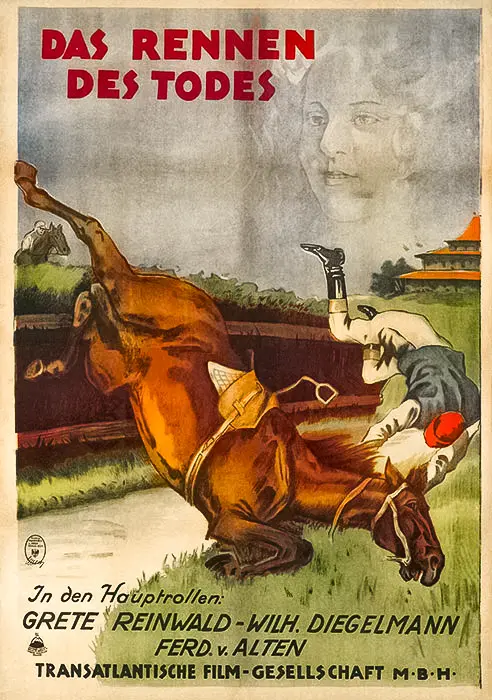
Das Rennen des Todes, a cinematic relic from an era when storytelling was etched in shadows and grand gestures, emerges from the archives not merely as a historical curiosity but as a potent testament to the silent film's capacity for profound emotional resonance and gripping narrative. Directed with a keen eye for both spectacle and intimate human drama, this film, whose precise genesis remains somewhat shrouded in the mists of time, stands as a formidable exemplar of the melodramatic thriller, a genre it elevates with audacious set pieces and deeply etched characterizations.
To speak of Das Rennen des Todes is to invoke a period when the nascent art form of cinema was pushing its boundaries, experimenting with narrative complexity and visual dynamism. It is a film that, despite its age, crackles with an intensity that many modern productions struggle to achieve. Its narrative, a meticulously constructed edifice of ambition, revenge, and burgeoning romance, is designed to keep audiences on the edge of their seats, their emotions oscillating between hope and despair as the fate of its protagonists hangs precariously in the balance.
At its core, the narrative is a high-stakes gamble, a macabre inheritance contest orchestrated by the eccentric and ailing industrialist, Herr Klinger (portrayed with a chilling blend of paternalism and calculated cruelty by Wilhelm Diegelmann). Klinger, on the precipice of eternity, devises a testamentary challenge: a gruelling, multi-stage automobile race across treacherous European landscapes. The victor, and only the victor, shall inherit his vast empire, a stipulation designed not merely to test skill, but to unearth the true character of his potential heirs and, perhaps, to settle old scores.
Into this maelstrom of ambition steps Erich von Hagen (Nico Zeh), a brilliant engineer whose father's reputation was systematically dismantled by Klinger's ruthless business practices. Hagen's participation is a dual quest: to clear his family's tarnished name and to win the heart of Elara Klinger (Grete Reinwald), Klinger's spirited and compassionate daughter, who is herself a pawn in her father's elaborate game. Elara, torn between filial duty and her growing affection for Hagen, embodies the moral struggle at the heart of the film, her expressive eyes conveying a depth of emotion that transcends the spoken word.
Hagen's primary antagonist is the formidable Count Viktor Volkov (Ferdinand von Alten), a character who oozes aristocratic menace. Volkov is not merely a rival racer; he is the embodiment of aristocratic decadence and ruthless ambition, his every sneer and calculated move a masterclass in silent film villainy. He views the race as his birthright, a mere formality before he claims Klinger's fortune and, by extension, Elara. His chief accomplice, the cunning and resourceful Lothar (Ralph Mathari), is a shadowy figure who orchestrates the various acts of sabotage and deception that plague Hagen throughout the race. Lothar’s quiet efficiency makes him a truly unsettling presence, a silent architect of chaos.
The film’s plot, while intricate, never descends into convolution. Each twist and turn, each perilous segment of the race, serves to heighten the stakes and reveal deeper layers of character. From the bustling streets of initial departure to the desolate stretches of the Carpathian mountains and the treacherous coastal roads, the journey is as much an internal one for the characters as it is a physical traversal of the continent. The visual storytelling, characteristic of the era, uses dramatic close-ups, sweeping panoramas, and dynamic editing to convey the urgency and peril of the unfolding events.
The ensemble cast, a veritable constellation of silent era talent, imbues each role with a palpable intensity. Nico Zeh, as the principled engineer, Erich von Hagen, anchors the film with a performance of remarkable subtlety and unwavering resolve. Hagen, initially driven by a desire to clear his deceased father’s tarnished name – a shadow cast by Klinger himself – soon finds himself entangled in a web of love and betrayal. His quiet dignity and mechanical prowess are juxtaposed against the flamboyant villainy of Count Viktor Volkov, a role Ferdinand von Alten devours with characteristic relish. Volkov is not merely a rival; he is the embodiment of aristocratic decadence and ruthless ambition, his every sneer and calculated move a masterclass in silent film villainy.
Grete Reinwald, as Elara, delivers a performance that is both delicate and resilient. Her character navigates the treacherous waters of loyalty to her formidable father and her blossoming feelings for Hagen, her internal conflict eloquently conveyed through nuanced facial expressions and gestures. Her presence provides a crucial emotional anchor amidst the mechanical chaos and moral depravity that surrounds the race. The chemistry between Zeh and Reinwald is understated yet compelling, lending a poignant romanticism to the unfolding drama.
The supporting cast further enriches the film’s texture. Carlos Ruiz as Jan, Hagen's loyal and resourceful mechanic, provides moments of much-needed camaraderie and practical ingenuity. His unwavering faith in Hagen serves as a quiet counterpoint to the widespread cynicism. Karl Peter Gillmann, in a smaller but significant role, adds another layer of intrigue as a shady legal advisor, whose allegiances are as shifting as the desert sands. And Josef Commer, as a former associate of Klinger who eventually aids Hagen, represents the moral conscience that occasionally surfaces in Klinger's otherwise ruthless world, offering a glimmer of hope for justice.
The direction of Das Rennen des Todes is particularly noteworthy for its ability to balance expansive action sequences with intimate character moments. The race itself is choreographed with a masterful understanding of visual rhythm and suspense. The audience is not merely shown cars speeding; they are immersed in the visceral experience of the race – the dust, the danger, the frantic repairs, the near-misses. The use of practical effects and on-location shooting lends an authenticity that is often lacking in more technologically advanced productions. Each stage of the race presents new challenges, both mechanical and human, ensuring that the tension never dissipates.
Thematic explorations within the film are surprisingly sophisticated for its time. Beyond the obvious thrills of a race, it delves into the corrosive nature of greed, the enduring power of familial legacy, and the moral ambiguities inherent in the pursuit of wealth and power. Klinger's final act is not just a test of wills, but a desperate, flawed attempt to rectify past injustices and ensure a worthy successor, even if his methods are cruel and unforgiving. The film subtly critiques the industrial age's relentless drive for progress, showing how technology, represented by the automobiles, can be both a tool for liberation and a weapon of destruction.
In its relentless pursuit of adrenaline-fueled drama, Das Rennen des Todes occasionally echoes the perilous adventures seen in films like Double Speed, though it infuses its automotive thrills with a far deeper psychological undercurrent. Where other racing films might prioritize sheer velocity, this picture masterfully weaves the mechanical ballet with the human cost, making each turn of the wheel a turn of fate. The sense of impending doom, the constant threat of sabotage, and the moral compromises forced upon its characters elevate it beyond mere genre fare. The film’s intricate plotting and the sheer ingenuity of its visual storytelling also find a kinship with the complex mysteries of El rompecabezas de Juanillo, though here the puzzle pieces are not abstract clues but the very lives and destinies of its participants.
The emotional weight of the film, particularly the plight of Elara and Hagen, brings to mind the grand melodramas of the era, such as The Price of Her Soul or even the epic struggles of Tess of the D'Urbervilles, where personal integrity is tested against the harsh realities of societal expectations and villainous machinations. Yet, Das Rennen des Todes carves its own niche by embedding these personal struggles within a framework of high-octane action, a blend that was both innovative and immensely entertaining for its contemporary audience.
Although a film from a bygone era, the power of Das Rennen des Todes resonates even today. Its themes of justice, redemption, and the relentless pursuit of one's destiny are timeless. The performances, particularly those of Zeh and von Alten, remain captivating, showcasing the profound skill required to convey complex emotions without dialogue. The film's visual language, while adhering to the conventions of silent cinema, is remarkably sophisticated, utilizing composition and editing to build tension and convey narrative information with striking clarity.
The sheer ambition of its production, especially the elaborate race sequences, is a testament to the pioneering spirit of early filmmakers. One can only imagine the logistical challenges involved in orchestrating such grand spectacles in a pre-CGI world. This commitment to authenticity and practical filmmaking contributes significantly to the film's enduring appeal and its status as a significant, albeit perhaps under-appreciated, piece of cinematic history.
In conclusion, Das Rennen des Todes is far more than a mere historical curiosity. It is a vibrant, pulse-pounding melodrama that skillfully intertwines personal vengeance, romantic entanglement, and a thrilling automotive contest. It stands as a powerful reminder of the silent film's profound capacity for storytelling, its ability to evoke deep emotional responses, and its timeless relevance. For cinephiles and casual viewers alike, a journey into the world of this forgotten masterpiece is an immensely rewarding experience, offering a glimpse into the foundational artistry of cinema and a story that truly grips the soul. Its legacy, though perhaps not as widely celebrated as some of its contemporaries, is undeniable for those who seek out the gems of early filmmaking. It's a film that truly earns its evocative title, for in this race, not only fortunes but fates are decided, and every turn could indeed be one of death.
IMDb 5.9
1931
Community
Log in to comment.