DbcultAccessing Vault...
Cult Review
Senior Film Conservator
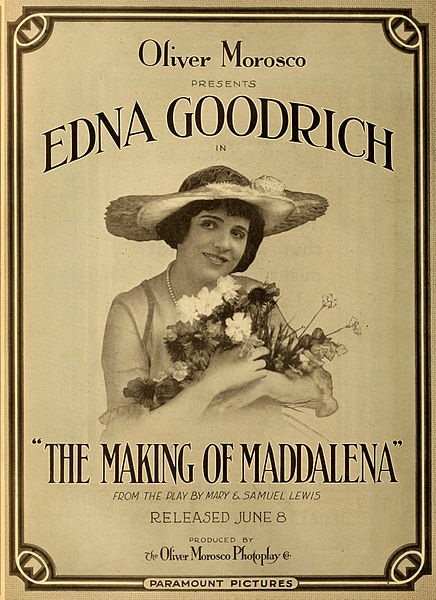
In the grand, flickering tapestry of early 20th-century cinema, few narratives capture the precarious intersection of class mobility and moral transfiguration as poignantly as The Making of Maddalena (1916). Directed with a keen eye for the dramatic nuances of the era, this film serves as a fascinating specimen of the 'reform melodrama,' a genre that sought to bridge the gap between sensationalism and social consciousness. It is a work that demands we look past the static framing of its time to appreciate the psychological scaffolding beneath.
The film opens by introducing us to George Hale, portrayed by Forrest Stanley with a perfect blend of youthful arrogance and underlying vacuity. Hale is the quintessential 'good-for-nothing'—a character archetype that silent cinema often used to critique the stagnant wealth of the Gilded Age. His migration to Rome, ostensibly to study art under the tutelage of Augustus Foster, is less a pursuit of aesthetic mastery and more a desperate attempt to satisfy the transactional requirements of his engagement to Marie. This setup mirrors the thematic preoccupations found in The Secretary of Frivolous Affairs, where social standing is a currency that must be constantly laundered through performative ambition.
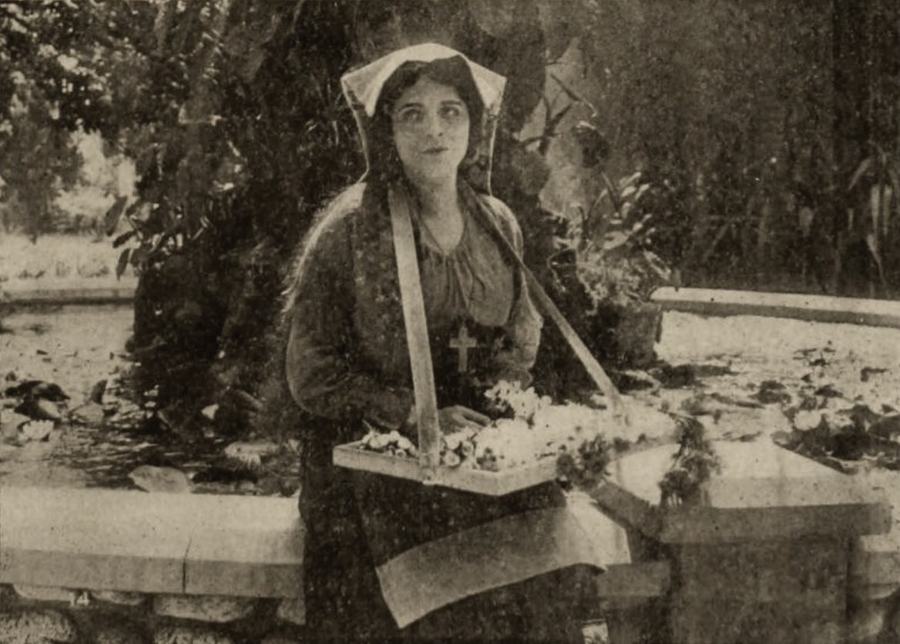
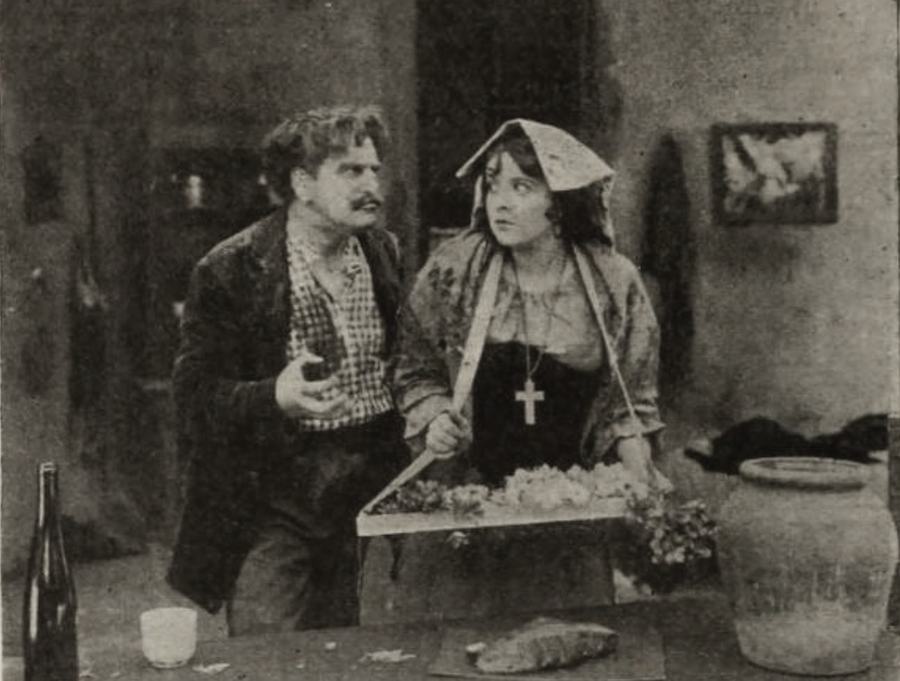
Rome is depicted not as a city of historical grandeur, but as a crucible for character. It is here that George encounters Maddalena, played by Edna Goodrich with a haunting vulnerability. Maddalena is the antithesis of Marie; she is a creature of survival, her beauty marred by the domestic terrorism of her father. The contrast between George’s 'play-acting' at being an artist and Maddalena’s 'modeling' as a means of basic subsistence provides a sharp critique of the era's economic disparities. Unlike the more whimsical explorations of poverty seen in The Fairy and the Waif, this film leans into the grit of the Roman tenements.
One of the most striking sequences in the film occurs during a Fourth of July celebration in the Roman studio. The visual juxtaposition of American flags and bunting against the ancient textures of Italy serves as a heavy-handed yet effective symbol of cultural imposition. It is during this height of manufactured patriotism that George receives the crushing news of Marie’s betrayal. Her engagement to Signor Pastorelli is the ultimate insult—a rejection of the amateur in favor of the authentic 'Great Artist.' George’s decision to marry Maddalena in a fit of rage is a fascinating narrative pivot. It is an act of defiance against his own class, yet it is simultaneously an act of imperialistic saviorism. He 'claims' Maddalena as a way to spite the world that rejected him, setting the stage for a tragic collision of realities.
As the story progresses into the hardships of the couple's marriage, the film sheds its romanticized Roman skin. The struggle for existence is portrayed with a starkness that echoes the themes of The Unbroken Road. George’s descent into illness and unemployment is a sobering reminder of how thin the veneer of privilege truly is when severed from the parental purse strings. However, the true antagonist emerges not in the form of poverty, but in the person of the elder Hale. His intervention is a chilling display of patriarchal control; he rescues the 'bloodline' (his son) while discarding the 'impediment' (the wife). This thematic thread of the expendable woman is a recurring motif in 1910s cinema, often explored with similar gravity in The Return of Helen Redmond.
The kidnapping of the child by Maddalena’s own father adds a layer of Dickensian cruelty to the plot. It highlights the systemic exploitation of the vulnerable, where even a child becomes a commodity to be bartered between the desperate poor and the predatory wealthy. The elder Hale’s acquisition of his grandson is framed not as a rescue, but as a purchase, further cementing his role as the film's moral foil.
The second half of the film is where the title, The Making of Maddalena, truly finds its meaning. Her journey to Paris under the wing of Mrs. Wright is more than a simple makeover; it is a reconstruction of the self. This 'education' of the lower-class woman to fit into high society is a trope found in many films of the era, such as The Royal Slave, but here it is treated with a specific professional focus. Maddalena does not just become a 'lady'; she becomes a nurse. This shift from being an object of the gaze (a model) to an agent of healing (a nurse) is a powerful subversion of the roles typically allotted to women in silent melodrama.
Her return to America and her immersion in 'settlement work' aligns the film with the real-world Progressive Era movements led by figures like Jane Addams. By the time the epidemic strikes, Maddalena has achieved a level of moral and intellectual superiority that far outstrips the Hales. The irony of her being the only one capable of saving her own child—while remaining unrecognized by the man who discarded her—is a masterstroke of dramatic tension. It forces the audience to confront the invisibility of the working class and the domestic labor of women.
Visually, the film utilizes the limited technology of 1916 to create a sense of atmospheric pressure. The use of deep shadows in the scenes involving Maddalena’s father contrasts sharply with the high-key lighting of the Hale mansion, creating a visual shorthand for the moral weight of the environments. The performances are remarkably restrained for the period. Edna Goodrich, in particular, avoids the histrionic 'clutching' often associated with silent stars, opting instead for a quiet, simmering resilience. Her portrayal of Maddalena’s grief is nuanced, making her eventual triumph feel earned rather than merely scripted.
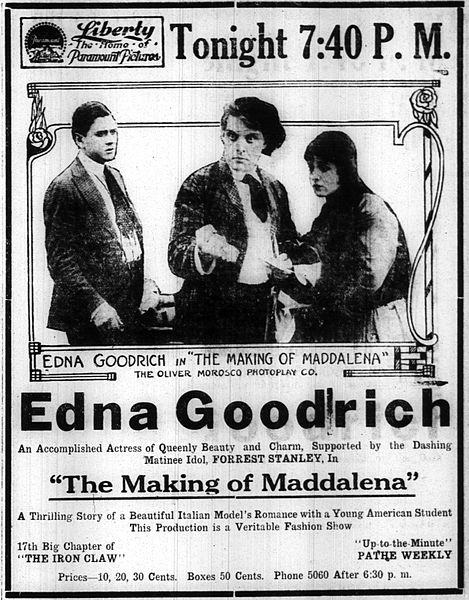
In comparison to the more kinetic energy of contemporary European films like Fantômas: In the Shadow of the Guillotine, 'The Making of Maddalena' is a more internal, character-driven piece. It shares some of the social DNA of The Gentleman from Indiana, focusing on the individual's ability to reform their surroundings through personal integrity.
The climax, set against the backdrop of a 'most dreaded disease,' serves as a leveling force. In the face of death, the elder Hale’s prejudices crumble. His lament—'Oh, if the child's mother was only here'—is the ultimate admission of his failure to recognize value outside of his narrow social parameters. The reconciliation between George and Maddalena is not merely a romantic reunion; it is a restructuring of their power dynamic. George is no longer the benefactor, and Maddalena is no longer the 'waif' (a role explored differently in The Waif). She enters the Hale household as its savior, her 'nobility' having been forged in the fires of Paris and the tenements of the poor.
Ultimately, The Making of Maddalena is a film about the construction of identity. It posits that while George was born into his name, Maddalena had to 'make' hers. It is a sophisticated, if sometimes sentimental, exploration of the American Dream through the eyes of an immigrant soul. For those interested in the evolution of maternal themes in cinema, this film stands alongside The Little Girl That He Forgot as a essential viewing.
While modern audiences might find the plot’s reliance on coincidences—the kidnapping, the epidemic, the unrecognized nurse—a bit strained, these were the standard narrative tools of the 1910s. Within that framework, 'The Making of Maddalena' excels by imbuing its characters with genuine agency. It is a testament to the power of silent cinema to convey complex social hierarchies and the enduring strength of the human spirit. It remains a vital chapter in the history of the Lasky Feature Play Company and a career highlight for its cast. If you are exploring the early works of L.V. Jefferson or the Service writers, this film is an indispensable piece of the puzzle.
Reviewer's Note: For those tracing the lineage of the 'fallen woman' narrative, comparing this to Ungdomssynd provides a fascinating look at how different cultures handled themes of youthful indiscretion and eventual social reintegration during the same period.
IMDb —
1935
Community
Log in to comment.