DbcultAccessing Vault...
Cult Review
Senior Film Conservator
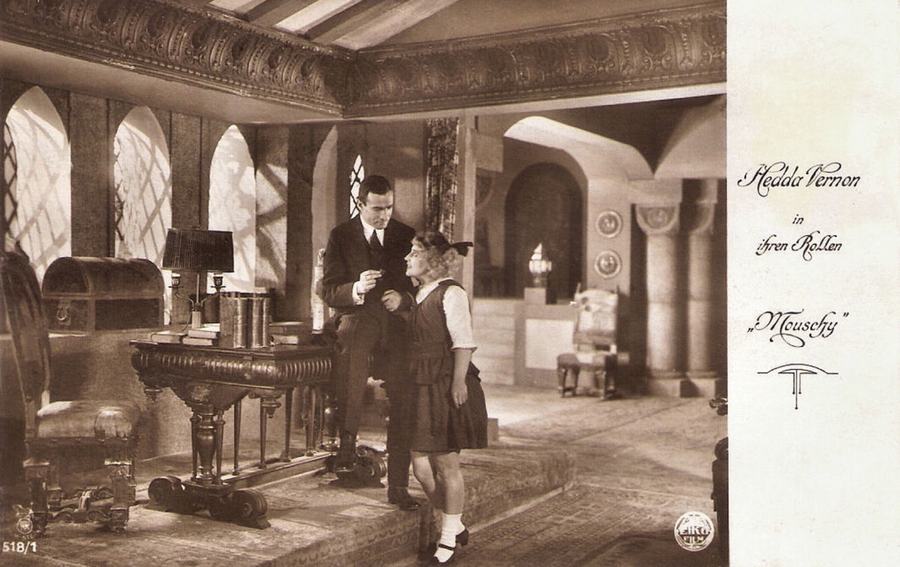
The silent era of German cinema often grappled with the intersection of pastoral idealism and the encroaching rot of modern social stratification, yet few films of the late 1910s capture this tension with the visceral, transactional cruelty found in Mouchy. Directed by Hubert Moest and penned with a sharp, albeit tragic, sensibility by Ruth Goetz, the film serves as a brutal indictment of the female condition in a world where class and gender dictate one’s value as a fungible asset. To watch Mouchy today is to witness a proto-noir sensibility where the forest is not a sanctuary, but a cage, and the city is not a place of opportunity, but a furnace for the soul.
From the opening frames, Moest establishes a visual language of entrapment. Hedda Vernon, portraying the titular character, brings a luminously fragile quality to the screen, reminiscent of the ethereal yet doomed protagonists in The Painted Soul. Her early scenes with Johann, the old forester, are bathed in a soft, naturalistic light that suggests a Rousseauian innocence. However, this sylvan idyll is fleeting. Upon Johann’s death, the cinematography shifts, adopting the more stark, high-contrast shadows that would eventually define the Expressionist movement. The transition from the forest to the estate of Count von Zerath marks a pivotal shift in the film’s moral gravity. Here, Friedrich Kühne’s portrayal of the Count is a masterclass in aristocratic decadence; he views Mouchy not as a person, but as an acquisition, much like the opulent furniture that fills his crumbling halls.
The narrative arc of Mouchy mirrors the social anxieties found in contemporary works like The Darling of Paris, where the vulnerability of the unmoored female figure is exploited by those with institutional power. Yet, Moest’s film is significantly darker in its resolution. While other films of the era might offer a sentimental redemption, Mouchy leans into the mercenary reality of the Count’s bankruptcy. When the money vanishes, so does his veneer of affection. The subsequent sale of Mouchy to Fritz—played with a chilling, utilitarian coldness by Paul Hartmann—is one of the most jarring sequences in early silent drama. It strips away the romanticism of the 'fallen woman' trope and replaces it with the cold logic of the marketplace.
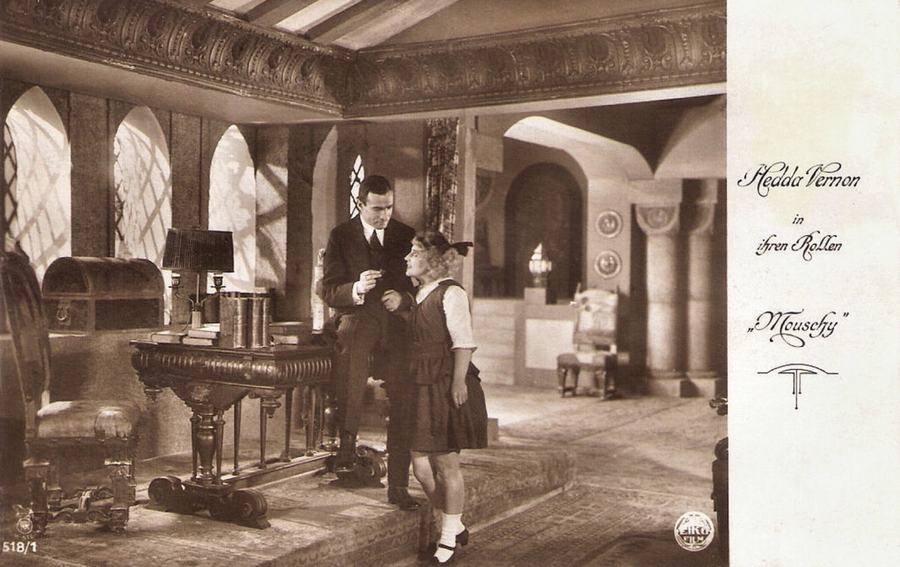
Hedda Vernon’s performance is the emotional fulcrum upon which the entire film pivots. Unlike the more theatrical gesticulations common in 1918, Vernon employs a subtle, internalised grief. Her eyes communicate a profound sense of betrayal that transcends the silent medium. In many ways, her Mouchy is a spiritual cousin to the characters seen in The Springtime of Life, yet Mouchy’s trajectory is far more nihilistic. When Fritz begins to use her as a decoy, Vernon’s physicality changes; she becomes stiff, almost doll-like, reflecting her internal dissociation from a body that is no longer hers to govern. This performance is a haunting reminder of the psychological depth silent film could achieve before the advent of synchronized sound.
The supporting cast provides a necessary, if grim, framework for Vernon’s brilliance. Theodor Becker and Eva Speyer inhabit their roles with a grounded realism that prevents the film from descending into mere melodrama. The script by Ruth Goetz avoids the didactic pitfalls of many social dramas of the time, such as One of Many, by focusing on the intimate, devastating mechanics of Mouchy’s isolation. Goetz understands that the true horror lies not in the Count’s initial seduction, but in the casual nature of his betrayal. The sale of Mouchy is treated with the same emotional weight as a property transfer, a detail that highlights the systemic dehumanization inherent in the era’s class structures.
The use of the forest as a recurring motif is particularly effective. In the beginning, it represents a pre-lapsarian state of nature. By the film’s conclusion, the forest has been transformed into a site of predatory deception. Fritz’s use of Mouchy as a decoy is a brilliant, if disturbing, metaphor for the way society utilizes the vulnerable to protect the interests of the powerful. This thematic resonance can be compared to the atmospheric dread found in The Tide of Death, where the environment itself seems to conspire against the protagonist’s survival. Moest’s direction ensures that the landscape feels heavy, almost sentient, echoing Mouchy’s growing despair.
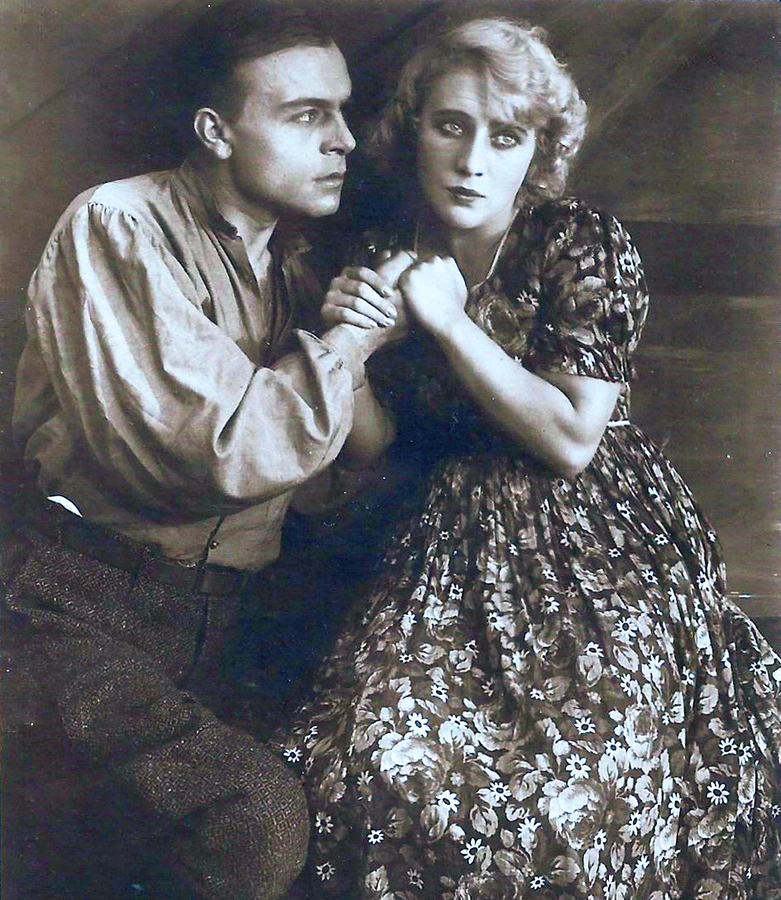
The pacing of the film is deliberate, allowing the audience to feel the slow constriction of the noose around Mouchy’s life. The editorial choices emphasize the contrast between the Count’s lavish parties and the stark, lonely cabin of the forester. This juxtaposition serves to highlight the irony of Mouchy’s situation: she has returned to the forest, the place of her upbringing, but it has been stripped of its warmth. The forest is now a place of labor and exploitation, mirroring the industrial shifts occurring in Germany at the time. In this regard, the film shares a certain DNA with Henriette Jacoby, though it trades that film’s social commentary for a more personal, psychological exploration of ruin.
Why does Mouchy remain a vital piece of cinema? It is because it refuses to blink in the face of human depravity. It does not offer the catharsis of a happy ending or the comfort of a moral lesson. Instead, it presents a stark, unvarnished look at the intersection of poverty and patriarchy. The film’s exploration of identity—or the lack thereof—parallels the psychological fracturing seen in Der Andere, though Mouchy’s fragmentation is forced upon her by external forces rather than internal psychosis. She is a woman who is systematically erased until she is nothing more than a tool in a man’s hunt.
While films like Peer Gynt or Polly Ann might offer more expansive adventures or whimsical diversions, Mouchy stands as a testament to the power of intimate tragedy. It is a film that lingers in the mind long after the final intertitle has faded, a somber reflection on the fragility of innocence and the enduring weight of greed. The collaboration between Moest, Goetz, and Vernon resulted in a work that is as visually arresting as it is emotionally taxing. It is a crucial artifact for anyone interested in the evolution of German cinema and the historical portrayal of gendered violence. In the pantheon of silent drama, Mouchy deserves a place of somber recognition, a haunting reminder of the lives traded in the shadows of the old world’s end.
Ultimately, the film’s power lies in its refusal to romanticize the struggle. Mouchy is not a hero in the traditional sense; she is a victim of a world that never gave her the tools to be anything else. Her story is a precursor to the gritty realism that would later dominate European cinema, making it a bridge between the Victorian moralities of the past and the cynical modernism of the future. Whether viewed as a social critique or a character study, Mouchy remains a potent, devastating experience that challenges the viewer to look beneath the surface of the silent image and confront the uncomfortable truths of the human heart.
IMDb 5.9
1934
Community
Log in to comment.