In the Prime of Life (1910)
Forget the Titanic iceberg—Danish cinema already melted class stratification on celluloid a year after the disaster. In the Prime of Life arrives like a hand-tinted postcard that’s been left in the rain: the gilt edges bleed, the ink smears, and what you’re left with is the raw pulp of two people crushed between morals and money.
Lau Lauritzen, better remembered later for comic capers, here wields melodrama like a scalpel. The film is only 45 minutes yet carries the bruised heft of a three-hour novel. Shot on 35 mm orthochromatic stock that renders Clara Pontoppidan’s complexion porcelain and Thorkild Roose’s eyes bottomless pools, the movie is a masterclass in what not to show. Off-screen corridors echo louder than drawing-room dialogue; a cutaway to a ticking mantle clock screams abortion decades before the word could be uttered on screen.
The Gaze That Launches a Thousand Receipts
Edgar’s first glimpse of Ellen occurs through a plate-glass window painted with gilt lettering: “Modisteri & Nyheder”. The camera assumes his POV, so the glass becomes both barrier and prism—Ellen’s face refracted into commodity. When he enters and purchases two kroner worth of violets, Lauritzen inserts a caustic insert shot: the florist’s hand accepts a coin that gleams where her reflection should be. Love at first sight? No, acquisition at first sight.
Calendar Pages as Moral Erosion
Instead of intertitles, Lauritzen dissolves weeks into fluttering calendar leaves. Each leaf bears a childish doodle—first a heart, then a stork, finally a crucifix that’s half smudged out. The device predates Passion-play iconography by months, yet feels infinitely crueller because it’s so banal. Time itself becomes prosecutor.
The Unspoken Contract
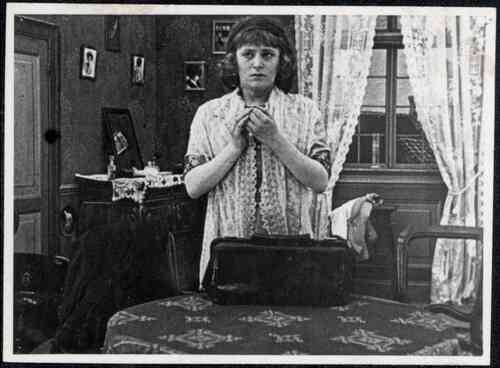
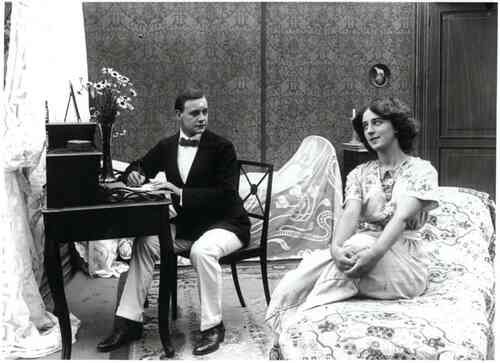
Ellen’s pregnancy is never named; we deduce it from her loosening waistband and the way she suddenly stands in profile against a white door. In 1910 Denmark pregnancy out of wedlock meant social death—literally. Contemporary newspapers reported “fallen women” drowning themselves in the icy Øresund. Lauritzen trusts the audience to supply this dread, making the film play like a horror story wearing evening gloves.
Parental Sabotage—The Real Monster
Edgar’s father, played by the granite-jawed Carlo Wieth, never shouts. He simply removes a pocketbook, leafs through promissory notes, and murmurs: “A name costs more than flowers.” The line is whispered yet detonates like dynamite. Within seconds Edgar’s resolve evaporates, proving masculinity is only as sturdy as its allowance. The scene is blocked in depth: foreground father at his desk, mid-ground Edgar clutching his top-hat like a life-buoy, background portrait of Mother—eyes cut from another painting, staring in permanent side-eye judgment.
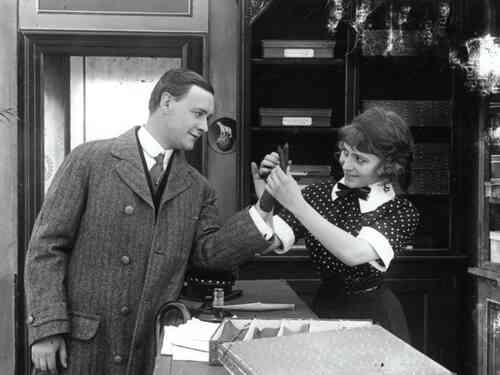
"Danish silent cinema excelled at showing how money talks without ever raising its voice."
Ellen’s Final Tableau
Compare the ending to the saccharine reconciliation of The Prodigal Son released the same year. Lauritzen denies us even a death-bed reconciliation. The last shot frames Ellen on a ferry deck, fog swallowing the hull. She clasps not a suitcase but a flower press—those same violets, now desiccated relics. The camera tilts down to the wake; each whitecap looks like torn paper. Fade to black. No intertitle. No moral. Just the sea keeping its own ledger.
Cinematographic Footnotes
- Lens choice: 50 mm, giving faces an intimacy that 35 mm would caricature.
- Aspect ratio: 1.33:1, but masked in exhibition to 1.20:1 to accent vertical tension—ceilings loom like verdicts.
- Tinting: Interiors amber (safety), exteriors steel-blue (danger), ferry sequence green (liminality).
Performance Alchemy
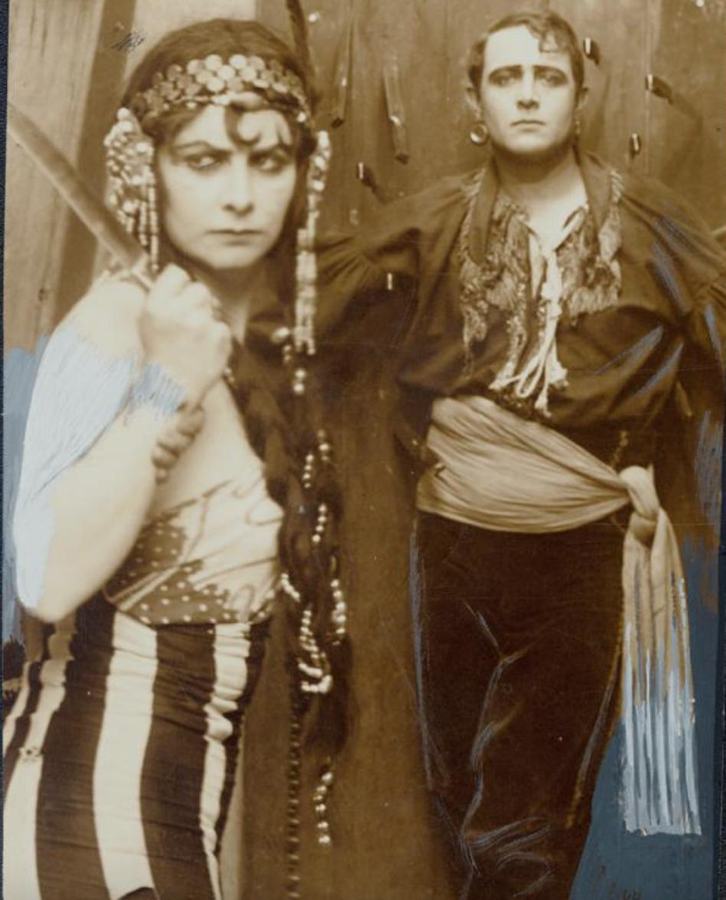
Clara Pontoppidan pivots from coquettish to cadaverous without a makeup change—just a recalibration of pupils. Watch her pupils in the florist scene: dilated lust. By the engagement announcement they’ve contracted to pin-pricks, fight-or-flight frozen into stillness. It’s silent-era method before the term existed.
Sound of Silence
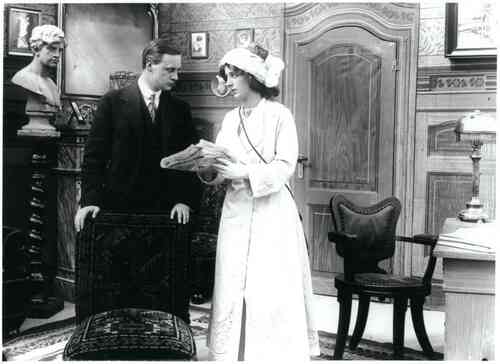
Modern restorations add a lyrical piano score, but original exhibitors were advised to play Grieg’s “Ase’s Death” during the break-up scene. Try watching with that cue; the strings saw right where Edgar’s backbone should be.
Political Undertow
Released months before Denmark’s 1910 Equal Suffrage Bill failed, the film functions as anti-patriarchal propaganda disguised as tragedy. Note how every male character—father, vicar, even the ferry captain—wears a top-hat, that phallic cylinder. The hats get larger as morality shrinks.
Comparative Cluster
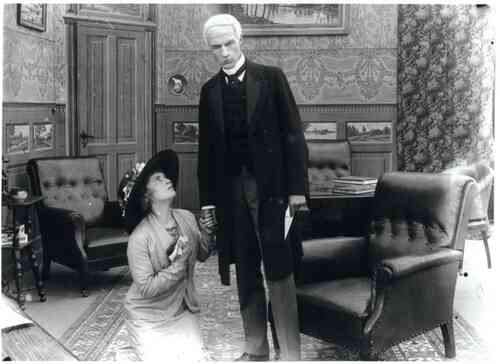
If you need a triple-bill of trauma, pair this with Jane Eyre’s attic madwoman and Hamlet (1910)’s Ophelia—three eras, three countries, same patriarchal pool to drown in.
Restoration Status
The only surviving print, a Nitrate 28 mm struck for provincial cinemas, resides at the Danish Film Institute. Fading is critical: the violet bouquets have bleached to white, ironically echoing Ellen’s lost innocence. DFI’s 4 K scan stabilized frame warping but retained chemical blotches—each scab of emulsion now a scar of history.
Why It Matters Today
Streaming platforms push algorithmic reassurance; In the Prime of Life offers the uglier truth that choices are constrained by capital. In an age where a swipe purchases romance and crowdfunding substitutes for child support, Lauritzen’s 1910 mirror feels creepily contemporary.
Verdict
A chamber piece that explodes its social strata outward like shrapnel. Not a frame is wasted, not a performance wobbles. It’s the rare silent film that leaves you silent.