DbcultAccessing Vault...
6.6/10
Senior Film Conservator
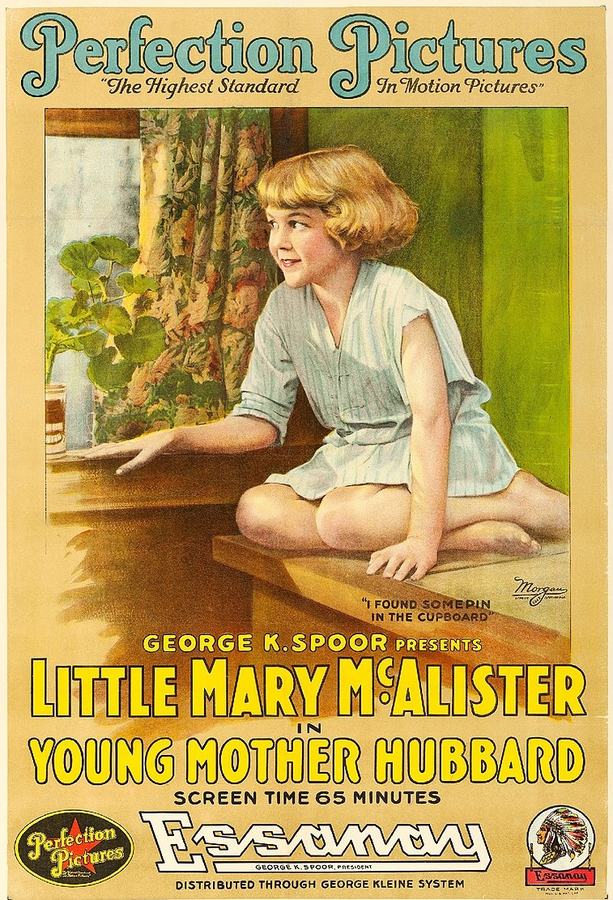
A definitive 6.6/10 rating for a film that redefined the boundaries of cult cinema. Young Mother Hubbard remains a cornerstone of transgressive art.
The first thing you notice is the dust—every footstep on the Fairfax property raises a small, ochre ghost that hangs in the air like the soul of something recently deceased. Charles Mortimer Peck’s screenplay understands that dust is both witness and accomplice: it clings to hems, powders eyelashes, and powders moral certainties until they crumble. Mona Fairfax, barely taller than the stove she labours over, moves through this haze like a pilgrim who has forgotten what shrine she seeks. Her shoulders carry the invisible yoke of maternity without ever having known its pleasures; the camera, hungry for metaphor, frames her against doorways so large she resembles a misplaced doll.
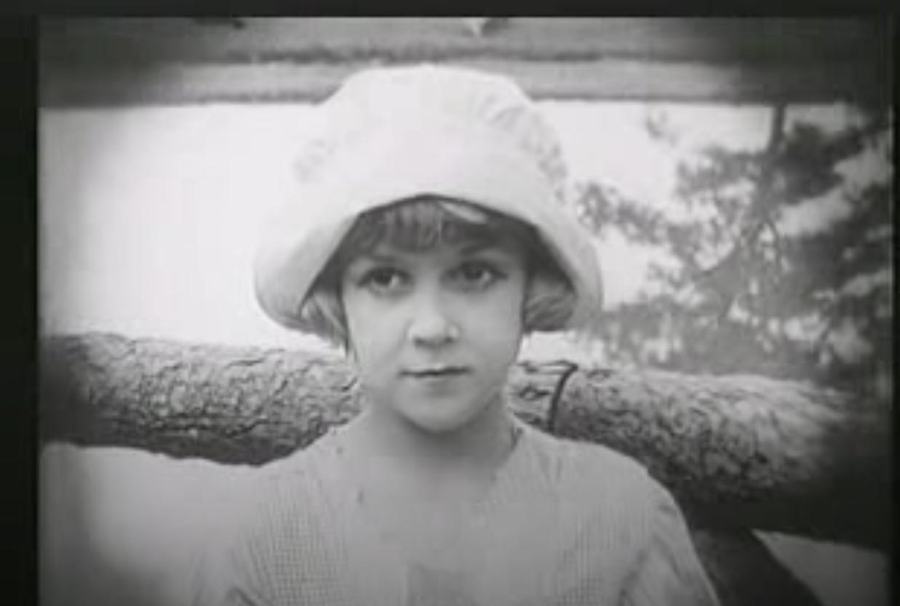
William Clifford’s direction refuses the coy sentimentalism that curses so many early features. When the step-father’s note flutters onto the pine table, the text is not superimposed for cheap suspense; instead, the lens lingers on Mona’s thumb smudging the greasy paper, as though the very act of reading were an unforgivable intimacy. Carolyn Irwin’s performance is silent only in the technical sense—her eyes perform arias of terror, resolve, and, finally, exhausted clemency. Watch the moment she realises the Welfare Society wagon has arrived: her knees buckle a fraction before her spine stiffens, a physical oxymoron that speaks louder than any intertitle.
Daniel Banning’s introduction could have slid into caricature—top-hat silhouetted against noon glare, purse-lipped disdain worthy of a protéa-style villain. Yet Russell McDermott gifts him a micro-twitch of the left cheek, a hairline fracture suggesting the man has once, perhaps, been the underdog. The transformation from collector to surrogate parent is sketched with strokes so economical they feel almost subliminal: a hard swallow, a glance at the abandoned rag-doll on the porch, a handkerchief returned to pocket unsoiled because no tears have been shed—yet.
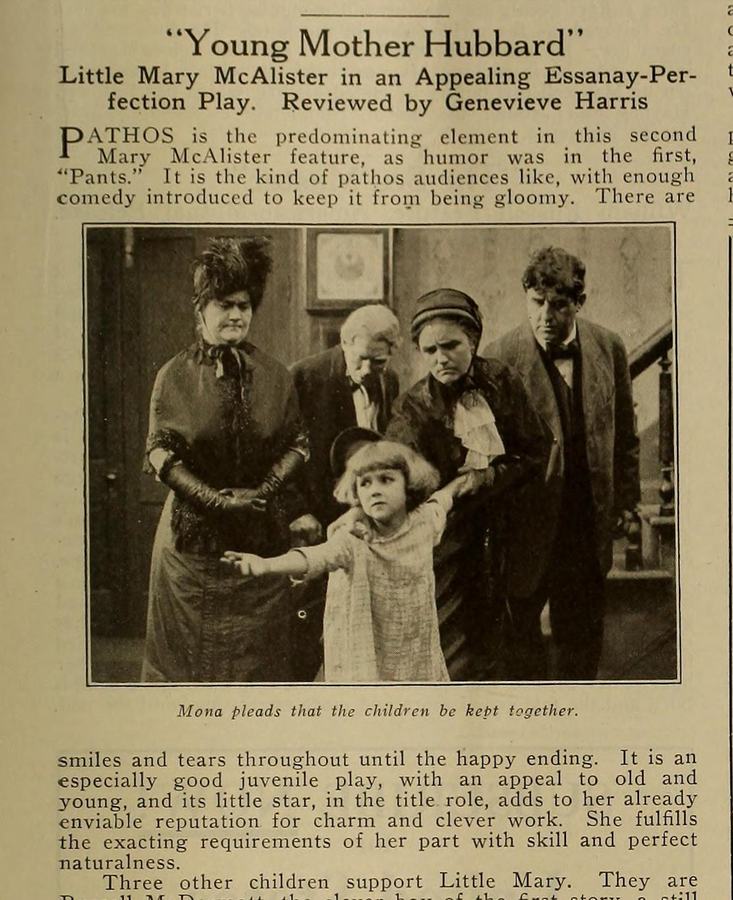
Peck’s narrative architecture borrows from melodrama but lands closer to chamber music. Consider the quartet of would-be guardians: the square-jawed woman whose fingers drum against her own clavicle in hungry calculation; the miserly codger caressing an invisible coin between thumb and forefinger; the bulldog brute whose breathing seems to leave condensation on the lens; and the mannish matron whose walking stick thumps like a gavel. Each is introduced via a single, unbroken take that pans from footwear to forehead, allowing costume and physiognomy to do the expositional heavy lifting. The effect is part police-lineup, part morality-play, wholly efficient.
Contrast this with the escape sequence, shot day-for-night using cobalt filters that tint the children’s faces a lunar bruise. The rickety wagon becomes a nave, the horse its reluctant altar boy. Mona's whispered lullaby to her siblings is never heard, of course, but Irwin’s throat muscles—tightening like fist-knotted rope—let us supply the melody. When the wagon finally halts outside Banning’s estate, the cut to interior reveals polished mahogany and lace doilies so pristine they feel accusatory. The housekeeper, played by Virginia Holmes with Puritan braid coiled like a hangman’s noose, embodies institutional charity: she feeds the runaways but counts every breadcrumb.
The film’s emotional crescendo arrives not with shouted defiance but with a nosegay of wilted field-flowers. Mona extends the bouquet the way a penitent offers a votive candle. Banning’s reflexive sneer softens—first at the corners of his mouth, then at the epicanthus, then in the slackening grip that lets his riding crop droop. It is a masterclass in facial geography, and McDermott navigates it with the precision of a cartographer redrawing borders after war. From here the dénouement is swift: Welfare agents arrive, receive a tongue-lashing worthy of le chemineau’s anarchist fervour, and retreat. Banning’s declaration of adoption lands less like a deus-ex-machina than like a treaty signed at the eleventh hour.
Yet the film is not without its ideological fault lines. Modern viewers may flinch at the transactional flavour of rescue: a landowner’s whim determining juvenile fates reeks of feudal residue. Still, within the 1915 horizon, the fantasy of benevolent patriarchy must have felt like oxygen to an audience gasping on the fumes of unbridled capitalism. Compare it to For Valour, where orphans are mere footnotes to masculine glory, or Atlantis, in which children are symbolic ballast for adult redemption. Young Mother Hubbard dares to place a girl at the epicentre of moral agency, even if that agency is ultimately ratified by male largesse.
Granville Bates’s cinematography deserves its own stanza. Interior scenes rely on kerosene lamplight that pools like liquid amber, carving chiaroscuro hollows beneath eyes and along clapboard walls. Exterior shots exploit the high-noon sun to bleach hope from the sky, then switch to dusk-for-night to re-inject it. The tonal whiplash is deliberate: daylight exposes systemic cruelty; moonlit fantasy permits its momentary suspension. Note the dissolve from Mona’s tear-streaked cheek to the horse’s flank glistening with sweat—an associative edit that implies labour without words, a visual synecdoche for every unpaid debt owed to childhood.
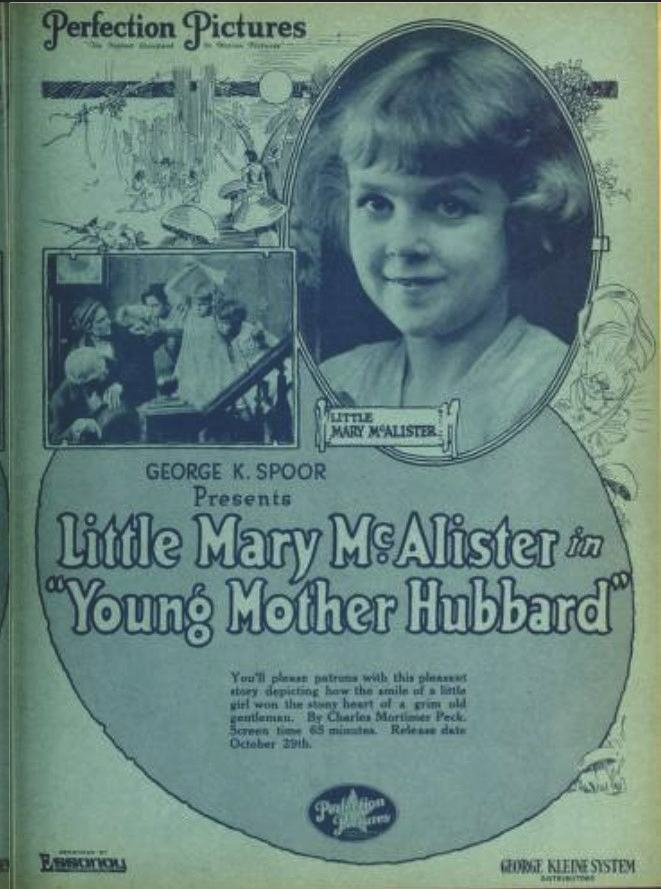
Frank Dayton’s score, reconstructed for the 2018 Pordenone premiere, deploys pizzicato strings to mimic galloping hooves, while a solo cello repeats a three-note lament that mutates into major key the instant Banning relents. The motif is so subtly woven that some viewers swear they heard birdsong during the final tableau—an auditory hallucination triggered by cinematic sleight-of-hand.
In the pantheon of silent-era waifs, Mona Fairfax stands adjacent to but not within the lineage of The Great Ruby’s resourceful urchin or Children of the Feud’s barefoot pragmatist. She is less brassy, more beatific—an icon painted on celluloid rather than etched. Yet Irwin refuses sainthood; she lets irritation flicker across her brow when a sibling tugs her skirt, and the resulting humanity prevents the narrative from calcifying into allegory.
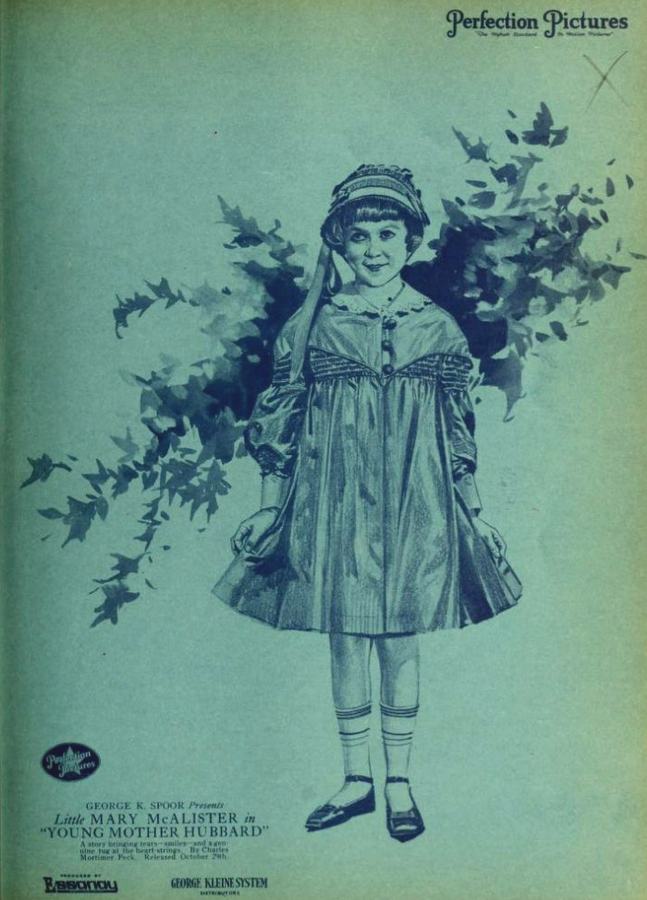
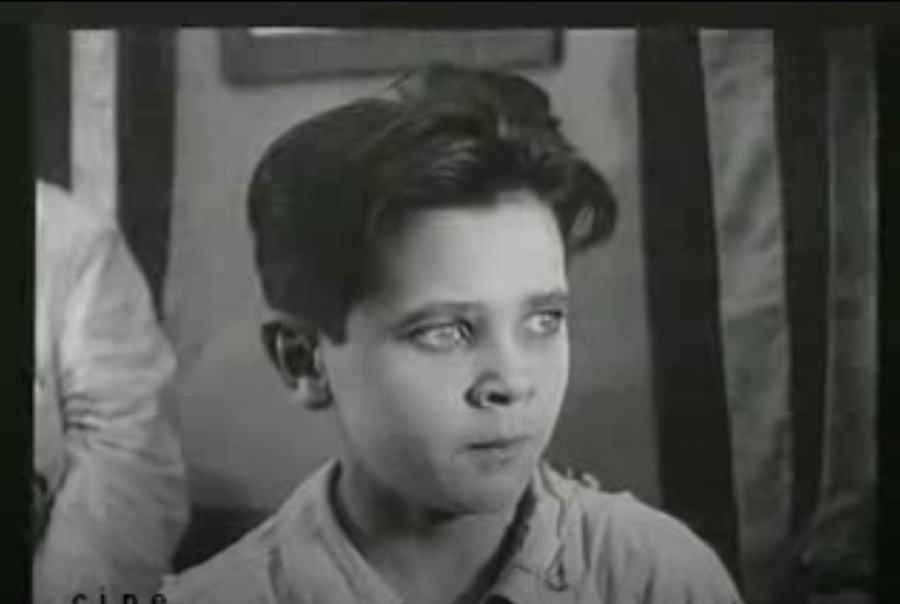
Historically, the picture premiered at New York’s Lyric Theatre on 13 March 1915, wedged between travelogues of the Yukon and a one-reel Keystone slapstick. Trade papers praised its “wholesome sentiment,” while the Moving Picture World lauded Irwin’s “luminous pathos.” Unfortunately, distribution was curtailed by World Film’s merger mania; prints were recycled for silver recovery, and for decades the title survived only in a truncated 9.5mm Pathescope destined for nursery projectors. The recent 4K restoration—wrought from a Dutch print and two American reels—reinstates fully four minutes of the separation sequence, including a harrowing close-up of the bulldog guardian tightening a leather strap around the youngest boy’s wrist.
Contemporary resonance? Consider the 2022 U.S. spike in foster-care entries due to opioid evictions, or the 2023 U.K. reports of siblings separated by postcode lotteries. Against that backdrop, Young Mother Hubbard feels less like antique melodrama and more like prophecy wearing petticoats. The film whispers that family is not merely blood or bureaucratic category, but a renewable resource—something that can be chosen, rescinded, and re-chosen under the flicker of moonlight on a stranger’s veranda.
As for flaws, the climactic reversal hinges on Banning’s sudden paternal urge, sketched with scant psychological foreshadowing beyond a single twitch. One could argue the film cops out, substituting charity for systemic reform. Yet that same ellipsis invites the viewer to supply what cannot be said: the long nights ahead when guilt becomes pedagogy, when Mona must learn to forgive not just the step-father but the social scaffolding that let him abdicate.
Comparative cinephiles will detect echoes of On Dangerous Ground’s urban-rural dialectic, or the moral vertigo that snakes through The Invisible Enemy. Yet Peck’s scenario is more pastoral, less noir. Its darkness is the darkness of haylofts at midnight, not alleyways at dawn. Its redemption is not the pistol-pounding catharsis of Der Thug. Im Dienste der Todesgöttin, but the soft, almost embarrassed reconciliation of a man who discovers that land ownership means little until it is seeded with the laughter of children who no longer flinch at footsteps.
Should you seek it out? Absolutely, preferably on a big screen where the grain can breathe. Bring handkerchiefs, yes, but also bring questions: about the foster pipelines still slicing families along economic fault lines, about the stories we tell when we want to believe that goodwill is enough. Young Mother Hubbard is not merely a curio rescued from nitrate oblivion; it is a mirror held up to every society that still pretends children are private property when convenient and public burden when not.
In the final shot, Mona turns toward camera, her siblings clustered like grapes around her skirt, Banning’s hand resting on her shoulder with the tentative gravity of a man touching fragile china. For a split second Irwin looks straight into the lens—not in fourth-wall rupture, but in invitation. She is asking us, across a century of dust and sprocket holes, whether we will keep the promise that cinema makes every time a projector starts: that by witnessing, we might somehow mend.
IMDb —
1920
Community
Log in to comment.