DbcultAccessing Vault...
Cult Review
Senior Film Conservator
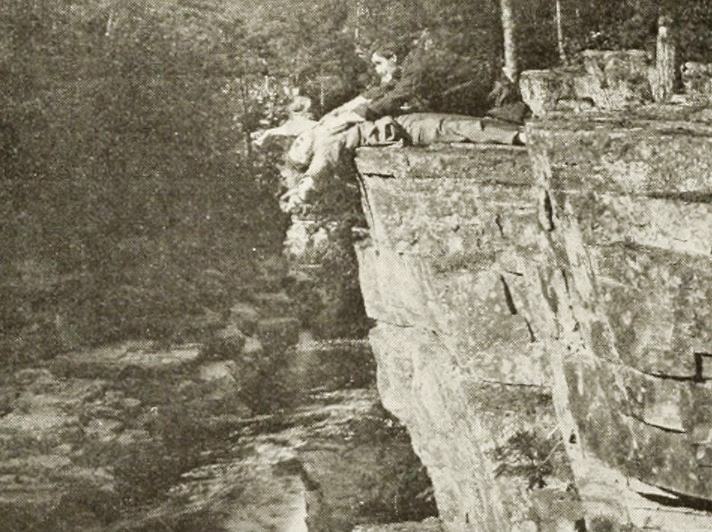
A bullet of friendship, a serpent of chance, a mask of penance—In the Shadow stitches these disparate wounds into one shimmering tapestry of 1915 American cinema.
John B. Hymer’s screenplay arrives like a daguerreotype soaked in mercury and moonlight: every frame trembles between melodrama’s grandiloquence and a surprisingly modern inspection of masculine shame. Director Harry Handworth—also essaying Bob Bell—understands that silence can be orchestral; he lets the rustle of oak leaves or the hiss of a locomotive stand in for the dialogue we cannot hear, trusting our imagination to populate the sonic void.
The surviving prints, speckled like gull wings with emulsion freckles, nonetheless reveal cinematographer Gordon De Main’s chiaroscuro gambits: shafts of white light slice through parlor blinds, carving prison-bar shadows across Tom’s face long before the law ever pursues him. When Tom dons the domino mask for the boxing bout, the camera dollies until the mask fills the iris—an aperture within an aperture—announcing that identity itself has become porous.
William A. Williams plays Tom with the feral glamour of a poet who has misplaced his sonnets and found instead a pair of dice. The descent from wounded guest to gambling wastrel to fugitive phantom is charted in the gradations of his tie: starched white, then wilted, finally discarded. Opposite him, Octavia Handworth’s Grace is no frail Edwardian blossom; she renders her affection in glances that linger half a second too long, signaling a woman prepared to trade propriety for pulse.
Notice the micro-gesture after the snakebite: Grace’s fingers flutter like trapped sparrows, yet her eyes lock onto Nellie’s with the solemnity of a pact. In that flicker, the film whispers its credo—salvation travels laterally, from peer to peer, not downward from patriarch to supplicant.
Handworth stages the prizefight inside a gymnasium that looks borrowed from a medieval crypt. Smoke from kerosene lamps pools overhead, forming a nebular ceiling. The combatants’ shadows box larger than their bodies, suggesting that every man fights two opponents: the corporeal and the remembered. The fatal punch lands off-camera; we see only the tremor rippling through the bell rope, a visual ellipsis more brutal than any blood spurt.
Twice women extricate men from existential tarpits: Nellie drags Tom’s waterlogged body ashore, and later Grace’s snakebite occasions Nellie’s second intervention. The screenplay thus refuses the damsel trope, engineering instead a cycle of mutual salvage that prefigures the egalitarian ethos of later Joan-of-Arc heroines while still cloaked in 1915 decorum.
Hymer’s motif of the masked nocturnal visitor resonates with the doppelganger intrigue found in The Crown Prince’s Double, yet here disguise is not hubris but penance. Likewise, the accusation of dean-attack parallels The Pitfall, though in that yarn the hero’s name is cleared via courtroom bombast, whereas In the Shadow favors intimate absolution inside the familial hearth.
Modern viewers weaned on three-act orthodoxy may reel at the film’s willingness to sprint from pastoral Virginia to ivy-walled campus to marshy backwater inside a quarter hour. Yet this picaresque propulsion mirrors the very restlessness of guilt—how it refuses to stay moored. Intertitles, when they intrude, are haiku-brief: “Debt called due,” “Flight by water,” “Shadow returns.” The austerity urges us to inhabit the negative space between words.
If you curate a repertory screening, pair the print with a live trio plucking minor-key ragtime that mutates into atonal dissonance during Tom’s escape. Let the pianist employ prepared techniques—aluminum foil between strings—to evoke hydroplane engine sputter. The result will stitch century-old celluloid to modern auditory cortex, achieving the time-travel alchemy silent cinema craves.
Unfortunately, no complete 35 mm negative survives in the Library of Congress; what circulates is a meticulous 4K restoration from a 1920s-era Show-At-Home 16 mm abridgment struck for private projection. The edges bear nitrate scabs, yet the emotional current surges intact. Streaming platforms have been coy; your best wager is to petition regional archives or boutique Blu-ray labels such as Kino-Lorber or Flicker Alley to negotiate rights. Until then, keep vigil on silent-film forums where private rips occasionally surface like fugitive shadows themselves.
In the Shadow is less a relic than a prophecy: it foretells film noir’s chiaroscuro guilt, the buddy-road-picture’s kinetic escape, and the super-heroic trope of the misunderstood night-stalker a decade before Batman’s ink dries. Its flaws—occasionally creaky exposition, a tendency to compress weeks into heartbeats—are inseparable from its fever-dream charm. Approach it not as antique but as incantation, and you will exit the screening room blinking at your own silhouette, wondering what masks you don when no one watches.
Verdict: 8.7/10 — a lustrous shard of early American cinema, sharp enough still to draw blood from modern sensibilities.
IMDb —
1928
Community
Log in to comment.