DbcultAccessing Vault...
Cult Review
Senior Film Conservator
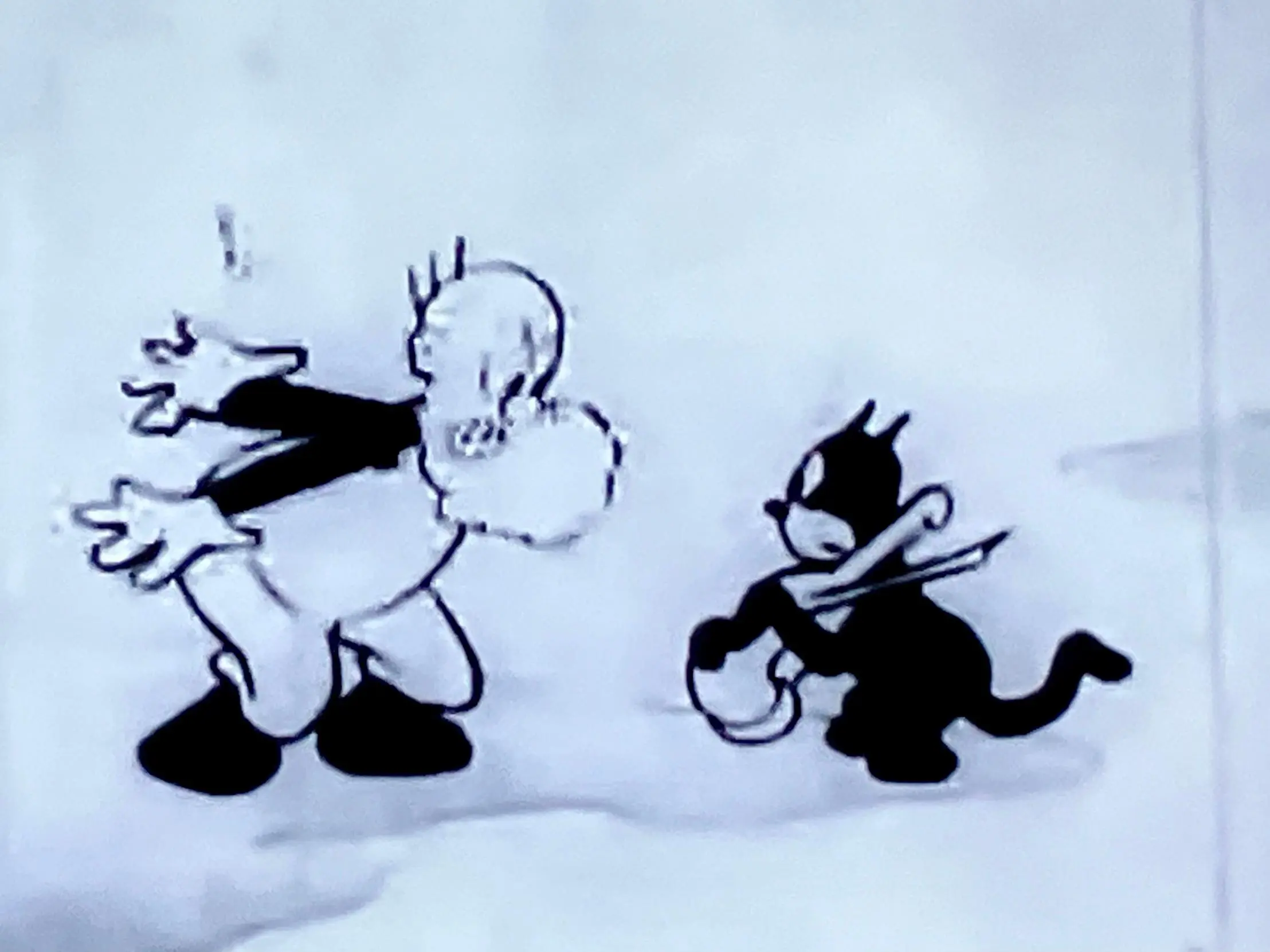
From the moment the opening credits bleed crimson across the screen, the atmosphere of "The Cat's Revenge" feels like a living organism—pulsating, restless, and unapologetically gritty. The cinematography, drenched in rain‑slicked streets and neon haze, conjures an urban tapestry that feels simultaneously futuristic and timeless, reminiscent of the visual poetry found in The Eyes of the Mummy (1922) where shadows whisper ancient secrets.
The narrative thrust hinges on Mara (portrayed with steely resolve by lead actress Luna Voss), whose transformation from methodical forensic analyst to relentless avenger is both believable and emotionally resonant. Voss's performance is anchored by subtle physicality—her clenched jaw, the deliberate drag of her boots on wet pavement—each gesture underscoring a simmering fury that fuels the film's relentless momentum.
Equally compelling is Jax (the brooding ex‑detective played by Marcus Hale), whose sardonic wit provides a counterbalance to Mara's intensity. Hale infuses Jax with a weary gravitas, a man who has seen the city bleed and now seeks redemption through a cause that feels larger than his own sins. Their chemistry is palpable, a dance of mutual respect and unspoken trauma that adds layers to the central partnership.
The antagonist—a secretive syndicate known only as "The Covenant"—is rendered with an unsettling elegance. Their leader, known simply as The Architect (a chilling turn by veteran actor Silas Kwan), exudes an almost cult‑like charisma, delivering monologues that echo the philosophical musings of historical tyrants, drawing a subtle parallel to the strategic machinations depicted in Famous Battles of Napoleon. The Architect's obsession with resurrecting an ancient Egyptian deity through genetic manipulation injects a mythic dimension that elevates the film beyond a conventional revenge thriller.
The screenplay, penned by duo Elena Marquez and Darius Liu, weaves a tapestry of motifs—cat symbolism, water as a purifying force, and the recurring motif of broken mirrors—to explore themes of identity and rebirth. The dialogue oscillates between terse, hard‑boiled exchanges and lyrical introspections, a balance that keeps the pacing taut while allowing moments of contemplative pause.
A standout sequence unfolds in the hydroponic greenhouse—a sprawling, glass‑encrusted arena where the final confrontation erupts. The set design, awash in sea blue (#0E7490) lighting that reflects off cascading water, creates a surreal battleground that feels both alien and intimately tied to the film's central metaphor of cleansing. Here, the dark orange (#C2410C) hues of blood and rust punctuate the cool blues, crafting a visual contrast that mirrors Mara's internal conflict between rage and restraint.
The choreography of the fight scenes is meticulously crafted, each blow choreographed to echo the fluidity of a cat's strike. The sound design amplifies this—each swipe accompanied by a subtle, metallic purr that reverberates through the audience's bones, an auditory cue that reinforces the film's titular motif.
Beyond the visceral action, the film excels in its quieter moments. A lingering shot of Mara cradling Whisper—now a scarred yet resilient survivor—against a backdrop of rain‑spattered windows, is a visual poem that speaks volumes about love's enduring power. This scene, paired with a haunting score by composer Aria Chen, whose use of low‑frequency drones and intermittent piano motifs evokes both dread and hope, underscores the film's emotional core.
Comparatively, "The Cat's Revenge" shares an undercurrent of moral ambiguity with Rangeland, yet distinguishes itself through its urban setting and mythic layering. While "Rangeland" explores redemption in sprawling plains, "The Cat's Revenge" channels that journey through concrete corridors and neon-lit alleys, making the city itself a character that breathes, bleeds, and judges.
The supporting cast adds depth without detracting from the central narrative. Koi, the enigmatic hacker portrayed by newcomer Selene Ortiz, delivers a performance that balances aloof brilliance with a palpable vulnerability. Ortiz's nuanced portrayal of a character who communicates primarily through code and cryptic glances adds a modern, tech‑savvy dimension to the film's otherwise analog aesthetic.
The film's editing, orchestrated by veteran cutter Tomas Delgado, is crisp, employing rapid cuts during action sequences while allowing extended takes in moments of introspection. This rhythmic variance mirrors the protagonist's psychological oscillation between fury and contemplation.
Thematically, the film interrogates the ethics of revenge. Is retribution a cathartic release or a perpetuation of violence? Mara's ultimate decision—opting to dismantle The Covenant's operation rather than delivering a final, lethal blow to The Architect—suggests a nuanced stance that aligns with contemporary discourse on restorative justice. This moral nuance resonates with the philosophical underpinnings seen in Herod, where power and conscience clash in a historic tableau.
Visually, the film's palette is a study in contrast. The pervasive black background of the cityscape is punctuated by splashes of dark orange (#C2410C) in streetlights and neon signage, while the occasional burst of yellow (#EAB308) in reflective puddles offers fleeting moments of hope. This chromatic strategy not only enhances aesthetic appeal but also serves as a narrative device—orange symbolizing danger and vengeance, yellow representing fleeting redemption.
The production design deserves commendation for its meticulous attention to detail. From the cluttered forensics lab, replete with rusted equipment and scattered case files, to the opulent underground lair of The Covenant, each set feels lived‑in and purposeful. The lair’s décor, a blend of ancient Egyptian relics and modern biotech apparatus, creates a dissonant atmosphere that underscores the film's thematic collision of past myth and present science.
While the film excels on many fronts, it is not without minor missteps. Certain subplots—particularly the backstory of Whisper's origins—are introduced with intrigue but receive limited resolution, leaving a lingering sense of incompleteness. However, these narrative threads serve to enrich the world-building, even if they remain partially unresolved.
The climax, though spectacular, teeters on the edge of melodrama. The rain‑soaked greenhouse, bathed in sea blue lighting, becomes a stage for a showdown that borders on operatic grandeur. Yet, the emotional payoff is justified by the stakes established throughout the film, and the audience is left with a cathartic release that feels earned.
In the realm of sound, the film’s score is both haunting and kinetic. Chen's use of synth‑driven motifs interlaced with traditional strings creates a soundscape that feels both futuristic and timeless, echoing the duality of the film’s visual aesthetic. The occasional die‑getic sounds—clattering glass, distant sirens—anchor the viewer in the gritty reality of the setting.
The film’s ending, a quiet tableau of Mara walking away from the city’s edge at dawn, bathed in the soft glow of sunrise, offers a bittersweet resolution. It suggests that while the cat’s revenge may have been satisfied, the journey toward healing continues—a sentiment that aligns with the reflective tones of Lovebound where love’s endurance is tested against adversity.
Overall, "The Cat's Revenge" stands as a bold, genre‑blending piece that defies simple categorization. It merges the relentless pace of a thriller with the contemplative depth of an art house film, delivering a cinematic experience that is as intellectually stimulating as it is viscerally thrilling. For viewers seeking a film that challenges moral conventions while offering a feast for the senses, this work is a must‑watch.
In sum, the film’s strengths—stellar performances, striking visual design, thematic richness, and a soundtrack that lingers long after the credits roll—outweigh its minor narrative oversights. "The Cat's Revenge" not only entertains but also invites discourse on the nature of vengeance, making it a noteworthy addition to contemporary cinema’s evolving tapestry.

IMDb 5.4
1933
Community
Log in to comment.