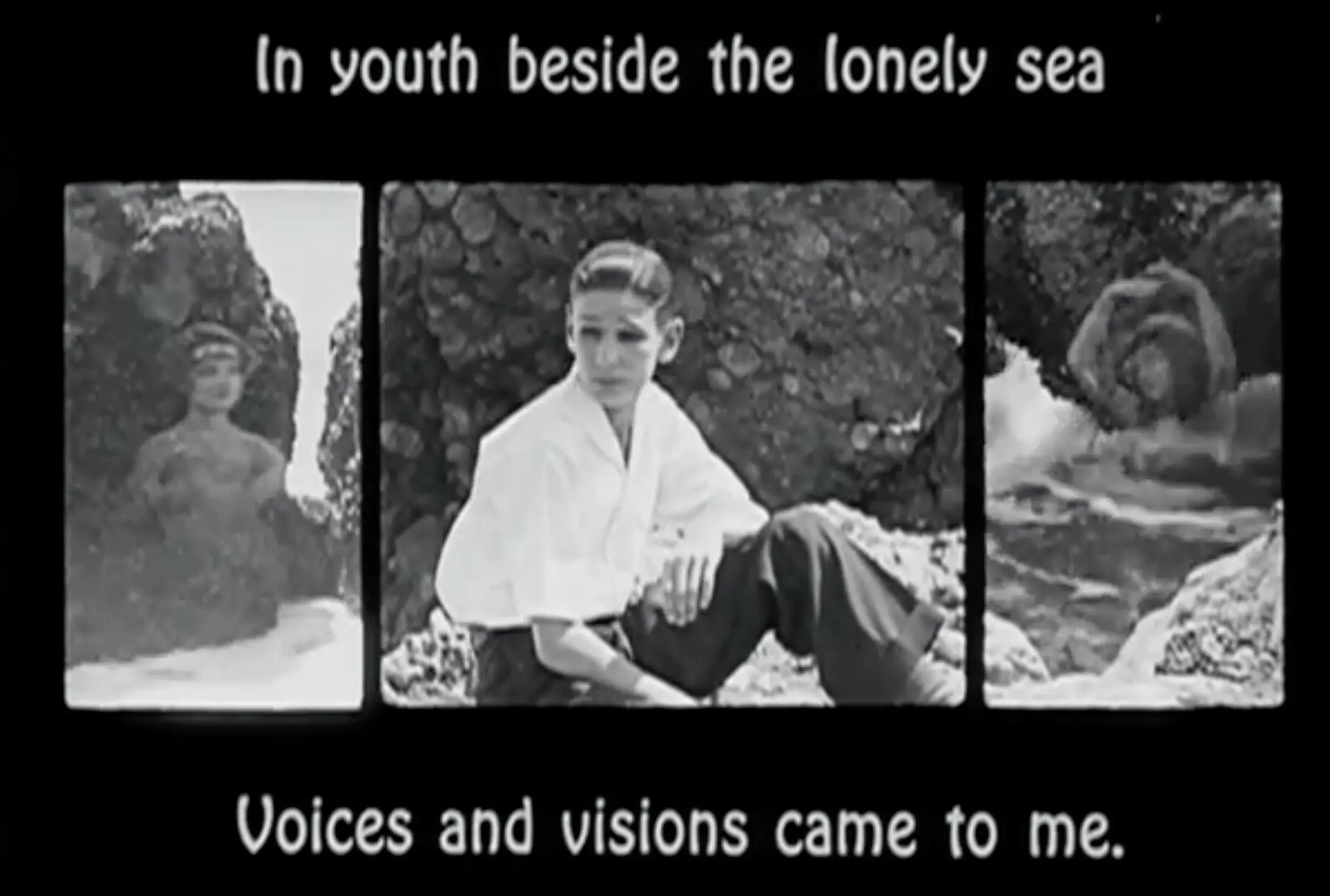
In Youth, Beside the Lonely Sea is a cinematic exploration of the human condition, distilled through the poetic lens of Thomas Bailey Aldrich’s verses. This film, a triptych of visions, captures the essence of a life’s journey, from the innocent and hopeful days of youth to the more somber reflections of old age. The narrative unfolds in three distinct panels, each representing a crucial stage of life, yet interconnected by the thematic threads of temptation, loss, and the enduring power of memory.
In the central panel, the viewer is transported to a seashore where a young man stands, surrounded by the beckoning allure of mermaids and the whimsical presence of fairies. This scene, rich with symbolism, captures the purity and wonder of youth. The young man’s soliloquy, interwoven with Aldrich’s words, reflects on the fleeting nature of innocence and the eternal pull of the unknown. The fairies, in their ethereal forms, represent the protective forces that guide and nurture the young soul, ensuring that it remains untainted by the world’s harsh realities.
The second panel shifts to a city street, where the young man, now grown, walks amidst the bustling crowds and the myriad temptations that adulthood brings. This scene is a stark contrast to the serene beauty of the seashore. Here, the atmosphere is charged with the energy of the city, where every corner seems to beckon with promise or peril. The man’s journey is one of self-discovery, where he grapples with the pull of the old memories and the allure of new experiences. The fairies, in this panel, are more subdued, their presence a gentle reminder of the past, but no longer the protectors they once were.
The final panel presents the man as an old, weary figure, sitting alone in a bed. Here, the memories of his youth are a distant echo, and the present is a bleak landscape of despair and fading memories. The bottle on the nightstand symbolizes the futility of his struggle, as he clings to what little remains of his youth. The fairies, in this last scene, are almost forgotten, their visitations mere fleeting apparitions. The words of Aldrich’s poem, appearing above and below the triptych, serve as a poignant reminder of the journey that has led to this moment. They encapsulate the bittersweet nature of life, where the past is both a guide and a burden.
Aldrich’s poem, with its rich imagery and philosophical musings, serves as the backbone of this film. The visual poetry of the triptych, with its meticulous compositions and striking contrasts, amplifies the emotional resonance of the text. The young man’s journey is a metaphor for the human experience, where the innocence of youth is inevitably tested by the complexities of adulthood. The film’s use of memory and nostalgia adds depth, making the viewer reflect on their own lives and the memories that define them.
The performances, particularly of Winston Miller, are nuanced and evocative. Miller’s portrayal of the young man, the grown man, and the old man is a testament to his range and understanding of the character’s emotional arc. His ability to convey the weight of each stage of life, from the joy of youth to the despair of old age, is both powerful and moving. The supporting cast, with their ethereal and almost otherworldly presence, adds to the film’s dreamlike quality, enhancing the poetic nature of the storytelling.
In comparison to its contemporaries, In Youth, Beside the Lonely Sea stands out for its innovative approach to visual storytelling. Compared to films like Algeria or The Common Law, this triptych offers a more introspective and philosophical exploration of life. It is a film that demands a deeper engagement from the viewer, one that requires not just passive observation but active reflection on the themes presented. The inclusion of Aldrich’s poetry not only enriches the narrative but also provides a lyrical quality that elevates the film beyond mere entertainment.
Aldrich’s verse, with its poetic cadence and deep philosophical undercurrents, is central to the film’s emotional and intellectual appeal. The poem’s themes of temptation, loss, and the enduring power of memory resonate throughout the triptych, providing a thematic coherence that ties the disparate scenes together. The film’s use of memory and nostalgia is particularly effective, as it allows the viewer to connect with the character’s journey on an emotional level.
In conclusion, In Youth, Beside the Lonely Sea is a deeply moving and thought-provoking film that transcends the boundaries of traditional narrative. Its innovative use of the triptych format, combined with Aldrich’s poetic verses, creates a rich and layered experience for the viewer. It is a film that invites repeated viewings, each time revealing new depths and nuances. If you are a fan of films that delve into the human experience with both poetic and emotional depth, you will undoubtedly find In Youth, Beside the Lonely Sea a rewarding and unforgettable journey.