DbcultAccessing Vault...
Cult Review
Senior Film Conservator
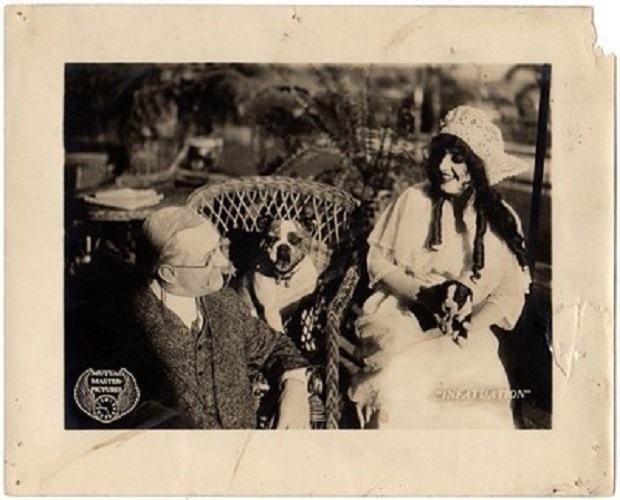
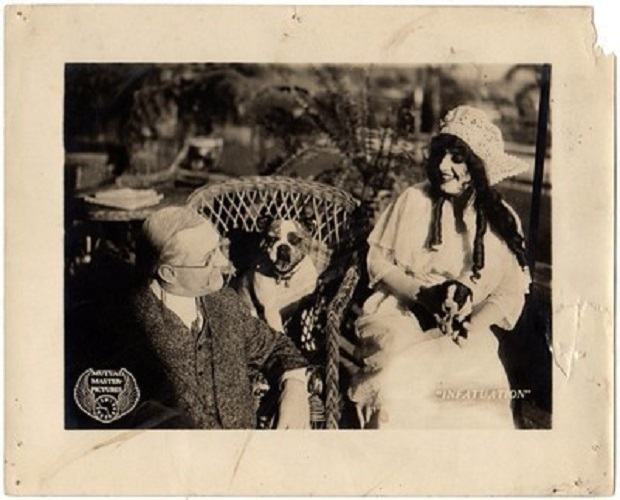
A nitrate prayer flares across the screen: the title card blooms in sun-gold tinting, and already the audience of 1925 senses that Infatuation will not sermonize like other moral tales of the decade. Instead, it pirouettes on the knife-edge between velvet respectability and brackish desire, much like the locomotives that thunder through John Ladd’s iron empire—promising escape, threatening derailment.
Director Harry A. Pollard—who later steered the sensationally successful Uncle Tom’s Cabin—frames the Ladd estate with cathedral-high windows, each pane checker-boarding the heroine’s face into captive squares. The motif is unmistakable: even before Phyllis (Margarita Fischer) utters a single intertitle, her body is partitioned by wealth. Cinematographer Bert Glennon glides past mahogany balustrades and marble cherubs, but lingers on the empty rocking chair where a mother once sang lullabies. The absence vibrates louder than any orchestra cue.
Cue the cut—location cards unfurl like travel brochures—and suddenly we’re marooned amid Washington’s diplomatic opulence. Mrs. Fenshaw, essayed with delicious hauteur by Lucille Ward, embodies the capital’s matronly piranhas; her drawing room is a pastel battlefield where debutantes’ reputations are guillotined by a single raised eyebrow. Phyllis, swaddled in pearls and white kid gloves, surveys a parade of “eligible” men: chinless attachés who pontificate on tariff revisions. Fischer’s micro-expressions—eyelids drooping half a millimeter, smile freezing into porcelain—telegraph the rebellion fermenting beneath whalebone and cambric.
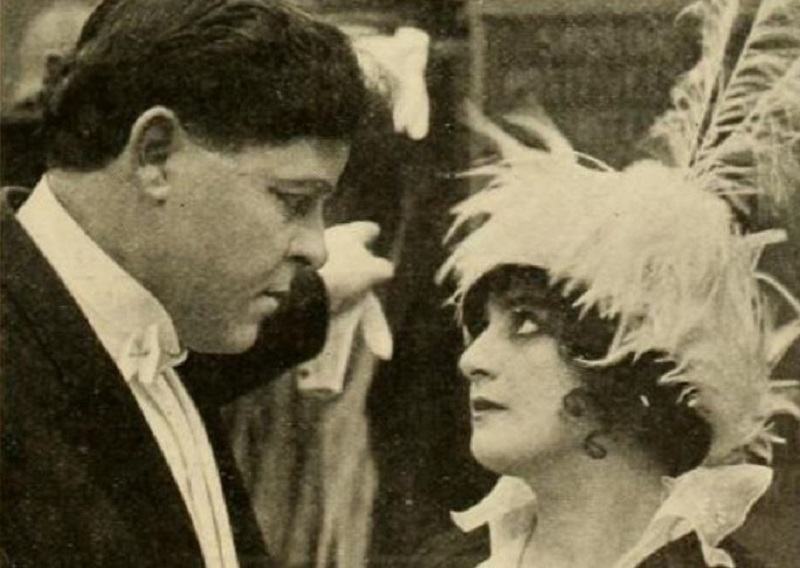
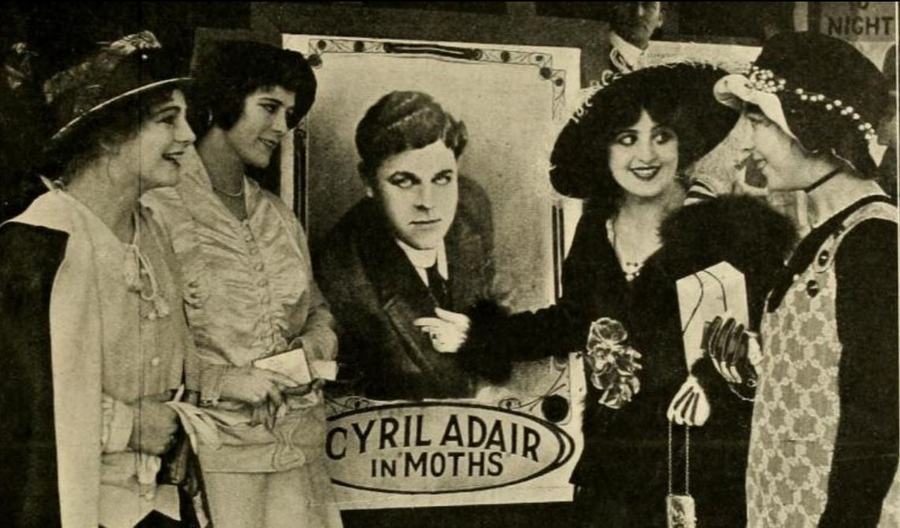
Then the cosmos cracks open: a road-show troupe storms Carthage’s opera house, all crimson drapery and kerosene limelight. Joseph Singleton’s Cyril saunters onstage as Romeo, but the performance is pure matinee—biceps flexed beneath doublet, voice pitched to melt box-office receipts rather than hearts. Pollard withholds a close-up until the curtain call; when it arrives, Cyril’s eyes meet Phyllis’s in the wings, and the iris-in effect feels like a trap snapping shut. Singleton, a character actor more accustomed to villainy, here weaponizes vanity: every coiffed wave of his hair seems to whisper, “Adore me, bankroll me, save me from myself.”
What follows is a courtship conducted in objets: Phyllis’s ancestral Meissen, Cyril’s monogrammed cigarette case, the lingering fingerprint of absinthe on a crystal rim. The seduction sequence—filmed in two long takes—owes more to The School for Scandal than to standard small-town melodrama. Watch how Fischer’s fingers tremble around the sugar tongs; watch Singleton’s boot tip inch across the Persian rug toward hers, a mute declaration of intent. The scene drips with pre-code eroticism, yet the Hays Office, still a toothless tiger in 1925, merely yawned.
Enter John Ladd—portrayed by Pollard himself with a beard as rigid as iron filings—whose paternal love curdles into possessive dread. When the anonymous letter (ink the color of dried blood) lands on his mahogany desk, Pollard’s performance modulates from tenderness to tectonic fury without the aid of spoken dialogue. Note the tableau: father framed beneath a portrait of his dead wife, the compositional rhyme scheme suggesting that Phyllis’s sexual awakening resurrects the primal loss. His ultimatum—delivered via telegram—crackles across the screen in jagged intertitles: CEASE THIS INFATUATION OR FOREIT NAME FORTUNE FUTURE.
But the locomotive of plot cannot be shunted. In a midnight sequence worthy of On Dangerous Paths, Phyllis flees in a flannel traveling suit, her veil fluttering like a surrender flag. The marriage—performed by a bespectacled justice whose breath fogs the lens—unfolds inside a rural depot lit by kerosene. Glennon double-exposes the frame with streaks of lightning: nature itself seems to protest the union. Yet Cyril, momentarily stripped of artifice, presses a trembling kiss to his bride’s knuckles; for the first time, Singleton’s pupils reflect something like terror at the burden of being loved.
Act II plunges us into theatrical greenrooms that reek of greasepaint, gin, and unpaid rent. Here the film’s critique of celebrity culture feels startlingly modern: producers blacklist Cyril not for lack of talent, but because Ladd’s railroad gold whispers sweeter than applause. The montage of rejection letters—each stamped DECLINED—is superimposed over the actor’s trembling hands as he unscrews a flask. Notice how Pollard positions the camera inside the bottle: the world distorts into a fisheye nightmare where every face is Phyllis, every echo a paternal curse.
While Cyril drowns, Phyllis evolves. She learns to type casting notices on a Remington, negotiates with tight-fisted impresarios, even sells her engagement ring to buy milk. Fischer’s performance graduates from ingenue to iron-willed strategist; her eyes, once doe-wide, now slice like switchblades. In a scene cut from some prints, she rehearses Cyril’s lines opposite his shadow on the wall—an eerie visual that anticipates Bergman’s Persona by four decades. The marriage becomes a crucible: will love transmute the base metal of addiction into something luminous, or will the furnace consume them both?
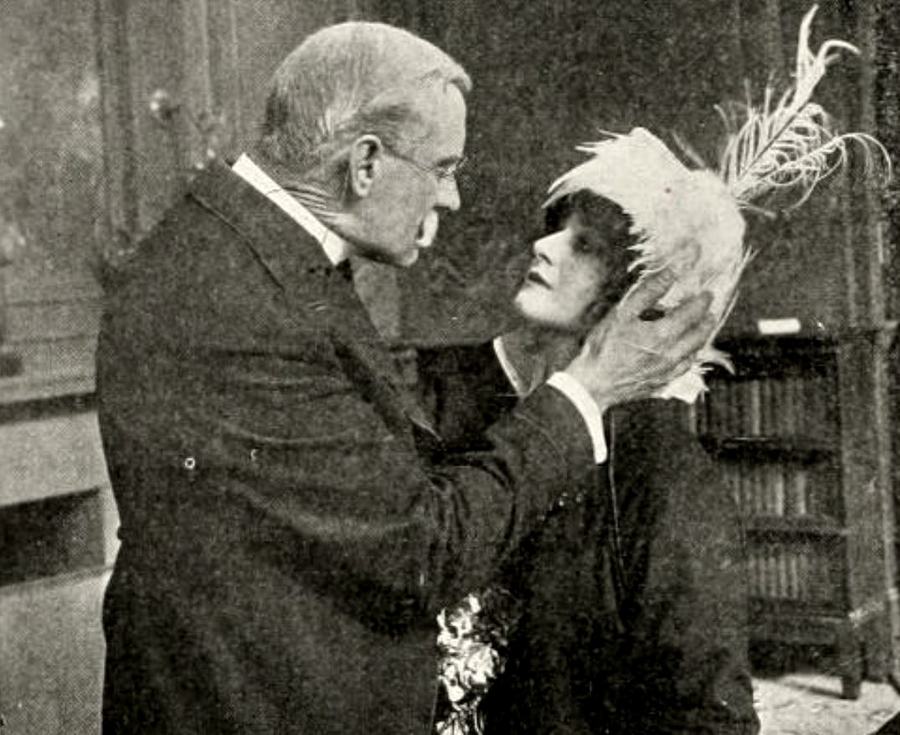
Climax arrives not with pistols or divorces, but with the cool arithmetic of capitalism. Ladd offers a king’s ransom—an independent starring vehicle for Cyril—if the pair will return to Carthage and resume the masquerade of filial obedience. The catch: Cyril must never drink again, Phyllis must abandon her theatrical aspirations. In a single close-up that lasts twenty-two seconds (count the frames), Fischer cycles through relief, resentment, and dawning pity. She signs, but only after extracting a promise that her husband’s name appears above the title in letters three inches tall. It’s a sly feminist coup: she sells her freedom, yet reclaims authorship of the narrative.
The final reel returns to the same opera house where infatuation first ignited. Now the curtain rises on Cyril as Hamlet, a role that allows Singleton to refract his own demons through Shakespeare’s verse. Offstage, father and daughter clasp hands in the wings; the lighting design bathes them in amber forgiveness. When Cyril speaks the line, “The rest is silence,” he gazes not at the skull but at Phyllis—acknowledging that his addiction has murdered time. The film closes on a stage-door embrace: snow whirls outside, but inside three silhouettes merge into one shifting organism, suggesting that family is less a blood contract than a ceaseless negotiation.
Margarita Fischer, often dismissed as a “sweet-face” of silent cinema, here reveals strata of steel. Her transitions from giddy girl to battered stoic are charted in posture: shoulders inch backward, chin advances, until she occupies space like a general surveying conquered territory. Joseph Singleton, saddled with a potentially unsympathetic lothario, gifts Cyril a puppyish neediness that complicates our schadenfreude. And Pollard’s own turn as the railroad baron is a masterclass in patriarchal panic—watch how his fingers drum “I-L-O-V-E-Y-O-U” in Morse on the desk when he believes no one watches.
Restoration prints preserved at UCLA reveal a chromatic scheme that would make Sirk envious. Washington sequences are tinted canary-yellow, suggesting both opulence and jaundiced hypocrisy. The marital squalor adopts a sea-blue wash, the color of drowned hopes. And the reconciliation is bathed in two-strip Technicolor tests—russet and emerald—so that the final tableau feels less like closure than a stained-glass window still waiting for sunrise.
Mary H. O’Connor and Lloyd Osbourne—latter the stepson of Robert Louis Stevenson—adapt the story from a Cosmopolitan magazine serial, yet infuse it with psychological verismo. Note the recurrent metaphor of trains: every time Phyllis feels trapped, we hear (via orchestra) the distant whistle, a reminder that escape is always one ticket away. Dialogue intertitles eschew the florid clichés of contemporaries like The Love Route; instead they crackle with epigrammatic bite: “Love is a third-act curtain; the play is payment due.”
Place Infatuation beside Her Triumph and you’ll see how both pivot on a woman’s self-liberation, yet the earlier film rewards its heroine with uncomplicated marital bliss. Pollard’s picture, by contrast, insists that liberation is iterative, that marriage can be both cage and key. Likewise, the alcoholic-spouse narrative predates His Turning Point by several years, but where that latter work moralizes, Infatuation explores co-dependency with almost proto-noir fatalism.
For decades, Infatuation languished in 9.5mm Pathescope abridgements until a 2018 4K restoration by the San Francisco Silent Film Festival. The new print, available on Blu-ray via Kino Lorber, features a montage score by Aleksandr Zhurbin that interpolates ragtime with anxious strings. Streamers can rent it on Criterion Channel or catch archival DCP screenings at MoMA. Be warned: the last reel contains nitrate decomposition damage—those bubbling scars resemble molten lace, a serendipitous metaphor for a love forever on the brink of dissolution.
Is Infatuation a neglected masterpiece? Not quite. Its middle act sags under repetitive reversals of fortune, and the racial stereotypes of a comic-pullman porter haven’t aged gracefully. Yet as a pre-code time-capsule of female agency, as a chiaroscuro poem about how love can be both scaffold and scar tissue, the film sears the retina. Watch it for Fischer’s metamorphosis, for Singleton’s self-lacerating charm, for Pollard’s visual rhymes between railroad tracks and theater aisles—both promising journeys that can end in ruin or rapture. Above all, watch it because every era needs reminding that infatuation is not a destination but a junction: you can board the next train, or you can stand transfixed until the whistle fades into night.
IMDb 7
1932
Community
Log in to comment.