DbcultAccessing Vault...
Cult Review
Senior Film Conservator
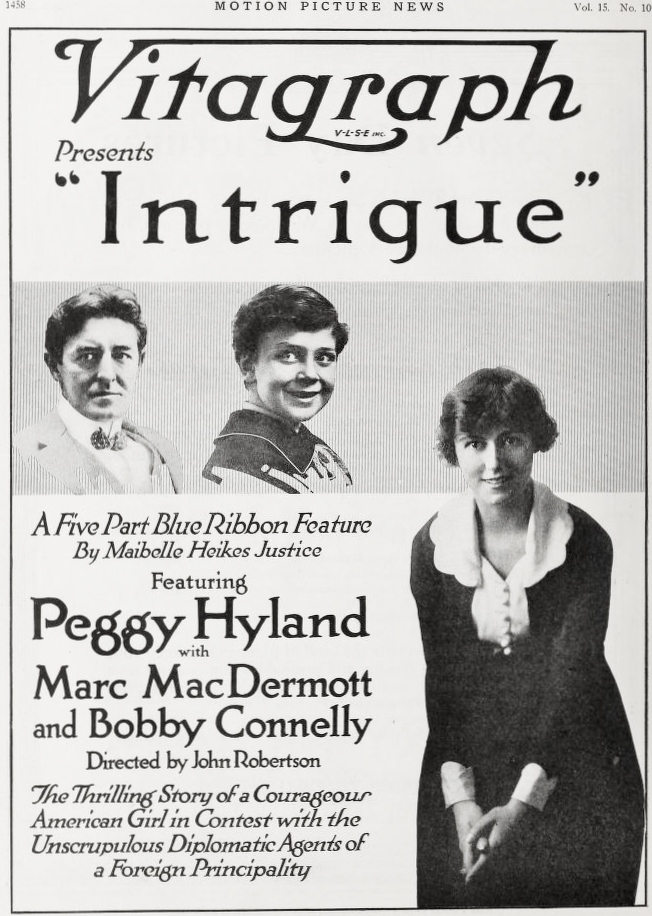
Ah, the silent era! A time of unbridled melodrama, grand gestures, and narratives painted with broad, sweeping strokes across the silver screen. In this vibrant tapestry of early cinema, films like 1917's Intrigue stand as poignant reminders of storytelling at its most elemental, yet utterly captivating. Directed with a keen eye for dramatic tension and featuring the luminous Peggy Hyland, this picture plunges audiences into a world where chance encounters dictate destiny and the fate of nations can hinge on the courage of an ordinary woman. It’s a compelling journey through a fictional European duchy, brimming with political machinations, innocent vulnerability, and the enduring power of selfless love.
Our narrative commences with Peggy Dare, played with an exquisite blend of naiveté and burgeoning fortitude by Peggy Hyland, embarking on what she anticipates will be a joyous reunion with her beloved, Richard Carr. Her destination: the capital of the Grand Duchy of Bonaluria. But fate, as it often does in these cinematic escapades, has a far more intricate script in mind. Mid-journey, the placid rhythm of her train compartment is violently disrupted. A small boy, no older than eight or nine, is literally hurled through the doorway, landing at her feet. This is Manouche, portrayed with heart-wrenching innocence by Bobby Connelly, a child whose very existence is a secret, a political hot potato in a volatile landscape. Peggy, a woman of inherent compassion, is immediately drawn to the boy. Her maternal instincts ignite, and she becomes his protector, shielding him from unseen forces that clearly wish him harm. This unexpected guardianship sets the stage for a series of events that will test her mettle and redefine her understanding of loyalty and sacrifice. The initial attempt on Manouche’s life, swiftly foiled by Peggy, serves as a stark premonition of the grave dangers lurking beneath the surface of Bonaluria’s seemingly tranquil facade.
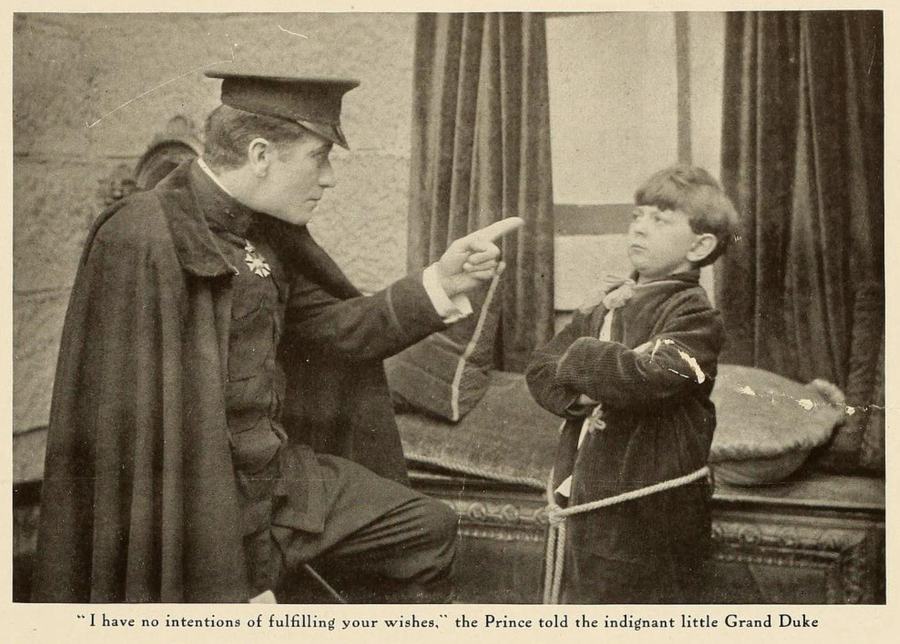
Upon their arrival in the ducal capital, the true weight of Manouche’s identity is revealed: he is, in fact, the rightful Grand Duke, a fact that both elevates and imperils him. This revelation, delivered by a stunned Richard Carr (Marc McDermott), casts Peggy’s earlier acts of protection in a new, more profound light. No longer just a kind stranger, she has inadvertently become entangled in a high-stakes game of succession and power. The immediate consequence is Manouche’s return to the royal court, a necessary but heartbreaking separation from Peggy, who is relegated to the more domestic sphere of living with Richard’s mother. The film deftly uses this separation to heighten the emotional stakes, allowing the audience to feel the wrench of the bond forged between Peggy and the young Duke.
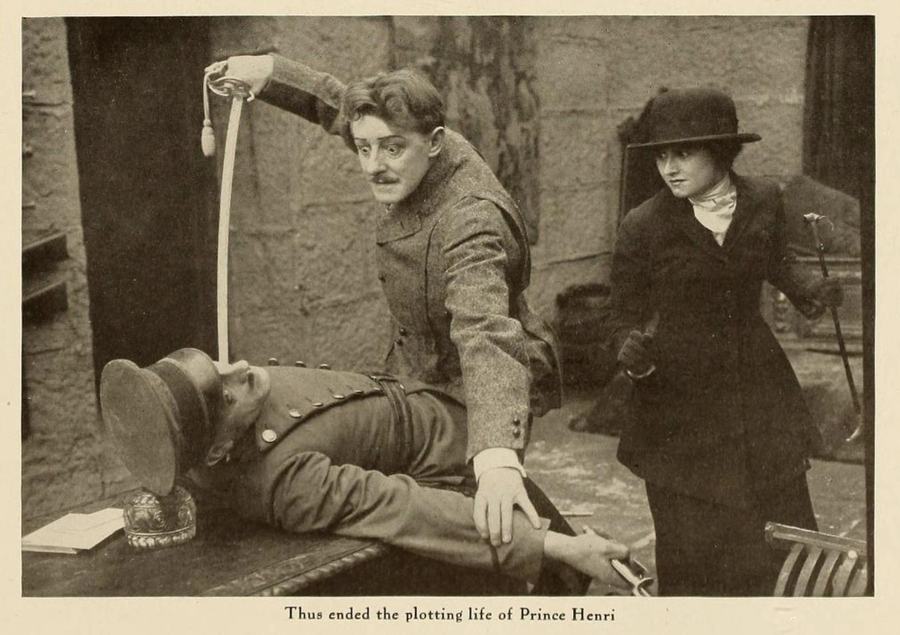
The true antagonist emerges in the form of Prince Henri, a character dripping with malevolent charm and played with chilling conviction by Templar Saxe. Henri is not merely a power-hungry schemer; he is also consumed by an unsettling infatuation with Peggy. His desire for the throne is inextricably linked with his twisted yearning for her, creating a dangerous psychological dynamic. He abducts the young Grand Duke, holding him captive and leveraging the child's life as a cruel bargaining chip for Peggy’s hand. This is the ultimate test of Peggy’s character. Faced with an impossible choice – her personal happiness or the life of an innocent child and the stability of a nation – she chooses the path of self-sacrifice. She agrees to accompany Henri to his secluded castle, a decision born of profound courage and desperate love for Manouche, but one that is tragically misinterpreted by Richard Carr.
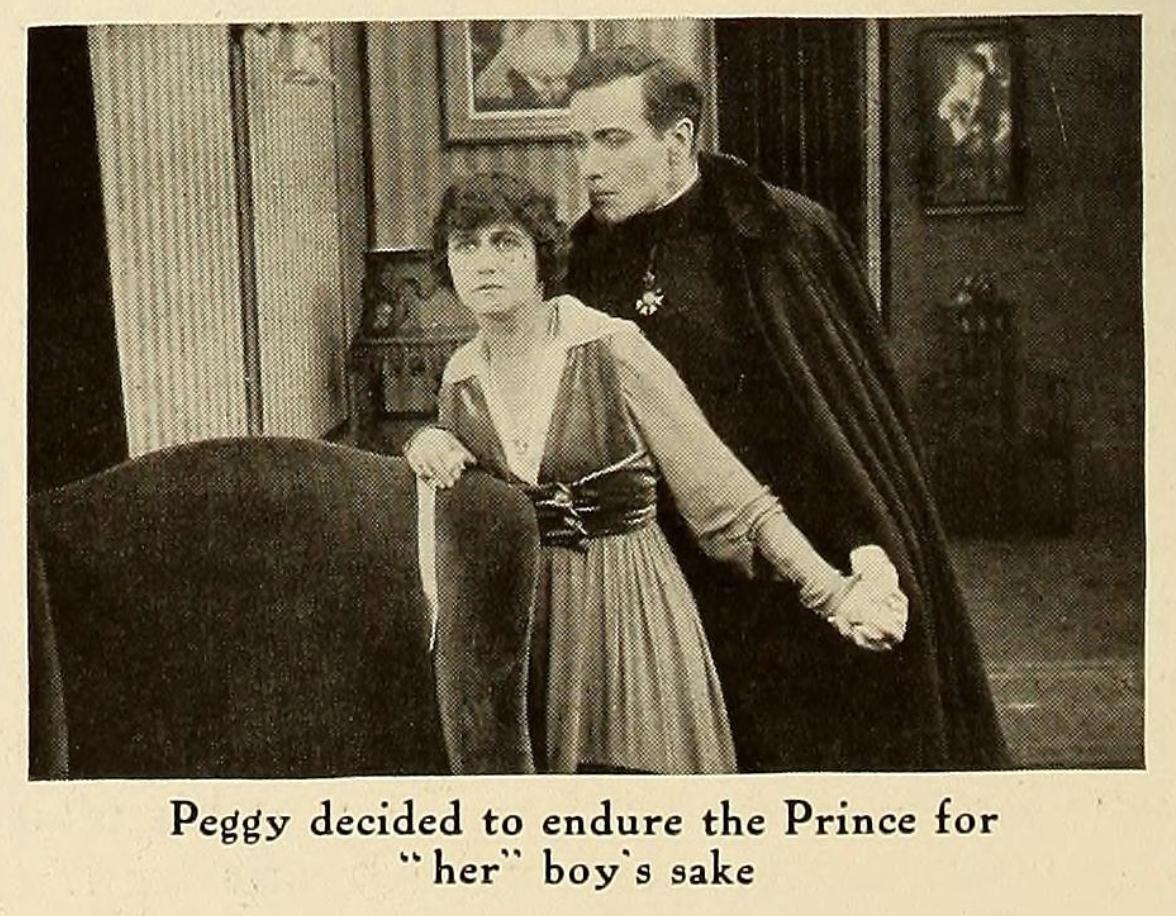
Carr, blinded by jealousy and a profound sense of betrayal, follows them, his heart heavy with suspicion. This emotional turmoil leads him directly into Prince Henri's trap, resulting in his imprisonment alongside the very duke he sought to protect. This classic melodrama trope, where misunderstanding fuels conflict and separates lovers, is executed with a particular urgency in Intrigue. It speaks to the era’s fascination with the 'damsel in distress' narrative, though Peggy, in this instance, is far from passive. Her strategic agreement to go with Henri, her quiet resolve, and ultimately, her clandestine summoning of the Royal Guards, elevate her beyond a mere victim. She is an active agent in her own rescue and the rescue of others, a characteristic that, while perhaps not fully revolutionary for its time, certainly underscores her strength. One might draw parallels to the spirited heroines found in contemporary serials, like those navigating the perils in Beatrice Fairfax Episode 11: The Wages of Sin, where female protagonists often demonstrate surprising resilience amidst dire circumstances.
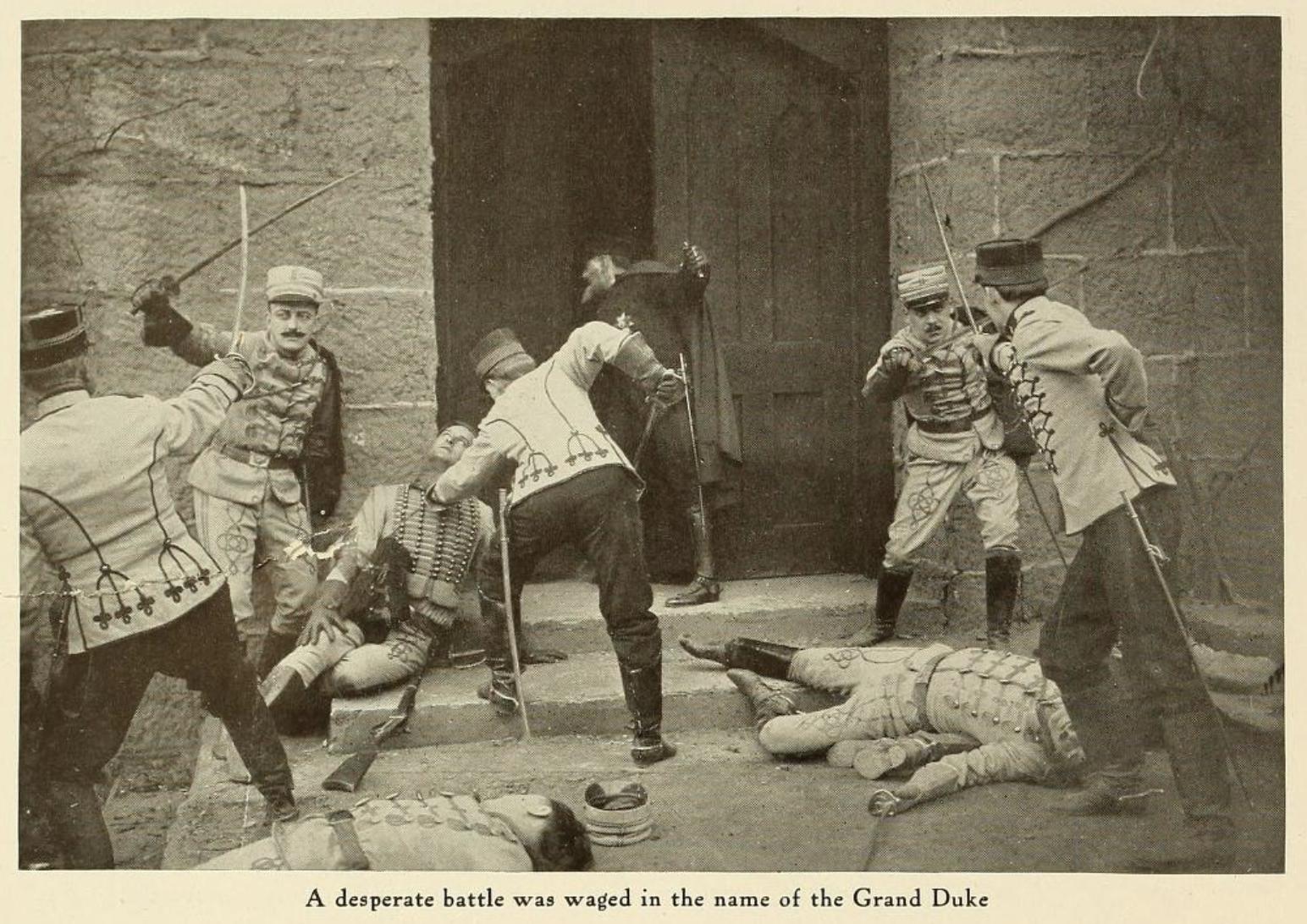
The climax is a whirlwind of action and resolution. The Royal Guards, alerted by Peggy’s ingenuity, storm the castle, a dramatic sequence that would have thrilled audiences of the period. Prince Henri’s reign of terror is brought to an abrupt end, his villainy exposed and punished. With the Grand Duke safe and Henri apprehended, the stage is set for the emotional reconciliation between Peggy and Richard. Carr, now fully cognizant of Peggy’s selfless act and his own misjudgment, offers a heartfelt apology. This moment of contrition and forgiveness is crucial, solidifying their bond and allowing their love story to reach its deserved happy ending. The final scene, with Peggy and Richard sailing for America, symbolizes a fresh start, a departure from the intricate web of European politics and personal peril, towards a future built on trust and mutual understanding. This embrace of a new world, a new beginning, was a common aspirational theme in early American cinema, resonating with immigrant experiences and the promise of a land unburdened by old-world conflicts.
The cast of Intrigue delivers performances that, while constrained by the conventions of silent film, manage to convey a remarkable depth of emotion. Peggy Hyland, as Peggy Dare, is truly the heart of the film. Her expressive eyes and nuanced gestures communicate a wide range of feelings – from initial innocence and burgeoning affection for Manouche, to courageous determination in the face of Henri’s threats, and finally, quiet resolve and joy. She embodies the archetypal silent film heroine: beautiful, vulnerable, yet possessing an inner steel that allows her to navigate treacherous waters. Her performance is a masterclass in conveying complex motivations through purely visual means, a skill paramount in the silent era. One might consider her portrayal alongside other strong female leads of the time, such as those in The Common Law, where women often grappled with societal expectations and personal desires, albeit in different narrative contexts.
Marc McDermott’s Richard Carr is a more stoic figure initially, a man of honor whose love for Peggy is evident, but whose judgment is clouded by jealousy. His journey from suspicion to understanding and remorse is a critical emotional arc. Bobby Connelly, as Manouche, is utterly charming and believable as the innocent child caught in adult machinations. His portrayal evokes immediate sympathy, making his plight genuinely impactful. Templar Saxe’s Prince Henri is suitably menacing, a villain whose suave exterior barely conceals a ruthless ambition and disturbing possessiveness. The supporting cast, including Nellie Spitzer, Pauline Curley, and Brinsley Shaw, contribute to the tapestry of Bonalurian society, adding layers of courtly intrigue and loyal support.
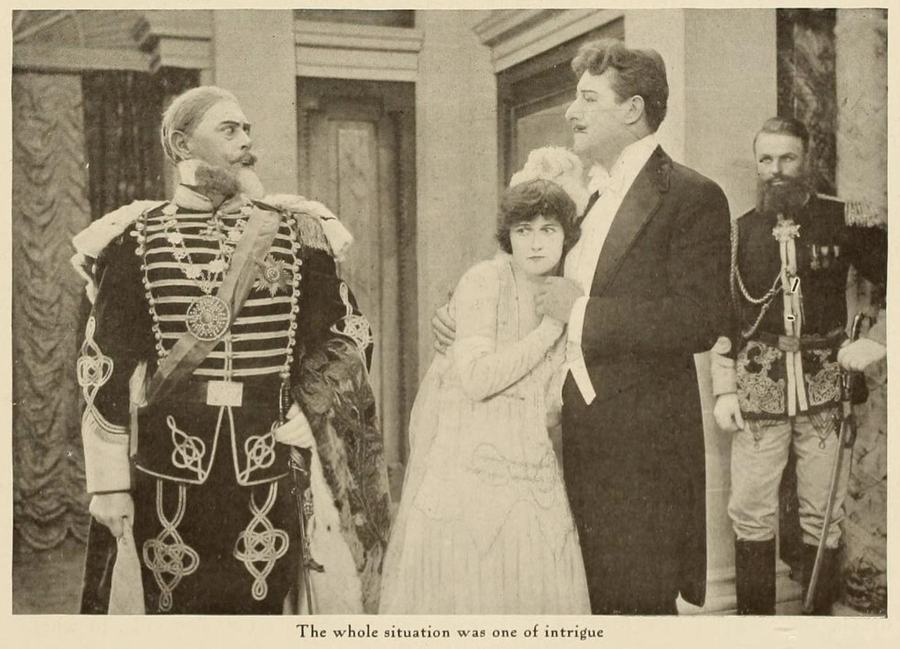
At its core, Intrigue explores several enduring themes. The most prominent is perhaps the transformative power of unexpected love and maternal instinct. Peggy’s bond with Manouche transcends societal barriers and political complexities, becoming the driving force behind her heroic actions. It’s a love that demands sacrifice, echoing the profound emotional stakes often explored in films of the period, where familial bonds were frequently tested by external pressures. The film also delves into themes of duty versus personal desire, as Peggy must choose between her own happiness with Richard and her obligation to protect the young Duke. This moral dilemma is presented without preachiness, allowing the audience to genuinely feel the weight of her choice. The political intrigue, while perhaps simplified for cinematic effect, provides a compelling backdrop for the personal drama, demonstrating how individual lives can be swept up in larger historical currents. This intertwining of personal fate with national destiny is a hallmark of many early melodramas, giving them a grand, epic feel, even when the focus is on a handful of characters.
From a narrative perspective, the film is a testament to the efficient storytelling of the silent era. Writers Maibelle Heikes Justice and Joseph F. Poland craft a plot that moves with a brisk pace, introducing complications and resolutions in quick succession. The use of intertitles is effective, providing necessary exposition and character dialogue without bogging down the visual flow. The direction, while not overly flashy, is competent, focusing on clear blocking and expressive close-ups to convey emotion. The visual language of silent cinema, relying heavily on mise-en-scène and actor’s physicality, is well-utilized here. The tension builds steadily, culminating in a satisfyingly dramatic conclusion. The film's ability to maintain suspense and emotional engagement without spoken dialogue is a powerful reminder of the artistry inherent in this form of filmmaking.
Watching Intrigue today is more than just an academic exercise; it’s an immersive experience into the origins of cinematic storytelling. It reminds us of a time when narratives were often more direct, emotions more overt, and the power of a compelling gaze or a dramatic gesture could communicate volumes. While some elements might appear quaint to modern eyes, the fundamental human drama – love, betrayal, sacrifice, courage – remains timeless. The film’s ability to draw the viewer into Peggy’s plight, to root for the young Duke, and to despise Prince Henri, speaks to its enduring power. It demonstrates how early filmmakers, with limited technological means, were already mastering the art of engaging an audience on a deeply emotional level. The film also serves as a valuable historical artifact, offering insights into the popular entertainment and societal values of the early 20th century. The portrayal of royalty, political instability, and the idealization of certain virtues like selflessness were common themes that resonated with audiences of the time, providing a form of escapism and moral instruction.
In an era where cinema was rapidly evolving, Intrigue stands as a charming, if not groundbreaking, example of the melodramatic thriller. It’s a film that understands its genre and executes it with clarity and conviction. It might not possess the grand scale of an epic like For Napoleon and France, nor the stark social commentary found in other contemporary works, but its strength lies in its focused, emotionally resonant narrative. The journey of Peggy Dare, from an ordinary woman to an unwitting heroine, is one that continues to captivate, proving that true courage and an unwavering heart are indeed the most potent forces in any tale of 'intrigue'. For those with an appreciation for the foundational works of cinema, and a fondness for tales where innocence is imperiled and love triumphs over adversity, this film offers a delightful and surprisingly engaging viewing experience. It's a reminder that even in silence, stories can shout with profound emotional resonance, leaving a lasting impression long after the final frame.
IMDb —
1931
Community
Log in to comment.