DbcultAccessing Vault...
6.4/10
Senior Film Conservator
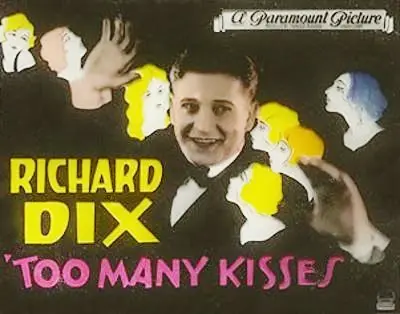
A definitive 6.4/10 rating for a film that redefined the boundaries of cult cinema. Too Many Kisses remains a cornerstone of transgressive art.
In the 1925 romantic comedy Too Many Kisses, director John Monk Saunders weaves a tale of love, loyalty, and cultural identity, set against the stunning backdrop of the Basque region in France. The film stars Richard Dix as Richard Gaylord, Jr., a charismatic and confident ladies' man, whose numerous romantic conquests have exhausted his father's patience.
The elder Gaylord, played by Paul Panzer, decides to send his son to the Basque region, hoping that the local women will be less receptive to his charms. However, Richard quickly catches the eye of Yvonne Hurja, a beautiful young woman played by Alyce Mills, who sees him as a potential savior from the unwanted advances of Julio, a local guardsman.

As tensions rise between Richard and Julio, a fierce rivalry develops, threatening to upend Richard's carefree existence. The film's portrayal of this rivalry serves as a backdrop for exploring themes of love, loyalty, and cultural identity. The cinematography is breathtaking, capturing the picturesque landscapes and charming villages of the Basque region.
The cast delivers strong performances, with Richard Dix bringing a sense of charm and charisma to the role of Richard Gaylord, Jr. Harpo Marx also makes a notable appearance, adding a touch of comedic relief to the film. The chemistry between the leads is undeniable, and their performances bring depth and nuance to the story.

In comparison to other films of the era, One of the Finest and The Jail Bird also explore themes of love and identity, but Too Many Kisses stands out for its unique blend of romance, comedy, and cultural exploration. The film's use of location shooting and its focus on the Basque region add to its distinctiveness.
The film's script, written by John Monk Saunders and Gerald C. Duffy, is well-paced and engaging, with a narrative that flows seamlessly. The dialogue is witty and engaging, and the characters are well-developed and complex.

One of the standout aspects of Too Many Kisses is its exploration of cultural identity. The film portrays the Basque region and its people with sensitivity and respect, highlighting the unique cultural practices and traditions of the area. This attention to detail adds depth and authenticity to the story.
In terms of cinematography, the film is notable for its use of location shooting in the Basque region. The landscapes and villages are breathtakingly captured on camera, providing a stunning backdrop for the story. The film's use of lighting and composition is also noteworthy, adding to the overall visual appeal of the film.

Overall, Too Many Kisses is a charming and engaging film that explores themes of love, loyalty, and cultural identity. With its strong performances, stunning cinematography, and well-paced script, it is a must-see for fans of classic cinema. The Midnight Girl and The Volcano may also be of interest to fans of Too Many Kisses, as they share similar themes and elements.
The film's historical context is also worth noting. Released in 1925, Too Many Kisses reflects the social and cultural attitudes of the time. The film's portrayal of women's roles and relationships is particularly noteworthy, highlighting the changing attitudes towards women's rights and independence during the 1920s.

In conclusion, Too Many Kisses is a delightful and engaging film that is sure to charm audiences. With its unique blend of romance, comedy, and cultural exploration, it is a standout of the era. Fans of classic cinema will not want to miss this film, and those interested in the history of cinema will find it a fascinating example of the evolution of the medium.
Ultimately, Too Many Kisses is a film that will leave you smiling, with its lighthearted tone and charming performances. It is a testament to the enduring power of cinema to transport us to another time and place, and to captivate us with its magic.

IMDb 5.8
1930
Community
Log in to comment.