DbcultAccessing Vault...
Cult Review
Senior Film Conservator
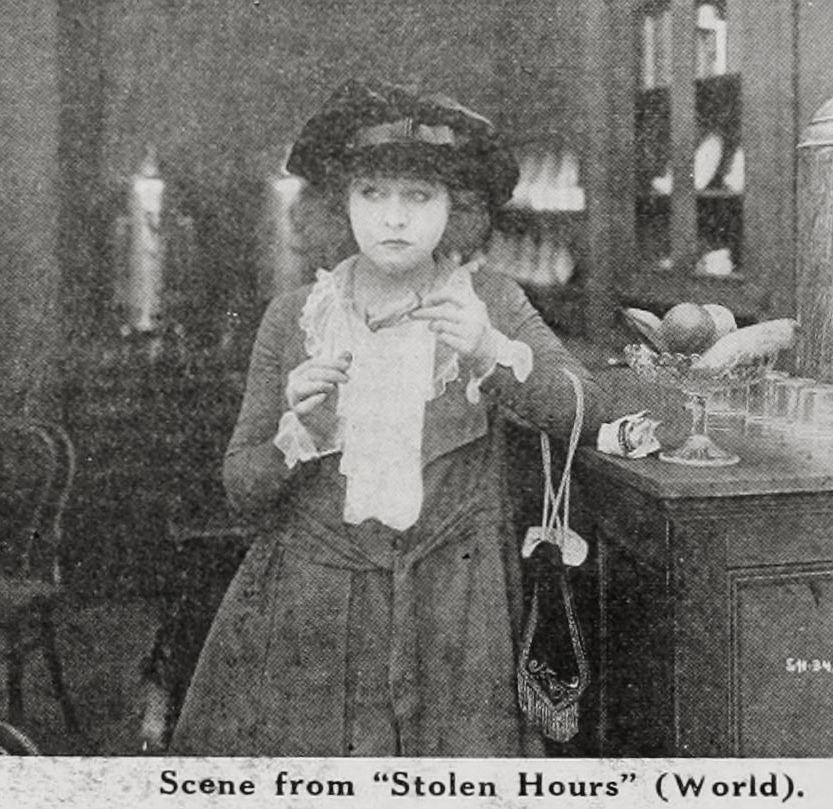
In the annals of early cinema, where the grand narratives often unfolded without the benefit of spoken dialogue, relying instead on the evocative power of gesture, expression, and the poignant intertitle, a film like Stolen Hours (1919) emerges as a fascinating artifact. It is a testament to the enduring allure of human drama, particularly the timeless struggle between personal desire and the inexorable demands of societal decorum. Directed with a keen eye for emotional resonance and featuring a cast that, while largely defined by the conventions of its era, manages to convey a profound depth of feeling, this picture offers more than just a glimpse into a bygone cinematic age; it provides a mirror to the perennial complexities of love, duty, and sacrifice. The year 1919, nestled amidst the tumultuous aftermath of the Great War, was a period ripe for narratives that explored personal turmoil against a backdrop of shifting social mores, and Stolen Hours, in its own silent way, navigates these treacherous waters with considerable aplomb.
The narrative, penned by Olive Wadsley, commences with a dramatic flourish that immediately establishes the precarious world inhabited by its protagonist, Diana Lester, portrayed with a compelling blend of fragility and resolve by Ethel Clayton. We are introduced to Diana amidst the chaotic tableau of a police raid on an illicit gambling establishment, a den of vice presided over by her father, Cosmo Lester. It is here, in this morally ambiguous setting, that destiny intervenes with a most improbable encounter. Diana, demonstrating an unexpected courage and fierce loyalty, intervenes to shield Hugh Carton, a distinguished member of the English Parliament and a man on the precipice of a significant Cabinet appointment, from the ignominy of being implicated in the raid. This initial act of audacious heroism is the catalyst for a chain of events that will irrevocably alter the course of both their lives.
Hugh Carton, played by John Bowers with a suitable air of aristocratic gravitas and underlying vulnerability, is immediately captivated by Diana's unconventional charm and daring spirit. Grateful for her timely intervention, he extends an offer that, while seemingly innocuous, sets the stage for their inevitable entanglement: a position as companion to his sister. This proximity, born of obligation and gratitude, soon blossoms into an fervent, all-consuming love. The film masterfully portrays the burgeoning romance, allowing the unspoken language of glances, tender gestures, and shared moments to convey a passion that transcends the social chasm separating their worlds. Yet, their joy, palpable and profound, is simultaneously shadowed by a formidable obstacle: Hugh is a married man. His wife, a spectral presence more felt than seen, refuses him both cohabitation and divorce, trapping him in a marital limbo that renders his love for Diana illicit and unsustainable within the strictures of Edwardian society.
Diana, caught in the throes of a love she cannot deny, makes the agonizing decision to become Hugh's mistress. This arrangement, a desperate grasp at ephemeral happiness, carries with it an intrinsic tragedy. Their "stolen hours" – clandestine meetings snatched from the relentless gaze of public scrutiny – begin to exact a heavy toll on Hugh's burgeoning political career. His once-unwavering dedication to parliamentary duties wanes, supplanted by the compelling pull of his secret affection. The very foundation of his public life, built on rectitude and unwavering commitment, starts to crumble. It is at this critical juncture that Hugh's sister, a figure embodying the rigid societal expectations of their class, intervenes. Recognizing the existential threat Diana poses to her brother's future, she implores Diana to make the ultimate sacrifice, to relinquish her claim on Hugh for the sake of his reputation and career.
With a heart shattered but resolute, Diana accedes to this heart-wrenching plea, retreating from Hugh's world and returning to the familiar, albeit morally ambiguous, embrace of her father's domain. The subsequent chapters of her life unfold with a melancholic inevitability. She eventually accepts the marriage proposal of Phil Duran, an old friend whose steadfast affection offers a semblance of stability, if not true passion. However, the emotional toll of her sacrifices proves too immense. On the very cusp of a union devoid of genuine love, Diana succumbs to a profound physical and psychological breakdown, a visceral manifestation of her protracted suffering. The narrative reaches its dramatic crescendo when, in a moment of almost divine intervention, Hugh reappears with the news that his estranged wife has, at long last, granted him a divorce. This revelation, a beacon of hope piercing through Diana's despair, miraculously restores her health and spirit, culminating in a reunion with the man she has loved with such unwavering devotion.
Ethel Clayton's portrayal of Diana Lester is undoubtedly the film's beating heart. In an era where acting often veered towards the melodramatic, Clayton manages to imbue Diana with a nuanced emotional landscape. Her gestures, though grand by modern standards, convey a genuine sense of inner turmoil – the initial spark of defiance, the tender vulnerability of falling in love, the crushing weight of sacrifice, and the ultimate, almost spiritual, resurgence. She doesn't merely enact the plot; she embodies Diana's journey through societal judgment and personal agony. John Bowers, as Hugh Carton, complements Clayton's performance with a portrayal that balances his character's public persona of political ambition with the private torment of a man torn between duty and desire. The silent film actor's challenge was to communicate complex emotions without words, and Bowers, through his earnest expressions and restrained physicality, effectively conveys Hugh's predicament, making his eventual neglect of duties believable and his love for Diana palpable. The supporting cast, including Richard Clarke, Victor Kennard, and Joseph Herbert, contribute to the tapestry of the film, each adding a layer of authenticity to their respective roles, even if their screen time is limited.
The direction, while not attributed in the provided details, would have been crucial in shaping the visual storytelling. Silent films relied heavily on mise-en-scène, lighting, and camera angles to establish mood and narrative progression. One can infer the use of stark contrasts to highlight Diana's dual existence – the shadowy, illicit world of her father versus the opulent, yet suffocating, environment of Hugh's aristocratic sphere. Close-ups would have been employed to emphasize the emotional intensity of key moments, particularly Diana's breakdown and her eventual recovery. The pacing, a critical element in silent cinema, would have been carefully modulated to build suspense during the affair, evoke pathos during Diana's separation, and deliver the cathartic resolution. The film's visual grammar, though perhaps rudimentary by contemporary standards, would have been sophisticated enough to convey the complex emotional and moral dilemmas at its core, making the audience feel the weight of societal expectations pressing down on the protagonists.
At its heart, Stolen Hours is a profound exploration of societal constraints and the relentless human yearning for liberation, particularly for women in an era where their autonomy was often circumscribed by patriarchal norms. Diana Lester's journey is a microcosm of this struggle. She is initially presented as a woman of unconventional courage, operating outside the strictures of polite society, yet her eventual entanglement with Hugh forces her into a more traditional, albeit illicit, role as a mistress. This transition highlights the limited options available to women of the time, even those who displayed remarkable agency. Her sacrifice of love for Hugh's career underscores the pervasive expectation for women to prioritize male ambition over their own happiness. This thematic thread resonates with other films of the period, such as The Girl Who Wouldn't Quit, which often showcased female characters navigating challenging circumstances, though perhaps with a more overt emphasis on their resilience in the face of adversity. Diana's resilience is more internal, manifesting as endurance rather than outright rebellion.
The film also delves into the stark class distinctions of early 20th-century England. Diana's origins in a gambling den immediately brand her as an outsider to Hugh's aristocratic world. Their love, therefore, is not just forbidden by marital ties but also by the invisible, yet impenetrable, barriers of social class. This tension is a recurring motif in cinematic narratives, exploring how love attempts to bridge societal divides, often with tragic consequences. The pressure exerted by Hugh's sister, representing the rigid upper-class morality, serves as a powerful antagonist, far more formidable than any individual villain. This struggle between individual desire and the collective judgment of society is a timeless theme, echoing the moral quandaries found in films like The Banker's Daughter, where financial and social standing often dictated personal choices and relationships, or even the more overtly dramatic Playing with Fire, where dangerous liaisons brought about social ruin.
Olive Wadsley's screenplay, while conforming to the narrative conventions of its time, manages to imbue the story with a genuine sense of emotional progression. The arc of Diana's suffering, from the initial joy of illicit love to the crushing despair of sacrifice and breakdown, is meticulously crafted. The eventual resolution, while perhaps bordering on a convenient deus ex machina with the sudden divorce, serves to underscore the era's preference for morally satisfying conclusions, even if they require a suspension of disbelief. Yet, it is within this framework that Wadsley allows for moments of profound psychological insight, particularly in Diana's internal struggle. Her breakdown is not merely a plot device; it's a powerful statement on the devastating impact of emotional repression and societal pressure on the human psyche. This exploration of inner turmoil finds resonance in films like The Girl Without a Soul, which often delved into the psychological landscapes of its female protagonists, or even the more dramatic self-reflection seen in I Accuse, albeit in a different context.
While Stolen Hours may not possess the same enduring cultural footprint as some of its more celebrated contemporaries, its significance lies in its representative quality. It stands as a powerful example of how silent cinema, even without the benefit of sound, could weave intricate tales of human emotion, moral quandary, and social commentary. It reminds us that the fundamental narratives of love, loss, and the pursuit of happiness against overwhelming odds are timeless. The film's exploration of a woman's sacrifice for the man she loves, and the ultimate reward for her endurance, speaks to a particular sensibility of the early 20th century, where virtue was often rewarded, sometimes in the most unexpected ways.
In a broader context, the film's dramatic opening, with Diana rescuing Hugh from a raid, could be seen as a precursor to many "hero-saves-heroine" (or vice-versa) tropes, but here with a crucial twist: the heroine saves the prominent male figure, immediately establishing her agency and challenging traditional gender roles, however subtly. This initial act of courage sets her apart and foreshadows the strength she will require to navigate the subsequent emotional maelstrom. It’s a compelling inversion of the damsel-in-distress narrative that would continue to evolve throughout cinema history. The film’s exploration of the hidden lives led by individuals in high society, the secrets and compromises necessary to maintain appearances, offers a fascinating parallel to other dramas of the era that peeled back the veneer of respectability.
The resolution, where Hugh’s wife finally grants a divorce, is the ultimate fulfillment of the romantic ideal prevalent in many films of the time. It assures the audience that true love, even if long-suffering, will eventually triumph over adversity. This kind of resolution provided comfort and an affirmation of moral order for audiences emerging from a period of great global upheaval. While modern sensibilities might question the convenient timing of the divorce, it served its purpose within the narrative structure of the era, offering a satisfying emotional release after prolonged tension and sacrifice.
Ultimately, Stolen Hours serves as a poignant reminder of the power of early filmmaking to capture the human condition in all its messy, glorious complexity. It's a film that demands empathy for its characters, particularly Diana, whose journey is fraught with moral dilemmas and personal anguish. Her eventual redemption and reunion with Hugh are not just a happy ending, but a symbolic triumph of enduring love over the formidable forces of societal convention and personal sacrifice. For enthusiasts of silent cinema and students of film history, it offers rich material for reflection on the evolution of narrative techniques, acting styles, and the timeless themes that continue to captivate audiences across generations. It encourages us to look beyond the absence of sound and appreciate the profound visual and emotional language that defined an entire epoch of cinematic artistry. The enduring power of these "stolen hours" lies in their ability to remind us that love, in its purest form, often defies logic and societal decree, leaving an indelible mark on the soul.
The film’s examination of the public versus private self, particularly for figures like Hugh Carton, a politician, is exceptionally relevant even today. The scrutiny faced by public figures, and the precarious balance they must maintain between their personal lives and their professional duties, is a narrative thread that continues to be woven into contemporary storytelling. Diana’s role as the catalyst for Hugh’s professional neglect, and his sister’s subsequent intervention, highlights the pressure on individuals to conform to societal expectations, especially when a public career is at stake. This theme, of personal happiness clashing with professional integrity, is a powerful one, and Stolen Hours presents it with a clarity that belies its silent nature.
Moreover, the choice of a gambling establishment as Diana’s initial milieu immediately situates her outside the conventional bounds of respectability. This initial characterization sets up a dramatic contrast with Hugh’s world, amplifying the “forbidden” aspect of their love. It’s not merely a case of an already married man, but a man of high standing falling for a woman from the fringes of society. This adds another layer of tension and makes Diana’s eventual acceptance into Hugh’s world, post-divorce and post-sacrifice, all the more significant. It suggests a triumph not just of love, but of character over social prejudice. The silent film era, with its reliance on visual cues and archetypes, often used such juxtapositions to powerful effect, and Stolen Hours is a prime example of this narrative strategy.
The film also subtly touches upon the concept of agency and self-determination for women. While Diana makes significant sacrifices, her initial act of saving Hugh, her decision to become his mistress, and her eventual acceptance of Phil Duran's proposal (even if born of despair) all demonstrate a degree of agency within the confines of her circumstances. Her breakdown is a powerful, albeit tragic, assertion of her emotional truth, a refusal of her spirit to conform to an unloving future. Her recovery, spurred by the news of Hugh's divorce, is not merely passive; it is a re-embracing of life on her own terms, terms that are finally aligned with her heart's true desire. This nuanced portrayal of female experience, navigating societal pressures while striving for personal fulfillment, makes Stolen Hours a compelling watch for anyone interested in the evolving representation of women in early cinema.
In conclusion, Stolen Hours, with its intricate plot, compelling performances, and exploration of timeless themes, offers a rich cinematic experience. It is a film that, despite its age and the silent medium, speaks volumes about the human heart's capacity for love, sacrifice, and resilience. Its narrative complexity, combined with the evocative power of silent acting, ensures its place as a significant, if perhaps understated, contribution to the tapestry of early 20th-century cinema.
IMDb 5.4
1934
Community
Log in to comment.