DbcultAccessing Vault...
5.2/10
Senior Film Conservator
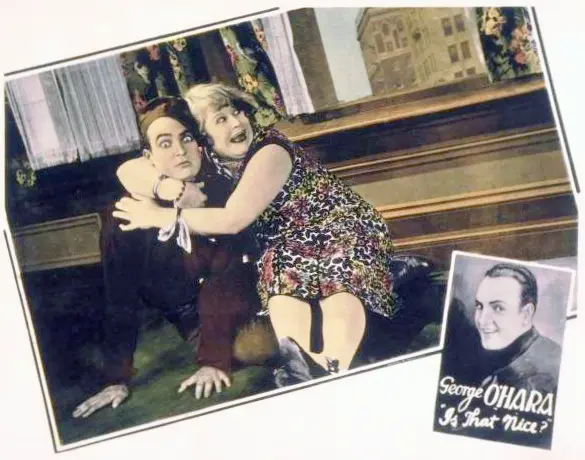
A definitive 5.2/10 rating for a film that redefined the boundaries of cult cinema. Is That Nice? remains a cornerstone of transgressive art.
Is ‘Is That Nice?’ worth watching today? Short answer: yes, but with significant caveats. This film is primarily for ardent cinephiles, historians of early cinema, and those with a deep appreciation for silent-era screwball comedies and journalistic thrillers. It is emphatically NOT for viewers seeking modern pacing, sophisticated narratives, or high production values typical of contemporary blockbusters.
For the patient viewer, this 1920s caper offers a fascinating glimpse into a bygone era of moviemaking, brimming with an earnest energy that, while occasionally clumsy, remains undeniably infectious. Its narrative, a frantic scramble for journalistic vindication, possesses an unexpected, almost prescient, relevance in an age grappling with the ethics of information.
This film works because: Its energetic pace, the surprising relevance of its thematic undercurrents, and the undeniable charm of its lead actors combine to create a compelling, if imperfect, historical artifact.
This film fails because: Its narrative often sacrifices character depth for plot momentum, and the technical limitations of its era, while understandable, can sometimes detract from immersion.
You should watch it if: You are an enthusiast of silent cinema, interested in the evolution of genre storytelling, or simply curious about how early filmmakers tackled themes that still resonate today.
At its core, ‘Is That Nice?’ is a high-stakes journalistic farce, a tale of ambition outstripping prudence. We are introduced to Ralph Tanner, a cub reporter for the Morning Standard, whose ink-stained fingers are quicker than his fact-checking. He pens a sensational, deeply libelous exposé targeting John Gorman, the city’s formidable political boss. His superiors, publisher Wilbert and managing editor Dyke, initially revel in the scoop, their smiles as wide as the newspaper’s banner headline.
This fleeting triumph, however, dissolves into palpable panic when Tanner sheepishly admits a rather significant oversight: he has no verifiable proof to substantiate his explosive claims. Suddenly, the triumphant headline becomes a legal noose. The film then transforms into a frantic, often comedic, race against the clock. Tanner, now desperate, must retroactively gather evidence to save his career, the newspaper, and perhaps even himself from the formidable wrath of Gorman.
His quest is a chaotic affair, a mad dash through the city’s underbelly, complicated by a motley crew of assistants and hindrances. There’s Doris Leslie, a mysterious woman whose allegiances are as opaque as her intentions, and the rather more straightforward, if physically imposing, duo of Winnie Nash, a hefty stenographer from the paper, and her even huskier boyfriend, Bill Schultz. This ensemble cast, with their clashing personalities and divergent motivations, propels Tanner through a series of increasingly improbable scenarios, all in pursuit of that elusive, career-saving proof.
Directed by Walter A. Sinclair, ‘Is That Nice?’ is a product of its time, showcasing both the limitations and the burgeoning creativity of early cinema. The direction, while not groundbreaking, is effective in maintaining a consistent, brisk pace. Sinclair understands the need for momentum in a story driven by a ticking clock. The film rarely lingers, pushing the narrative forward with a series of quick cuts and dynamic scene changes, which was quite progressive for the era.
One notable aspect is the portrayal of the bustling newspaper office. Sinclair uses wide shots to capture the frenetic energy, with reporters rushing, typewriters clacking (implied), and editors barking orders. This establishes the chaotic, high-stakes environment from which Tanner's predicament springs. It’s a classic trope, yet executed with an earnest authenticity that grounds the more outlandish plot points.
Cinematographically, the film employs standard techniques of the 1920s, relying heavily on clear, well-lit compositions. There are few experimental flourishes, but the camera work is always functional, serving the story rather than drawing attention to itself. Close-ups are used effectively to convey emotional reactions, particularly Tanner's growing panic and Doris Leslie's enigmatic expressions. For instance, a particular shot of Tanner's face, bathed in the harsh light of the newsroom, as the realization of his error dawns, is surprisingly impactful, communicating his internal turmoil without a single spoken word.
The use of intertitles, while ubiquitous in silent film, is handled with a commendable economy. They provide necessary exposition and dialogue without overwhelming the visual storytelling. This balance allows the performances and action to carry much of the narrative weight, a testament to Sinclair's understanding of the medium's strengths at the time. The film’s visual language, while simple, is direct and unpretentious, reflecting a period when storytelling was still finding its cinematic voice.
The performances in ‘Is That Nice?’ are a fascinating blend of early cinematic melodrama and the nascent stages of comedic timing. George O’Hara, as the beleaguered Ralph Tanner, carries the film with an energetic, almost frantic, portrayal. His transformation from cocky reporter to desperate fugitive is conveyed primarily through exaggerated facial expressions and physical comedy, a hallmark of silent-era acting. O'Hara's ability to maintain audience sympathy, even as his character makes increasingly dubious decisions, is a testament to his charisma.
Doris Hill, playing the mysterious Doris Leslie, offers a more subdued but equally intriguing performance. Her character's motivations are deliberately ambiguous, and Hill masterfully uses subtle gestures and knowing glances to keep the audience guessing. She's not just a damsel in distress; there's a shrewd intelligence behind her eyes that suggests a deeper involvement in the machinations of the city's political landscape. Her chemistry with O'Hara, while not overtly romantic, adds a layer of intrigue to Tanner's frantic quest.
Perhaps the most memorable, and certainly the most comedic, contributions come from Babe London as Winnie Nash and David Kirby as Bill Schultz. London's Winnie is a force of nature, her physical presence matched only by her comedic timing. She embodies the "hefty stenographer" with gusto, delivering broad, physical humor that often steals the scene. Her interplay with Kirby's "even huskier" Bill Schultz provides much-needed levity, transforming what could have been a purely tense thriller into a genuine screwball comedy. Their bumbling but loyal assistance to Tanner is a highlight, offering moments of genuine, unforced laughter.
Charles Thurston as Wilbert and Stanton Heck as Dyke provide solid, if somewhat stereotypical, portrayals of the harried newspaper executives. Their initial glee and subsequent panic are palpable, effectively setting the stakes for Tanner's desperate mission. The ensemble, though constrained by the performance styles of the era, works cohesively to sell the story's absurdity and urgency.
One of the film’s greatest strengths is
IMDb —
1917
Community
Log in to comment.