DbcultAccessing Vault...
6.8/10
Senior Film Conservator
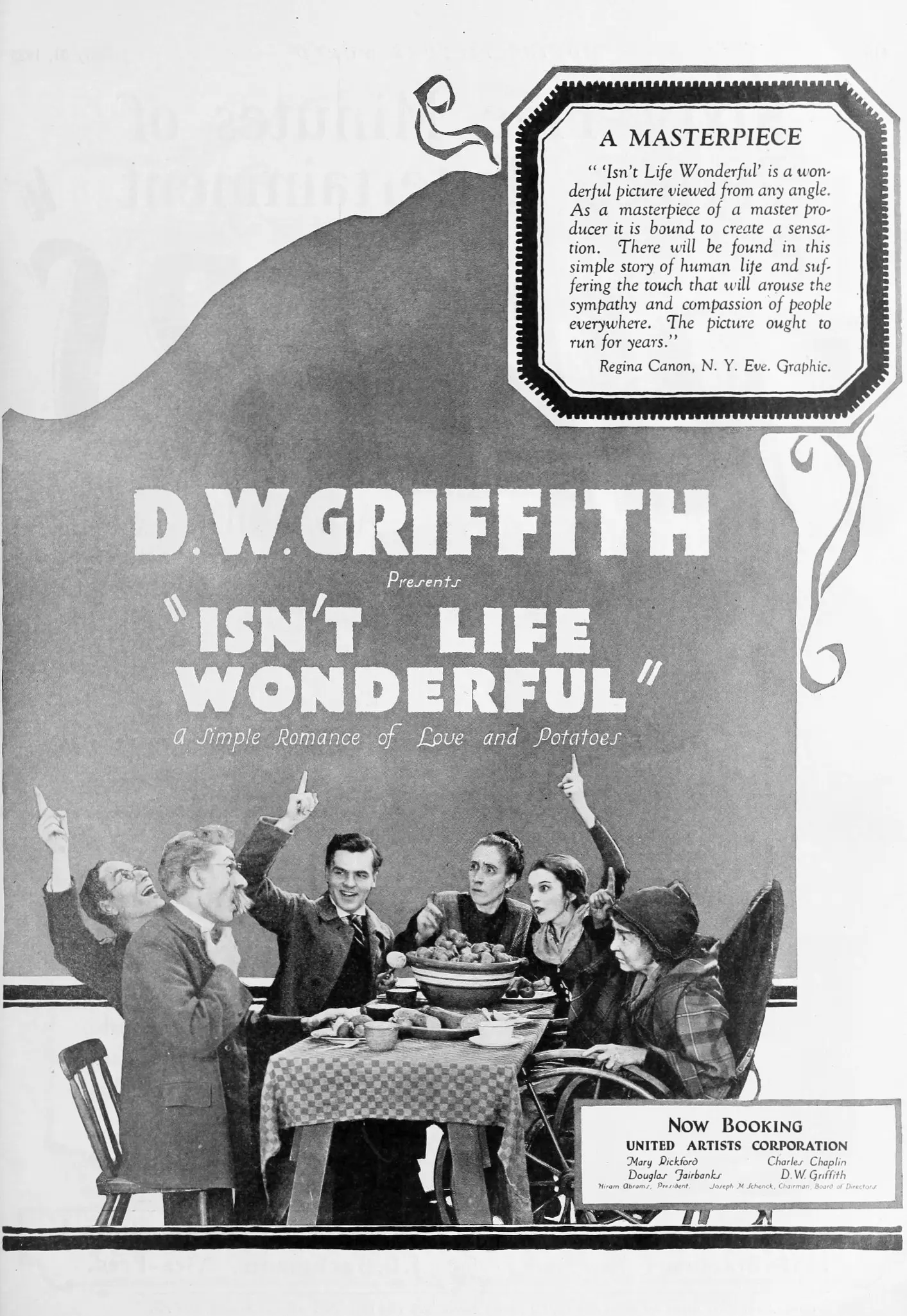
A definitive 6.8/10 rating for a film that redefined the boundaries of cult cinema. Isn't Life Wonderful remains a cornerstone of transgressive art.
In the twilight of his monumental career, D.W. Griffith pivoted from the gargantuan artifice of his earlier epics toward a startling, almost documentary-like realism with 1924’s Isn't Life Wonderful. Filmed on location in Germany during the actual throes of the Weimar Republic’s economic collapse, the film serves as a haunting time capsule. Unlike the high-octane adventure of Michael Strogoff, which relies on the kinetic energy of its source material, Griffith’s work here is stagnant in the most intentional sense—it mirrors the paralysis of a society whose currency has become less valuable than the paper it is printed on. The director, often criticized for his Victorian sentimentality, finds a perfect vessel for his pathos in the starving refugees of Oldenburg. This is a film that breathes the soot and desperation of its era, eschewing the studio-bound safety of contemporary productions like The Fortune Teller.

For decades, Carol Dempster was unfairly maligned as a mere surrogate for Lillian Gish, yet in this performance, she achieves a raw, sinewy vulnerability that Gish rarely touched. As Inga, Dempster is the kinetic center of the household, her movements characterized by a frantic, bird-like energy that suggests a constant state of low-level panic. She isn't the ethereal waif of *Broken Blossoms*; she is a laborer, her hands stained by the earth she tills. When contrasted with the lighthearted comedic timing found in A Pair of Sixes, Dempster’s work here feels revolutionary. She captures the specific exhaustion of the female refugee—the one who must stretch a handful of grain to feed an entire family while maintaining a facade of hope for her partner, Paul. Neil Hamilton provides a sturdy, if slightly more traditional, foil, but it is Dempster who carries the film’s moral weight.
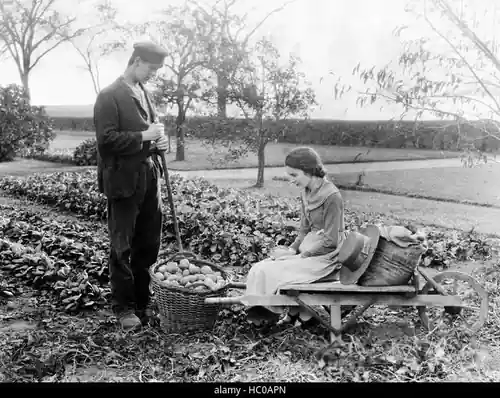
Griffith’s use of natural light and actual German streetscapes provides a texture that was largely absent from American cinema of the mid-1920s. The cinematography captures the gray, oppressive atmosphere of a nation in mourning. While films like Fantomas - On the Stroke of Nine utilized shadows for suspense and gothic flair, Griffith uses them to illustrate the literal darkening of a civilization. The camera lingers on the faces of actual townspeople—men and women whose hollowed cheeks were not the product of a makeup chair but of genuine systemic hunger. This commitment to verisimilitude elevates the film beyond mere melodrama into the realm of social advocacy. The sequences involving the bread lines are particularly devastating, portraying a collective loss of dignity that feels more akin to the later Italian Neorealism than the silent era's typical histrionics.

The narrative pivot of the film—the cultivation and subsequent theft of a potato crop—remains one of the most agonizing sequences in silent cinema. In a world where money is a fiction, the potato becomes the ultimate currency. Griffith treats the planting of the seeds with a quasi-religious reverence, a bucolic ritual that stands in stark contrast to the industrial decay of the city. When the harvest is finally stolen by a group of even more desperate men, the tragedy isn't just the loss of food; it is the total evaporation of the social contract. This thematic depth is far removed from the escapist tropes of Pure Grit or the procedural nature of Beatrice Fairfax Episode 9: Outside the Law. Here, Griffith posits that when the stomach is empty, morality is a luxury that few can afford.

Watching Isn't Life Wonderful today requires an understanding of the 1923 hyperinflation crisis. Griffith doesn't shy away from the politics, though he filters them through a humanist lens. He shows the profiteers and the butchers who hoard meat, creating a vivid portrait of class resentment that was bubbling beneath the surface of the Weimar Republic. It lacks the overt propaganda of a film like Armenia, the Cradle of Humanity under the Shadow of Mount Ararat, yet it is no less potent in its plea for international empathy. The film’s title, initially appearing as a cruel irony, eventually reveals itself as a defiant manifesto. Despite the theft, the hunger, and the political instability, the central couple’s survival is framed as a victory of the human spirit over the machinery of war and economics.
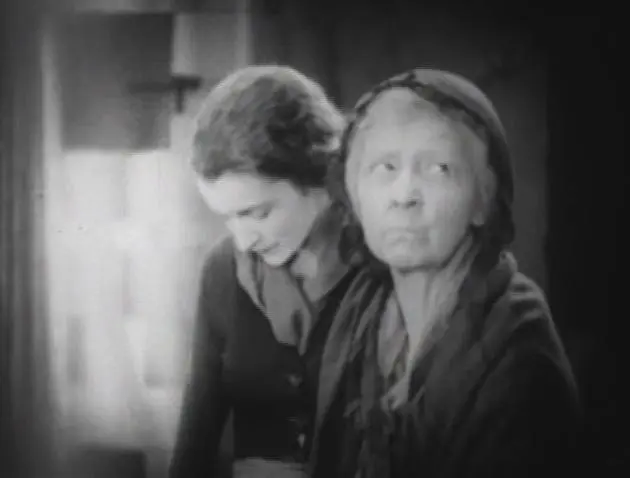
Technically, the film is a masterclass in pacing. Griffith moves between the intimate domesticity of the refugee shack and the sweeping chaos of the public squares with a fluid grace. The editing, while less revolutionary than his work in *The Birth of a Nation*, is more sophisticated in its emotional rhythm. He allows scenes to breathe, forcing the audience to sit with the characters in their moments of quiet despair. This is a far cry from the frenetic energy of Call a Taxi or the whimsical diversions of Don't Call Me Little Girl. Griffith is not interested in distracting his audience; he is interested in implicating them. The use of close-ups is particularly effective, isolating the characters from their bleak environment and emphasizing their internal resilience.
While often overshadowed by Griffith's more controversial or grander works, Isn't Life Wonderful deserves a place in the pantheon of great humanitarian cinema. It bridges the gap between the theatricality of the early silent era and the psychological depth of the coming sound age. It is a film that values the mundane over the spectacular, finding more drama in a boiling pot of water than in a thousand-man cavalry charge. Compared to the light-hearted fluff of Monty Works the Wires or the localized drama of Her Moment, Griffith’s exploration of the refugee experience feels startlingly modern. It anticipates the struggles of the 21st century, reminding us that the veneer of civilization is thin and easily punctured by economic hardship.
In the final act, when Paul and Inga return to their empty home, stripped of their winter's supply of food, the film reaches a crescendo of poignant stoicism. The title is spoken not with bitterness, but with a profound, almost terrifying optimism. It is the optimism of those who have nothing left to lose but their lives. This isn't the manufactured happy ending of What Love Will Do or the frantic resolution of June Madness. It is a hard-won, bloody-minded insistence on the value of existence. Griffith’s direction is at its most restrained here, allowing the actors and the setting to speak for themselves. The film remains a vital piece of cinema history, a reminder that even in the darkest chapters of human history, the act of survival is, in itself, a form of art. It stands alongside works like Bull Arizona - The Legacy of the Prairie in its attempt to capture a specific cultural zeitgeist, but surpasses them through its universal emotional resonance. Isn't Life Wonderful is not just a question; it is a battle cry for the indomitable soul.

IMDb 7
1922
Community
Log in to comment.