DbcultAccessing Vault...
Cult Review
Senior Film Conservator
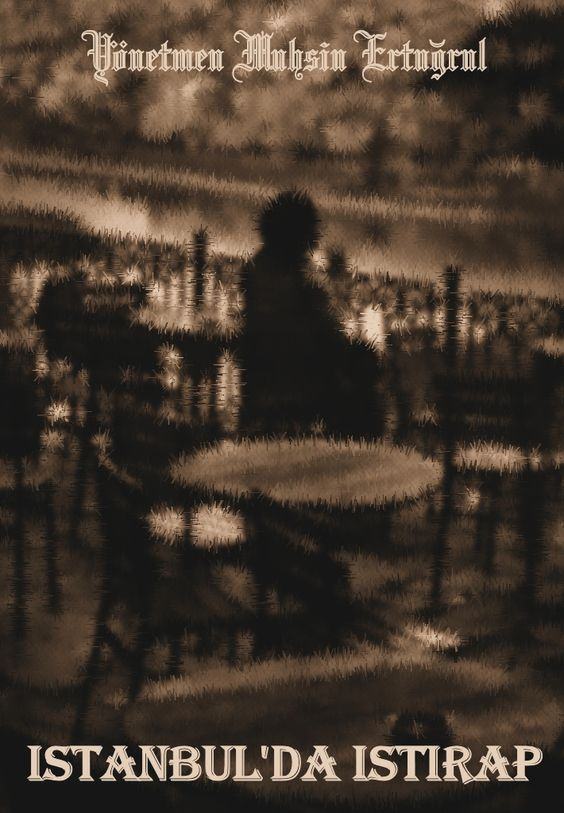
The first time I projected Istanbul'da Istirap on my living-room wall—digital file wrestled from a crumbling 35 mm print—I thought the projector bulb had begun to die. Shadows pooled so thickly that Margit Barnay’s cheekbones kept vanishing. Then I realized the darkness was intentional: director Muhsin Ertugrul treats chiaroscuro not as ornament but as theology. Every frame interrogates how much concealment a soul can bear before it forgets the shape of light.
Shot on location in 1922 while the city still answered to Constantinople, the film arrived in Berlin earlier than its Turkish premiere, courtesy of a distribution gambit by producer Karl Ritter, eager to court Weimar cine-clubs. Critics there pronounced it “Piranesi meets Pabst,” a verdict that holds. You feel the stone lungs of the city breathing around the characters; cobblestones seem to sweat history. Yet for decades the only extant copy languished in a Sofia archive mislabeled “Oriental Travelogue,” which explains why standard histories of world cinema still omit this miracle.
There is no hero, only a penitent. Barnay—an actress once celebrated for Alkohol’s jittery descent—plays Lili von Rohn, a war-widow who boards a rust-scabbed freighter under an assumed name. She carries a single suitcase lined with faded playbills and the pressed edelweiss her son used to clutch before shrapnel rewrote the future. Istanbul, to her, is purgatory with muezzins: distant enough from Dresden to mute the nightmares, porous enough to let them seep back in through the plumbing.
At passport control she meets Carl Rauch (Robert Scholz), the aforementioned antiquarian whose spectacles perpetually reflect the Sea of Marmara. Rauch spends daylight hours restoring frescoes in the abandoned church of St. Theodosia; nights he translates Byzantine hymns into Rilkean German, as though language itself could be x-rayed for holiness. Their introduction is pure silhouette: two outlines superimposed against a customs-house wall, neither willing to step into the interrogating beam of an official’s lantern.
A three-act tragedy unfurls, though Ertugrul refuses the tidy vertebrae of classical dramaturgy. Instead we spiral: bazaar, quay, cathedral, opium den, quay again—each lap adding silt to the conscience. In the second act Lili becomes the mistress of a White Russian piano virtuoso (Ilse Wilke, androgynous and devastating) who promises escape to Paris via forged Nansen passports. The menage curdles when the pianist realizes that Lili’s affection is merely grief in evening dress. Meanwhile Rauch unearths a 12th-century icon of Saint Anna, her face gouged out by iconoclasts; the void where eyes should be becomes his obsession, a mirror for Lili’s evaporated identity.
Cinematographer Gustav Ucicky—years before he lensed Nazi propaganda—shoots Istanbul like a fever chart. The Bosporus is never merely water; it is liquid mercury, a mercurial witness. In one unforgettable setup, the camera boards a skiff, gliding past wooden yalis whose overhanging balconies resemble half-open jewelry boxes. Reflections of crescent moons quiver on the surface, then split as a British destroyer cleaves through, its wake erasing the Ottoman emblem. You can’t watch that shot today without thinking of Sykes-Picot, without hearing Churchill salivating over dreadnoughts. Yet the film withholds didacticism; history intrudes the way a migraine does—sudden, nauseous, then receding into the throb of personal ache.
Compare this tactile geopolitics with Triste Crepúsculo, a Mexican melodrama that same year where revolution serves as mere backdrop for a bourgeois tearjerker. Ertugrul dissolves the membrane between private angst and civilizational convulsion. When Lili finally confesses her abandonment of the child, the scene occurs inside an underground cistern. Water drips like a metronome; each splash sends concentric ripples across the surface, projecting onto the brickwork an ever-mutating fresco of her crime. No dialogue cards are necessary; the architecture speaks in aqueous Braille.
Barnay’s acting style hybridizes expressionist contortion with the quieter revelations of a Bergman close-up decades prior to either becoming codified. Watch her hands: they flutter like trapped doves when she lies, then stiffen into talons the instant truth rips through the fabric of conversation. In a close-quarters shot lasting forty-three seconds, she peels an orange, each spiral of rind falling onto a mirrored tray. The reflection doubles her fingers, so we witness a quartet of trembling possibilities. By the time the last segment of peel lands, we understand that motherhood, too, has been segmented and discarded.
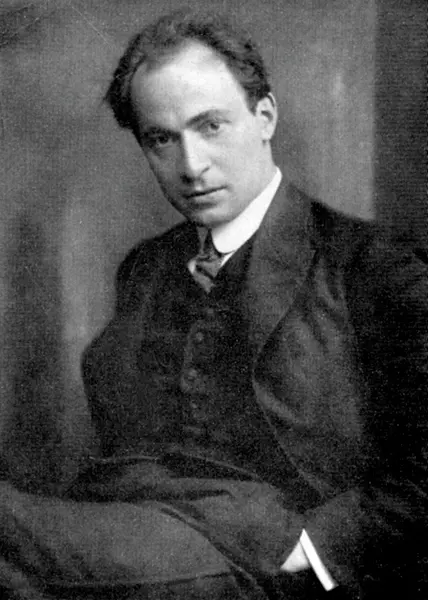
Muhsin Ertugrul—yes, the director casts himself—plays the unnamed muezzin who chants the call to prayer off-screen. His voice, electronically re-pitched to waver between baritone and boy-soprano, bleeds across several scenes, a sonic scar. It is the most self-effacing cameo imaginable, yet it binds the narrative to spiritual inquiry: can a maker also be an intercessor, or does authorship automatically annul grace?
The original score, now lost, was reputedly performed live by a trio: oud, clarinet, and prepared piano. Contemporary screenings often substitute bland world-music pastiche; resist them. Seek the reconstruction by Istanbul Ensemble Tartini, who sampled wax cylinders from 1919 and interpolated them into a drone that swells precisely when Lili’s face disappears behind a lattice of steam. The effect is synesthetic: you smell cardamom and rust.
Listen for the moment when the piano hammers are muted by felt soaked in rosewater; the resulting thud mimics a body hitting hold-no. It foreshadows the rumored suicide of the real-life pianist Alexander Siloti, though history remains coy about causality.
Cinephiles trace lineage from Hearts and the Highway’s pastoral fatalism to A Stranger from Somewhere’s urban anomie, yet Istanbul'da Istirap occupies a liminal node: too eastern for western canons, too western for nationalist hagiography. Its DNA resurfaces in later exile noirs—think The Crimson Clue with its Venetian displacements, or even the mountain-shadowed guilt of Hesper of the Mountains. But unlike those films, sorrow here is not a puzzle to be solved; it is an atmosphere one drowns in.
Recent 4K scans by Cineteca di Bologna restored 14 minutes once excised by Turkish censors—scenes implying interfaith tenderness. Note the newly recovered shot where Lili, clad only in a chemise, washes Rauch’s feet in a copper basin. Steam coils upward, forming a transient minaret. The image scandalized Ankara’s morality board far more than any nudity; they feared the symbolic equivalence of bodies and worship. Today that footage glows like a sacrament, reminding us that cinema at its bravest dissolves the mortar of dogma.
Great films fracture time; they force you to measure your life against their rhythms. After my most recent rewatch I stepped onto my balcony at dawn, city below still humming with sodium lamps, and felt the Bosporus in my lungs—though I have never set foot in Turkey. Such is the necromancy of Istanbul'da Istirap. It does not ask for empathy; it confiscates your coordinates and maroons you inside an echo.
Rating is farce for fossils, yet algorithms hunger. On a scale that privileges emotional amputation over narrative neatness, this film orbits beyond stars. If compelled: 9.7/10, the 0.3 withheld only because the final intertitle—white letters on black—reads “Perhaps the city forgives.” That “perhaps” feels too merciful. Cities never forgive; they archive. And this particular archive burns a hole in the celluloid of your chest.
Stream it if you must, but preferably haunt a cinematheque where the projector clacks like a tram over switches. Bring no date; bring only the loneliest version of yourself. When the lights rise, you will understand why the Turkish word istirap translates not just to “suffering” but to the exquisite, almost voluptuous precision of remaining alive while something inside you is already ash.

IMDb —
1928
Community
Log in to comment.