DbcultAccessing Vault...
6.6/10
Senior Film Conservator
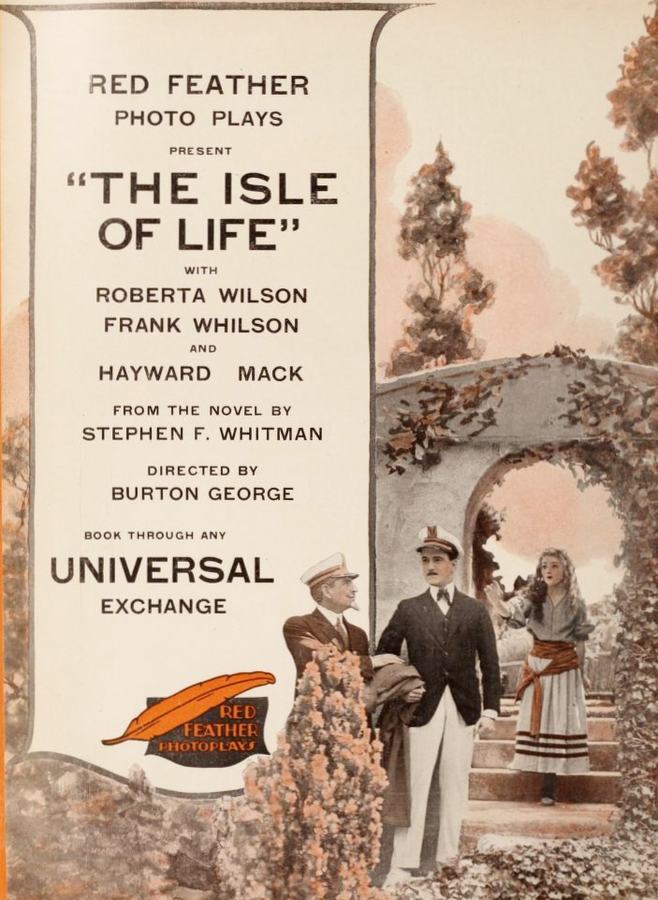
A definitive 6.6/10 rating for a film that redefined the boundaries of cult cinema. The Isle of Life remains a cornerstone of transgressive art.
The 1916 cinematic landscape was often dominated by moral binaries, yet The Isle of Life emerges as a startlingly complex meditation on the malleability of the human soul. Adapted from Stephen French Whitman’s prose, this celluloid journey bypasses the simplistic 'reformed rake' tropes of its era, opting instead for a grueling, almost tactile exploration of psychological transfiguration. Frank Whitson’s portrayal of Sebastian Maure is not merely that of a villain seeking a bride, but of a hollowed-out intellectual seeking a reason to exist beyond the echo chamber of his own fame.
The film opens with a sharp contrast between the light-drenched social circles of Rome and the internal darkness of Maure. Unlike the protagonists in The Woman in 47, who navigate social strata with a certain frantic desperation, Maure moves with a lethargic, predatory confidence. He is a man who takes 'keen delight' in the awe he inspires—a trait that mirrors the intellectual arrogance found in the titular character of Kreutzer Sonata. His books are described as 'daring,' a silent-film euphemism for works that likely challenged the Victorian leftovers of the early 20th century.
When Ghirlaine Bellamy (played with a luminous, fragile strength by Lillian Concord) enters his orbit, she represents more than a romantic interest; she is a moral affront to his nihilism. Her engagement to Vincent Pamfort (Hayward Mack) provides the necessary friction. Pamfort is the 'good standing' officer—the representative of order and tradition—making Maure the chaotic element that must either be expelled or transformed. The decision to follow her onto the vessel is the first crack in his calculated facade, a descent into the irrational that sets the stage for the film’s most shocking sequence.
The overboard abduction is a moment of pure cinematic audacity. In modern terms, we might view this through a lens of horror, but the 1916 audience would have recognized it as a 'grand gesture' gone toxic. Maure’s use of Ernesto Sangallo’s name to lure Ghirlaine to the deck reveals a manipulative streak that makes his eventual redemption all the more arduous. By throwing her—and himself—into the sea, he is effectively murdering their social selves. They are no longer the famous author and the American socialite; they are merely bodies struggling against the brine.
This sequence reminds me of the raw, elemental struggle depicted in The Primal Lure, though here the isolation is not the frozen North, but a sun-baked Mediterranean island. The rescue by Ilario (Hector V. Sarno) serves as the transition into the film’s second act: the purgatorial phase. The island is a space where the rules of Rome do not apply, and where Maure’s 'strong personality' is initially met with the suspicion of the primitive.
The introduction of the 'haunted villa' and the subplot involving Fannia (Roberta Wilson) and Annibale adds a layer of Gothic folklore to the narrative. The story of Fannia, sequestered at the top of a cliff to escape her father’s choice of a husband, provides a dark mirror to Ghirlaine’s own situation. However, whereas Annibale’s guardianship was born of a protective, albeit possessive, love, Maure’s initial motives are purely self-serving. The villa, avoided by the superstitious locals, becomes a laboratory for Maure’s psychological evolution.
It is within these crumbling walls that the film achieves its greatest emotional depth. The birth of Fannia’s child and Ghirlaine’s instinctive, motherly devotion to the infant serve as the catalyst for Maure’s epiphany. Lexically, we might call this the 'apotheosis of the domestic,' where the simple act of caring for a life more vulnerable than one's own shatters the ego. Maure, who previously lived for the 'awe' he could extract from others, begins to understand the 'awe' inherent in selfless service.
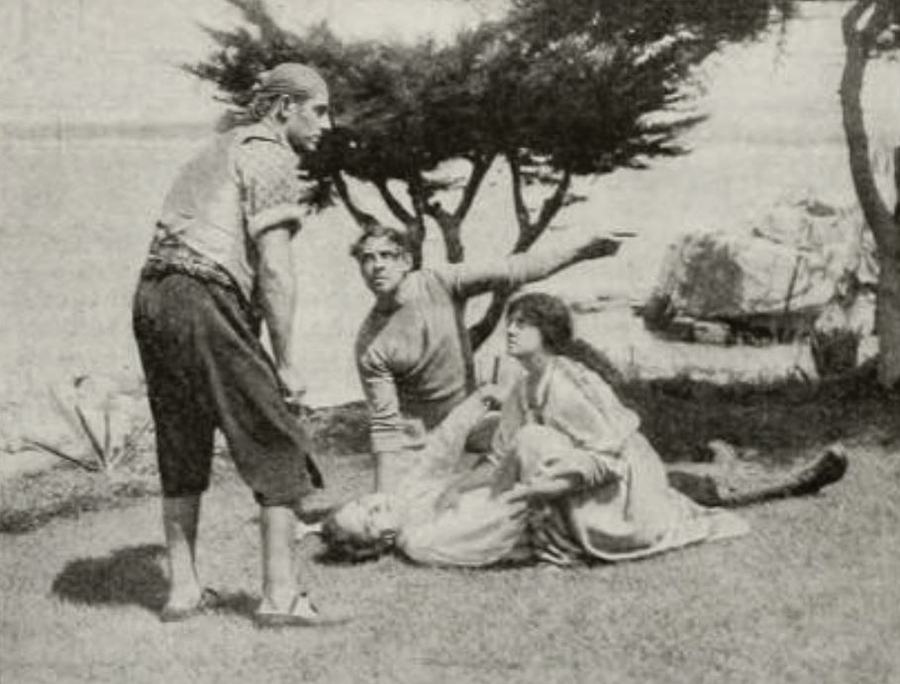
The outbreak of cholera is the film's turning point from a psychological drama to a hagiographic epic. The villagers, quick to blame the 'outsider' for the plague, represent the fickle nature of the masses—a theme explored with similar gravity in Life of Christ. Maure’s response to the epidemic is his penance. He does not use his intellect to flee; he uses it to heal. The man who once wrote 'daring books' now writes prescriptions and manages the logistics of death and recovery.
The visual storytelling during the plague scenes is remarkably grim for its time. We see the 'dread disease' not as a plot device, but as a visceral enemy. Maure’s transformation into a figure of god-like reverence among the natives is not portrayed as an easy victory, but as a grueling, soul-stripping process. He becomes the very antithesis of the man we met in Rome. If Her Bitter Cup deals with the social consequences of one's choices, The Isle of Life focuses on the internal, spiritual accounting of those same choices.
The arrival of the yacht, carrying Vincent Pamfort and Ernesto Sangallo, serves as the final test. In a lesser film, Maure might have hidden Ghirlaine or fought for her. Instead, he is 'stricken with the dread disease' at the moment of their arrival. This physical collapse mirrors his spiritual surrender. He allows Ghirlaine to leave, expecting nothing in return. He has finally 'stricken from his soul all of the evil,' a phrase that suggests a violent, surgical removal of the ego.
The conclusion, where Ghirlaine returns to him weeks later, is often criticized in modern feminist readings as a Stockholm Syndrome narrative. However, within the context of 1916 melodrama, it is intended as the ultimate validation of Maure’s metamorphosis. She returns not to the kidnapper, but to the saint he became in the crucible of the island. Her realization that she loves him 'more than anyone in the whole world' is the final piece of the puzzle, suggesting that true love is found not in the 'good standing' of an officer, but in the hard-won grace of a reformed sinner.
Directed with a keen eye for atmosphere, the film utilizes its locations to heighten the sense of isolation. The contrast between the open, dangerous sea and the claustrophobic, plague-ridden village creates a rhythmic tension that keeps the viewer engaged. The performances, particularly from Lillian Concord and Frank Whitson, possess a restraint that was rare in an era often characterized by histrionics. They allow the silence to speak, finding the 'influence of a good woman’s love' not in grand speeches, but in shared glances amidst the suffering.
While films like The Parson of Panamint deal with faith in a more direct, clerical sense, The Isle of Life finds its divinity in the secular acts of a broken man. It is a precursor to the great psychological dramas of the 1920s, a bridge between the moralizing shorts of the early cinema and the complex character studies that would follow. It remains a haunting, visually evocative piece of art that asks: can a man truly shed his skin, or are we all just waiting for the right island to force our hand?
Final Thought: For those who appreciate the intersection of high-stakes melodrama and philosophical inquiry, this film is an essential artifact. It lacks the polish of later sound era redemptions, but it possesses a raw, unvarnished power that contemporary cinema often struggles to replicate.
IMDb —
1928
Community
Log in to comment.