DbcultAccessing Vault...
Cult Review
Senior Film Conservator
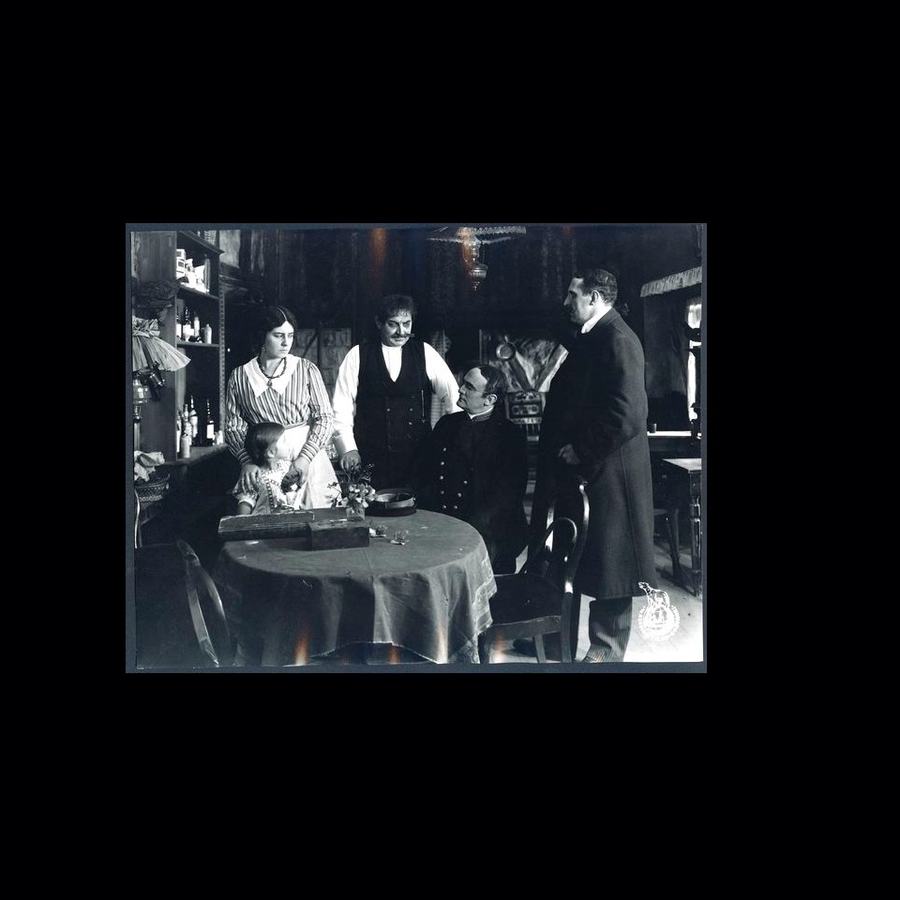
Spoilers flutter like moths around a lantern—impossible to cage without crushing their wings.
There is, lodged between the vertebrae of film history, a runtish sibling to Alexandra’s stateliness and The Price of Crime’s expressionist gloom: Hotel Paradiso, Carl Theodor Dreyer’s lone comedy—though calling it comic is like calling rigor mortis a posture. Shot in the anemic chill of a Danish autumn, the picture exudes the sulfuric cheer of a closed amusement park. From the first frame, a stationary wide shot of the hotel’s façade that holds so long the screen itself appears to mildew, the film announces its contempt for the audience’s comfort. No overture, no title card beyond the stark white lettering on black: Hotel Paradiso. Then the door creaks, and we are ushered into a world where slapstick is performed with the solemnity of last rites.
A canvas of cadaverous pastels
Dreyer, usually a surgeon of light, here works like a miserly anatomist: every bulb hangs too low, every curtain traps dust that turns sunbeams into coughing gas. The palette is intentionally sick—mustard walls bruised by sea-green wainscoting, nicotine moldings, and the perpetual ochre haze that suggests the entire building has been chain-smoking since the Franco-Prussian War. It is a universe drained of arterial color, waiting for someone to nick a vein and prove red still exists. Into this chromatic morgel struts Max in a canary tie, the only pure yellow in the film, a living highlighter mark on a mildewed manuscript. The moment he crosses the threshold the tie begins to dim, as though the hotel feeds on pigment.
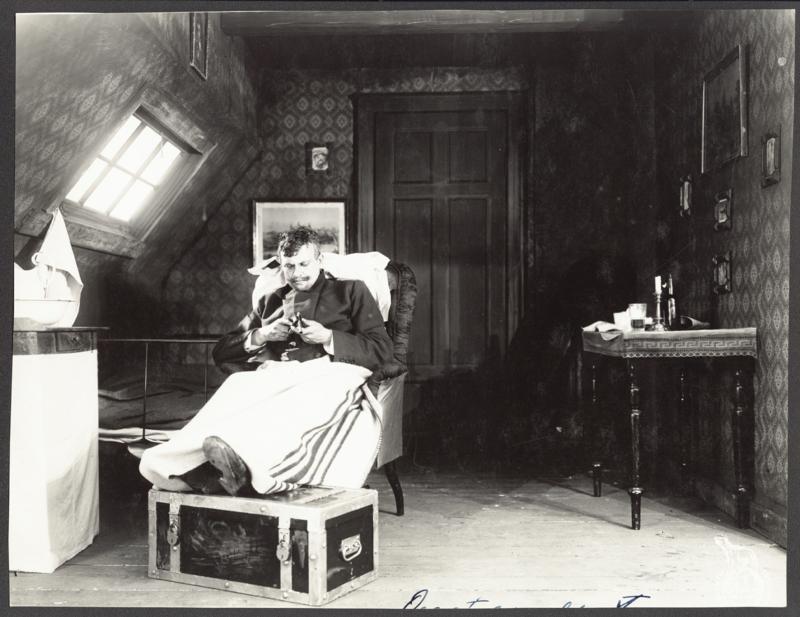
Performances calibrated to the millimeter of humiliation
Gunnar Sommerfeldt’s Boniface is a study in managerial impotence: spine like a string of wet pasta, smile like a hairline fracture. He measures out his days in the rustle of ledgers that never balance, caressing the spinal column of a fountain pen as if it could inseminate solvency. Watch the way he removes a key from its hook: thumb and forefinger form a beak, extracting the metal with the caution of a man defusing his own pulse. Peter Fjelstrup counterbalances with the louche physicality of a man who treats every corridor as a burlesque runway. His Max expands to fill negative space; when he laughs the chandeliers sway a millimeter, shocked that anyone still knows how.
Oda Larsen deserves a monograph: her Angelica performs boredom as religious ecstasy, eyelids half-mast in perpetual Stations of the Yawn. The voice—when she bothers—is a bored susurration suggesting she has already answered tomorrow’s questions yesterday. Yet in the linen closet tryst, her face fractures into a grin so predatory it seems to belong to another species. For thirty-three seconds she is alive, and the camera, usually Dreyer’s immobile judge, trembles as if caught in an illicit shudder.
A soundtrack of withheld notes and gastrointestinal suspense
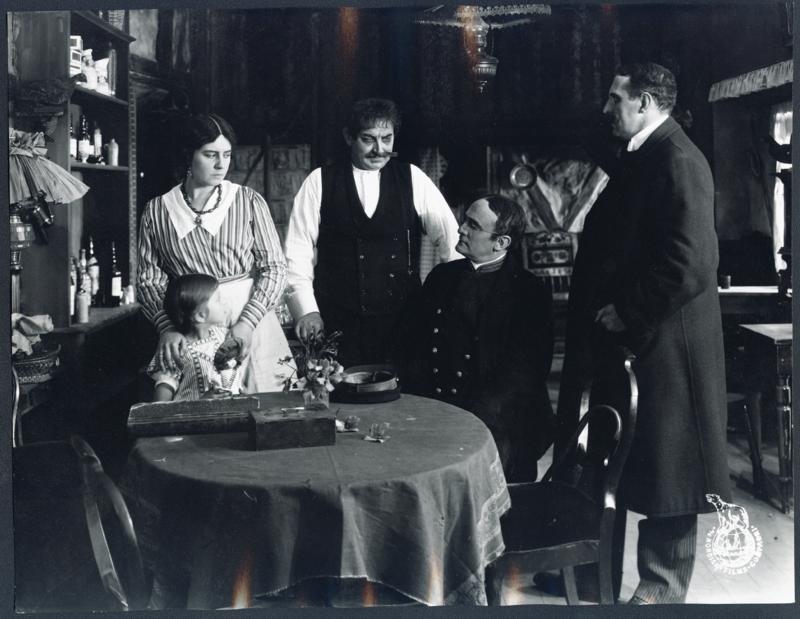
Dreyer banishes score; instead we inherit the hotel’s bowel sounds—pipes gargling, floorboards herniating, the faint thud of what might be a body or a sack of potatoes being dragged to the root cellar. Silence itself becomes an instrument, stretched until it squeals. When Angelica’s corset snaps in close-up, the crack ricochets like a starting pistol for despair.
Sex in the key of mildew
Eroticism here is not a matter of flesh but of ventilation. The lovers meet where the air is stalest: pantries, coal scuttles, the crawlspace under the register where exhaled breaths rebound in humid hiccups. Their embrace is a negotiation of elbows against sacks of flour, a choreography of inconvenience that renders every caress punitive. When Max finally unhooks Angelica’s collar, a puff of talcum erupts like ghostly applause; the erotic impulse dies mid-kiss, transmuting into a cough. The film posits that passion, in such rooms, can only be pathological—an allergy to stillness.
Comedy that autopsies laughter
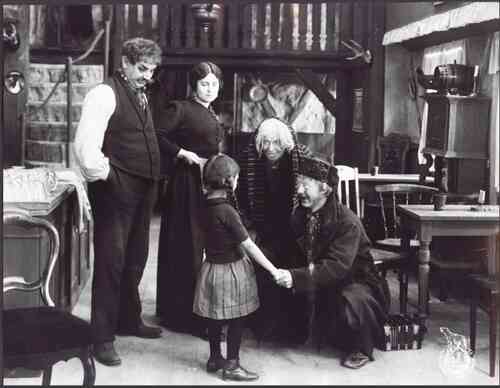
Traditional farce relies on acceleration; Dreyer decelerates until pratfalls achieve the gravity of public executions. A missing steak knife triggers a ten-minute inquisition where faces scrutinize one another with the solemnity of Inquisition portraits. The payoff—Boniface stabbing his own thigh—lands not as punchline but as forensic evidence. Blood seeps through gabardine in real time, a dark bloom that silences the dining room more effectively than any gun.
Compare this to Who Pays? where melodrama gallops, or Lena Rivers’s sentimental floods. Dreyer refuses catharsis; he administers a slow drip of chloroform, lets you awaken still inside the nightmare.
Mirror imagery: the asymptote of identity
The film’s visual spine is reflection. Mirrors appear cracked, veiled, or positioned to fragment a face into cubist self-surveillance. In the climactic locked-door tableau, Boniface confronts twenty diminishing selves, each iteration paler, suggesting the ego can be Xeroxed into oblivion. Dreyer denies the comfort of a single, stable self; identity here is a Russian doll carved from cigarette paper.
Colonial ghosts in the pantry
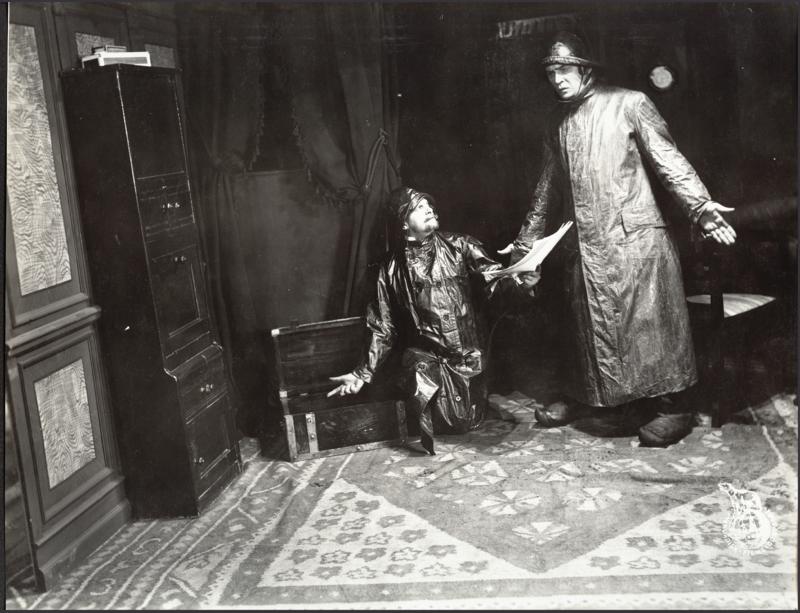
Though never spoken, the Empire haunts the margins: a crate labeled "Jamaican Rum" drips sticky residue; a retired magistrate brags of flogging "recalcitrants" in Ceylon; the doctor’s morphine arrives in vials stamped with export codes. The hotel profits from extraction yet remains stranded in provincial dusk, a mausoleum to a Denmark that never admitted its own participation in the plantation harvest. The guests drink rum sweetened by invisible sugar, and every belch smells of unpaid labor.
In a lesser film, these politics would be footnotes; here they seep like dry rot into the foundations, warping the comedy until it lists toward tragedy.
Gender as performance, performance as suffocation
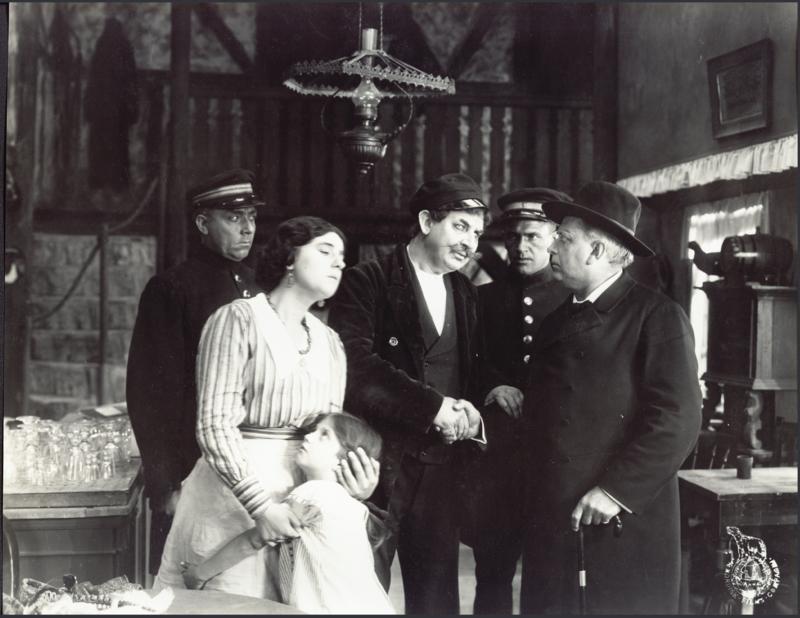
Angelica’s ennui is a revolt against ornamental femininity: she embroidies a handkerchief, then unpicks it nightly, condemning thread to eternal purgatory. Her affair is less erotic than atmospheric—a desperate opening of windows. Yet the film refuses feminist triumph; when she finally strides toward the exit, the doorknob comes off in her palm, a comic coup de grace that imprisons her in the very gesture of liberation.
Theology of inconvenience
A Lutheran pastor arrives to bless the boiler and leaves with his stole caught in the furnace flap, incinerating the symbol of grace while the machine keeps wheezing. No one comments; the incident hangs like a parable whose moral has been censored. Dreyer’s universe is Lutheran to the marrow: salvation is not denied, it simply never arrives, stuck in bureaucratic delay.
Where to exhume this curio
Streaming rights wander like the doctor’s morphine. As of this month, Hotel Paradiso survives only in a 1080p restoration on Danish Film Institute’s password-protected portal, and in a low-contrast 16mm print circulating among university archives. A Blu-ray paired with The Immortal Flame was mooted by Criterion but shelved when the licensing fee—rumored to equal the film’s original budget—was demanded by the estate. Bootlegs exist, watermarked like measles, yet even these are preferable to the abyss of total unavailability.
If you crave context, read Michael》s Dreyer biography, chapters 9–10; then view The Battle of Life to witness how other directors of the era handled ensemble farce with far less menace.
Hotel Paradiso is the cinematic equivalent of a laugh caught in the throat—an asphyxiation you mistake for humor. It will not cuddle you; it will not even bid you goodnight. Instead it locks the door, pockets the key, and leaves you listening to the rafters digest their own woodworm. And yet, weeks later, you will find yourself humming its silence, craving the sour perfume of its mildew, desperate to check in again—knowing full well the price is a sliver of your own reflection, left behind in the cracked mirror like an unpaid bill.
IMDb 6.7
1936
Community
Log in to comment.