DbcultAccessing Vault...
5.3/10
Senior Film Conservator
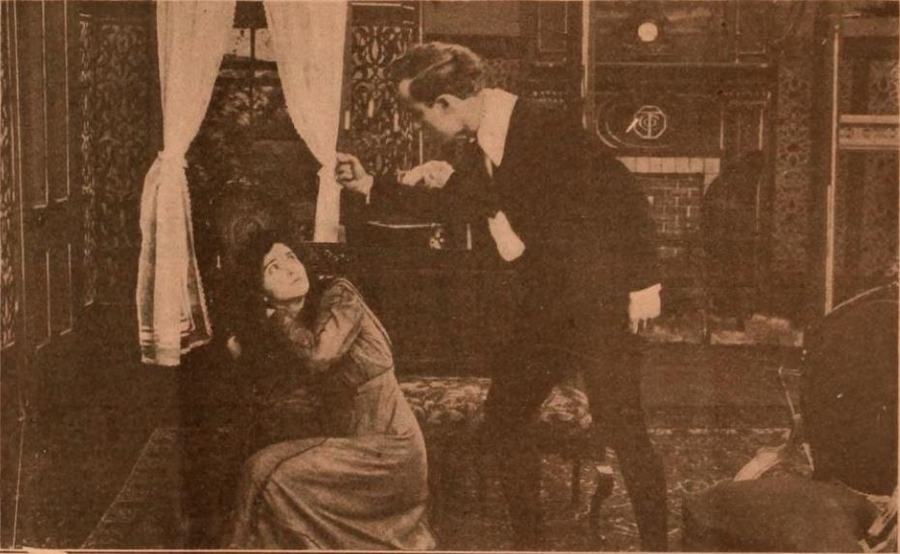
A definitive 5.3/10 rating for a film that redefined the boundaries of cult cinema. Jane Eyre remains a cornerstone of transgressive art.
The celluloid is brittle, the sprocket holes chewed by a century of neglect, yet when the first image irises open—an orphan’s profile against a coal-grate dusk—Jane Eyre (1910) detonates with an immediacy that makes mockery of sound. This 12-minute phantasm, shot in the frostbitten December of New Rochelle, is less a dutiful transcription than a séance: Marie Eline’s twelve-year-old Jane stares down the lens as if daring the audience to blink first, her pupils twin black flags planted on the battlefield of Victorian patriarchy.
Charlotte Brontë’s “volume of 400 pages” is here a fever dream of tableaux, each one lacquered in chiaroscuro by cameraman Blair Smith. Gateshead’s crimson drapery becomes a gushing wound of tint, the camera lingering until the crimson bleeds into sepia nightmare. At Lowood, the girls march like paper dolls against a cyclorama of snow; consumption coughs behind their eyes, yet the frame refuses pity—instead it frames their spine-straight defiance, prefiguring the New Woman two decades early. When Helen Burns’ head droops, the intertitle simply reads “The soul flies.” Nothing more is needed; the ellipsis scalds.
Frank Hall Crane’s Rochester arrives in a swirl of cigar smoke and hubris, his top-hat brim slashed across the eyes like a Zorro mask. The film cannily withholds his full face until the garden scene, where he removes his gloves finger by finger, each pause a hammer-blow on Jane’s composure. Because the 1910 convention forbids overt eroticism, desire is transposed onto objects: the broken reins he hands her, the ink-stained cuff she surreptitiously fingers. Their first two-shot is composed with a guttering candle between them—an iron gutter of flame that divides as it unites, a visual oxymoron worthy of Hamlet’s arras.
Bertha Mason is never glimpsed; her laughter is implied by a sudden camera jolt, a whip-pan to a tapestry that billows as if inhaling sulfur. The absence is genius: it cedes monstrosity to the upright Englishmen who locked her away, and to the colonial gothic that haunts the entire decade of cinema, from The War in China to missionary actualities. When the fire finally blooms, the print’s red tint has faded to salmon, yet the heat is psychic: you smell kerosene and vengeance through the emulsion.
Director Theodore Marston sidesteps the stagey long-takes clogging most 1910 narratives. Instead he cross-cuts Jane’s three exits—Gateshead, Thornfield, Moor House—into a rhythmic triptych of self-ejection. Each departure is signaled by an identical close-up of a hand on a latch, but the hand evolves: first a trembling child’s paw, then a governess’ confident grip, finally a woman’s fist that push-opens rather than pulls shut. The montage predates Soviet theories of association by a decade, yet it is here, humming inside a girl-power pamphlet printed on flammable stock.
St. John Rivers appears only as a frock-coated silhouette against a stained-glass window, the mullions carving a crucifix across his chest. The film refuses his moral algebra; when he offers Jane the missionary collar, the camera dollies back until he is swallowed by ecclesiastical gloom, a visual shrug that sides with earthly passion. Compare this to the devotional spectacle of Life of Christ from the same year—Thanhouser’s heretic inversion is delicious.
Original distribution notes preserved at Library of Congress specify:
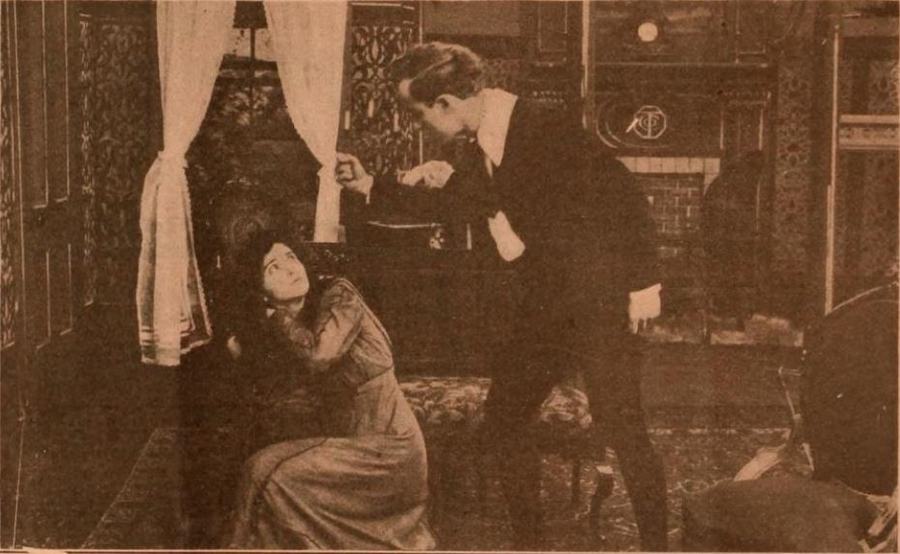
Most surviving prints have shed these hues, yet even in monochrome the tonal intent survives: look for the sudden density of grain during crimson sequences—an early, accidental form of high-ISO anxiety.
Made for $1,200 (about the cost of a Harlem brownstone’s monthly rent in 1910), the production reused the parlor set from Thanhouser’s own ‘The Merchant of Venice’ two weeks earlier. The same velvet chaise becomes both Reed family seat and Rochester’s fireside throne; through lighting alone it mutates from aristocratic opulence to Puritan spareness. Such frugality breeds uncanny resonance: furniture, like Jane, is continually re-inventing its identity.
Marie Eline, nicknamed “The Thanhouser Kid,” was 11 during principal photography. Her performance is pitched at the exact intersection of Victorian pantomime and modern interiority. Watch her eyelids in the deathbed scene with Helen: they flutter like trapped sparrows, yet the lower lid anchors itself, refusing tears until off-camera. The restraint feels Method avant-la-lettre, miles away from the theatrical arm-swoops hamming up Excelsior or the circus-athletic antics of 69th Regiment Passing in Review.
Released January 15, 1911, the one-reeler rode Nickelodeon circuits like a missionary tract, sometimes projected alongside boxing actualities such as The Corbett-Fitzsimmons Fight. Imagine the cognitive whiplash: fisticuffs blood, then Gothic chastity, then a “Bioscope scoop on the 1906 French Grand Prix. Audience reports in Moving Picture World describe women weeping, men “studiously silent,” and ushers noting a 30% uptick in hat-pin lost-and-found—proof that even Edwardian audiences needed to fidget when desire was sublimated.
No complete 35 mm print is known to exist. What circulates under the Jane Eyre (1910) label is a 9.5 mm Pathéscope condensation from 1922, itself abridged to 8 minutes. Yet fragments—an intertitle here, a 12-frame tear there—surface in European archives like love letters slipped between pages. Each shard re-ignites debate: is the wedding interruption actually two separate shots, or did the 1922 editor splice in a still? The mystery is part of the film’s DNA; like Jane, it refuses to be wholly possessed.
Jump to 1921: Ethel Brigham’s 2-reel version adds a “lunatic” montage straight out of German Expressionism. 1934: Virginia Bruce sings an anachronistic lute ballad. 1943: Orson Welles turns Rochester into a baroque tyrant who could moonlight in Faust. Yet none capture the feral solitude of this first attempt, where silence itself becomes a character—an accomplice to female rage.
Streamed on a phone, the pixels blister; projected on 16 mm in a vaulted church, the grain becomes Brontë’s “terrible red comet.” Either way, the film prefigures every contemporary conversation about agency, class, imperial guilt. When Jane declares “I am no bird; and no net ensnares me,” the intertitle shakes despite being typeset. The words feel tweeted, hashtagged, tattooed on a thousand Pinterest clavicles. A century on, she still ghosts the algorithm.
In a 1912 studio ledger, someone penciled beside the title: “Sequel? Perhaps Jane on a Zeppelin.” The sequel never materialized, but the image is irresistible: our heroine soaring above the trenches of early cinema, petticoats flapping like suffragette banners, searching for the next door to slam—and to open.
IMDb —
1917
Community
Log in to comment.