DbcultAccessing Vault...
5.4/10
Senior Film Conservator
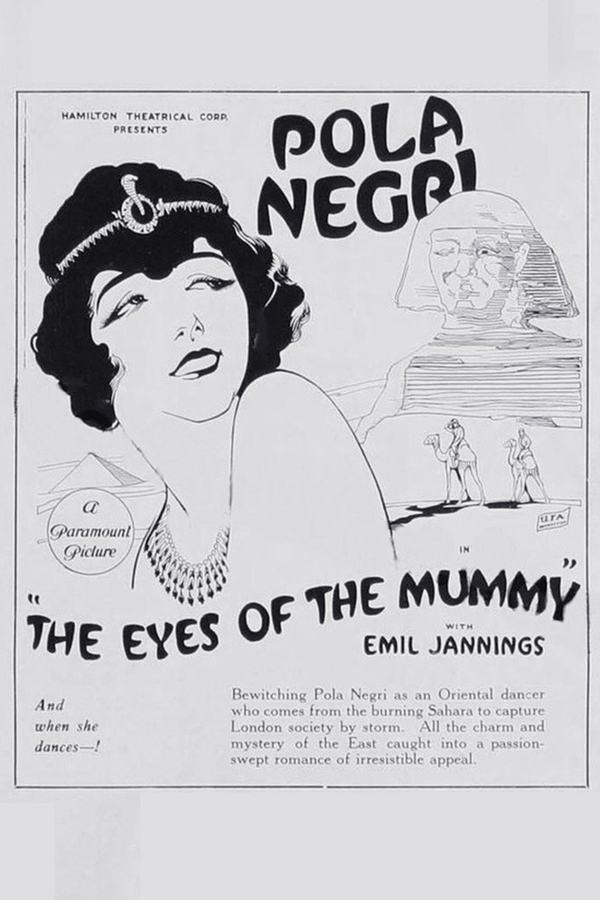
A definitive 5.4/10 rating for a film that redefined the boundaries of cult cinema. The Eyes of the Mummy remains a cornerstone of transgressive art.
German Expressionism exhumed a corpse in 1918 and decided the corpse should star in a love story.
If you approach The Eyes of the Mummy expecting gauze-wrapped ghouls lurching down corridors, recalibrate: Lubitsch’s earliest surviving thriller is a diaphanous fever of pigment, possession, and geopolitical vertigo. The true monster is the gaze itself—those lacquered, unblinking eyes of an Egyptian high priest that metastasize onto canvas, then onto celluloid, then onto you. In 59 brittle minutes, the film stages an archeology of surveillance decades before Baudrillard wrote about simulacra: the painted image drinks the soul like bathwater, and London’s high society sips the residue with champagne.
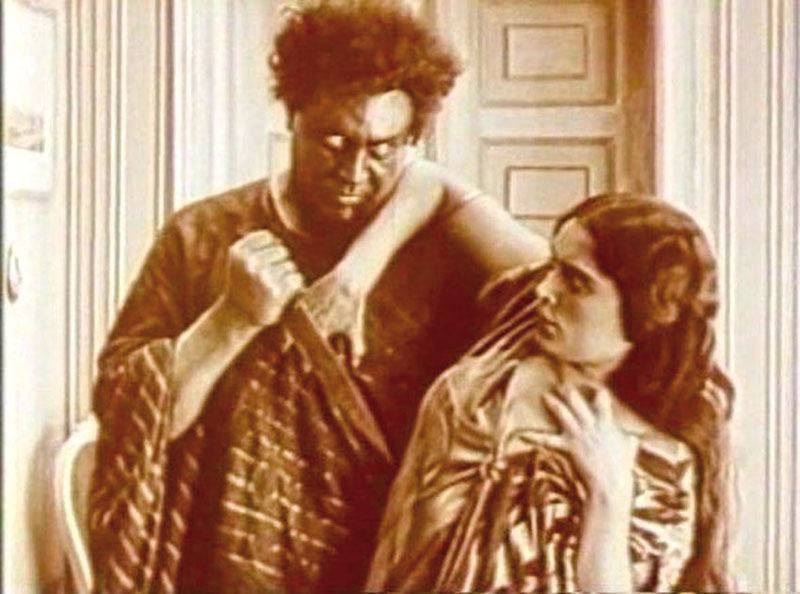
The first act unfolds almost without intertitles, trusting in Theo Robitzki’s chiaroscuro to do the talking. Torchlight carves sphinx-like silhouettes onto alabaster; priests glide like negative space come alive. Enter Harry Liedtke’s Albert Wendland—an artist-traveler who could be the debauched cousin of the protagonist in Sins of Her Parent. He sketches ruins for postcard companies, blissfully unaware that every line he draws is a suture in his own shroud. When he spots Ma chained inside a frescoed antechamber, Lubitsch withholds the conventional close-up; instead the camera ogles her through a cracked column, as if even the lens fears desecration. The implication: colonial tourism is already a form of bondage.
Once Ma is smuggled to England inside a sarcophagus-crate—note the cargo priority: mummy first, human second—the film’s palette inverts. Cairo’s sun-seared ochres flip to wan, gaslit blues. Suddenly we’re in a Mayfair salon where women wear Empire-waist gowns and gossip about “that odd little foreign duchess who never blinks.” The transition is so abrupt it feels like two separate films sutured by scar tissue. Yet that disorientation is the point: empire is the ultimate tomb, just better wallpapered.
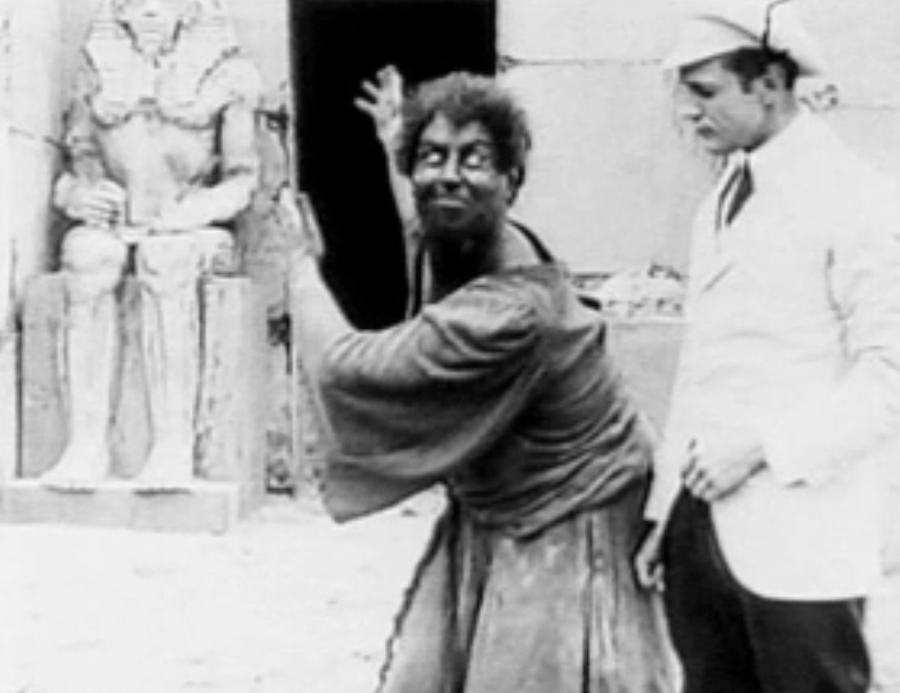
Silent-era reviewers drooled over Negri’s “voluptuous terror,” but today her acting looks almost experimental: she performs trance rather than emotion. Watch the way her pupils drift a millisecond off her scene partners, as though permanently tethered to something writhing behind the wall. In the scene where she first caresses the English piano, her fingers freeze mid-arpeggio; the chord lingers like a question she refuses to answer. The gesture predates—and maybe out-creeps—Max Schreck’s rat-clawed silhouette in Nosferatu. Critics who label Negri a mere vamp sell her short; she’s an ambulatory trauma study, a living illustration of Freud’s “Uncanny.”
As the high-priest Radu, Jannings doesn’t chew scenery—he inhales it like hookah smoke. Lubitsch lets him swell to fill entire frames, his shaved head lacquered until it reflects torch flames like a bronze mirror. The performance is so corpulent it borders on the absurd, yet the film needs that girth; Radu must feel like gravity itself. When he finally stalks through London’s pea-soup fog, the camera tilts upward so his headdress resembles a pagan steeple piercing Christianity’s sky. One half expects Big Ben to chime in hieroglyphs.
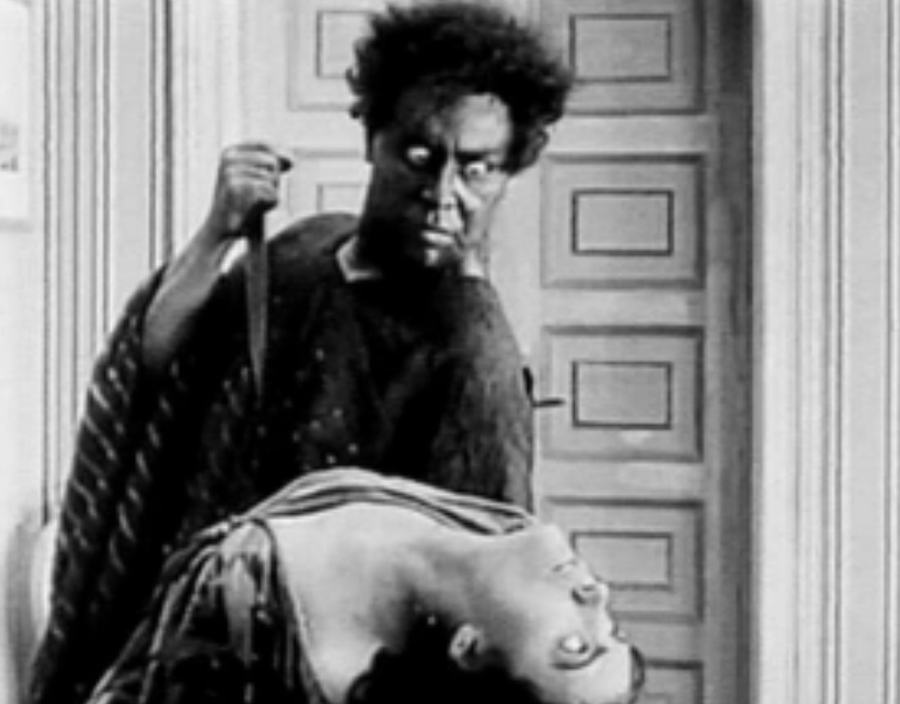
Mid-film, Radu ships a life-size portrait of Ma to London. The canvas arrives cracked, eyes agape like ruptured twin suns. Whoever hangs it in the drawing room effectively installs a panopticon in oil. From this point, the film’s tension pivots on indexicality: is the danger inside the image or inside the viewer? Ma collapses each time she meets her painted gaze, as though the portrait siphons the very act of being perceived. In 1918 this was heady stuff, predating Baudrillard’s simulacrum theory by half a century and chillingly echoing the modern dread of deep-fake replication.
Lubitsch stages the inevitable conflagration like a sacrificial rite. Ma applies torch to canvas; the painted iris bursts into a magnesium flare that imprints itself onto the negative. For a fleeting moment, the screen is nothing but an incandescent eye—celluloid watching you. The sequence is so radical that German censors in Munich demanded an alternate ending where the portrait merely gets “respectfully stored.” Thankfully, the print that survives via the Bundesarchiv preserves the apocalypse.
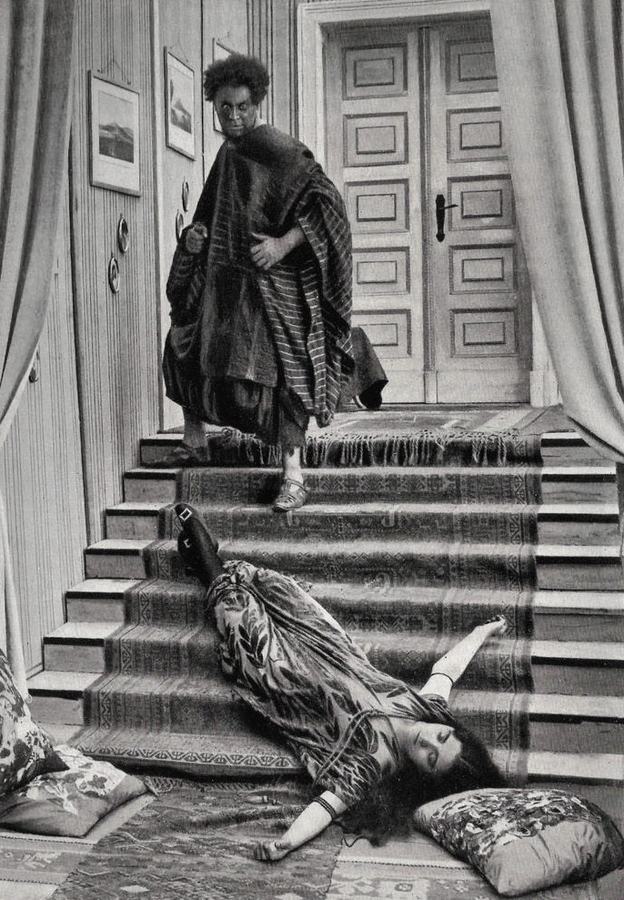
Scholars worship the later “Lubitsch Touch”—that feather-light innuendo which lets boudoir doors open and close just off-screen. Here the touch is more of a “gouge.” The camera lingers on manacles, on the sweat-slicked floor of a tomb, on Negri’s throat as she swallows a scream. Yet even in this nascent stage, you can spot the future master of ellipsis: notice how the actual rescue from the temple occurs off-camera, relayed only through a torn fragment of Wendland’s sketchbook. Lubitsch already understood that absence can emote louder than presence.
Post-colonial theorists could feast on this film for weeks. The narrative literally imports a colonized woman as loot, then frets when the loot talks back. Yet the film is also surprisingly candid about England’s complicity: the same gentlemen who toast “the Empire” scramble to lock their doors once they learn the curse has docked at Southampton. The allegory isn’t subtle—empire imports trauma, trauma imports itself—but Lubitsch’s proto-feminist spin lies in letting Ma engineer her own exorcism. She doesn’t wait for male salvation; she strikes the match.
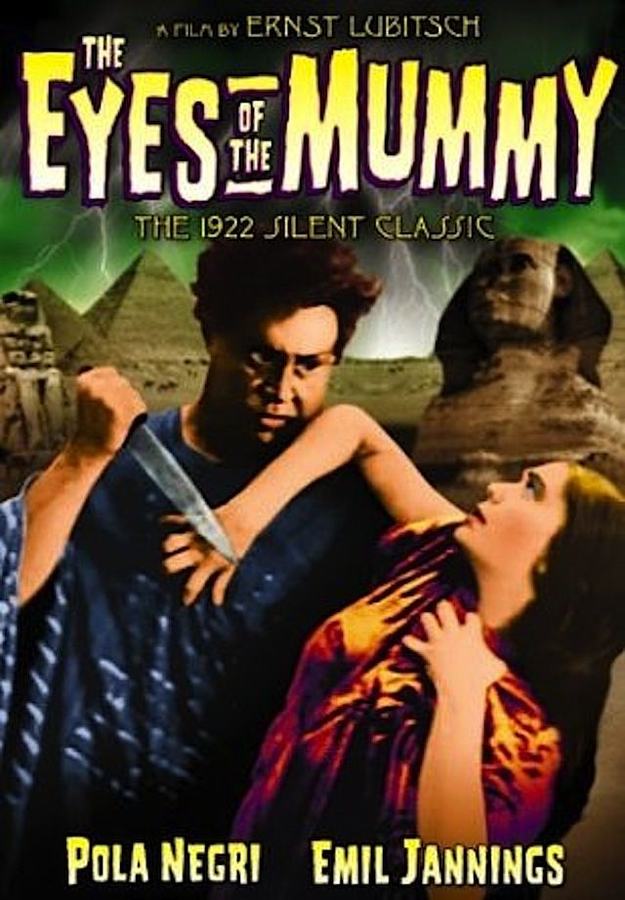
Archivally, the movie survives in a 35mm nitrate print struck for Scandinavian distribution in 1920. The tinting—amber for Egypt, cobalt for England—was restored by EYE Filmmuseum in 2018 using traditional hand-dye techniques. The result: a palimpsest of color that flickers like memory unsure of its own coordinates.
Place The Eyes of the Mummy beside Ramona or When Love Is King and you see how brazenly Lubitsch abandons melodrama’s safety rails. Those films cushion tragedy with pastoral redemption; Mummy offers only smoke and a hole where an iris used to be. Conversely, stack it against America Is Ready and you appreciate how international horror already transcended national borders before Hollywood codified the grammar. The movie’s DNA even slithers into later Gothic romances like Dragonwyck (1946), where painted portraits again pulse with voyeuristic venom.
Most home-video releases slap on generic orchestral pastiche. Ignore it. Screen the film silent, perhaps with nothing but a low sine-wave hum from a subwoofer. The absence of score exposes micro-sounds—your own heartbeat, the projector’s flutter—that dovetail with the movie’s obsession with unseen surveillance. Silence becomes the film’s third character, an aural tomb vibrating at 20 Hz.
Is The Eyes of the Mummy a flawless relic? Hardly. Its pacing lurches like a dromedary over cobblestones, and the London scenes betray penny-pinching sets that wobble when doors slam. Yet its conceptual audacity—portrait as parasite, empire as necromancy, woman as both cargo and detonator—feels more urgent now than in 1918. In an age where Instagram filters graft ancient Egypt onto selfies, the film’s central terror—“the image will replace you”—has migrated from fantasy to everyday pathology.
So watch it not as antiquarian homework but as a warning scrawled in kohl: every time you press the shutter, someone—something—presses back. The eyes of the mummy are no longer in the tomb. They’re in the lens, the screen, your own pupils dilating at 3 a.m. as you scroll. Lubitsch knew. The rest of us are still learning.
Where to watch: 2K restoration streaming on Deutsche Kinemathek’s Vimeo channel (region-free), included in the “Lubitsch in Berlin” Blu-ray box set (Flicker Alley, English subtitles), or catch a rare 35mm print at the British Film Institute’s annual “Silent Terror” festival each October.

IMDb —
1935
Community
Log in to comment.