DbcultAccessing Vault...
Cult Review
Senior Film Conservator
Is Jane's Honeymoon worth watching today? Short answer: yes, if you have an appetite for the chaotic energy of silent-era domestic farces, but no if you expect any semblance of emotional logic or healthy relationship dynamics.
This film is specifically for historians of the 'newlywed' subgenre and fans of high-speed physical comedy. It is absolutely not for those who find the 'incompetent housewife' trope grating or those who prefer their romantic resolutions to be earned rather than gifted by a sudden change in the weather.
1) This film works because it leans into the absolute absurdity of its premise, treating a bad dinner party with the same gravity as a Shakespearean tragedy.
2) This film fails because the character of Earl is fundamentally unlikable, making it difficult to root for a reconciliation that feels more like a hostage situation than a romance.
3) You should watch it if you want to see a fascinating precursor to the modern sitcom, complete with the 'boss coming to dinner' trope that would eventually become a staple of television.
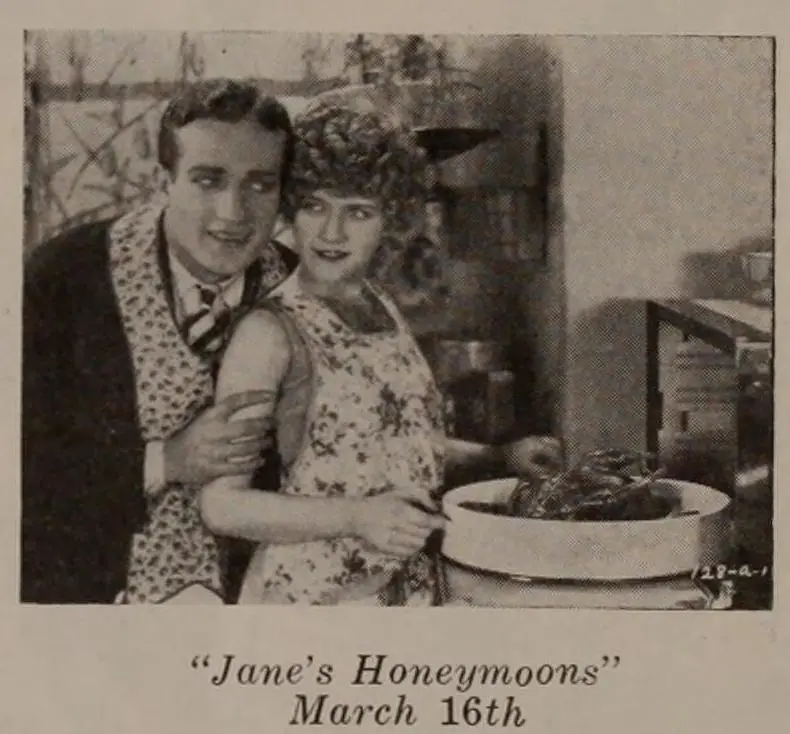
The film opens not with a soft focus on love, but with the ticking of a clock. Director Roy Evans understands that in the world of Earl McCarthy’s Earl, time is the enemy. The opening sequence, where Earl lingers over a goodbye kiss, is played for laughs, but there is a palpable sense of dread. We see the boss, played with a delightful, vein-popping intensity by Charles King, pacing like a caged tiger. This isn't just a comedy about a late employee; it's a commentary on the suffocating nature of the early industrial workspace.
Thelma Daniels brings a manic, wide-eyed energy to Jane. When she calls the office repeatedly, she isn't just being a 'doting wife'; she is a disruption to the capitalist machine. The physical comedy here is sharp. Every time the phone rings, Earl’s flinching is visible. It’s a performance of pure anxiety. Compared to the more subtle domesticity found in The Newlyweds' Neighbors, Jane's Honeymoon feels like it’s vibrating at a higher, more unstable frequency.
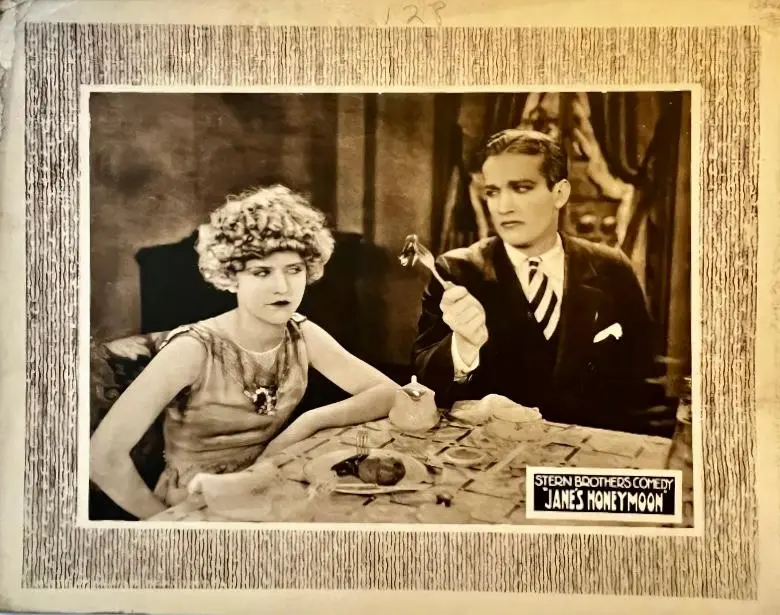
The centerpiece of the film is the dinner party. It is here that the film shifts from a workplace comedy to a surrealist nightmare. Jane’s total lack of culinary skill is treated as a character flaw of epic proportions. When the boss and his wife sit down, the tension is thick enough to cut with a dull knife—which is likely what Jane used on the roast. The moment the boss tastes the second course and decides he is being poisoned is the film’s peak. It’s an insane escalation. He doesn't just think the food is bad; he thinks it’s a premeditated hit.
This scene works because of the lighting and the claustrophobic framing. The dining room feels small, the shadows are long, and the boss’s reaction is so over-the-top that it borders on the grotesque. It’s a far cry from the more grounded melodrama of The Risky Road. Here, the stakes are life and death, or at least they are in the mind of a man who can't handle a little bit of undercooked poultry.
Jane's Honeymoon is worth watching for its historical value and its sheer, unadulterated speed. It moves from a wedding to a divorce and back to a wedding in the span of a few reels. It is a masterclass in how to pack a massive amount of plot into a short runtime without losing the audience's attention, even if you lose their sympathy for the characters.
The transition to the divorce court is where the film takes its most cynical turn. The 'hot words' exchanged between Jane and Earl are not shown in detail, but the fallout is immediate. In the 1920s, divorce was a scandalous topic, yet here it is treated as a punchline. Jane charges cruelty—a serious legal claim—and is granted a decree almost instantly. The speed of the legal system in this film is the most fantastical element of the whole production.
But then, the courthouse steps happen. This is the moment that will either make or break the film for a modern viewer. One look, one sentimental thought, and the entire legal process is rendered moot. They rush to a church to be re-married. It’s a circular narrative that suggests these two are trapped in a loop of their own making. It’s dark. It’s weird. It’s a bit of a mess, honestly. But it’s a fascinating mess.
Thelma Daniels is the standout. While Earl McCarthy plays the 'straight man' to the chaos, Daniels is the engine. Her performance is a precursor to the screwball heroines of the 1930s, though she lacks the sophisticated wit of a Carole Lombard. She is all instinct and movement. Lillian Worth, in a smaller role, provides a necessary foil, but the film belongs to the central couple's dysfunction.
Roy Evans’ direction is functional but effective. He uses close-ups to emphasize the boss’s rage and wide shots to show the desolation of the burnt kitchen. The pacing is relentless. There is no room for breath. In this way, it mirrors the frantic nature of early 20th-century life. It lacks the visual poetry of The Silent Master, but it makes up for it with sheer kinetic energy.
Pros:
- Exceptional comedic timing from Thelma Daniels.
- A fascinating look at 1920s office culture and social expectations.
- Short, punchy runtime that never drags.
- The 'poison' scene is genuinely funny in its absurdity.
Cons:
- The logic of the reconciliation is non-existent.
- Earl is a deeply frustrating protagonist.
- The 'incompetent wife' trope is laid on very thick.
Jane's Honeymoon is a relic, but it’s a vibrant one. It captures a specific moment in cinematic history where the anxieties of the workplace and the home were being negotiated through the lens of farce. It’s not a deep film, and it’s certainly not a romantic one, despite what the title suggests. It is, however, a frantic and occasionally hilarious look at two people who probably shouldn't be married, but who are too sentimental to stay apart. It works. But it’s flawed. Watch it for the history, stay for the burnt roast.
IMDb —
1923
Community
Log in to comment.