DbcultAccessing Vault...
Cult Review
Senior Film Conservator
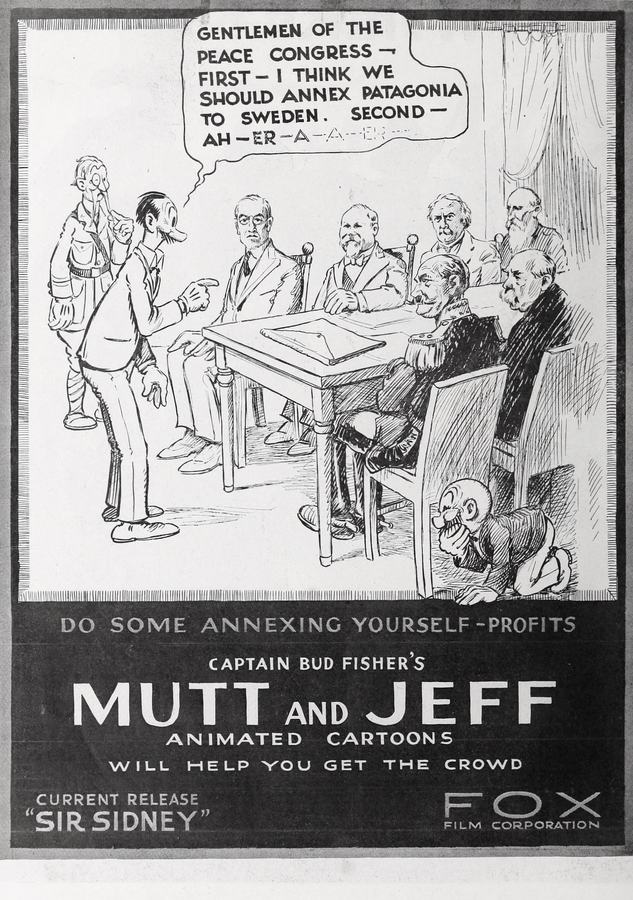
Imagine, if you can, a world where the ink on armistice is still damp and the air tastes of gunpowder and gallows humor.
In that twilight haze, Bud Fisher—newspaper cartoonist turned cinema prankster—unleashes Sir Sidney, a two-reel stick of dynamite disguised as a comedy short. Ostensibly another Mutt and Jeff caper, the picture is really a sly, demented pasquinade of the Paris Peace Conference, a geopolitical circus where the clowns have bayonets and the lions wear top hats.
Forget linear storytelling. Fisher’s narrative is a palimpsest: each gag scraped over the last, revealing older, darker jokes underneath. Mutt—gangly, top-hatted, morally elastic—smuggles himself into the Quai d’Orsay by posing as Sir Sidney, an obscure British peer whose credentials are a monocle and an accent that oscillates between Cockney and Transylvanian. Jeff, his pint-sized partner, hitches along inside a diplomatic pouch. Once unpacked, they ricochet through marble corridors, swapping nameplates, re-drawing borders on a Rand-McNally with a crayon, and turning the Council of Ten into the Council of Twelve-and-a-Half.
The film’s centerpiece is a hallucinated ballet of bureaucratic absurdity: Mutt commandeers a stenographer’s pool and dictates a clause demanding that Germany pay reparations in jellybeans; Jeff, believing he’s found a nursery, rocks a peace treaty to sleep like a infant. When the final document is signed, the camera lingers on a single jellybean melting into the parchment—an image so quietly apocalyptic it makes the Somme look like a spelling bee.
Fisher, unschooled in the grammar of Eisenstein but fluent in the syntax of newsprint, opts for a staccato montage. Frames skip like stones: a close-up of a monocle reflecting a map of Alsace-Lorraine, a medium shot of Jeff licking a stamp that reads Return to Sender: The Austro-Hungarian Empire, a long shot of delegates chasing their own top hats in a wind tunnel of papers. The intertitles, handwritten in Fisher’s jagged scrawl, behave like ransom notes from History itself.
Color tinting—amber for interiors, viridian for exteriors, blood-red for the signing ceremony—turns the 35mm print into a bruise. The tinting is so aggressive that when the film screened at a 1954 veterans’ hall in Milwaukee, two Legionnaires swore they smelled mustard gas.
Bud Fisher never intended Mutt and Jeff to be flesh; they were pen-and-ink grotesques. Yet here they are, incarnate. The taller half, Bud Duncan, moves with the rubber-band elasticity of a Harold Lloyd who’s been stretched on the rack of postwar anxiety. The shorter, Harry “Snub” Pollard, has the blinkered innocence of a child who has witnessed too much and understood none of it. Their timing is not Keystone chaos but something colder, more surgical—each pratfall lands like a verdict.
Watch Jeff’s face when he accidentally salutes a portrait of Kaiser Wilhelm: the salute morphs into a wave, then a benediction, then a nervous tic that will haunt your dreams. It’s Chaplin’s Great Dictator avant la lettre, but without the humanist sermonizing.
Released in March 1919, the film is defiantly silent, yet you’ll swear you hear the echo of distant artillery. Every intertitle is a mortar burst: “Article 231: The war was nobody’s fault—so everybody must pay.” The absence of synchronized dialogue is not a technical limitation but a moral choice—Fisher refuses to give the peacemakers the dignity of voices.
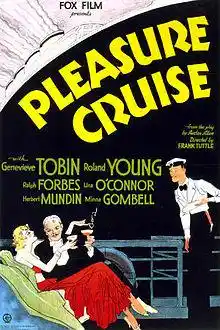
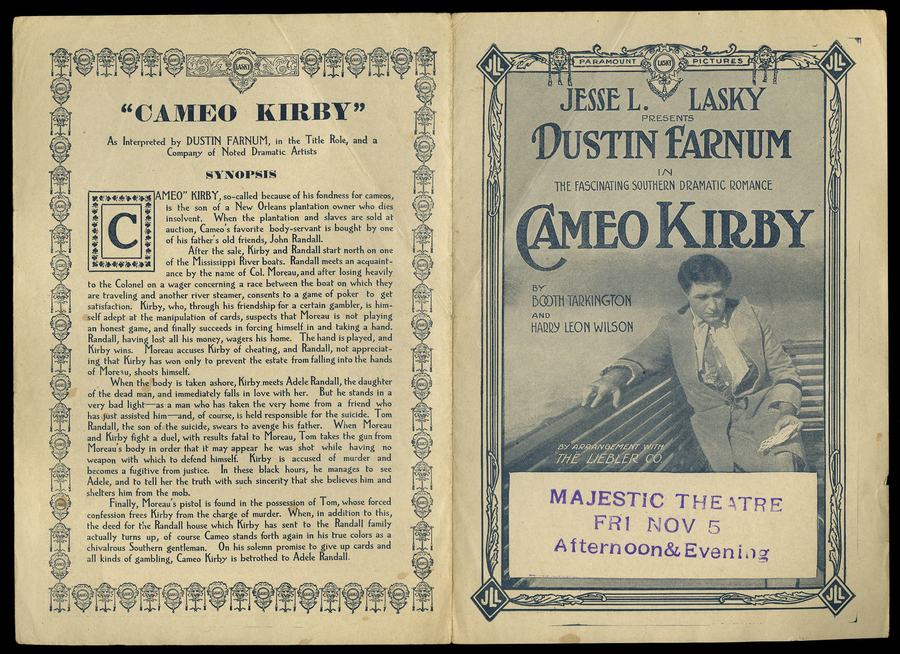
Place Sir Sidney beside Breakers Ahead (a maritime melodrama also from 1919) and you’ll see two Americas: one praying for rescue, the other laughing at the lifeboat. Contrast it with The Waybacks (1925), whose rural nostalgia now feels like a deliberate amnesia. Where A Modern Musketeer celebrates the American go-getter, Fisher’s film autopsies him.
Even the European canon feels the aftershock. The jellybean reparations scene prefigures the bureaucratic lunacy of Il medico delle pazze (1954), while the top-hat tornado anticipates the aristocratic entropy in Daddy Ambrose (1922). Yet Fisher’s cynicism is more corrosive: he refuses to believe, as Hands Across the Sea does, that international camaraderie can be sung into existence.
Contemporary critics didn’t know whether to laugh or court-martial the projectionist. Variety called it “a travesty unfit for the victory spirit,” while the New York Herald sniffed at its “Boche-like disrespect for protocol.” The film vanished from theaters faster than you could say war-guilt clause. Prints were melted for their silver nitrate; Fisher, shrugging, returned to comic strips where the stakes were lower and the censors less trigger-happy.
Flash-forward to 2011: a rusted canister labeled “Sydney—Comedy” surfaces in a Franciscan monastery outside Lyon. Inside, 8 minutes of the original 12 survive—enough to reconstruct the film’s savage heart. The restoration team, funded by an anonymous donor rumored to be a descendant of Clemenceau, opted to preserve the scratches, the cigarette burns, the very tremor of the sprocket holes. The result is a ghost story on celluloid: every flicker feels like a shell casing dislodged from the mud.
Stream it today and you’ll feel the sting of recognition. Replace jellybeans with crypto, swap the Quai d’Orsay for Davos, and you’ve got a playbook for twenty-first-century summits where promises are minted, traded, and short-sold before dessert. The film’s final image—two silhouettes dwarfed by a city that refuses to learn—could be any capital where lobbyists toast to peace over $3000-a-bottle Armagnac.
You don’t enjoy Sir Sidney; you survive it. It’s a mere 12 minutes, yet it hangs heavier than all four hours of The Craving. The film refuses catharsis; instead it offers a dare: to laugh at the precipice and then admit the joke is on us. Seek it out in the darkest corner of your favorite archive, let its jellybean nihilism stain your tongue, and when the credits roll—white letters on black, no music—notice how the silence tastes of cordite and unfinished business.
—projectionist’s note, scratched into the final frame: “History repeats itself, first as tragedy, second as vaudeville.”
IMDb 6.3
1935
Community
Log in to comment.