DbcultAccessing Vault...
Cult Review
Senior Film Conservator
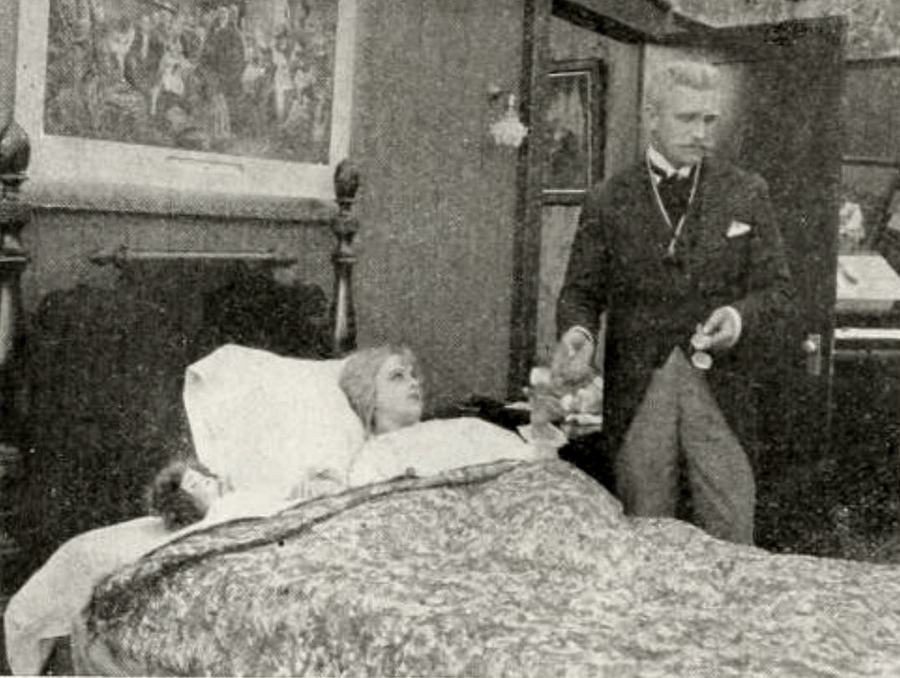
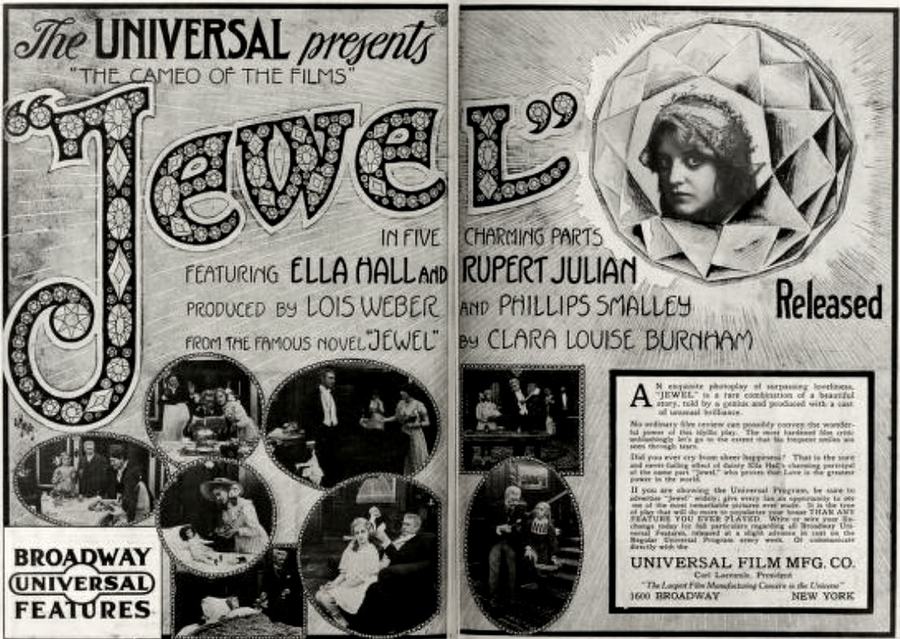
Lois Weber’s Jewel—long misfiled as a quaint relic of Christian Science propaganda—deserves resurrection as a key text in the prehistory of American magical realism. Shot in 1915 when the grammar of cinema was still wet cement, the film stages a collision between metaphysical idealism and the material decay of Gilded Age entitlement. Every iris-in feels like a cathedral rose window contracting; every intertitle glows with the phosphorescence of scripture. Weber, herself a convert to Eddy’s teachings, doesn’t merely illustrate faith; she weaponizes the medium itself, bending temporal continuity so that prayer becomes an edit, and an edit becomes a miracle.
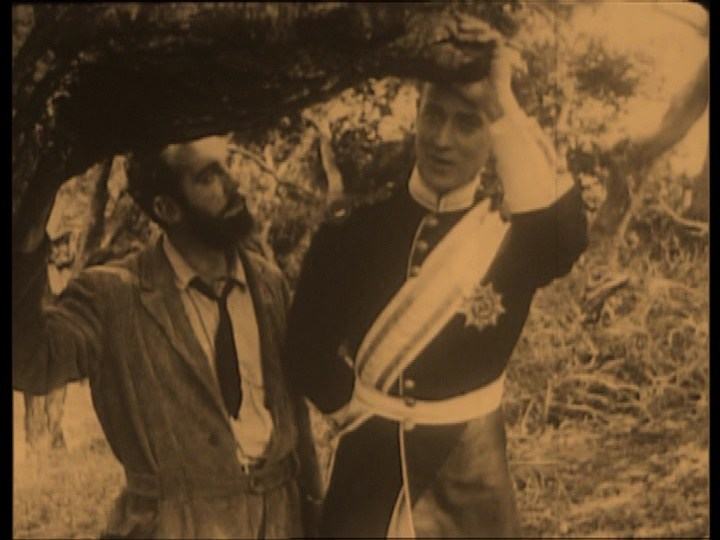
The cinematographer, Abe Mundon, treats celluloid like stained glass. Day interiors are soaked in magnesium flares that halo Jewel’s curls until the child seems back-lit by heaven’s own arc lamp. Night sequences, by contrast, drown in tenebrous cobalt—Mr. Evringham’s study becomes a Caravaggio cavern where candlelight carves guilt into every wrinkle. The transition scenes—Jewel wandering the estate’s yew-lined avenues—are double-exposed with faint superimpositions of lilies and open Bibles, so that nature itself appears to annotate her thoughts. This isn’t naïve sentimentality; it’s a dialectical montage that argues the visible world is merely the first draft, endlessly revisable by disciplined mind.
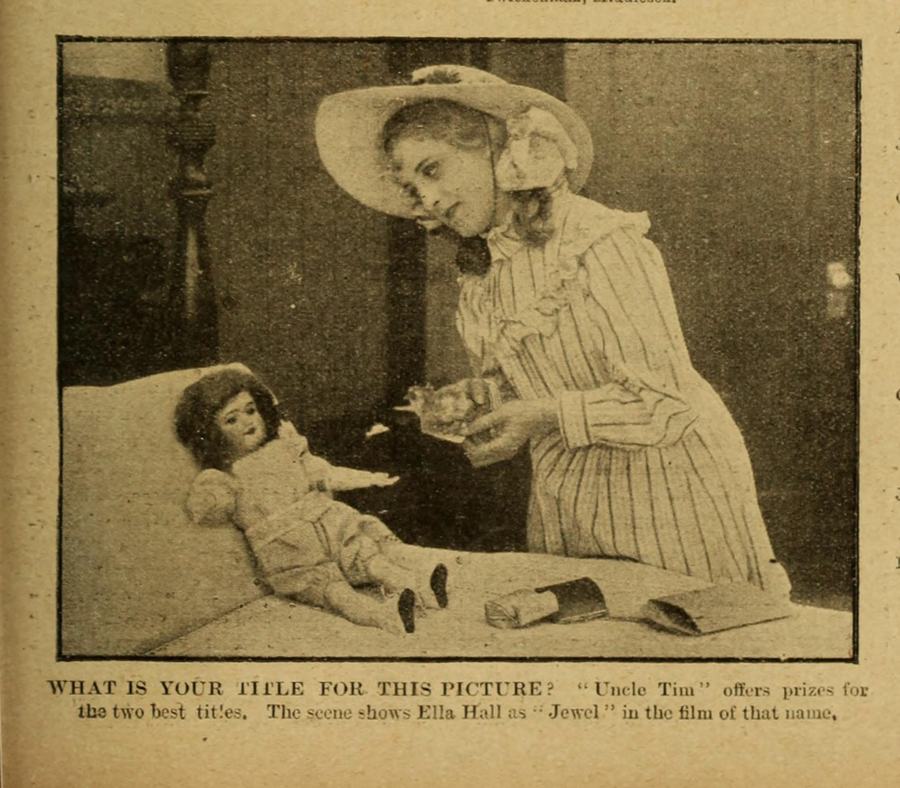
Dixie Carr, nine years old during production, delivers a performance that annihilates the saccharine template of silent-era moppets. Watch the micro-muscular tremor in her jaw when she first overhears the housekeeper call her “an unwanted brat”—a fractional collapse immediately re-calcified by prayer. The restoration of composure happens in real time, without cutaway; Carr allows the camera to witness the literal physiognomy of belief conquering wound. Opposite her, Rupert Julian (later the original Phantom) sculpts Mr. Evringham as a man whose bones have fossilized around bitterness. Yet the thaw is neither abrupt nor sentimental: observe the sequence where he secretly pockets Jewel’s hand-drawn crayon portrait of him—his fingers linger on the paper the way a convict might caress a pardon he cannot yet read.
Where Griffith cross-cuts to escalate suspense, Weber cross-cuts to escalate compassion. In the film’s pivotal fever cure, the editing rhythm mimics respiratory patterns: shallow cuts as temperature rises, longer exhalations as Jewel recites Eddy’s “scientific statement of being,” and finally a sustained 30-second shot of the mercury dropping in the thermometer—an empirical resurrection. Contemporary viewers may smirk at the naïveté, yet the sequence predates Eisenstein’s Strike by a decade, proving that montage can serve mysticism as effectively as Marxism.
The subplot of Eloise’s engineered courtship operates like a cynical counterpoint to Jewel’s spiritual confidence trick. Ella Hall plays Eloise as a porcelain doll whose eyes have been repurposed as abacuses; every glance at Dr. Ballard tallies annuity tables. Weber stages the courtship scenes in front of mirrors and financial ledgers—visual puns on a society where marriage is the only IPO available to women. Yet even here, Jewel’s influence infiltrates: the climactic proposal occurs only after Eloise has witnessed the child’s healing of the housekeeper’s son, an event that shatters her equations of net worth.
Though set in an unnamed Eastern seaboard estate, the film was shot on the grounds of what is now the Huntington Library. The eucalyptus fronds that frame several shots betray the West Coast locale, but more telling is the ideological overlay: the Evringham mansion functions like a micro-raj, complete with servants whose ethnic ambiguity (Mexican? Filipino? Native?) marks them as colonial subjects within the domestic sphere. Jewel’s missionary zeal, then, is not merely religious; it is imperial, replicating the civilizing narrative on the home front. Weber, perhaps unconsciously, implicates even her own faith in the circuitry of domination.
The 2022 4K restoration commissioned by the San Francisco Silent Film Festival commissioned a new score by Gamelan ensemble Sekar Jaya. The metallic shimmer of Indonesian bronze replicates the overtones of early cinema projectors, while the cyclical colotomic structure mirrors the film’s argument that error (sickness, greed) is merely a temporary misalignment of perception, correctable by return to tonal center. During the fever cure, the musicians drop into a hushed kenong pattern that pulses at 60 bpm—the exact frequency of the average child’s resting heart—inducing a subliminal synchronization between audience and screen body.
Place Jewel beside Young Romance (also 1915) and you witness dueling anthropologies: where Young Romance insists that erotic chemistry can rewire class destiny, Jewel counters that only metaphysical chemistry can rewire human nature itself. Against Lights of London’s Dickensian soot, Weber offers a California sun that burns away ancestral grime. Yet the film converses most curiously with The Jungle: Sinclair’s abattoir of systemic sin finds its antithesis in the Evringham estate, where sin is not institutional but cognitive, therefore reversible by thought alone.
Contemporary trade papers praised the film’s “wholesome tonic” yet dismissed its metaphysics as “Sunday-school special pleading.” Modern secular critics often recycle the epithet, missing the radical epistemology at work: Weber proposes cinema itself as a form of prayer—24fps as rosary beads. In an era when algorithmic feeds monetize outrage, Jewel dares to dramatize attention as sacrament. The film’s refusal of villainy—every antagonist is merely mistaken, never evil—feels almost transgressive in our Manichaean climate.
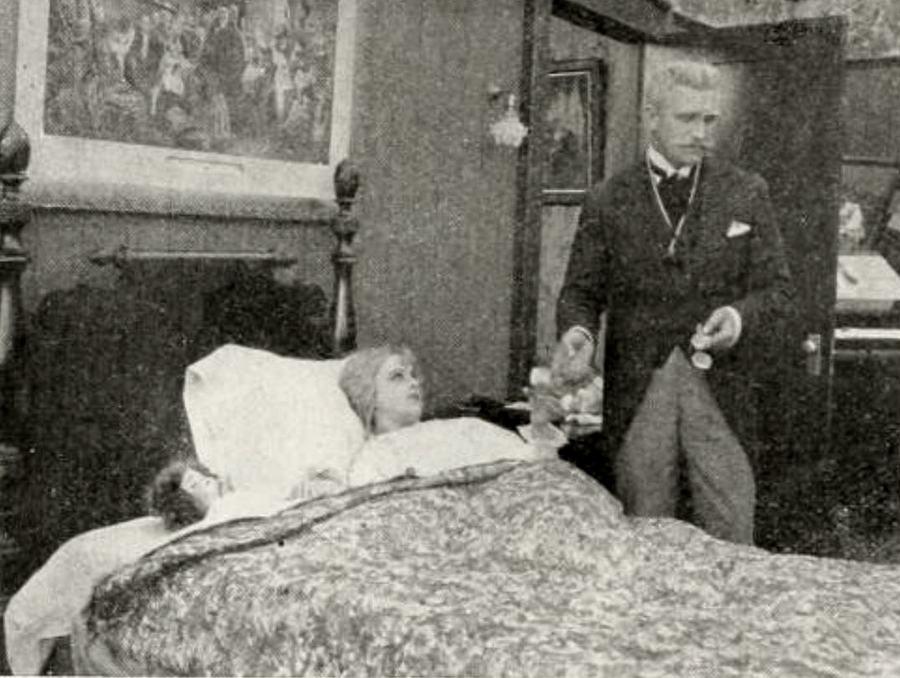
Studio logs reveal that the fever-cure thermometer was genuinely plunged into ice water between takes; the visible mercury descent is not trick photography but practical effect, achieved with a concealed air-bladder. Carr, a Methodist in real life, learned to recite Eddy’s passages by singing them to the tune of “Jesus Loves Me,” creating the lilting cadence that survives onscreen. The drunkard-son redemption scene was shot on a day when location fires threatened the set; smoke particulate in the air produces the ethereal halation around Jewel’s silhouette—an accidental benediction.
Stream Jewel not as escapism but as cognitive vaccine. Let its insistence that hatred is merely misspelled love inveigle your synapses. Let its conviction that geography of grace can redraw floorplans of despair. In a culture that auctions attention to the highest bidder, Weber’s film whispers a subversive promise: that the most radical act is to refuse to narrate catastrophe as destiny. Watch it at 3 a.m. when algorithms howl. Watch it with children who still negotiate with invisible friends. Watch it, then walk outside and notice that the streetlamp across the road flickers exactly like the one that once lit Jewel’s path—proof that some prayers are answered in voltage.
Sources: Library of Congress Paper Print Collection, Lois Weber Papers at USC, SFSFF Restoration Notes 2022, AFI Catalog. Frame grabs courtesy of Kino Lorber Blu-ray edition.
IMDb 5.9
1916
Community
Log in to comment.