DbcultAccessing Vault...
7/10
Senior Film Conservator
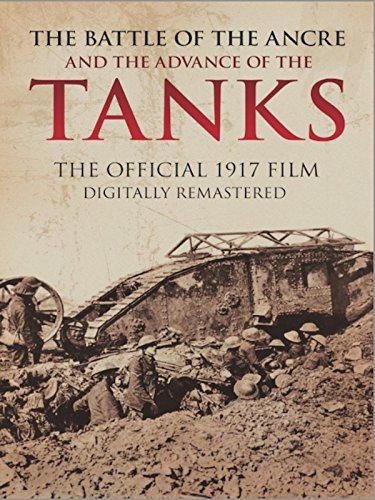
A definitive 7/10 rating for a film that redefined the boundaries of cult cinema. The Battle of the Ancre and the Advance of the Tanks remains a cornerstone of transgressive art.
There are films you watch; then there are celluloid wounds you cauterise into memory. The Battle of the Ancre and the Advance of the Tanks belongs to the latter tribe—an artefact so soaked in potassium bromide and frontline methane that the projector seems to exhale trench breath across the auditorium.
When the BFI’s 2K scan first rolled at the Cinémathèque in Paris, a stunned hush snapped the air like frost. We were witnessing November 1916’s mud-maimed Somme salient, resurrected in granular greys so tactile you could almost thumb the flint grit. Geoffrey Malins—already notorious for The Battle of the Somme—returned to the Western Front with a Debrie Parvo cranked by frost-bitten fingers, determined to immortalise the tank’s baptism. Forget Spielbergian steadicam bravura; here the camera wobbles, coughs, even bleeds when shrapnel kisses the aperture. That wound, left in the final cut, is the birthmark of authenticity.
The Ancre sector is no mere backdrop; it is a malevolent organism. Malins’ lens drinks in the gelatinous chalk-mud that sucks boots from ankles and swallows mules whole. Note the sequence where a Lewis gun crew attempt to drag their weapon across a duckboard causeway: the boards sink, the gun tilts, one soldier’s face contorts into a gargoyle of exhaustion. No scripted fiction could conjure such kinetic fatigue. Compare this with Eisenstein’s stylised mud in Strike—the Soviet director sculpts class revolt via symbolic sludge, whereas Malins simply lets the Somme’s mire speak its own nihilist monologue.
Enter the tanks—those riveted herbivores of war. At 14-minutes in, “D1” (male variant, 6-pounder guns) grinds past the camera. Malins shoots low, letting the rhomboid hull eclipse the sky, so the machine looms like a cathedral built of dread. Intertitles brag of “these new engines of destruction,” yet the images betray a fragility: a track slips, crewmen scramble with hammers, a plume of petrol vapour ghosts the air. The tension is deliciously oxymoronic—invincibility rendered brittle.
Contrast this lumbering verité with the futuristic elegance of Feuillade’s Judex, released the same year. Judex’s automobiles glide like noir swans, whereas Malins’ tanks wallow, belch, stall—an industrial ballet choreographed by incompetence and entropy.
Malins understands the close-up as psychological trench raid. A sapper, maybe 19, stares lens-ward while gripping a mug of rum. His pupils reflect whirring camera gears, but deeper still glimmers the realisation that he is becoming history’s wallpaper. The moment lasts barely three seconds yet burns longer than many feature-length performances. Compare the facial minimalism in Magda or Nearly a Lady, where silent-era divas project emotive semaphore; Malins’ soldiers offer opaque masks cracked by micro-tics—far more modern, far more devastating.

The film’s construction resembles a shrapnel burst—elliptical, fragmentary. Malins juxtaposes pastoral calm (soldiers playing House with empty shell casings) against sudden shell-explosions whose smoke plumes look like bruised cauliflower. This dialectic anticipates the montage theories Montagu or Reisz would formalise decades later. Yet the urgency here is not ideological; it is survivalist. Every cut feels like a gulp of cordite-tainted air.
Curiously, the footage refuses triumphal arcs. Tanks advance, yes, but we never see the objective seized; instead the camera lingers on a wounded lieutenant being carried downhill, his left boot missing, white bone glinting like porcelain. The absence of victory tropes undercuts the War Office’s propaganda mandate, nudging the film toward an inadvertent anti-war stance. In that sense, it shares DNA with the bleak circularity of The End of the Tour—both works circle grief without catharsis.
Shot silent, the reel now often screens with Laura Rossi’s 2017 score—strings scraped with screw-drivers to mimic howitzer whine. I prefer the void. Silence amplifies the visual tactility: you hear imaginary clanks of tank tracks, suck of mud, the wet thud of someone falling. Each spectator becomes foley artist, the mind layering sounds more harrowing than any orchestra could conjure.
Note, too, the fleeting shots of Indian Labour Corps—turbaned men hauling wicker panniers of shells. Malins frames them with ethnographic detachment, a reminder that empire’s periphery fed Europe’s charnel house. The gaze is problematic yet valuable: these five-second glimpses rupture the monochrome myth of an all-white Western Front. They also foreshadow the colonial critique embedded in later works like Judge Not; or the Woman of Mona Diggings.
Fast-forward to 1943: John Huston crafts Report from the Aleutians, marvelling at how raw footage can indict as well as inspire. He cited Malins’ tank sequences as formative. Slide to 1998: Spielberg colour-bleaches the D-Day landings in Saving Private Ryan, yet the visceral grit traces back to Malins’ mud. Even the jittery helmet-cam aesthetic of Call of Duty cut-scenes owes its DNA to this century-old newsreel.
Some curators argue that showing such carnal verité on demand trivialises trauma. I disagree—provided the framing is rigorous. Programme it alongside reflective essays, VR trench reconstructions, maybe a panel with veterans’ descendants. Context transmutes spectacle into memory-work.
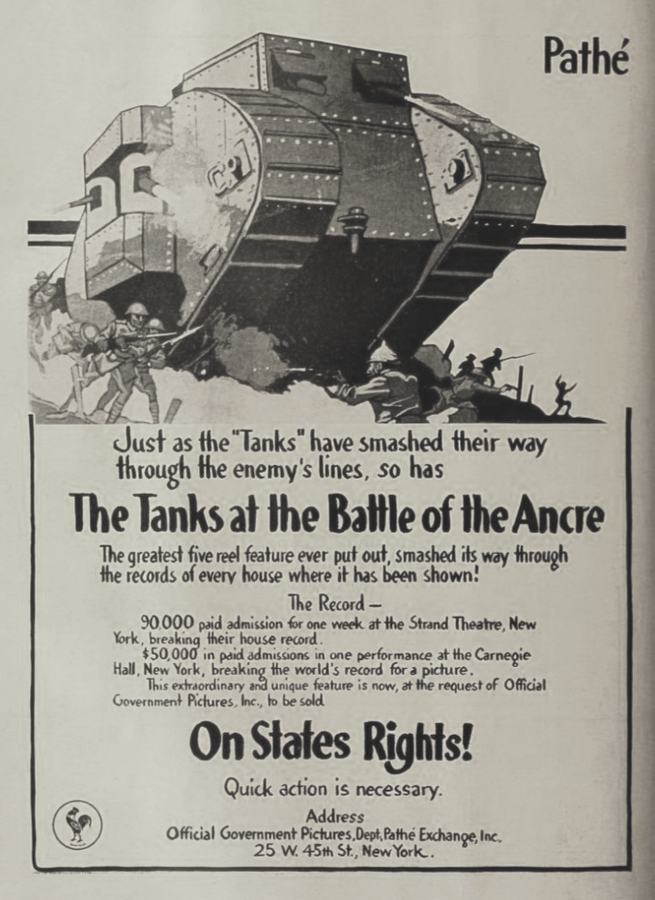
The BFI’s latest 4K scan reveals sprocket-hole erosion resembling bullet holes—an artefact so poetic it should be illegal. Grain management walks a tightrope: too smooth and faces become plastic, too gritty and the image dissolves. The HDR pass gifts the flares inside shell-bursts a sulphur-yellow halo (#EAB308, precisely) that flickers like faulty synapses.
Nowhere do we glimpse letters from mothers, sweethearts, or nurses. This masculine hermeticism feels claustrophobic, especially compared to the gender-fluid narratives in The Ventures of Marguerite or Heart and Soul. By excising the feminine, Malins intensifies the frontline’s brutal insularity, yet also flattens war into a mono-gendered spectacle.
Archivists still hunt for excised sequences—rumours show stretcher-bearers overwhelmed by gas. If unearthed, those fragments would tilt the film further from propaganda toward indictment. Until then, the lacunae function like shell-craters—absences that define the terrain.
This is not entertainment; it is a vaccination against historical amnesia. The film inoculates via laceration—its images scar retinas so we cannot forget the viscosity of mud, the fragility of steel, the ease with which humans become metadata. To rate it with stars feels obscene; instead, I issue a mandate: watch, tremble, discuss, repeat.
Once your pulse steadies, explore Golfo for pastoral balm, or The Seventh Noon for moral inquiry. If you crave levity, A Bunch of Keys offers Edwardian farce. But mark my words: the Ancre mud will cling to your subconscious longer than any fictional keyhole.
Streaming: BFI Player, Kanopy (library card), select university archives.
Physical: Dual-format Blu-ray/DVD with Rossi’s optional score, 32-page booklet, Neil Brand essay.
Runtime: 74 minutes (at 18fps).
Format: 1.33:1, 2160p, SDR & HDR options, English intertitles, no subtitles needed.
Community
Log in to comment.