DbcultAccessing Vault...
8.3/10
Senior Film Conservator
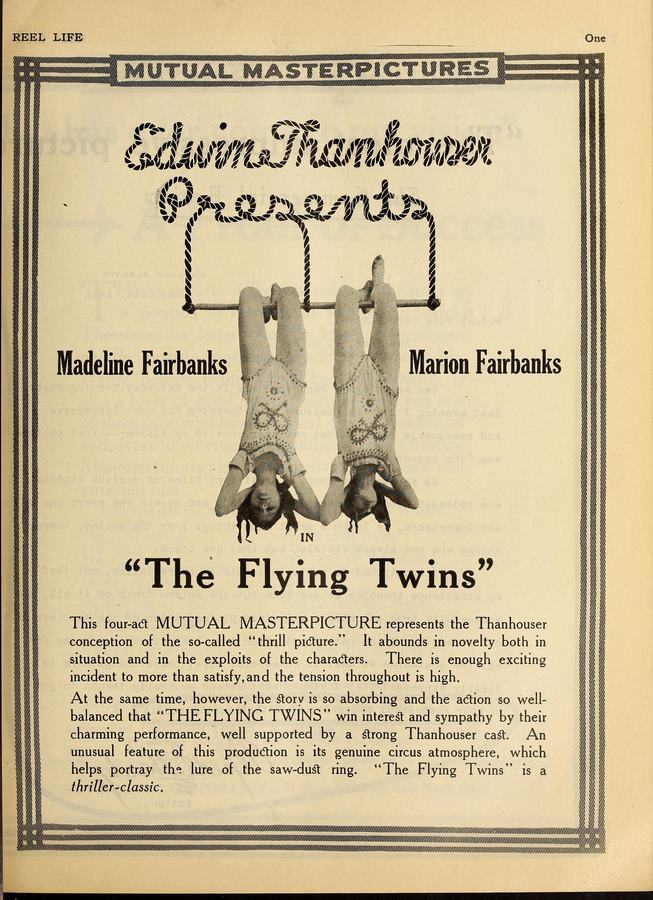
A definitive 8.3/10 rating for a film that redefined the boundaries of cult cinema. The Flying Twins remains a cornerstone of transgressive art.
The first time I saw The Flying Twins I was ankle-deep in a basement annex that smelled of copper wire and wet wool; the projector clacked like a nervous typewriter while the screen—bedsheet, really—shivered with each new reel. What unfurled was not the creaky morality play I’d steeled myself for, but a prism of obsessions: class vertigo, twinship as mirror-maze, and revenge served not cold but blazing hot beneath a circus cupola.
There is, of course, the bald synopsis: two golden daughters of industrial smoke are lured from gilded captivity by a vaudeville opportunist; once found out, the family fractures, the girls are rusticated, and the opportunist returns wearing spangles and matrimony. Yet within that armature, every crease hides something feral. Director W. Ray Johnston—seldom celebrated outside the crate-digging cine-clubs—threads patrician dread through carnival ecstasy so deftly that the film feels like a nickelodeon fever dream stitched inside a society melodrama.
The camera, static by modern standards, nonetheless leans. In the opening ballroom sequence—where chandeliers drip like inverted honey—it frames the twins (Marion & Madeline Fairbanks) from a low, covetous angle, so their identical ruffled collars become a barricade of privilege. Later, once the narrative relocates to Aunt Sally’s clapboard cottage, the horizon line drops; suddenly sky devours two-thirds of the frame, as though the world itself has grown bigger, hungrier. Johnston’s visual grammar anticipates the rural-urban dialectic Griffith flaunted in Judith of Bethulia, yet here the stakes feel intimate, almost bruising.
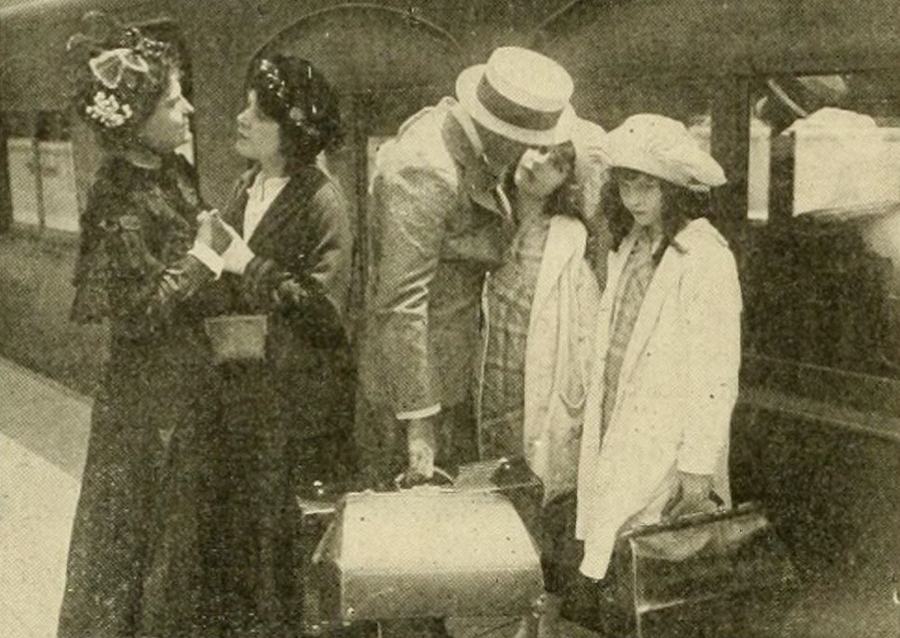
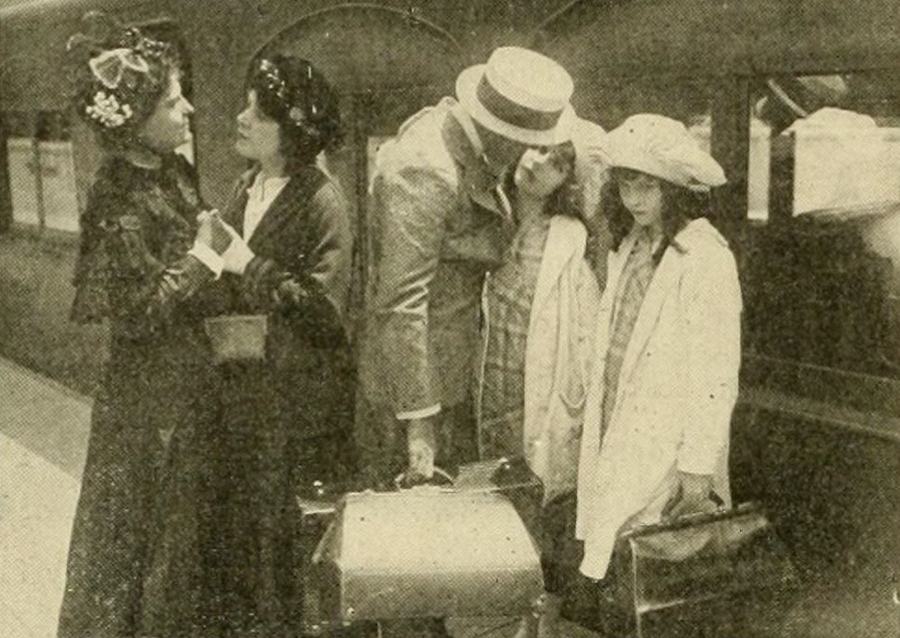
Harry LaPearl’s Ray is no Snidely Whiplash moustache-twirler; he is charm weaponized. Notice how, in the first reel, he courts not the twins but the idea of them—he studies their reflections in a gilt mirror, doubling four girls into infinity. His body, all sinew and torque, is a manifesto against factory order; when he back-flips across the parquet, the very air feels ungovernable. The manufacturer’s panic is less about impropriety than about contagion: if his progeny succumb to centrifugal motion, what becomes of conveyor belts and time-cards?
Everyone remembers the twins; few linger on Nellie Parker Spaulding’s Mabel, the cousin whose banishment jump-starts the plot. She is introduced scuffing barn-dust off her boots, eyes bright with trespass. The film’s most erotically charged moment isn’t between Ray and either twin but between Ray and Mabel—he teaches her to balance on a slack wire behind the carriage house. Johnston shoots through a lattice of lilac, so their silhouettes ripple like forbidden constellations. When the manufacturer severs their friendship, the edit is brutal: smash-cut from lilac to a slamming gate, the clang reverberating like a judge’s gavel. Mabel’s subsequent marriage to a pen-pushing clerk is filmed in a single static take; the camera’s refusal to move feels like a life sentence.
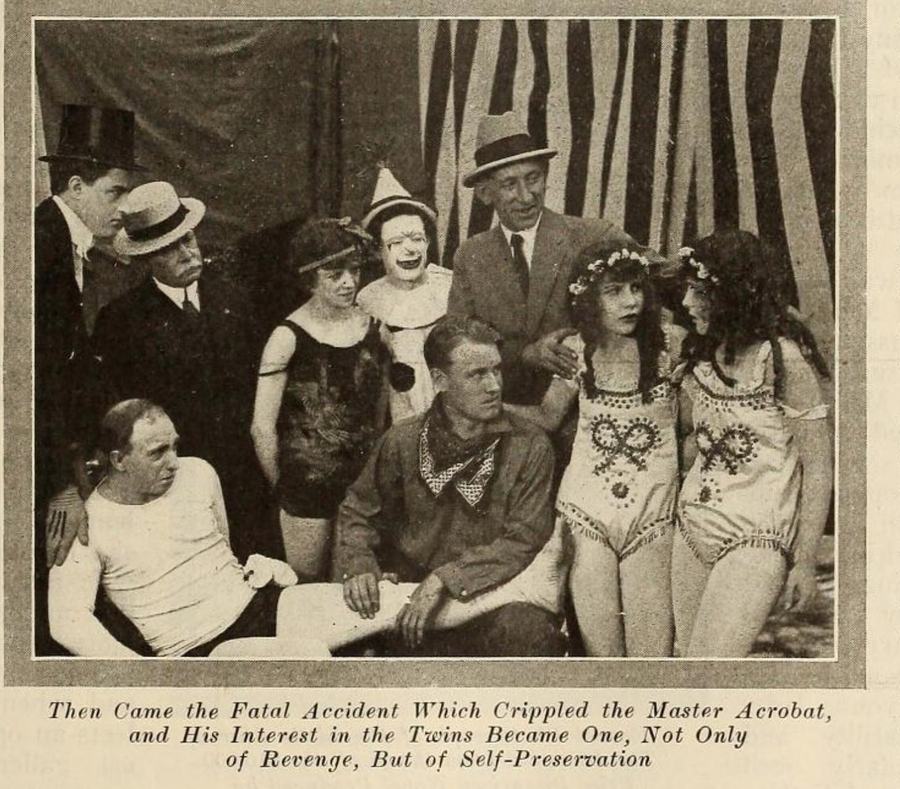
Once the narrative relocates to the circus, color values invert. Intertitles—usually staid—suddenly bloom with hand-tinted crimson and canary, as though the film itself has inhaled mercury vapors. A routine tightrope act becomes vertiginous poetry: the twins, now billed as The Flying Sylphs, traverse a wire backlit by limelight so fierce it haloed their hair. Meanwhile, Ray’s wife—played with flinty precision by Ethel Jewett—keeps a ledger of every gasp, every sold seat. Capitalism, it seems, can commodify even peril.
The story’s hinge is a poison-pen postcard, its letters clipped from newspapers like a ransom note in embryo. Ray mails it wearing white gloves—an exquisite touch, as if contempt itself must remain unstained. The manufacturer receives it at his oak desk, flanked by Corinthian columns; Johnston inserts a 9-second close-up of the envelope sliding across mahogany, paper fibers ablaze with magnesium bloom. That micro-moment heralds the coming of the detective subplot, a narrative gearshift that feels both preposterous and delightful.
Enter J. Morris Foster as the trench-coat sleuth halfway through reel four. Though the character is unnamed in surviving prints, Variety’s 1915 blurb dubs him Trenchard, so Trenchard he remains. His methodology—sniffing stamp adhesive, measuring kerning on newsprint—anticipates forensic noir by three decades. In one delectable scene he interrogates a paperboy using a chocolate coin as bait; the boy bites it, verifies its authenticity, then spills every detail. Consumerism as truth serum—an irony the film declines to underline, trusting the viewer to savor it.
Most extant copies lack reel three, which allegedly contained a fire-eater’s act and a brief stroboscopic waltz. The Library of Congress’s 2018 4K restoration interpolates stills and an explanatory intertitle; purists howled, but I found the lacuna oddly affecting—like a bullet hole letting light stream through. Compare this to The Secret of the Old Cabinet, where missing footage feels like amnesia, or to The Melting Pot, whose lost ending strands its characters mid-assimilation. Here, absence catalyzes imagination; we supply the blaze, the gasp, the twins’ incandescent terror.
Silent cinema is lousy with imperiled siblings—think of the Fairbanks twins’ later vehicle From Gutter to Footlights, or the bushland ordeal in Robbery Under Arms. Yet The Flying Twins is singular in making the abduction voluntary. The girls choose sawdust over silk, craving not freedom but velocity. Their eventual restoration to the paternal estate plays less like rescue than recapture; the final tableau—twins in matching white descending the same grand staircase—echoes the opening shot but with faces now unreadable, eyes shuttered. The circular structure implies not closure but cyclical incarceration.
Marion and Madeline Fairbanks were 14 at shooting, yet project uncanny poise. Their synchrony is never gimmickry; instead, slight desynchronicities—a half-second delay in curtsy, divergent blinks—hint at inner fissures. In the circus ring they abandon mimicry and occupy opposite spatial planes, as if centrifugal force has split the atom of twinship. Meanwhile Lorraine Huling, as Aunt Sally, supplies matriarchal ballast; watch how she clutches a Presbyterian hymnal while sneaking peeks at the aerialists, yearning shackled by creed.
In 1915 the film toured with a small wind orchestra performing “The Aerial Waltz” by Albert Beaumont. Modern festivals often commission new scores; I caught a 2019 Brooklyn print with a feminist punk trio who replaced strings with distorted mandolin and typewriter clacks. The anachronism jarred, then electrified—proving the narrative’s pliability. The circus, after all, is a crucible where eras collapse: Victorian spangles, Edwardian corsets, and Roaring Twenties pluck braid into a single rope.
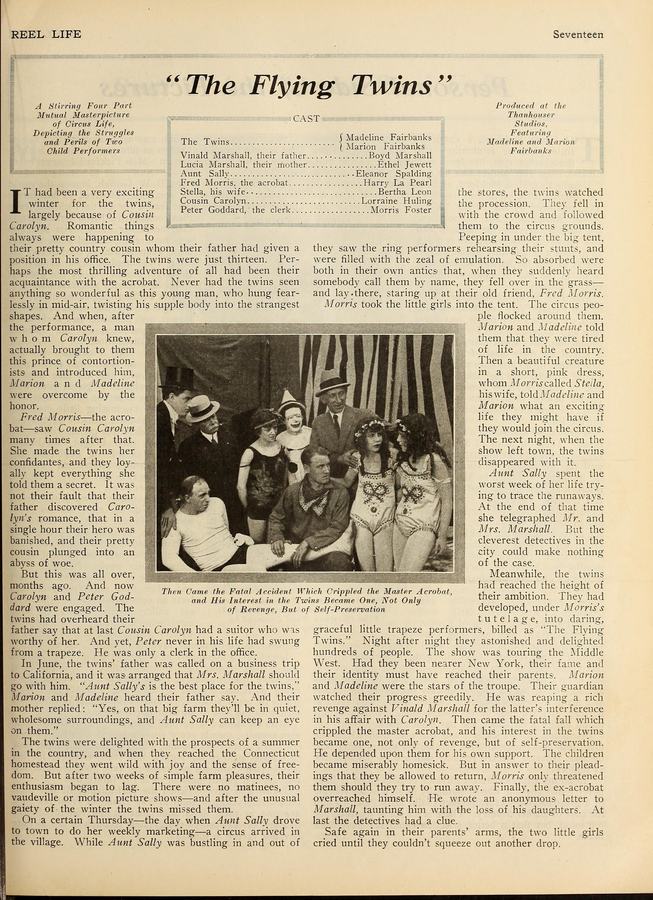
Ray’s wife manages the twins’ salaries, deducting costume repairs and telegram fees. She keeps ledgers in a leather notebook monogrammed ‘V’ for Valor—a sly joke on capitalist euphemism. Johnston lingers on her ink-stained thumb as it stamps each week’s total: the girls’ flesh commodified into integers. One cannot watch without recalling The Spendthrift, where fiscal profligacy dooms its heroine; here, thrift itself is the cage.
Motion Picture News praised the film’s “clean moral fiber”—a phrase that now reads like satire given its undercurrent of child endangerment. The New York Dramatic Mirror griped about narrative sprawl, preferring the concentrated oedipal punch of The Squatter’s Son. Yet crowds cheered the aerial stunts, unaware that veteran circus doubles performed the extreme long shots. Censors in Pennsylvania demanded excision of the letter-sending scene, claiming it taught criminal method; producers placated them by substituting a title card about “just punishment.”
History has not been kind. The film is absent from the AFI catalog, and IMDb lists it with corrupted runtime. Yet fragments proliferate: a French Pathé excerpt surfaces on YouTube; a Dutch collector owns a 35mm nitrate of the finale. Each rediscovery feels like a trapeze catch executed inches above oblivion. Scholars of female juvenile serials cite it as proto-Zudora; historians of labor point to its depiction of management paranoia. Like the acrobat it portrays, the film refuses to land.
Because every frame quivers with contradiction: innocence complicit, rebellion merchandised, familial love weaponized into control. Because the Fairbanks twins, smiling in matching sailor suits, haunt you long after the projector’s hum dies. Because in an age when algorithms flatten viewing into scrollable sameness, this scratched ribbon of celluloid reminds us that cinema was once a spangled dare, a tightrope stretched between today and an unknowable tomorrow. Seek The Flying Twins not for comfort but for vertigo; let its sawdust seep into your veins, and when the lights rise, notice how stable ground feels newly suspect.
IMDb 6.7
1920
Community
Log in to comment.