DbcultAccessing Vault...
Cult Review
Senior Film Conservator
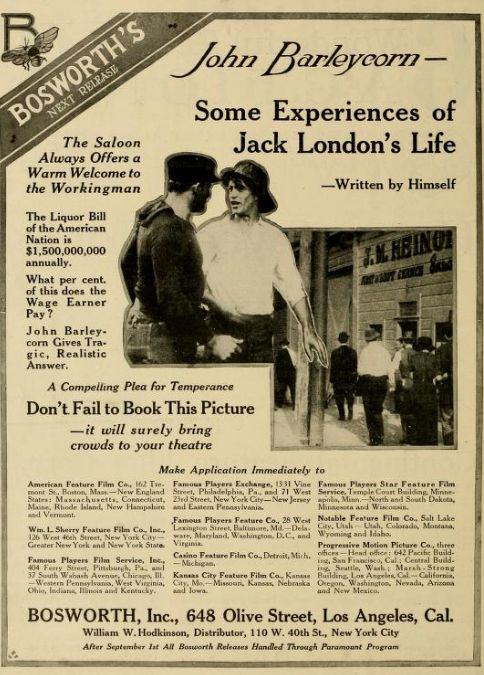
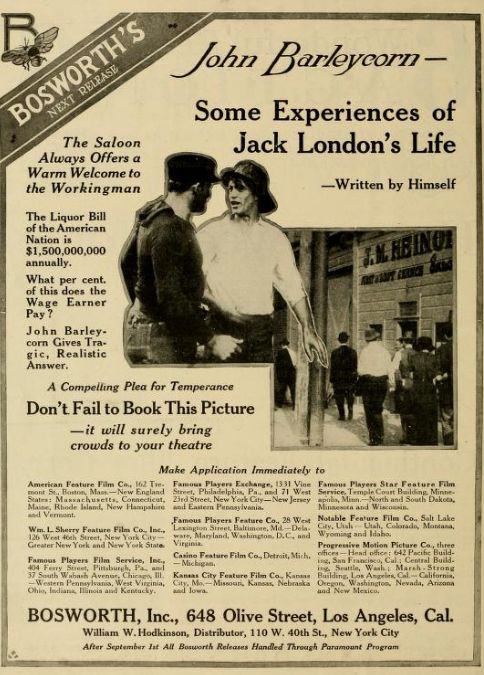
In the annals of early cinema, few films dared to tackle the raw, unflinching introspection of personal struggle with the same gravitas as "John Barleycorn." This 1914 cinematic endeavor, an adaptation of Jack London's seminal autobiographical novel, stands as a remarkable testament to the silent era's capacity for profound psychological exploration. It isn't merely a story about drinking; it's a harrowing journey through the mind of a man grappling with an omnipresent, insidious force that permeates every facet of his existence. The film, much like London's literary work, personifies alcohol as a distinct entity, a cunning adversary, a siren song leading to both fleeting euphoria and abyssal despair.
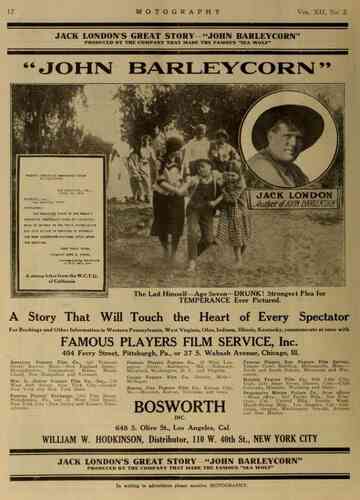
Jack London, a literary titan whose adventurous life often mirrored the untamed spirit of his characters, poured his own tumultuous experiences with alcohol into the novel "John Barleycorn: Alcoholic Memoirs." The film, penned for the screen by Hettie Grey Baker and London himself, endeavors to translate this deeply personal, often brutal, narrative to the visual medium. This wasn't an easy feat in an era devoid of spoken dialogue, where nuanced emotions had to be conveyed through exaggerated gestures, expressive facial contortions, and meticulously crafted intertitles. The challenge lay in capturing the internal monologue, the creeping insidious nature of addiction, without the benefit of a narrator's voice. The directorial vision, likely influenced heavily by London's own input, focuses on the symbolic and the visceral, allowing the audience to witness the protagonist's descent through a series of evocative vignettes.
Hobart Bosworth, a prominent figure of early Hollywood, takes on the demanding role of the protagonist, portraying the character across various stages of his life. Bosworth's performance is a masterclass in silent film acting, utilizing his imposing presence and nuanced expressions to convey the gradual erosion of a man's spirit. We see him evolve from a wide-eyed youth, portrayed by actors like Antrim Short and Matty Roubert in earlier stages, to a man increasingly trapped by the very substance he once sought for escape or camaraderie. Elmo Lincoln, though perhaps more famed for his portrayal of Tarzan a few years later, also contributes to the ensemble, as do Joe Ray, Elmer Clifton, Rhea Haines, Dick La Reno, and Viola Barry. Each performer, within the stylistic constraints of the era, contributes to the tapestry of a society where alcohol plays a pervasive, often destructive, role. The film doesn't shy away from depicting the harsh realities of saloon culture, the casual acceptance of heavy drinking, and the devastating impact on families and individuals. The ensemble cast, under the direction, paints a vivid if somber portrait of early 20th-century American life, where "John Barleycorn" was a common, often unexamined, companion.
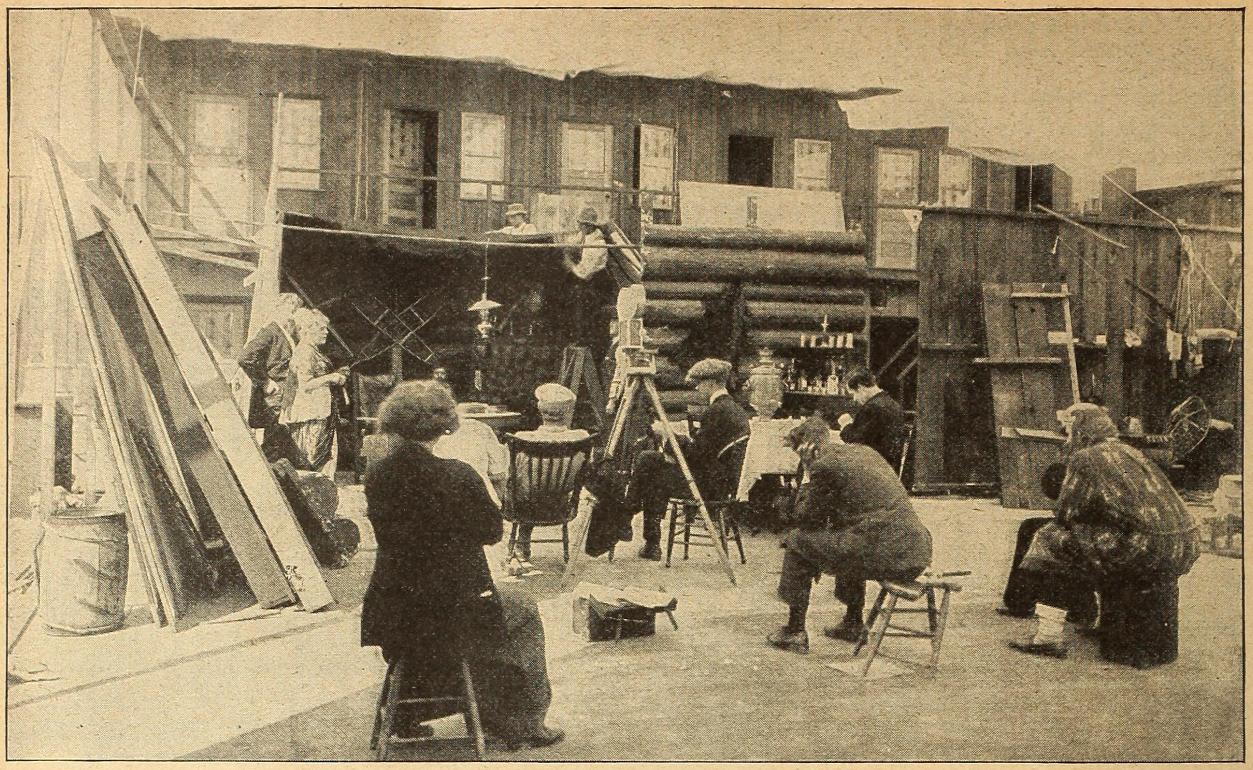
The true artistry of "John Barleycorn" lies in its visual storytelling. Without dialogue, the filmmakers rely heavily on symbolism, stark contrasts, and the sheer power of the actors' physicality. Close-ups of trembling hands, haunted eyes, or the fleeting, deceptive smile of a man under the influence speak volumes. The cinematography often employs chiaroscuro lighting, plunging scenes of despair into deep shadows, while moments of fleeting joy or initial temptation are bathed in a deceptive, almost ethereal glow. The intertitles, rather than merely advancing the plot, often serve as internal monologues, echoing London's prose and offering glimpses into the protagonist's tormented psyche. These textual inserts are crucial, providing the philosophical and psychological backbone that would otherwise be lost. They articulate the protagonist's rationalizations, his fleeting resolves, and his ultimate surrender, making the audience privy to the battle within. This innovative use of intertitles elevates them beyond mere exposition, transforming them into an integral part of the narrative's emotional fabric.
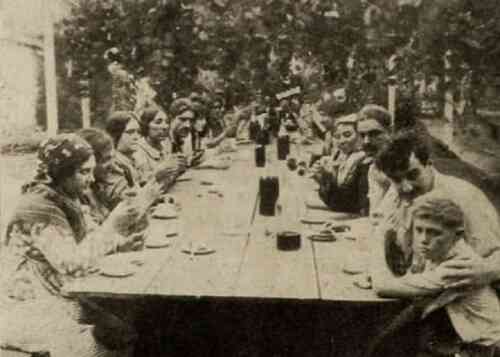
The pacing of the film is deliberate, allowing the audience to fully absorb the weight of each decision and its inevitable consequence. Unlike the often melodramatic or action-packed narratives of other early films like The Adventures of Kathlyn, which focused on thrills and cliffhangers, "John Barleycorn" embraces a more contemplative, almost agonizing rhythm. It's a slow burn, reflecting the gradual, insidious nature of addiction itself, rather than a series of dramatic external events. This commitment to portraying the internal struggle with such fidelity sets it apart as a pioneering work in psychological realism for the silent era.
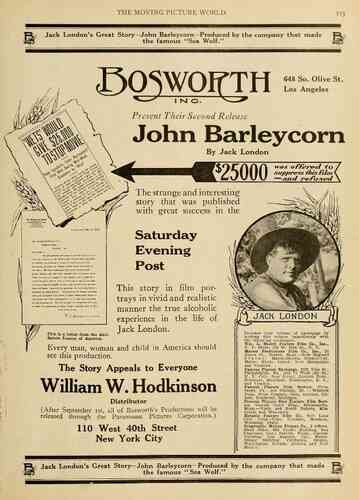
"John Barleycorn" isn't just a personal confession; it's a searing indictment of a society that, at times, both condones and condemns the very substance that creates so much suffering. London's work, and by extension the film, explores the cultural rituals surrounding alcohol – the toasts, the celebrations, the social lubrication it provides – juxtaposed with the solitary anguish of the dependent. The film, released during a period when the temperance movement was gaining significant traction, served as a powerful, albeit subtle, piece of social commentary. It didn't preach with overt moralizing, but rather presented the stark reality of one man's journey, allowing the audience to draw their own conclusions about the societal implications of widespread alcohol consumption. This nuanced approach, focusing on experience rather than dogma, gives the film a timeless quality.
The narrative carefully avoids simplistic answers, acknowledging the complex interplay of environment, personal choice, and psychological vulnerability. It's a testament to the film's depth that it doesn't merely portray a villain (alcohol) and a victim (the protagonist), but rather a nuanced struggle within a context that often normalizes or even glorifies drinking. This distinguishes it from more straightforward moral tales, aligning it more closely with literary adaptations that sought to explore the intricacies of the human condition, such as early versions of I tre moschettieri, which, while adventurous, also delved into themes of loyalty and honor within a specific societal framework.
What makes "John Barleycorn" particularly compelling is its pioneering attempt to visualize an internal battle. Before the advent of sophisticated narrative techniques or advanced psychological realism in cinema, this film used the tools at its disposal—tableau staging, expressive acting, and intertitles—to delve into the mind. It illustrates the allure, the deceptive comfort, and the eventual tyranny of alcohol. The protagonist's moments of clarity, his desperate attempts to break free, and his relapses are depicted with a raw honesty that transcends the limitations of its era. This focus on the mental and emotional landscape, rather than purely external events, marks it as a significant work in the evolution of film as an art form capable of exploring complex human psychology.
The film's impact lies not in grand spectacles, like Salambo, a $100,000 Spectacle, but in its quiet, persistent exploration of a universal human vulnerability. It invites viewers to empathize with the protagonist's struggle, to understand the forces at play, and to confront their own perceptions of addiction. The character's journey is presented as a cautionary tale, yet it avoids being didactic, instead offering a deeply personal and often agonizing account. The silent medium, paradoxically, amplifies the internal conflict, forcing the audience to project their own understanding onto the protagonist's silent screams and desperate pleas.
Decades later, "John Barleycorn" remains a powerful and relevant film, a testament to London's enduring literary vision and the early filmmakers' courage to tackle such a challenging subject. It serves as a historical artifact, offering insight into both the social attitudes towards alcohol in the early 20th century and the nascent language of cinema. For students of film history, it provides a fascinating example of how silent movies could convey profound psychological narratives without spoken words. For contemporary audiences, its themes of addiction, self-destruction, and the search for personal liberation resonate with undiminished force. The film, much like the novel, doesn't offer easy answers or a neat resolution. Instead, it leaves the viewer with a lingering sense of the complexity of human nature and the formidable power of our inner demons.
The unflinching gaze upon the self-destructive cycle, a subject that continues to challenge society and individuals, positions "John Barleycorn" as a work of enduring significance. It's a reminder that some stories, particularly those born from profound personal experience, possess a timeless quality that transcends technological advancements in filmmaking. The raw honesty of London's original work, coupled with the earnest efforts of the cast and crew, forged a cinematic experience that, even in its silence, speaks volumes about the human condition and the relentless pursuit of escape, and ultimately, the fight for sobriety. This film, far from being a mere historical curiosity, stands as a vital piece of cinematic heritage, inviting continuous re-evaluation of its artistic merits and its resonant message.
IMDb 6
1923
Community
Log in to comment.