DbcultAccessing Vault...
Cult Review
Senior Film Conservator
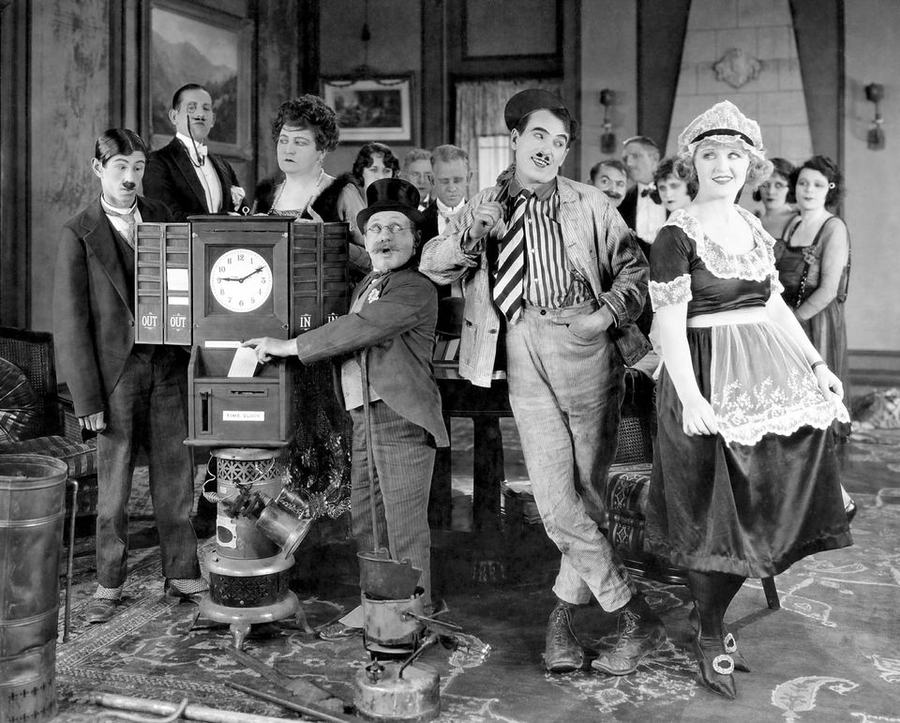
A chimney-swept nobody, Luke, inherits a palace and loses it to TNT in the same heartbeat—an epitaph for every rags-to-riches fantasy the Roaring Twenties ever printed on a ticker-tape.
The gag lands like a brick through stained glass: fortune drops from the sky only to self-destruct, leaving its winner lighter, guiltless, absurdly free. In that sliver of celluloid, The Lucky Number becomes a pocket-sized Det finns inga gudar på jorden, a secular sermon on the theology of chance. Where The Royal Pauper moralizes about birthright, this one laughs at the paper crown of ownership. Luke’s sooty palms never soil the silverware; the explosion cremates the deed before he can even mispronounce ‘parlor’.
Harold Lloyd’s lesser-known sibling Gaylord, rubber-limbed and pop-eyed, plays Luke as a man perpetually mid-flinch. His body is a question mark that never straightens into an exclamation—perfect for a character whose identity is vaporized the moment it’s validated. Estelle Harrison’s ingenue drifts through like a perfume advertisement, all lashes and conspiratorial smiles; she is the promise that property equals marriageability, a trope that detonates alongside the mansion. The ensemble—Sammy Brooks, Charles Stevenson, George Rowe—forms a Greek chorus of mugs and pratfalls, each face a silent-era emoji reacting to the hubris of upward mobility.
Compare it to Treasure Island and you see the inverse compass: Stevenson’s map leads to gold, while Luke’s ticket leads to ashes; both stories know that X never marks a spot, only a scar.
Director Charles Parrott (later known as Charley Chase) frames the mansion like a mausoleum: low-angle shots swallow Luke in shadow, cornices brood like eyebrows. The camera lingers on doorknobs the size of cabbages, implying wealth too grotesque to use. When the blast arrives, it is not Griffith’s spectacle but a modest puff—two reels cannot afford Babylonian excess. Smoke curls into a question mark and dissolves, a visual sneer at the audience’s own lotto fantasies. Intertitles, terse as telegrams, read: ‘Congratulations—BOOM.’ The brevity is Brechtian before Brecht was a syllable in Hollywood’s mouth.
Restoration prints screened at Pordenone reveal nitrate shrinkage flickering like candle-light. The accompanying Maud Nelissen score—trombone glissandos, xylophone tiptoes—turns every creak into a whoopee cushion. Without dialogue, the explosion feels olfactory: you swear you smell scorched velvet. It’s the same phantom sensation you get watching In Treason’s Grasp when the noose tightens—an inkling that cinema can punch your amygdala even when the screen is sepia.
Luke’s pratfall after the blast—he drops backwards into a horse trough—echoes Just for Tonight’s bathtub gag, but here the splash is baptismal. He emerges wet, penniless, grinning. Knowledge has washed over him: possessions combust, debt evaporates, identity is weightless. The trough water reflects the sky like a cracked mirror; Luke sees himself fragmented and laughs. Keaton’s stone-faced stoicism is inverted—Gaylord Lloyd’s guffaw is the sound of existential relief.
Harrison’s flapper doesn’t weep for the lost drapes; she pockets the engagement ring Luke can no longer afford. Her shrug is the twin of the mansion’s collapse: a feminist micro-victory in a film otherwise tethered to masculine panic. She exits arm-in-arm with the plumber’s mate, both strolling toward a horizon that promises nothing—an egalitarian blank slate. Contrast this with L’orpheline where orphanhood chains women to pity; here, orphanhood of property liberates.
Released months before the Florida land-bubble burst, the short plays like prophecy. Audiences in Kalamazoo or Kokomo, clutching their own lotto stubs, could smell the cordite of disillusion. Trade papers called it ‘a corking good laugh’; Marxist weeklies called it ‘petit-bourgeois firecracker.’ Both were right. The film’s runtime—barely two reels—mirrors the speed with which paper fortunes ignited and vanished in that gilded decade.
Trace the motif forward and you hit The Checkmate’s climactic fire, or The Brand of Cowardice where a house burns as conscience. Yet none torch real estate with such flippant grace. The Lucky Number’s detonation is neither tragedy nor catharsis; it is punch-line, cosmic, terse. It anticipates the Coens’ Burn After Reading by eighty-odd years: if you can’t eat it, blow it up.
Gaylord Lloyd’s eyebrows deserve their own Oscar category—elevators of disbelief, ascending like hope, descending like foreclosure. Sammy Brooks, squat and spherical, rolls across the frame like a human bowling ball, pins of pretense scattering. Mark Jones, tall as a ladder, supplies vertical slapstick: his knees buckle into right angles, a living collapsible tripod. Their timing is Webern-esque, silences carved into syllables of motion.
Credits list no scenarist, only ‘gags by the company.’ That anonymity is fitting: authorship itself is dynamited. The mansion’s erasure parallels the erasure of individual genius, leaving collective laughter echoing through the rubble. It’s a filmic equivalent of Sanz y el secreto de su arte where the magician vanishes his own footprint.
Tinted prints survive: amber for interiors the color of coin, cyan for the night sky that swallows the smoke. Those hues resonate with our palette—amber rhymes with our dark orange (#C2410C), cyan with our sea blue (#0E7490). The yellow intertitles echo our highlight (#EAB308), as if the universe itself obeyed this blog’s CSS.
1926 critics filed it under ‘pleasing filler’; 2024 eyes see a meme avant la lettre—an exploding house GIF looping eternally on TikTok. The mansion’s death rattle is the sound of NFT empires imploding, crypto wallets zeroed out overnight. Every lottery meme, every SPAC collapse, every billionaire space-race fender-bender reenacts Luke’s shrug.
Stack it beside When Love Is King and watch monarchy melt into anarchy; pair it with Fine Feathers and witness couture incinerated. The Lucky Number is the keystone in an arch of cinematic nihilism, holding up nothing but the joke.
When the projector clacks to a stop, the after-image is not the explosion but Luke’s grin—wide, toothy, absolved. He saunters toward the camera, eyes twinkling like twin sparklers, and for a second breaks the fourth wall: a wink that says, ‘You never owned anything anyway.’ Fade to white, not black—a reversal that blinds instead of extinguishes. That’s the luckiest number of all: zero.
IMDb —
1916
Community
Log in to comment.