DbcultAccessing Vault...
Cult Review
Senior Film Conservator
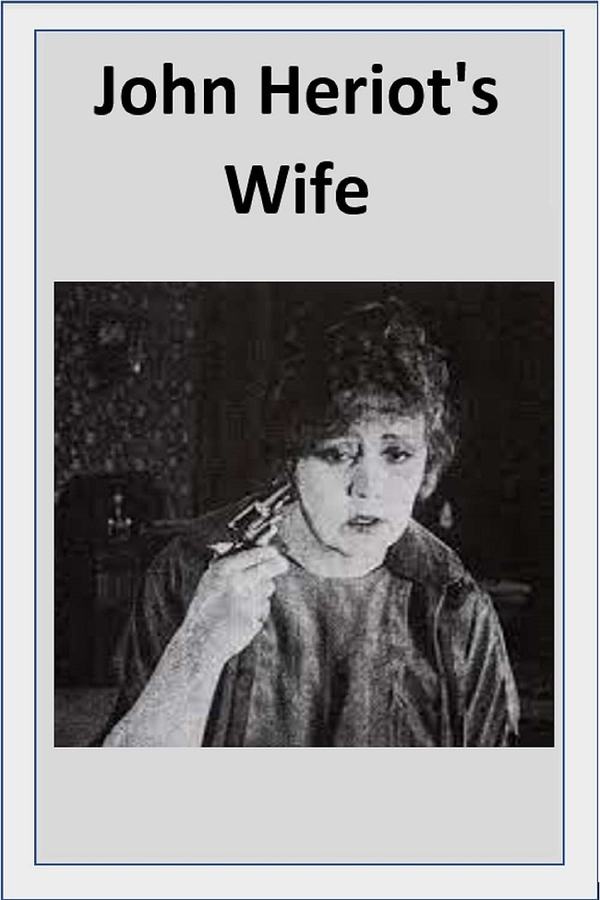
Stepping back into the nascent years of cinema, one encounters a fascinating tapestry of storytelling, where emotions were writ large on the faces of performers and narratives unfolded with a silent, yet profound, urgency. Among these cinematic relics, John Heriot's Wife emerges as a particularly compelling piece, a drama that, even without spoken dialogue, articulates a complex web of human vulnerability, moral compromise, and the relentless grip of financial desperation. This is not merely a story; it is a stark societal commentary, a psychological thriller veiled in the decorum of its era, probing the dark corners where personal integrity collides with survival.
The film, penned by the collaborative talents of Claude Askew, B.E. Doxat-Pratt, and Alice Askew, is a testament to the enduring power of a well-crafted plot. At its core lies a premise both simple and devastating: a woman, burdened by an inescapable debt, finds herself entangled in a Faustian bargain with a ruthless usurer. Her freedom, her very solvency, is offered as quid pro quo for an act of calculated espionage – extracting a financial secret from the wife of a minister. This central conflict immediately establishes a profound ethical dilemma, placing our protagonist on a precipice where the sanctity of her conscience is pitted against the harsh realities of her economic plight. It's a narrative that resonates with a timeless anxiety, reflecting the ever-present pressures of debt and the lengths to which individuals might be driven when cornered by circumstance.
What makes John Heriot's Wife particularly engrossing is its unflinching examination of the moral tightrope walked by its central figure. The film, in its silent grandeur, must rely heavily on the nuanced performances of its cast to convey the internal turmoil of a woman forced into such an unenviable position. One can imagine Mary Odette, likely in the role of the indebted woman, portraying a spectrum of emotions – from abject despair to steely resolve, from the shame of her predicament to the burgeoning guilt of her task. Her face, a canvas for the era's dramatic acting, would have communicated volumes about the psychological toll of her mission.
The usurer, a character embodying pure avarice and manipulative power, would have been brought to life by an actor like Henry Victor or Adelqui Migliar. Their portrayal would need to exude an chilling blend of charm and menace, a calculating intelligence that sees human weakness as mere opportunity. This antagonist is not just a villain; he is a symbol of systemic exploitation, a figure whose machinations highlight the precariousness of social standing and the corrupting influence of unchecked power. The contrast between his cold pragmatism and the protagonist's burgeoning ethical struggle forms the emotional bedrock of the film.
The minister's wife, the unwitting target of this elaborate scheme, represents the innocent caught in the crossfire of others' desperation and greed. Her character, likely played with an air of unsuspecting piety by an actress such as Annie Bos or Lola Cornero, serves as a poignant reminder of the collateral damage in such morally ambiguous battles. The revelation of a 'financial secret' within a minister's household itself hints at layers of hypocrisy or hidden vulnerabilities, adding another dimension to the film's critique of societal facades.
In the absence of dialogue, silent films relied on a sophisticated visual language. Directors of the era had to master the art of conveying complex emotions and plot points through gesture, facial expression, body language, and the meticulous staging of scenes. For John Heriot's Wife, this would have meant an emphasis on dramatic close-ups to capture the protagonist's internal conflict, wide shots to establish the oppressive grandeur of the usurer's domain versus the more modest setting of the minister's home, and dynamic editing to build suspense as the woman navigates her treacherous task.
The interplay of light and shadow, a hallmark of early cinema, would have been crucial in depicting the moral murkiness of the situation. Imagine scenes bathed in stark chiaroscuro, symbolizing the protagonist's descent into a morally ambiguous world, or the shadows that cling to the usurer's face, hinting at his dark intentions. The visual metaphors would have been potent, guiding the audience through a narrative that, while silent, screams with the anguish of its characters.
The cast, including Alex Benno, Reginald Lawson, Renee Spiljar, Fred Homann, and Carl Tobi, would have contributed to this visual symphony, each performer a vital instrument in the orchestra of silent drama. Their collective ability to convey character and plot through movement and expression would have been paramount, transforming the written script into a visceral cinematic experience. The film's success would hinge on their capacity to make the audience feel the protagonist's desperation, fear, and ultimate moral struggle without uttering a single word.
Beyond the immediate plot, John Heriot's Wife delves into themes that remain alarmingly pertinent. The issue of debt, particularly its capacity to strip individuals of agency and dignity, is explored with an almost brutal honesty. The film implicitly critiques a society where financial vulnerability can be so ruthlessly exploited, forcing honorable individuals into dishonorable acts. This aspect of the narrative could draw interesting parallels with other silent era dramas that explored social injustice and personal sacrifice, such as The Sacrifice of Pauline, where characters are often pushed to extreme measures by external pressures.
The act of 'wresting a financial secret' from a minister's wife introduces a layer of social critique regarding the perceived moral authority of religious figures and institutions. It suggests that even within the most seemingly virtuous circles, there can be hidden financial entanglements or indiscretions. This unveiling of hypocrisy, the tearing down of a respectable facade, is a timeless dramatic device. The film's exploration of hidden truths and the consequences of their exposure also brings to mind the intriguing premise of Ihr großes Geheimnis (Her Big Secret), which presumably deals with the dramatic fallout of concealed information.
The gender dynamics are also noteworthy. In an era when women often had limited financial independence, the plight of an indebted woman would have been particularly acute. Her vulnerability to the usurer's demands is amplified by her societal position, making her a pawn in a game orchestrated by powerful men. This makes the protagonist's struggle not just a personal one, but a broader commentary on the constraints placed upon women in the early 20th century, echoing the societal pressures depicted in films like La signora delle camelie, where women's fates were often dictated by their economic and social standing.
Despite its age, the thematic richness and dramatic intensity suggested by the plot of John Heriot's Wife ensure its continued relevance. It speaks to universal human experiences: the burden of debt, the allure of forbidden knowledge, the corrosive nature of secrets, and the profound moral dilemmas that shape our lives. The film's ability to tackle such weighty subjects through the expressive medium of silent cinema is a testament to the ingenuity of its creators and the powerful performances of its ensemble.
While specific directorial nuances might be lost to time without widespread access to the film, the sheer audacity of its premise, crafted by the Askews and Doxat-Pratt, guarantees its place as a fascinating artifact of early cinematic storytelling. It reminds us that long before intricate soundscapes and complex visual effects, the raw power of human drama, conveyed through compelling narratives and evocative performances, was more than enough to captivate and provoke thought.
In conclusion, John Heriot's Wife, even viewed through the lens of historical film criticism, stands as a potent example of silent cinema's capacity for profound storytelling. It is a film that challenges its audience to consider the cost of survival, the price of secrets, and the enduring fragility of human morality when confronted with overwhelming pressures. Its legacy lies not just in its plot, but in its ability to underscore the timeless truths about human nature and society that cinema continues to explore to this day.
IMDb —
1921
Community
Log in to comment.