DbcultAccessing Vault...
Cult Review
Senior Film Conservator
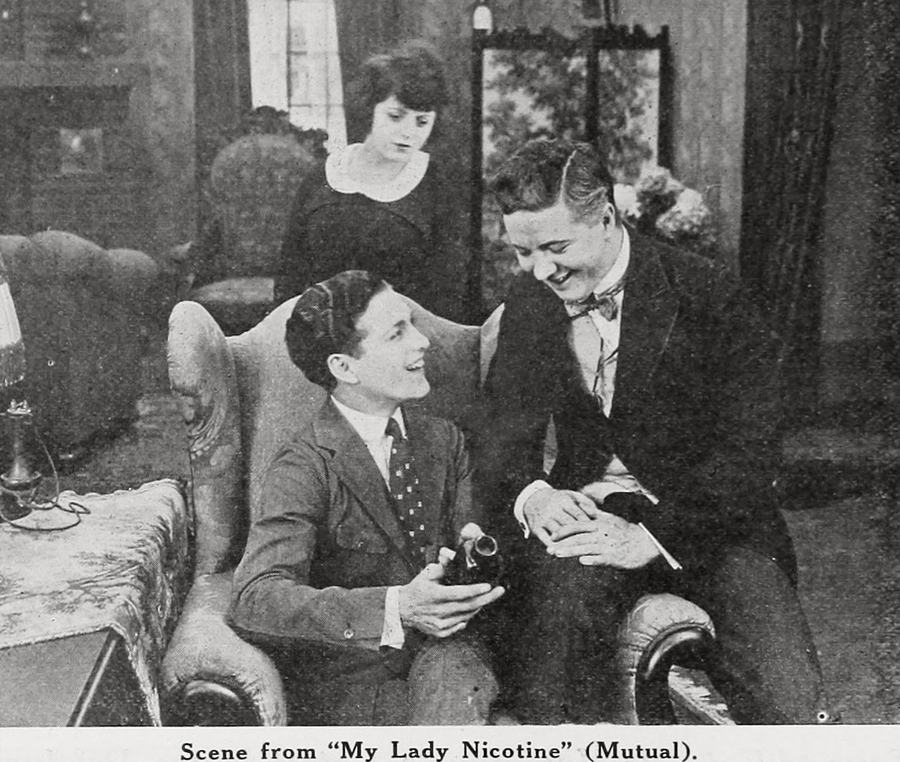
Watching My Lady Nicotine feels like uncorking a volatile chemical compound—part Victorian propriety, part anarchic slapstick, wholly unstable. Director John S. Robertson crafts a suffocating domestic arena where love curdles into control, and a cigar becomes both phallic symbol and weapon of mass matrimonial destruction. The film’s genius lies not in subtlety, but in how it weaponizes the everyday: coffee cups transform into vessels of betrayal, kitchen cabinets hide pharmacological treachery, and a simple rolled leaf detonates into marital Armageddon.
Cullen Landis’s Jack isn’t merely a nicotine addict—he’s a portrait of masculine identity under siege. Observe how his shoulders slump after relinquishing his vice for matrimony, the way his fingers twitch with phantom cravings during teatime. Landis masters the silent vocabulary of deprivation: eyes darting toward abandoned ashtrays like a lovelorn swain, sighs deeper than the Mariana Trench. This isn’t acting; it’s biological archaeology, excavating the tremors of a soul denied its simplest solace. His eventual subterfuge carries the giddy exhilaration of a prisoner tunneling toward freedom—until the walls collapse.
Opposite him, Billie Rhodes’s Mary evolves from porcelain-doll benevolence to something unnervingly primal. Watch her eyes during Jack’s faux seizure—genuine terror melting into volcanic fury when the ruse is revealed. Rhodes doesn’t telegraph vengeance; she ferments it. Her transition from nurturing wife to pyrotechnic saboteur mirrors society’s own contradictions about femininity. Is she protector or jailer? Healer or poisoner? The loaded cigar becomes her Excalibur, wielded not for kingdom but for kitchen-table dominance.
Roberton weaponizes domesticity with surgical precision. Consider Nico Not—the film’s fictional anti-smoking serum. Its very name drips with early-20th-century quackery, a venomous embodiment of progressive-era anxieties about addiction and the burgeoning pharmaceutical industry. When Jack discovers the bottle, the camera lingers on its label like a Grimm’s fairy tale prop. This isn’t medicine; it’s alchemy disguised as salvation. The subsequent role reversal—Jack replacing poison with sugar—unfolds like a dark comedy of laboratory errors. His performative convulsions parody Mary’s earlier “cure,” turning medical paternalism into grotesque cabaret.
The film’s tonal audacity peaks in its explosive finale. Unlike the genteel resolutions of The Yaqui or the moralistic closure of Christa Hartungen, My Lady Nicotine detonates its central relationship. Jack’s cigar explosion isn’t mere slapstick—it’s domestic terrorism rendered in smoke and sparks. Cinematographer Joseph Brotherton photographs the chaos in frenetic close-ups: Jack’s limbs flailing like a marionette in a tornado, Mary’s laughter contorting into something between Bacchic ecstasy and nervous breakdown. The scene owes less to Chaplin than to Grand Guignol.
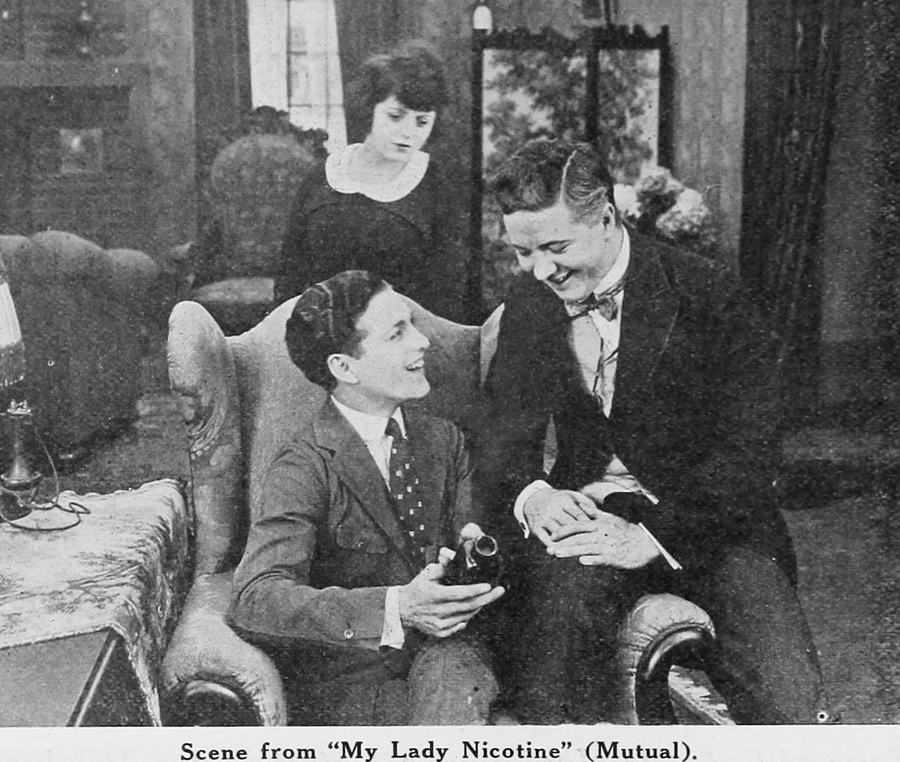
Structurally, the film anticipates later battle-of-the-sexes farces, yet its heart pumps pre-Freudian dread. When Jack implores the audience to “send smokes to the boys over there,” the plea rings hollow—less patriotic altruism than POW-level desperation. This fourth-wall rupture mirrors the unsettling direct address in Macbeth, turning viewers into accomplices. Unlike the swashbuckling camaraderie in Rupert of Hentzau, Jack’s surrender feels less like truce than internment.
Rhodes’s performance similarly dismantles the era’s angelic-heroine tropes. Her final laugh echoes the unhinged feminine vengeance of Le ravin sans fond, but stripped of supernatural pretense. This is spousal retribution distilled to gunpowder and nicotine—a far cry from the sacrificial femininity of Les Misérables’ Fantine.
What unsettles most isn’t the pyrotechnics, but the aftermath. When the smoke clears, Jack’s “swearing off” feels less like redemption than Stockholm syndrome. His eyes glaze with the vacant obedience of trench soldiers marching toward mustard gas. Mary’s victory smile? The chilling serenity of a general surveying scorched earth. Their joint plea for temperance reeks of performative marital unity—a ceasefire brokered over mutual assured destruction.
Production designer Charles O. Seess imbues the couple’s home with oppressive gentility—lace doilies like mouse traps, armchairs that swallow Jack whole. The kitchen cabinet where Nico Not lurks becomes a Pandora’s Box of domestic control. Compare this to the claustrophobic mining shafts in The Hard Rock Breed. Both are prisons, but Jack’s has floral wallpaper.
My Lady Nicotine remains a radioactive artifact of its era—a time when prohibitionist fervor collided with Freud’s emerging theories of repression. Its comedic beats foreshadow the marital grenade-tossing of The Bludgeon, yet its heart is uniquely poisoned. The film dares to ask: When love becomes a cage, is rebellion suicide? Jack’s cigar blast answers with sulfurous finality—sometimes liberation tastes like burnt eyebrows and shattered dignity.
Ultimately, Robertson gifts us not a morality tale but a cautionary inferno. Every frame hisses with unspoken truths: that abstinence breeds deceit, that cure can be crueler than disease, and that the road to matrimonial hell is paved with good intentions—and packed with dynamite. As the final plea for temperance fades, one imagines soldiers in muddy trenches receiving Jack’s donated cigars, puffing thoughtfully as artillery booms. Somewhere, Mary smiles.
IMDb 5.7
1929
Community
Log in to comment.