DbcultAccessing Vault...
5.6/10
Senior Film Conservator
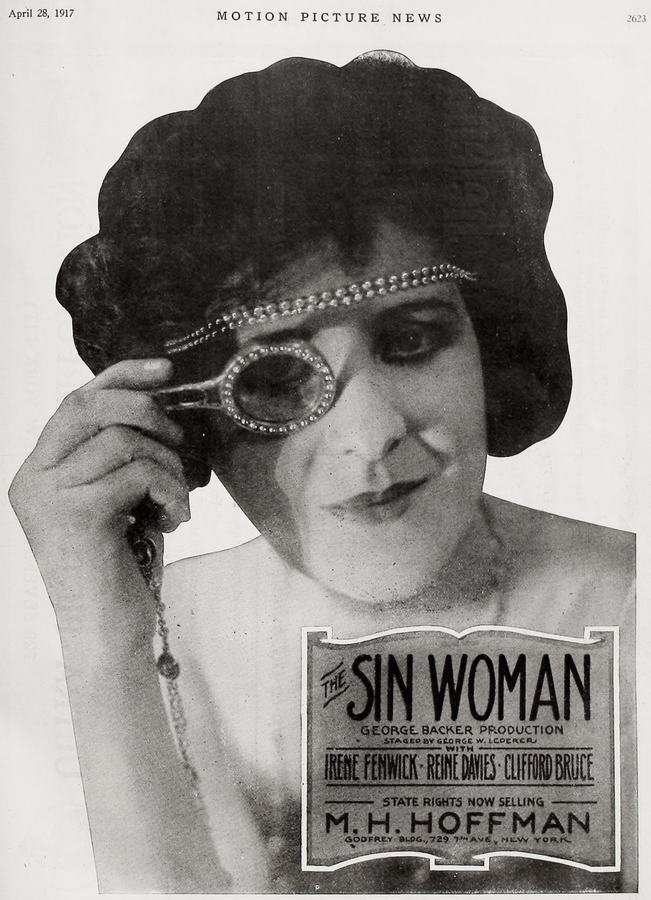
A definitive 5.6/10 rating for a film that redefined the boundaries of cult cinema. The Sin Woman remains a cornerstone of transgressive art.
One minute and fourteen seconds of nitrate lightning—that’s all that remains—yet the afterimage scalds the retina longer than most features.
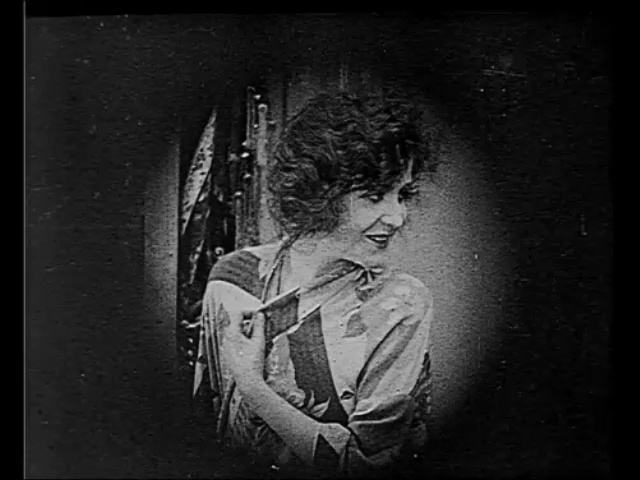
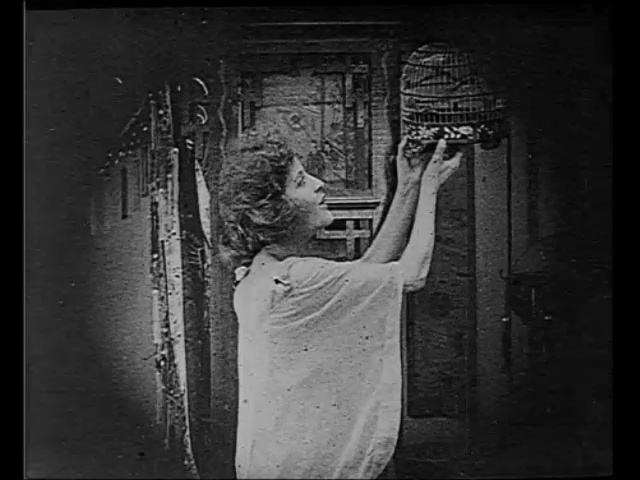
The trailer for The Sin Woman lands like a shard of stained glass hurled from a belfry: jagged, luminous, sacrilegious. We open on a Eden that looks less like paradise and more like an overexposed morgue; tinting swings from septic green to arterial red without warning. Eve—Sarah McVicker—steps into frame, her bare shoulders dusted with silver nitrate glitter that could be pollen or ash. She bites the fruit, but the juice looks suspiciously like mercury, and when she smiles, the frame stutters, as if the film itself is recoiling.
Cut: a subterranean ballroom lit by chandeliers of human ribs. Eve, now in a gown stitched from Communion veils, waltzes with Wellington A. Playter’s cadaverous poet. Every spin erases a decade from his face; by the time the dance ends he’s a desiccated mummy, still clutching her waist. The camera iris closes until only her eye fills the screen—pupil dilated, swallowing the cosmos. An intertitle flashes: “She sins to remember; we watch to forget.”
There’s no narrative spine in the traditional sense, rather a metastasizing mood: sin as contagion, history as hemorrhage. Corbett and Winslow’s screenplay (if the scribbled curses on the trailer cards can be called such) refuses redemption arcs; instead it offers a palimpsest of transgressions—each century layered like scar tissue. The vampire trope here isn’t Gothic romance but ontological rot: immortality as perpetual bruise.
What glues the modern viewer to this fragment is its savage visual syntax. Double exposures don’t merely suggest Eve’s omnipresence—they convulse. A child’s cradle superimposes over a plague pit; both dissolve into McVicker’s laughing mouth. The effect predates Nosferatu’s shadow-play by five years, yet feels nastier, more intimate. Cinematographer George Morgan (also starring as the doomed friar) cranks the camera slower during feeding scenes, so blood droplets hover like punctuation marks, commas in a sentence that never ends.
Compare this to The Devil (1918) where Satan struts across Baroque sets dripping decadence; The Sin Woman peels that varnish off until only suppurating wood remains. Or juxtapose with The Sin of a Woman (1918)—a similarly titled morality tale whose cinematography kneels at the altar of domestic melodrama. Here, morality is roadkill on the highway of myth.
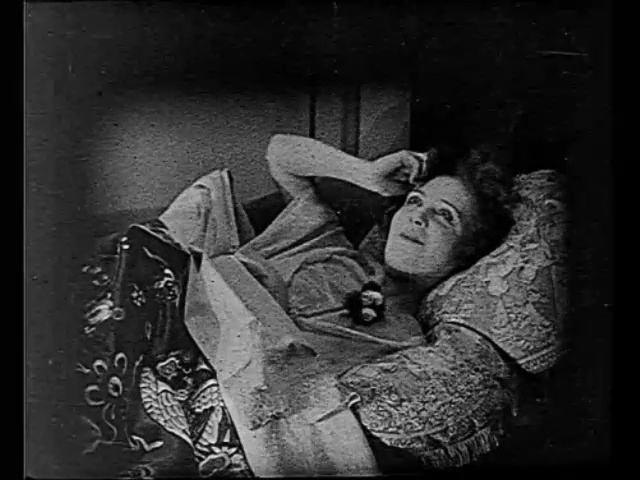
McVicker’s Eve is neither femme fatale nor virginal martyr—she’s the crack in the lens itself. Her body bends into impossible arches, a marionette with cut strings, yet the performance never slips into camp. Watch her blink: each flutter syncopates with a splice, so she appears to edit herself in real time. Irene Fenwick and Reine Davies play her “echoes,” women who inherit portions of the curse—one doomed to love, the other to remember. Their scenes together were reportedly excised by censors; the trailer hints at them only through a staccato montage of clasped hands dissolving into fangs.
This splintered sisterhood prefigures Helene of the North (1916)’s Arctic succubi, yet where that film traps its women inside frozen tableaux, Sin Woman lets them bleed across epochs. The result is a trans-temporal triptych of feminine rage: Eve as proto-Lilith, Lilith as future Medusa.
No musical cue sheets survive, but the trailer’s rhythm hacks your inner ear. Intertitles slam in ALL CAPS, then whisper in lowercase—an early form of auditory hallucination. Imagine a score of distant organs warping into dental drills; that’s the frequency the film occupies. Censors in 1917 claimed they could “smell brimstone” wafting from the screen; projectionists reported prints that rotted faster than bananas, emulsion bubbling into ichorous blisters.
This olfactory mythos aligns Sin Woman with The Maelstrom (1917), another lost film whose promotional posters oozed actual phosphorescent ink. Both traded on the fantasy that cinema could leak off-screen, contaminate. In an age when nickelodeons were still half-peep-show, such huckster horror worked like gangbusters.
Eden, here, is not Mesopotamian but pan-geographical. One truncated shot shows Eve reclining under a palm that drips rubbery sap—an image cannily echoing Die Königstochter von Travankore (1917)’s colonial fever dreams. Imperial extraction becomes original sin: every plundered province a re-skinned Garden, every plantation worker an unwitting Adam. The vampire narrative thus weaponizes the tropics, turning them into veins to tap. It’s eco-Gothic decades before the term existed.
Likewise, the Romanov massacre footage in The Fall of the Romanoffs (1917) shares this film’s sanguinary tint. Both suggest history itself is a haemophiliac: bump it, and it bleeds crimson propaganda.
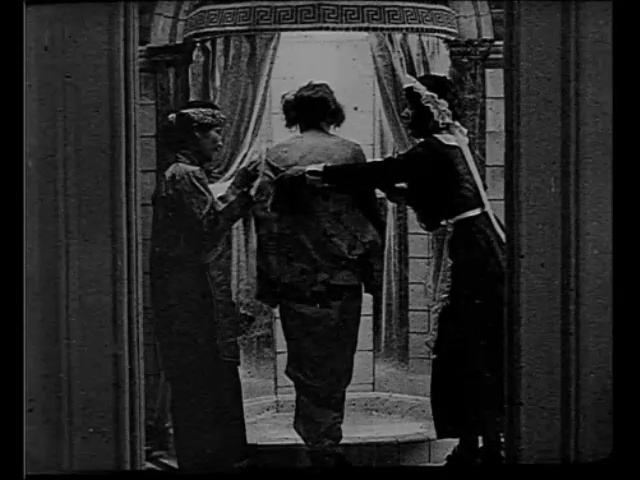
Chicago’s police commissioner confiscated the negative in April 1917, claiming it “promulgated menstrual idolatry”—a phrase so unhinged it deserves needlepoint. What returned from the confiscation was a butchered 47-minute cut minus the childbirth-turned-blood-orgy sequence. That truncated version toured Bible Belt towns under the title Eve’s Tears, marketed as a temperance sermon. Meanwhile, East Coast prints kept the fangs but lost the crucifixion dream—two strips of celluloid amputated from the same body, limping in opposite moral directions.
This diaspora echoes Mutiny (1917), whose ending was reshot three times to appease Navy brass. Both films prove that early Hollywood never finished a movie; it merely surrendered to whichever censor screamed loudest that week.
Because the feature is lost, the trailer transubstantiates into scripture. Every splice scar becomes stigmata; every missing frame, a martyr. Fans parse its 14 shots like Talmudic scholars: does the maggot-ridden apple equal the Trojan horse? Is the infant’s cradle empty or invisible? Reddit threads spawn theories that the film never existed beyond its teaser—a sort of proto-Crowleyan hoax. Yet production stills (unearthed in a 1978 Rochester attic) show McVicker in full vamp regalia, fangs carved from mother-of-pearl, eyes pinned with silver nitrate droplets that refract the camera like disco balls of the damned.
Watch the trailer back-to-back with Sapho (1917) and you’ll notice matching wallpaper patterns—Victorian damask later used in Citizen Kane’s Xanadu. Production designer Clifford Bruce allegedly lifted the pattern from a Parisian whorehouse, claiming “debauch ages faster than piety.” Similarly, the flickering candle effect resurfaces in Chernaya lyubov (1917), proving that cinema’s earliest vampires shared both crew and contagion.
In an era when every lost film gets a crowd-funded resurrection, The Sin Woman remains stubbornly ectoplasmic. No prints in Antarctic archives, no reels mislabeled as David Copperfield. What survives is a cultural black hole whose gravity bends adjacent works toward it. Watch The Woman in 47 (1917) and you’ll spot the same serpentine tracking shot; binge The Morals of Hilda (1917) and hear its echo in the adulterous sighs.
Perhaps that void is the point. Cinema, like Eve, survives by biting its own tale: each lost film a missing rib, each trailer a scar where the rib was ripped. We keep watching because the wound sings.
If this micro-dose of macabre whets your appetite, chase these spectral sisters:
And should a dusty canister labeled “Eve’s Temptation” surface in your grandmother’s attic, handle it with kid gloves soaked in holy water. Some frames bite back.
IMDb —
1933
Community
Log in to comment.