DbcultAccessing Vault...
7/10
Senior Film Conservator
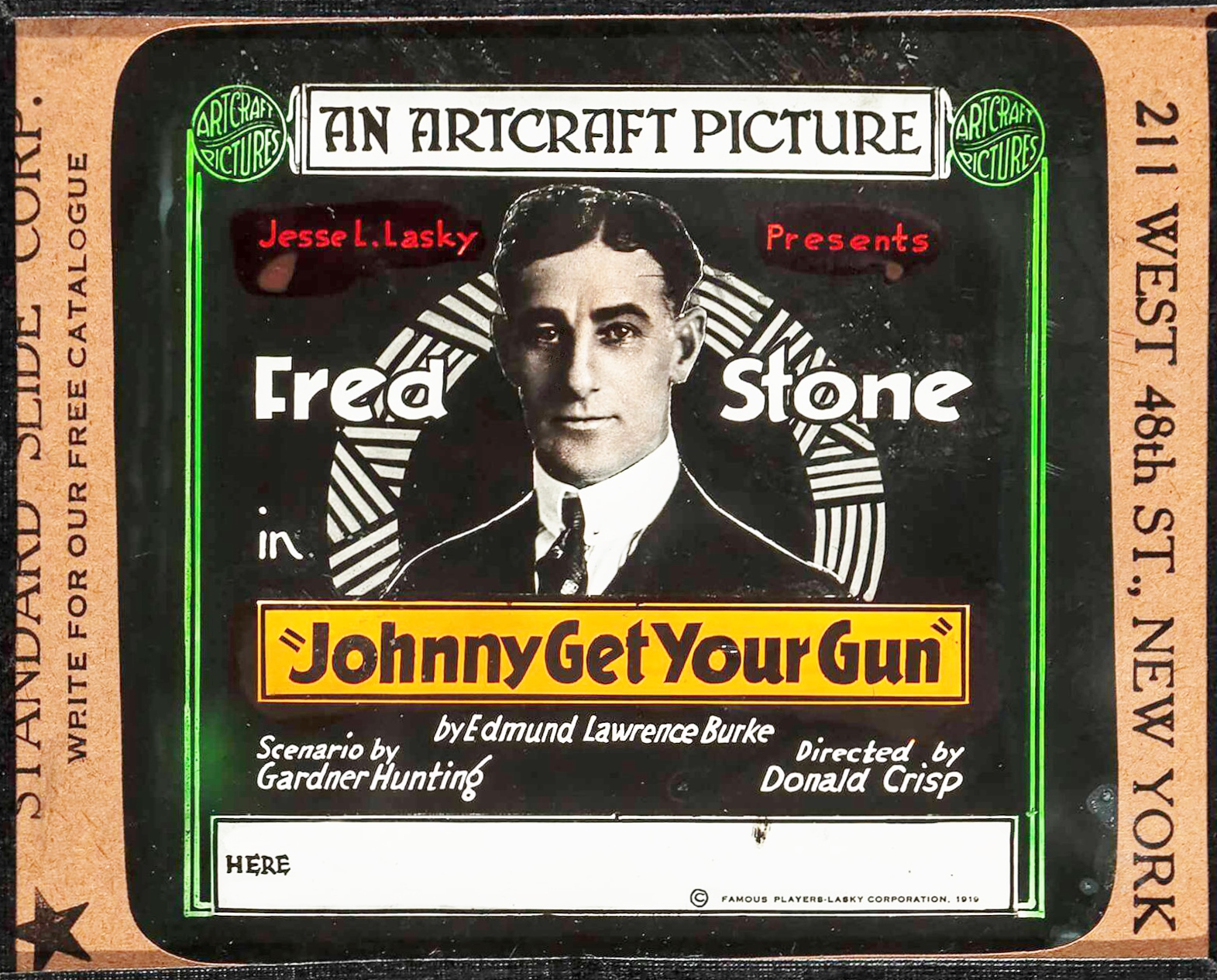
A definitive 7/10 rating for a film that redefined the boundaries of cult cinema. Johnny Get Your Gun remains a cornerstone of transgressive art.
Stepping back into the hallowed halls of silent cinema, one occasionally unearths a true delight, a film that, despite the passage of a century, retains an effervescent charm and a surprisingly sharp wit. Such is the case with Johnny Get Your Gun, a 1919 offering directed by the prolific James Cruze and featuring the unique talents of Fred Stone. This isn't merely a historical curiosity; it's a vibrant, engaging piece of filmmaking that masterfully blends the boisterous energy of the American West with the sophisticated, if often superficial, milieu of Palm Beach society. Its narrative, a classic fish-out-of-water tale infused with mistaken identity and a dash of frontier justice, provides ample comedic fodder while subtly exploring themes of authenticity and societal pretense.
The premise unfurls with a delightful absurdity: Bill Burnham, portrayed by Ernest Joy, a scion of wealth and a connoisseur of revelry, finds himself in a rather undignified predicament—jailed for a drunken, if spirited, shooting spree through town. While incarcerated, a letter arrives, bearing tidings both grim and grave: his father has passed, his sister Janet (Mary Anderson) is on the precipice of marrying a decidedly worthless count, and the family fortune, already precarious, faces imminent peril. Unable to extricate himself from his legal binds, Bill concocts a desperate scheme, a gambit that sets the entire narrative into motion. He enlists his acquaintance, Johnny Wiggins, brought to life with exuberant panache by Fred Stone, a bona fide motion picture cowboy, to impersonate him. The stage is set for a cultural clash of epic proportions, as the unrefined, yet inherently good-hearted, Westerner is thrust into the polished, often duplicitous, world of East Coast aristocracy.
Fred Stone, a celebrated stage comedian and acrobat, was a natural fit for the role of Johnny Wiggins. His physical comedy, expressive face, and innate ability to convey sincerity beneath a veneer of awkwardness make Johnny an instantly lovable protagonist. His arrival in Palm Beach, a stark contrast to the rugged landscapes of his cinematic adventures, is a masterclass in comedic discomfort. Johnny's Western mannerisms – his directness, his penchant for informal attire, his very way of moving – immediately grate on the sensibilities of Janet and her aunt, Sylvia Ashton. Yet, they are forced to tolerate his perceived eccentricities because Bill's official sanction for Janet's marriage is a non-negotiable prerequisite for her to receive her substantial inheritance. This creates a delicious tension, a simmering resentment beneath a forced politeness, which Stone exploits for maximum comedic effect. The film brilliantly highlights the stark differences between genuine character and superficial social graces, a theme that resonates even today. One might draw parallels to similar comedic explorations of class and identity in other silent films, though perhaps less overtly than in The Enchanted Barn, which also features rural characters navigating unfamiliar social landscapes, albeit in a different context.
The supporting cast, while perhaps overshadowed by Stone's magnetic performance, contributes significantly to the film's texture. Mary Anderson's Janet evolves from a somewhat haughty socialite to a woman whose eyes are slowly opened to the true nature of character. Her initial irritation with Johnny gradually gives way to a grudging respect, and eventually, a deeper understanding. The count, played by Clarence Geldert, is the archetypal silent film villain – smarmy, opportunistic, and entirely without scruples. His villainy is essential to driving the plot forward, providing the necessary foil for Johnny's heroics. The dynamic between Johnny and the count is less a battle of wits and more a clash of fundamental moral codes, with the honest, if uncouth, cowboy standing in stark contrast to the polished, yet corrupt, aristocrat.
Director James Cruze, who would later helm the epic The Covered Wagon, demonstrates a keen understanding of comedic timing and visual storytelling in Johnny Get Your Gun. The film is replete with clever sight gags and well-orchestrated sequences that capitalize on Stone's physical prowess. The juxtaposition of Johnny's rugged charm against the backdrop of Palm Beach opulence is consistently amusing. Cruze’s direction ensures that the narrative, despite its farcical elements, maintains a sense of purpose and momentum. The pacing is brisk, a testament to the efficient storytelling characteristic of the era, yet it never feels rushed, allowing moments of character development and comedic beats to land effectively. The screenplay, credited to Gardner Hunting and Edmund Lawrence Burke, is remarkably well-structured, building suspense and humor in equal measure, a challenging feat for a silent film where exposition must be conveyed primarily through action and intertitles.
The narrative truly ignites when the count, whose suspicions about Johnny's true identity have been simmering, finally unmasks the impersonation. His attempt to elope with Janet, hoping to secure the fortune before the truth can fully unravel, sets the stage for one of the film's most memorable sequences. Johnny, ever the resourceful Westerner, pursues the fleeing automobile, and in a moment of cinematic brilliance, employs his signature skill: the lasso. The image of the count being unceremoniously yanked from his moving vehicle by a cowboy's rope is a triumphant blend of slapstick and genuine action, a moment that elicits both laughter and a cheer for the underdog hero. This scene is a prime example of how Johnny Get Your Gun transcends simple comedy, embracing the adventurous spirit of the Western genre, perhaps even echoing the rugged individualism seen in films like Back to God's Country, albeit with a comedic twist rather than stark drama.
Beyond the immediate comedic payoff, the film delves into a fascinating exploration of identity. Johnny Wiggins, a man whose profession is to *play* a cowboy, is thrust into a situation where he must *play* a sophisticated gentleman. Yet, in doing so, his inherent decency and genuine cowboy spirit shine through, proving more effective and honorable than the superficiality he's meant to emulate. He doesn't just impersonate Bill; he inadvertently becomes a better version of what Bill *should* have been—a protector of his family's interests and a purveyor of justice. This thematic depth elevates Johnny Get Your Gun beyond mere farce, offering a subtle commentary on the performative aspects of social roles and the enduring value of authenticity. It's a theme that could be subtly compared to the layers of deception and revelation found in more dramatic thrillers like The Great Secret, though here, the stakes are played for laughs rather than peril.
The film's climax sees Johnny dispensing his brand of justice not just to the villainous count, but also to the crooked broker Milton C. Milton, a character who embodies the financial chicanery lurking beneath Palm Beach's gilded surface. At gunpoint, Johnny compels Milton to make restitution for Janet's losses from bad stock investments, a satisfying moment of populist retribution. This act solidifies Johnny's role as a true hero, a man who, despite his humble origins and unconventional methods, possesses a strong moral compass and the courage to act upon it. It's a refreshing take on justice, delivered with a smile and a six-shooter, contrasting sharply with the bureaucratic or legalistic justice often depicted in more serious dramas of the era.
The romantic subplot, though secondary to the main comedic thrust, is handled with a charming simplicity. Johnny, the unwitting hero, finds love not with the initially disdainful Janet, but with Ruth, the maid. This choice is significant, reinforcing the film's underlying message about finding value in genuine character over social standing. Ruth, perhaps initially overlooked by the Palm Beach elite, recognizes Johnny's true worth, and their union is a heartwarming conclusion to his unexpected adventure. It's a quiet affirmation that true love often blossoms in the most unpretentious of circumstances, a delightful subversion of typical romantic tropes in films where the hero often ends up with the 'princess'.
The ensemble cast, including Casson Ferguson, Jack Hoxie, Noah Beery, and Raymond Hatton, among others, provides a rich tapestry of characters that populate this vibrant world. Each actor, in their silent performance, contributes to the overall atmosphere and helps to ground the more farcical elements in a believable reality. Noah Beery, known for his formidable screen presence, even in smaller roles, adds a certain gravitas, while Fred Huntley and Nina Byron round out the colorful cast. The collaboration between these performers, under Cruze's direction, creates a cohesive and engaging cinematic experience. The film also benefits from the uncredited contributions of a large crew, working tirelessly to bring the vision of writers Gardner Hunting and Edmund Lawrence Burke to life.
One cannot discuss Johnny Get Your Gun without acknowledging its place within the broader context of silent film comedies. It belongs to a lineage of films that delighted in the clash of cultures, the humor derived from mistaken identities, and the triumph of the common man (or cowboy) over the corrupt elite. While it may not possess the profound social commentary of a Chaplin or the elaborate visual gags of a Keaton, it offers a pure, unadulterated form of entertainment. Its legacy lies in its ability to consistently entertain, showcasing the enduring appeal of a good story well told, even without spoken dialogue. The film's lighthearted approach to serious themes – fraud, inheritance, social climbing – makes it a particularly enjoyable watch, a testament to the filmmakers' skill in balancing humor with narrative stakes.
The technical aspects, while perhaps not groundbreaking for its era, are competently handled. The cinematography effectively captures both the grandeur of Palm Beach and the dynamism of the action sequences. The editing is crisp, maintaining a steady rhythm that guides the audience through the narrative twists and turns. The use of intertitles is judicious, providing necessary exposition without bogging down the visual storytelling. For those interested in the evolution of American cinema, Johnny Get Your Gun offers a fascinating glimpse into the transitional period of the late 1910s, where narrative sophistication was beginning to merge with the burgeoning artistry of film direction and performance. It stands as a charming example of how early cinema could craft compelling, character-driven stories with universal appeal.
Ultimately, Johnny Get Your Gun is more than just a historical artifact; it's a testament to the timeless appeal of a well-crafted comedic adventure. Fred Stone's performance as Johnny Wiggins is a tour de force of physical comedy and genuine charm, anchoring a narrative that is both uproariously funny and surprisingly insightful. The film's themes of authenticity, class clash, and the triumph of good over greed remain perennially relevant, wrapped in a package of delightful silent-era antics. When Johnny, having completed his mission and found love with Ruth, departs with a promise that things will 'get livelier' upon Bill's return, it leaves the audience with a smile and a sense of satisfaction. It's a film that reminds us of the power of a simple story, well told, to transcend the limitations of its time and continue to captivate audiences generations later. A definite recommendation for anyone seeking a forgotten gem from the golden age of silent film.
IMDb —
1927
Community
Log in to comment.