DbcultAccessing Vault...
7.6/10
Senior Film Conservator
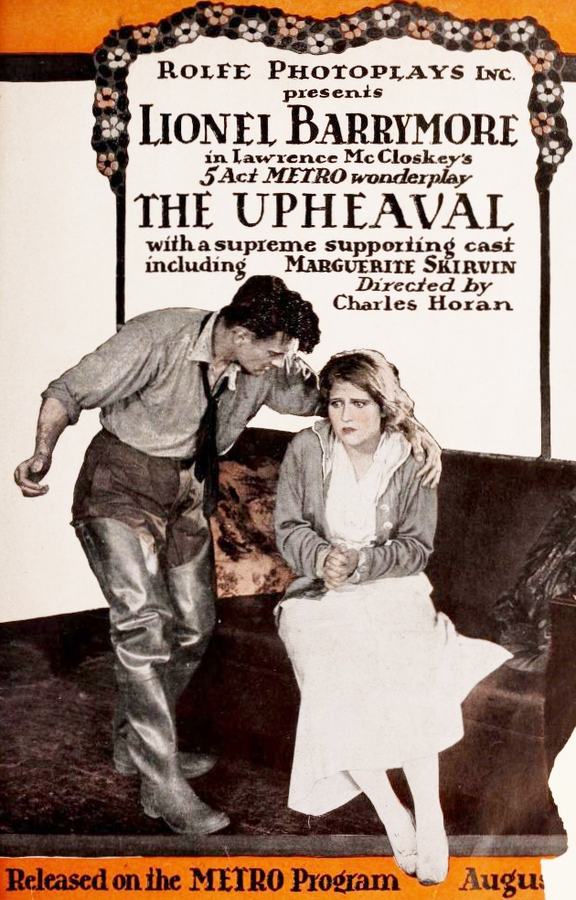
A definitive 7.6/10 rating for a film that redefined the boundaries of cult cinema. The Upheaval remains a cornerstone of transgressive art.
In the annals of cinematic storytelling, few narratives capture the thorny essence of political idealism battling entrenched corruption with the visceral intensity of "The Upheaval." This film is not merely a period piece; it's a timeless exploration of character, perception, and the relentless pursuit of integrity in a world determined to doubt it. From its opening frames, we are plunged headlong into a municipal landscape choked by cynicism, where the very air seems heavy with the ghosts of past misdeeds. It's a setting ripe for drama, a stage upon which the personal and the political will collide with devastating, yet ultimately redemptive, force.
At the heart of this intricate web is Jim Gordon, portrayed with a compelling blend of gravitas and vulnerability by Edgar L. Davenport. Jim is not merely stepping into a political vacuum; he is inheriting the infamous mantle of his father, "Big Jim" Gordon, a name synonymous with the very bedrock of the city's corruption. This isn't just a challenge; it's a crucible. The public, the press, and even his supposed allies are predisposed to view him through the tainted lens of his predecessor's venality. Every handshake, every policy proposal, every public address is scrutinized not for its merit, but for the hidden agenda, the subtle nod to graft that they are convinced must lurk beneath the surface. Yet, Jim is guided by a different star: the hallowed memory of his deceased mother, whose teachings instilled in him an unshakeable belief in civic duty and altruism. This internal conflict—the external expectation of corruption battling the internal drive for probity—forms the foundational tension of the narrative, a tension Davenport masterfully conveys through subtle shifts in his demeanor, from resolute conviction to fleeting moments of profound weariness.
Gordon's early legislative victories, such as the crucial Utilities Bill and the much-needed Water Rate Bill, are not met with the public acclaim one might expect. Instead, they are met with a pervasive, almost aggressive, skepticism. "The New American," a newspaper under reform management, becomes the vocal embodiment of this mistrust, its editorials and headlines screaming warnings against what it labels Gordon's "hypocrisy." The film excels in illustrating how deeply ingrained cynicism can be, how difficult it is to dislodge a preconceived notion, especially when that notion is reinforced by a powerful media voice. It's a poignant reminder that good intentions alone are often insufficient in the political arena; one must also win the battle for public perception. This struggle for legitimacy resonates with themes explored in films like The Voice in the Fog, where public opinion, often swayed by sensationalism, dictates the fate of individuals, regardless of actual guilt or innocence. Here, the fog is not of mystery, but of a deeply ingrained societal suspicion.
Gordon's singular, critical misstep comes in his appointment of Sidney Benson as Director of Public Safety. Portrayed with a chillingly suave duplicity by Lionel Barrymore, Benson is the quintessential wolf in reformer's clothing. He speaks the language of change, yet his every action is carefully orchestrated to further his own nefarious ends. His engagement to Joan Madison adds another layer of complexity to his deceit, placing him in the orbit of genuine social reform while simultaneously undermining it from within. When Madison approaches Benson for aid on the vital Sanitary Bill, designed to alleviate the squalid conditions of the city's tenement dwellers, his evasive answers are a stark contrast to Jim Gordon's direct, albeit misunderstood, approach. Barrymore imbues Benson with a captivating charm that makes his eventual betrayal all the more impactful, a testament to the insidious nature of corruption that can hide behind the most respectable facades. His character serves as a stark counterpoint to Gordon, highlighting the vast chasm between genuine idealism and opportunistic self-interest, a thematic exploration reminiscent of the moral quandaries presented in The Broken Law, where the lines between right and wrong are blurred by personal gain.
Joan Madison, brought to life with spirited conviction by Marguerite Skirvin, represents the film's moral compass, initially untainted by the political machinations. Her passionate advocacy for the downtrodden and her alliance with Benjamin Waters, the editor of "The New American," underscore the power of investigative journalism to expose societal ills. As she embarks on a series of articles exposing local conditions, her quest for truth inadvertently leads her to a restorative mountain resort, a brief respite from the city's grime. It is here, amidst nature's tranquility, that fate intervenes, orchestrating a meeting with Jim Gordon, who is also seeking a temporary escape from the relentless pressures of his office. Their burgeoning romance, born of shared ideals and mutual respect, is beautifully rendered, a tender counterpoint to the harsh political realities awaiting them back in the city. Skirvin's portrayal captures the evolution of Joan from an earnest activist to a woman grappling with profound personal and ethical dilemmas, her initial fondness for Gordon blossoming before being cruelly tested. This accidental romance, fraught with future complications, adds a deeply human layer to the otherwise politically charged narrative, much like the unexpected connections forged in What Love Can Do, where personal relationships often serve as the catalyst for broader societal change.
The film reaches a pivotal emotional climax when Joan returns to the city, determined to plead with Gordon himself to pass the Sanitary Bill. Her surprise upon discovering her mountain friend is the very man she's come to lobby is eclipsed by a far more devastating revelation: her own father is the owner of the dilapidated tenements slated for destruction by the bill. The passing of this legislation would mean penury for her family. This moment presents a profound moral gauntlet, forcing Joan to choose between filial loyalty and her deeply held principles of social justice. Skirvin expertly conveys the agony of this decision, where principle ultimately triumphs over selfishness. Yet, the cost is immediate and severe, leaving her father without means. Gordon's subsequent proposal—a marriage designed to solve her father's financial woes—casts a shadow of transactional suspicion over Joan's affection. She consents, but a seed of doubt regarding his true motives takes root, clouding their union from its very inception. This complex intertwining of personal sacrifice and political expediency is handled with remarkable nuance, presenting a narrative that refuses easy answers. The film dares to ask: what is the true cost of integrity, and can love truly flourish when suspicion poisons its roots? The ethical dilemmas here echo the profound choices faced by characters in Called Back, where personal loyalties and moral obligations clash with dramatic consequences.
The arrival of a new traction company in the city's competitive landscape ignites the final, most explosive phase of Gordon's battle. When the incumbent company accuses him of abandoning their interests, his audacious response—an offer to buy the concern outright—is readily accepted. This strategic maneuver, however, is tragically misconstrued by Joan. Still believing her husband to be a grafter, and perhaps influenced by Benson's lingering presence, she sees this acquisition as irrefutable proof of his intent to defraud the public. Her subsequent decision to inform Benson, though born of a misguided sense of civic duty, sets in motion a chain of events that threatens to utterly destroy Gordon. The front-page accusation in "The New American" on the morning the franchise bill is to come before the city council is a devastating blow, igniting public fury and culminating in a vast, angry crowd determined to fight Gordon and any measure he might advocate. The tension in these scenes is palpable, a masterclass in building narrative suspense. The film expertly uses the mob mentality to amplify the stakes, creating an almost suffocating atmosphere of distrust and impending doom.
In the film's breathtaking climax, Jim Gordon, facing down the wrath of a city he has tirelessly striven to serve, demands a hearing before the council. His voice, initially drowned out by the cacophony of public outrage, slowly cuts through the din. He recounts the benefits he has conferred upon the city, not as a boast, but as a quiet testament to his true character. Then, with a clarity and conviction that silences the angry throng, he reveals his true intent behind the traction company acquisition: he bought the concern not for personal gain, but to make a grand present of it to the city. This extraordinary act of civic philanthropy is presented as a dual tribute: an honor to his dead mother's memory and a profound atonement for the wrongs perpetrated by his father. It's a moment of unparalleled emotional release, a complete subversion of all expectations, and a powerful vindication of his unwavering idealism. The film brilliantly uses this dramatic reveal to demonstrate that true power lies not in accumulation, but in selfless giving. The immediate aftermath, leaving Gordon and Joan penniless, underscores the profound personal cost of such an act, yet simultaneously solidifies their bond in a way no material wealth ever could. Their decision to begin a new life together, stripped of all possessions but rich in mutual understanding and integrity, is a deeply moving resolution.
The ensemble cast delivers performances that elevate this narrative far beyond a simple political drama. Edgar L. Davenport as Jim Gordon anchors the film with a portrayal that is both stoic and deeply empathetic, allowing the audience to feel the weight of his burden and the purity of his intentions. Marguerite Skirvin’s Joan Madison is a revelation, evolving from a determined social reformer to a woman navigating complex emotional and ethical terrain with grace and conviction. Lionel Barrymore, as the duplicitous Sidney Benson, crafts a villain whose charm is as dangerous as his deceit, providing a crucial foil to Gordon's idealism. The direction, while unobtrusive, meticulously builds tension and allows the intricate plot, penned by Lawrence McCloskey, to unfold with compelling clarity. McCloskey’s script is a masterclass in character development and thematic exploration, ensuring that every twist and turn feels earned and impactful. The visual storytelling, though perhaps understated by modern standards, effectively conveys the grit and grandeur of the urban political landscape. The use of stark contrasts, both thematic and visual, underscores the film's central conflict between light and shadow, honesty and corruption.
"The Upheaval" transcends its period setting to offer a remarkably prescient commentary on political trust, the power of media, and the enduring human struggle for integrity. Its themes of public perception versus reality, the cost of genuine leadership, and the redemptive power of selfless action remain as relevant today as they were upon its release. It reminds us that true change often comes not with fanfare, but with quiet sacrifice, and that the greatest victories are sometimes those that strip us of everything but our honor. For those who appreciate narratives that delve into the complex machinery of society and the human heart, "The Upheaval" is not merely a film to be watched, but an experience to be profoundly felt. It stands as a powerful testament to the idea that even in the darkest corners of corruption, the light of idealism can, and sometimes does, prevail. Its message of personal sacrifice for the greater good resonates deeply, much like the heroic endeavors depicted in How We Beat the Emden, where individuals rise to meet monumental challenges with unwavering resolve.
This is a film that challenges its audience to look beyond the surface, to question motives, and ultimately, to believe in the possibility of genuine good, even when all evidence seems to point to cynicism. It’s a compelling journey that leaves a lasting impression, cementing "The Upheaval" as a vital piece of cinematic history, a profound narrative on the arduous, yet essential, path to redemption and public service.

IMDb 6.7
1932
Community
Log in to comment.