DbcultAccessing Vault...
Cult Review
Senior Film Conservator
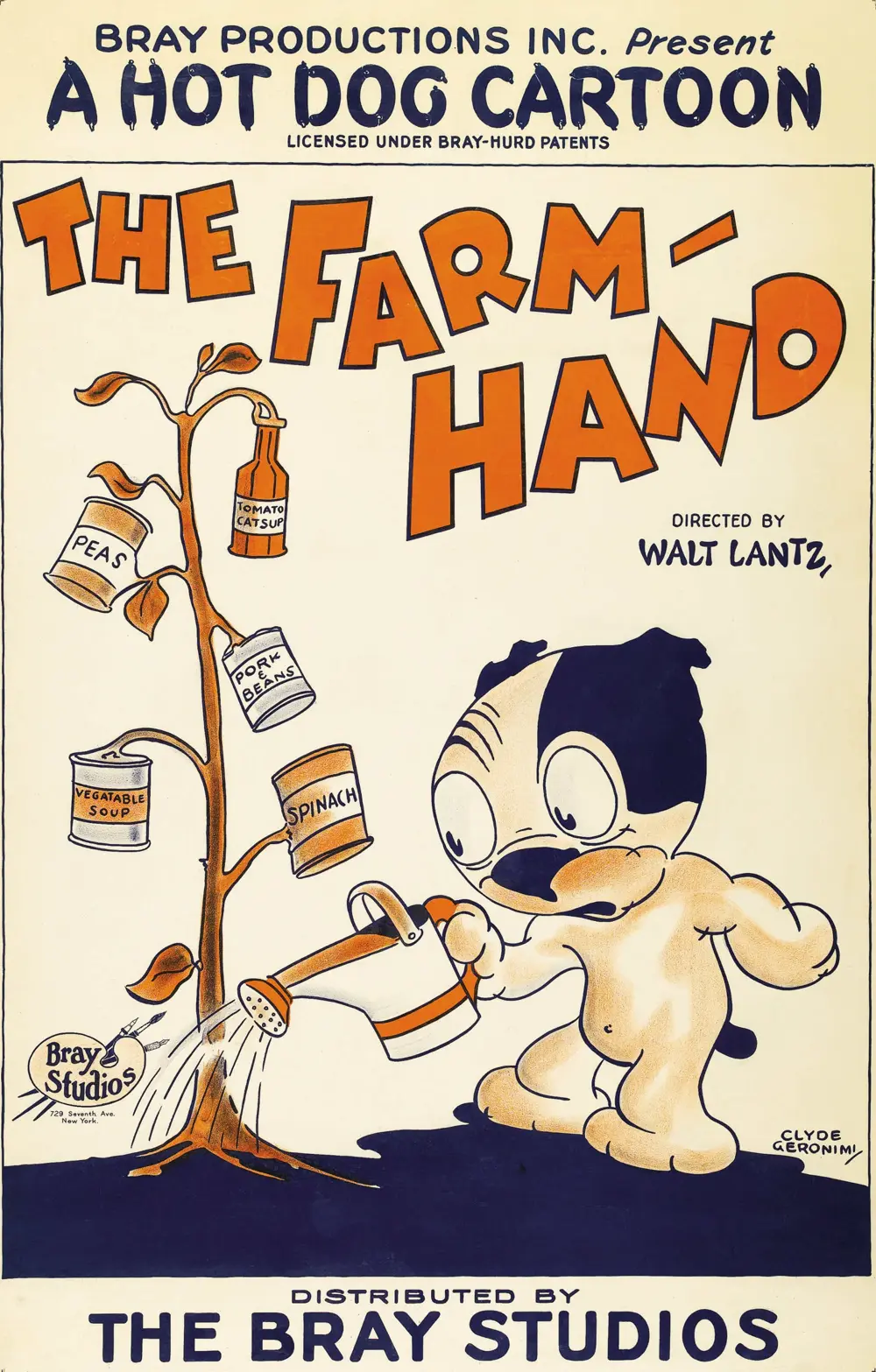
Is The Farm Hand worth watching today? Short answer: yes, but only if you are a student of comedy history or a fan of early silent slapstick. This film is for those who appreciate the raw, unpolished origins of physical humor and the evolution of Walter Lantz; it is definitely not for viewers who require high-definition spectacle or complex narrative arcs.
Before we dive into the dusty furrows of this 1923 short, let us address the core of the experience. The film exists in a vacuum of early 20th-century sensibilities where the gag is king and the story is merely a delivery vehicle. It lacks the polish of later Lantz works, yet it contains the DNA of what would become a legendary career in animation and film production.
1) This film works because it captures the pure, unadulterated essence of the 'lazy protagonist' archetype that would later define characters across the medium.
2) This film fails because its repetitive structure can feel monotonous to a modern eye used to faster pacing and more varied set-pieces.
3) You should watch it if you want to see the literal foundation of Walter Lantz’s career before he became a titan of the animation industry.
In The Farm Hand, Walter Lantz crafts a character that is surprisingly relatable even a century later. We have all known a Walt—someone who puts more effort into avoiding work than it would take to actually do the job. This isn't the earnest, hardworking heroism found in films like The Pioneers. Instead, it’s a celebration of the 'dodge.'
The film’s humor is derived entirely from the power dynamic between Walt and Pete. Pete is the engine, the muscle, and the victim. Walt is the architect of Pete's misery. There is a specific scene involving the loading of hay where Walt’s pantomime of 'heavy lifting' is so exaggeratedly fake that it becomes a biting satire of management. It’s a bit mean-spirited, honestly. But that’s why it works.
Unlike the romanticized rural life depicted in Wild Beauty, the farm here is a stage for chaos. The environment is used as a weapon, with every tool and animal becoming a potential setup for a punchline. This isn't high art; it's functional comedy that relies on the audience’s inherent understanding of the unfairness of labor.
Yes, but as a historical artifact rather than a blockbuster. It provides a clear view of how early filmmakers used physical space to build tension. The film shows us that comedy hasn't changed as much as we think. The frustration of being the 'Pete' in a relationship is a universal truth that transcends the silent era.
Walter Lantz, acting as both writer and star, shows a keen understanding of frame composition. In the 1920s, the camera was often static, but Lantz uses that limitation to his advantage. He treats the screen like a proscenium arch, allowing the action to flow from left to right in a way that feels like a precursor to his later animated storyboards.
The pacing is deliberate. It doesn't have the frantic energy of Up in the Air, but it possesses a rhythmic quality. Every gag is given room to breathe. When Walt tricks Pete into carrying a massive load, the camera lingers just long enough for the audience to register Pete's exhaustion before cutting to Walt's smug satisfaction.
However, the cinematography is undeniably flat. Compared to the more ambitious visual storytelling in God's Law and Man's, The Farm Hand feels visually sparse. The backgrounds are functional but lack character. This is a film that lives and dies by the performances of its two leads, and Lantz’s rubbery face does a lot of the heavy lifting that Walt refuses to do.
One of the most striking things about The Farm Hand is how it subverts the typical 'tramp' character made famous by Chaplin. Walt isn't a victim of circumstance; he’s an opportunist. He’s not looking for a meal; he’s looking for a shortcut. This cynical edge makes the film feel more modern than many of its contemporaries.
It’s a sharp contrast to the more traditional comedic structures found in The Barnstormers. In that film, the humor comes from the situation; in The Farm Hand, the humor comes from the character's fundamental flaws. It’s a character study disguised as a slapstick short. Lantz isn't afraid to make himself look like a jerk, which is a brave choice for a lead actor of that era.
The camera doesn't move, but the comedy does. There is a sequence involving a stubborn mule that feels like a dry run for the animated antics Lantz would later perfect. The timing of the mule’s reaction to Walt’s laziness is the highlight of the film, showcasing a level of animal-human choreography that was difficult to achieve in 1923.
To understand The Farm Hand, one must look at what else was happening in cinema. While films like Taming the West were exploring the grandeur of the frontier, Lantz was focused on the minutiae of a single farmyard. He wasn't interested in the 'Big Picture.' He was interested in the small, petty victories of a lazy man.
This focus on the 'small' is what makes the film endure. It doesn't have the epic scale of a western, but it has the intimacy of a well-told joke. It’s flawed. It’s simple. But it’s honest about human nature. We all want to be Walt, even if we know we should be Pete.
Pros:
Cons:
The Farm Hand is a fascinating, if slightly repetitive, slice of cinematic history. It isn't a masterpiece, but it is a necessary building block. It works because it doesn't try to be anything other than what it is: a series of gags about a man who refuses to work. It’s flawed, but its flaws are the flaws of a medium still finding its feet. If you can get past the primitive production values, you’ll find a comedy that is surprisingly sharp and eternally relevant. It’s a testament to the fact that laziness is, and always will be, funny. It’s not a classic on the level of Keaton or Lloyd, but it’s a vital piece of the Walter Lantz puzzle that deserves its 15 minutes of fame in the digital age.
IMDb —
1915
Community
Log in to comment.