DbcultAccessing Vault...
Cult Review
Senior Film Conservator
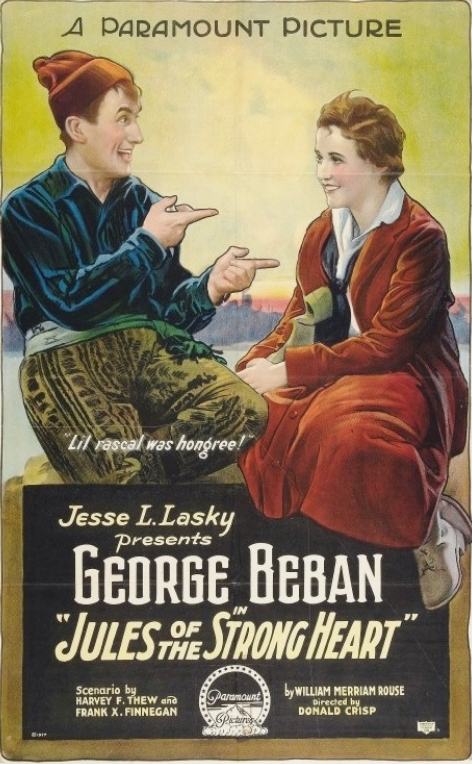
Snowmelt and sawdust swirl through Jules of the Strong Heart like opposing spirits: one soft, one severing. Director William Merriam Rouse stages the Nemo lumber camp as an amphitheatre of pine trunks where masculinity is measured in board-feet and ballads. Into this cathedral of crackling axes steps George Beban—ebullient, doe-eyed, speaking French-inflected English with a tremor of lullaby. Beban’s Jules arrives not as swaggering Paul Bunyan but as a man suddenly burdened by tenderness, a backpack of sentiment heavier than any cedar log.
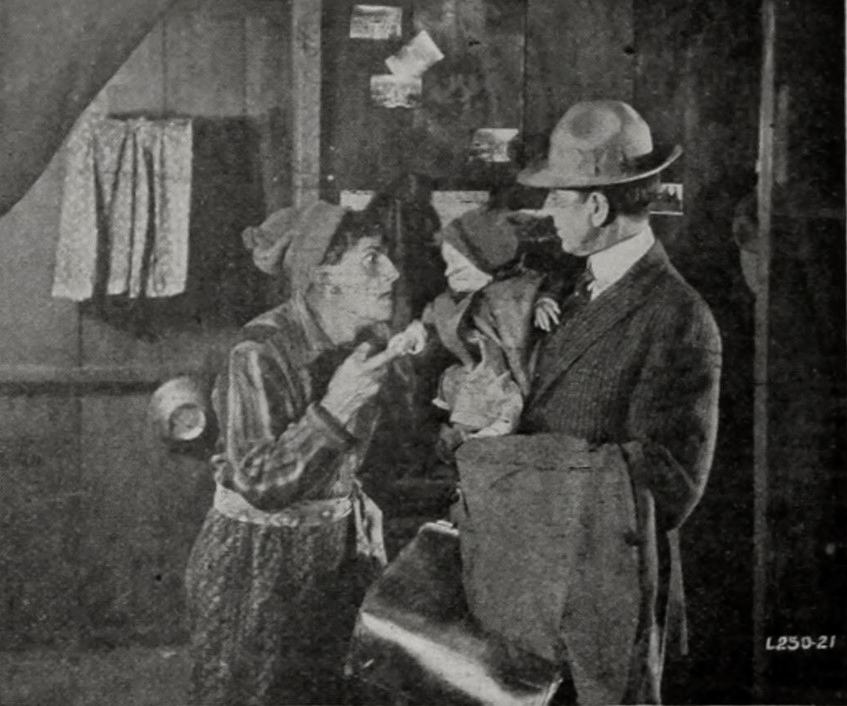
The baby he cradles is more than prop; it is the film’s moral tuning fork. Each time Jules adjusts the wool blanket, the frame itself seems to exhale, reminding viewers that brutality and nurture share the same campfire. Notice how cinematographer Frank X. Finnegan—yes, one of the writers doubling behind the lens—keeps the child’s face unseen for half the picture, a void around which gossip orbits. The camera cherishes obfuscation: lantern smoke, river fog, breath in sub-zero air, all veils that delay revelation until the stranger from England strides in.
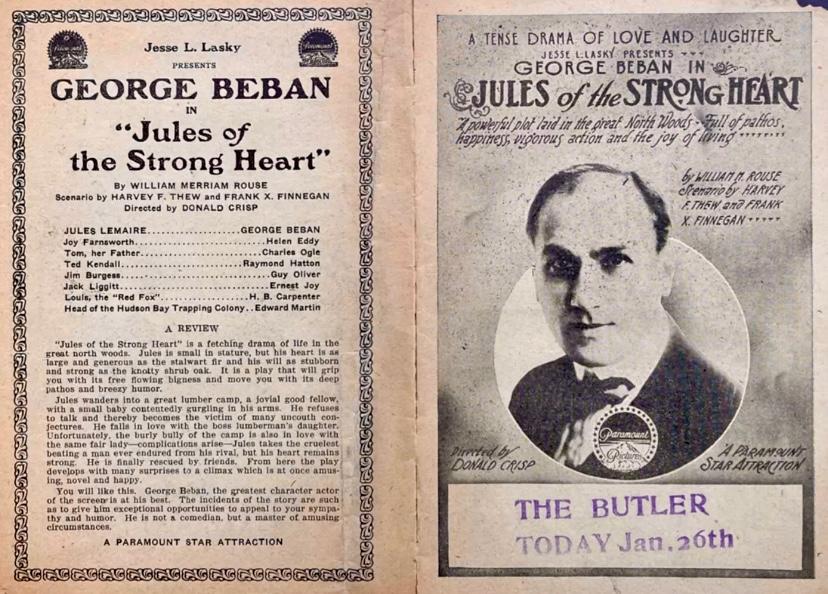
Silent-era labor unrest rarely enjoys such intimate stakes. The delayed payroll subplot is no bureaucratic footnote; it is the fuse Burgess (a venomous Guy Oliver) lights beneath communal fear. His oratory amid stacked cedar planks feels proto-Reds, yet Rouse refuses agitprop sermonizing. Instead the strike becomes a canvas on which suspicion is daubed: accents, origins, even lullabies become evidence of allegiance. Jules’s foreign cadences mark him as outsider until the baby baptizes him in collective sympathy—a narrative sleight of hand that feels radical for 1919.
Helen Jerome Eddy’s Joy Farnsworth watches this metamorphosis with pupils dilated by more than torchlight. She is no ornamental ingenue; her trousers tuck into timberjack boots, her stride scatters woodchips like confetti. When she strips a branch with one deft swipe, the gesture foreshadows her later stripping of social protocol to propose marriage. Eddy plays the moment with flushed audacity, eyes locked on Jules as if daring the celluloid itself to object. Their chemistry is less swoon than combustion, a flare against the midnight river.
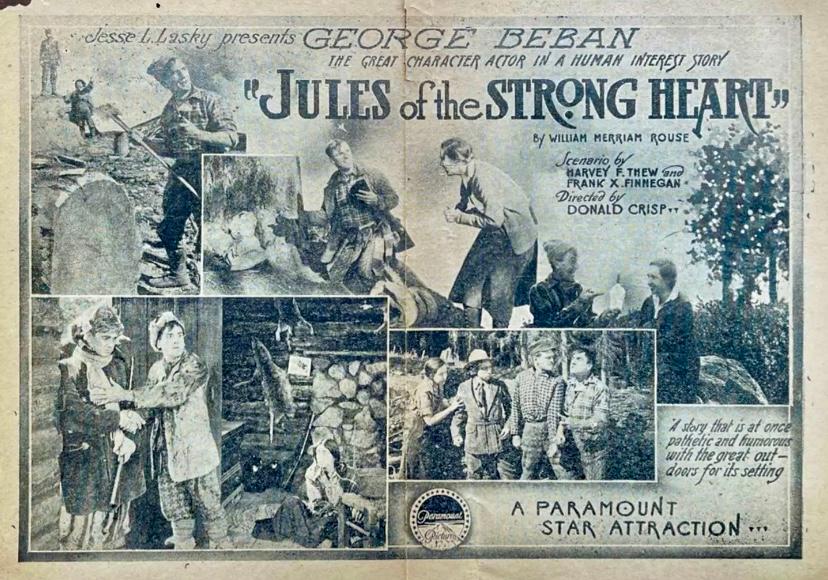
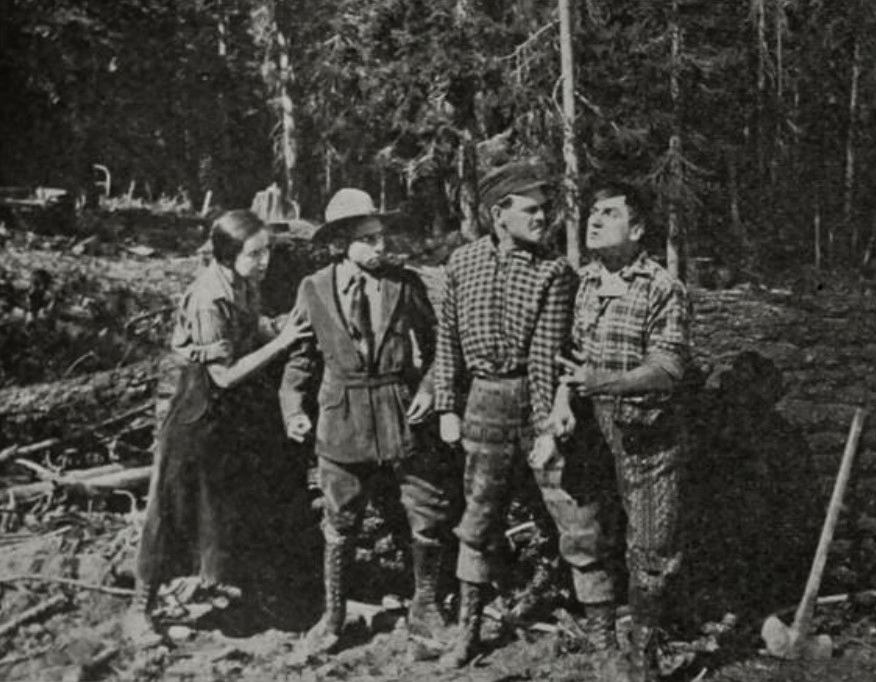
Every epic demands its Goliath, and Charles Ogle (contrary to some mis-citations, Burgess is Ogle’s bruising domain) supplies a colossus steeped in moonshine menace. Watch how he looms over Jules’s tied form, axe handle twitching like a conductor’s baton awaiting symphony of agony. The forest absorbs sound; Burgess’s whispered threats feel sacramental, as if cruelty itself is receiving communion. Yet Rouse and co-writer Harvey F. Thew complicate the brute: mid-torment, Burgess recalls his own destitute childhood, a flicker that humanizes without absolving—a nuance many silents skip.
Compare this to The Heart of a Lion where villainy is destiny, not dialectic. Jules dares ambiguity, positioning Burgess as both symptom and saboteur of frontier capitalism. The river, half-frozen, becomes an amphitheatre of reckoning: as Burgess raises a billet above Jules’s knuckles, ice floes crack like distant applause. It is silent cinema’s answer to duel under cathedral light, minus swords, plus snowflakes.
The eleventh-hour arrival of the child’s biological father could have capsized the film into farce. Yet the stranger—played with stately restraint by Ernest Joy—functions as external validation of Jules’s moral credit. He is walking proof that tenderness can be borrowed, shared, returned like library scripture. Together with Joy, the stranger forms a triumvirate of rescue, galloping across intercut rapids that recall The Battle of the Ancre’s marshy peril, albeit on timber rafts rather than iron behemoths.
Editorial cadence here deserves applause. Intertitles recede; visuals speak: Burgess’s rope slackens, Joy’s rifle glints, Jules’s eyes well with melting snow. The sequence is a masterclass in condensation—economy of exposition that modern blockbusters, bloated with exposition dumps, could envy.
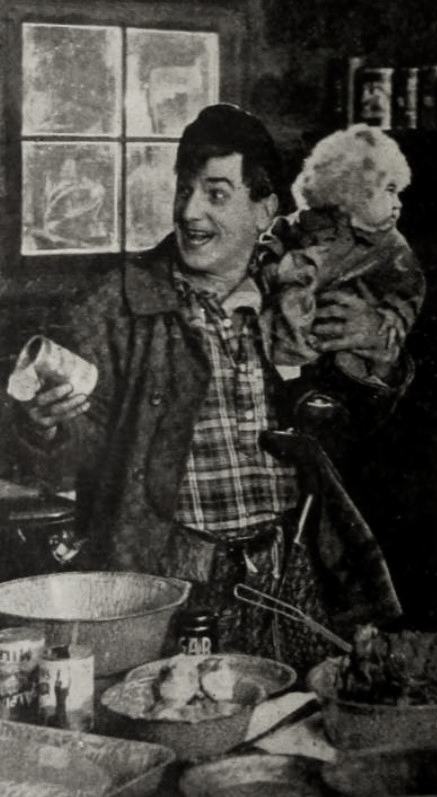
Perhaps the most subversive beat arrives when Joy kneels amid wood shavings and proposes. The act is framed at waist-level: Jules stands dumbstruck, axe slung like useless ornament. Around them, lumberjacks freeze—statues of disbelief. Eddy delivers her intertitle with steady gaze: “I’d brave worse rivers than this for a man who knows how to cradle life.” The line, likely penned by Thew, detonates social orthodoxy. Compare to Her Moment where agency circles the heroine yet ultimately reverts to male sanction. Jules refuses that reversion; the film ends on the couple strapping the child between them as they stride toward an uncertain dawn, payroll secured but more importantly, emotional ledger balanced.
Though monochromatic, the film’s palette is implied through tinting: amber for hearthside communion, cerulean for river sequences, rose for the proposal. Contemporary archivists speculate lost nitrate reels bore hand-painted embers during the campfire standoff between Jules and Burgess. One hopes future restorations resurrect these hues, allowing the orange of flames to echo the dark orange urgency of the men’s desperation.
Initial screenings boasted live fiddle reels transmuting into lullabies, mirroring Jules’s arc from roustabout to rocking father. Variety (1919) praised Beban’s “pliant facial symphony,” while a Montreal Gazette critic noted the film’s bilingual intertitles—groundbreaking for Quebecois audiences. Alas, like many silents, Jules slipped into obscurity, overshadowed by Beban’s later The Italian (1915) reissues. Yet cinephiles tracing the genealogy of frontier feminism find treasure here, a stepping stone between A Woman’s Experience and 1920s flapper iconoclasm.
Rewatching today, one perceives pre-echoes of John Ford’s communal tableaux, of Lois Weber’s social conscience, even of Kelly Reichardt’s riverine tension in Meek’s Cutoff. The baby operates as both MacGuffin and moral mirror, akin to the child in One More American but with less patriotic veneer and more humanist inquiry.
Meanwhile, the camp payroll crisis anticipates Broadway Bill’s economic anxieties, though set in sawdust rather than ticker tape. Such intertextual reverberations render Jules of the Strong Heart not a relic but a Rosetta stone for decoding early cinema’s negotiation of capital, care, and conscience.
Raymond Hatton as the camp clerk supplies comic counterpoint, tallying figures on a chalk-slate that keeps smudging, a gag both humorous and symbolic—ledgers can’t contain life’s intangibles. James Neill’s foreman oscillates between authoritarian bark and paternal worry, embodying managerial tension that would resurface in Depression-era union pictures. Even peripheral lumberjacks—Edward Martin, Horace B. Carpenter—register as distinct silhouettes, their wool caps and elbow patches suggesting entire backstories in a glance.
Is the film flawless? Pacing in reel three lags during a redundant river montage, and intertitles occasionally over-explain what Beban’s eyebrows already convey. Yet these are splinters in a mighty redwood. Jules of the Strong Heart endures because it locates softness inside savagery, partnership inside patriarchy, and proposes—literally—that love’s strongest currency is not coin but courage.
Seek it out should a print surface in your regional archive; bring live strings, invite bilingual readers, let the campfire flicker anew. For in an age when masculinity still oscillates between bluster and benevolence, Jules Lemaire’s saga offers a template: carry the child, cross the torrent, and when the moment demands, accept the proposal—no matter who kneels.
IMDb 6.5
1917
Community
Log in to comment.