DbcultAccessing Vault...
Cult Review
Senior Film Conservator
I. The Purity League vs. The Body Politic
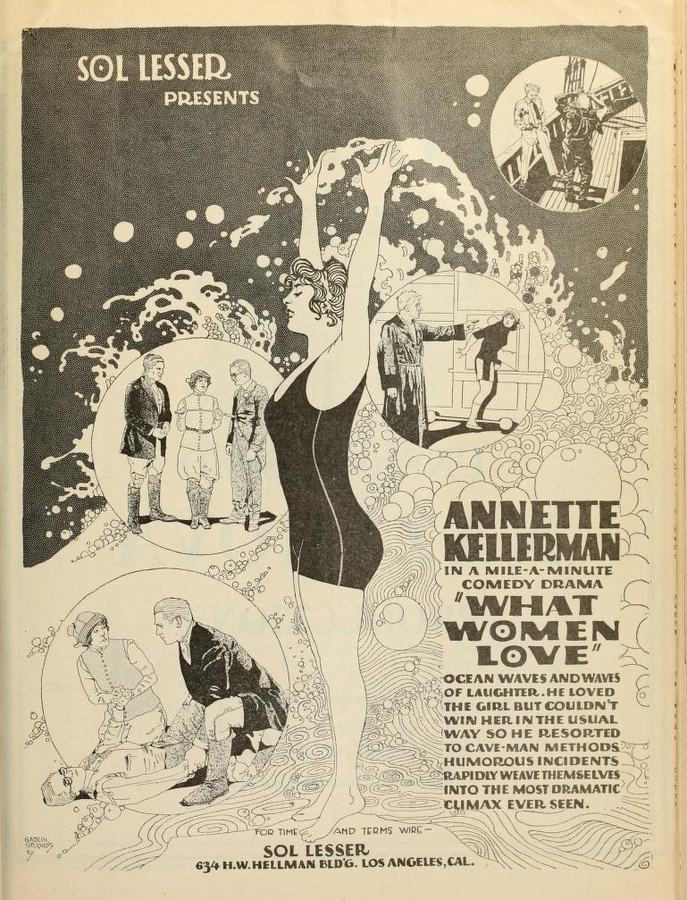
A single intertitle—white letters trembling against obsidian—announces James King Cotton’s crusade against "the epidemic of immodesty." Yet the camera, voyeur that it is, can’t stop ogling the very epidermal excess he condemns. This contradiction is the film’s serrated edge: a sermon on modesty stitched together with voyeuristic close-ups of Annabel’s clavicle, her thighs scalloped by scalloped swimsuit hems. The Purity League’s banners flap like black flags at a bacchanal, each slogan an incantation doomed to be drowned by jazz phonographs and the slap of water on flesh.
II. Annabel Cotton: Siren, Cipher, Guillotine Blade
Annette Kellerman, the Australian aquanaut who once dove ninety feet into the Thames, performs her own stunts here, and the camera worships the torque of her spine as she climbs the ratlines. Annabel is neither flapper nor feminist in any manifesto sense; she is appetite incarnate, a body that refuses the girdle of ideology. When she laughs at Willy’s "spaghetti arms," the sound is less cruelty than a tuning fork struck against the brittle facade of Edwardian masculinity. Her eventual submission is not a capitulation but a transaction: she trades the terror of near-drowning for proof that her suitor can weaponize tenderness.
III. Willy St. John: The Awkward Inheritance of Violence
William Fairbanks plays Willy with the rubbery facial acrobatics of a man who has read about valor in dime novels but never flexed it. His decision to hire Buck Nelson is less strategy than self-harm: purchasing the capacity for violence the way one might buy a tailor-made suit, hoping it will cin backbone into a spine of custard. When the climactic melee erupts—fists, belaying pins, a harpoon gun that Chekhov would envy—Willy’s metamorphosis feels less like heroism than a man finally inhabiting the silhouette that patriarchy drew for him.
IV. Captain Buck Nelson: The Id Unleashed
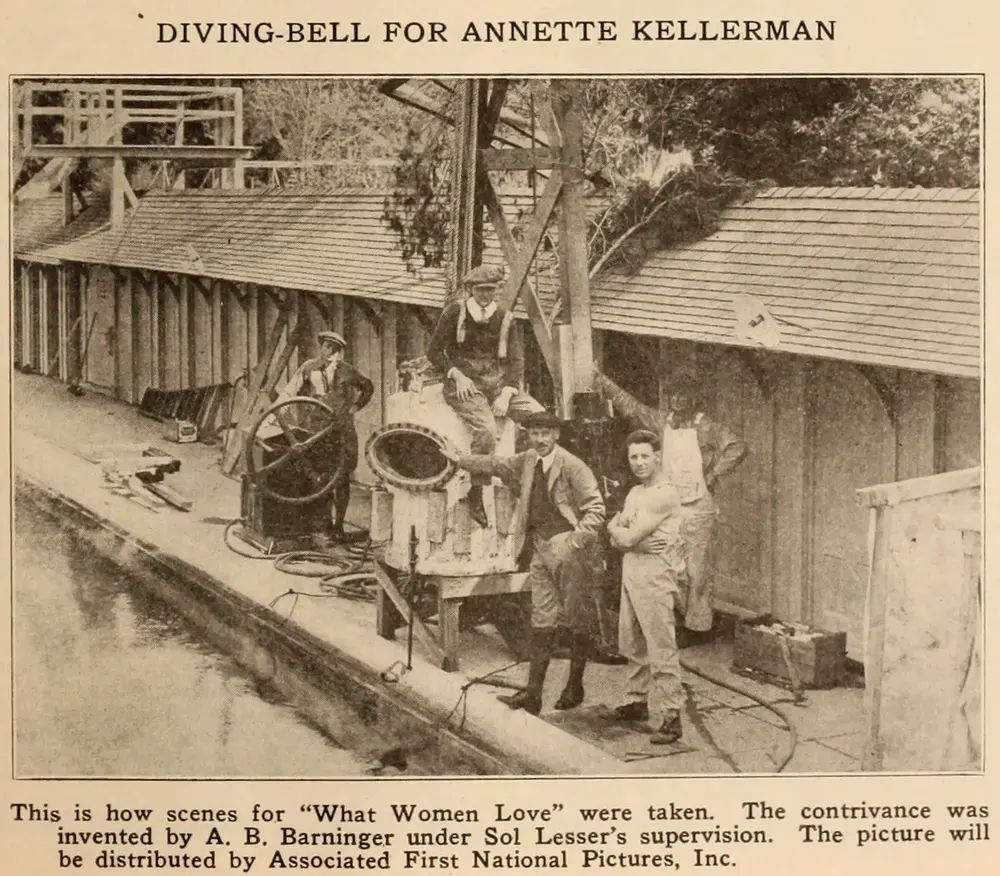
Bull Montana, a slab of beefsteak in human form, stomps through scenes like Melies’ train reincarnated as prizefighter. His obsession with Annabel is not seduction but colonization: he wants to plant flags on her skin. The underwater grapple—shot through plate-glass tanks with kelp drifting like green confetti—blurs the line between erotic struggle and attempted erasure. The film dares you to root for the brute’s comeuppance while simultaneously thrilling at the spectacle of his brute strength.
V. Maritime Panopticon: Yacht as Coliseum
The yacht, all burnished brass and imperial flags, is a floating contradiction: a playground for the leisure class rigged like a torture device. Masts become scaffolds; portholes, Judas eyes. Cinematographer George Webber tilts the horizon until the ocean itself seems to lean in, jury of salt and moon, watching the patriarchs devour their own doctrines. The high-diving sequence—Kellerman ascending thirty feet of rigging while the camera spirals below—prefigures Hitchcock’s vertiginous bell-tower in Vertigo by three decades, only here the fall is voluntary, a baptism by free will.
VI. Screenwriters’ Schism: Purity vs. Pelley
Script credits read like a roll-call of warring ideologies: Reed Heustis’s social-realist sympathies collide with William Dudley Pelley’s proto-fascist obsessions. The result is a film that both drools over discipline and aches for liberation, a push-pull mirrored in the film’s oscillation between slapstick pratfalls and near-rape tension. Katherine McConville’s editing rhythms—jagged jump-cuts during fights, languid dissolves in aquatic ballets—further fracture any moral certainty.
VII. Comparative Undertow
The film’s aquatic eroticism ripples outward toward The Blue Monster, where the sea likewise swallows social strata. Conversely, its anxiety about female exposure anticipates the corseted repression of Fesseln, though here the punishment is administered not by society but by testosterone run amok. And if you squint through the nitrate scratches you’ll glimpse the same masochistic spectacle that powers On Dangerous Ground, only relocated from arctic mission to sun-baked schooner.

VIII. Sound of Silence, Taste of Salt
Because the film is mute, every splutter of surf feels amplified, every gasp dubbed by your own inner foley. When Annabel surfaces after the underwater skirmish, water cascading off her lashes like broken chandeliers, the lack of synchronized sound paradoxically intensifies the moment—you supply the ragged inhale, the heartbeat drumroll. The absence of dialogue becomes an ethical vacuum: you become accomplice, voyeur, jury.
IX. The Final Transaction: Love as Receipt
In the last reel, Annabel presses her mouth to Willy’s bruised knuckles—not a benediction but a seal on contract. The film refuses to moralize; it simply presents the ledger. The Purity League’s banners are nowhere in sight, replaced by the Jolly Roger of consensual desire. Whether this union will mutate into matrimony or remain a salt-crusted memory is left to the viewer’s cynicism or optimism. The fade-out is not a iris-in kiss but a long shot of the yacht receding, a toy of empire bobbing toward a horizon that may promise utopia or shipwreck.
X. Restoration & Availability
Surviving prints, rescued from a Brisbane vault in 1998, shimmer with photochemical dreams; the UCLA restoration tinted night sequences in malachite green, dawn in amber reminiscent of diluted whiskey. Kino’s Blu-ray offers an optional commentary by a swimming historian who charts every anachronistic stroke. For the brave, a 16mm print occasionally screens at LACMA, projector clattering like hail on tin.
What Women Love is not a feminist manifesto nor a chauvinist cartoon; it is a celluloid seismograph registering the tectonic jolt when desire collides with doctrine. Ninety minutes of water, skin, and the brittle sound of intertitles cracking under the weight of their own contradictions. Approach it not as artifact but as acid test: does the sight of a woman claiming agency through peril thrill you, chill you, or both? The tide pulls back, the projector flickers, and you are left tasting salt on your lips, unsure whether it is ocean brine or the residue of your own sweat.

IMDb —
1921
Community
Log in to comment.