DbcultAccessing Vault...
6.1/10
Senior Film Conservator
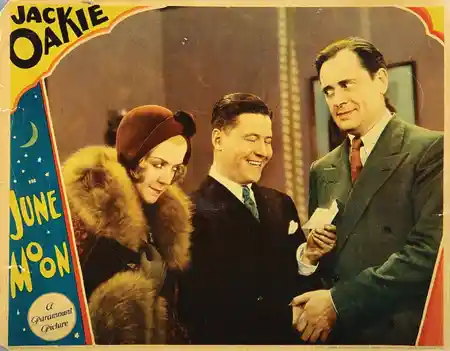
A definitive 6.1/10 rating for a film that redefined the boundaries of cult cinema. June Moon remains a cornerstone of transgressive art.
If you like movies where people talk way too fast and wear very high-waisted pants, then yes.
It is a great pick for a rainy Sunday when you want to see how people in 1931 made fun of themselves.
If you hate old movies where everyone sounds like they are performing on a stage, you will probably hate this one.
It feels a lot like Whoopee! in that early talkie way where the camera is still learning how to move around.
The movie starts on a train, which is where all good stories about people making bad life choices begin.
Fred Stevens is our main guy, and he is... well, he is a bit of a sap.
Jack Oakie plays him with this permanent grin that makes him look like he just won a free ham.
He is leaving Schenectady for the big lights of New York City because he thinks he can write lyrics.
On the train, he meets Edna, played by Frances Dee.
She is clearly too good for him immediately.
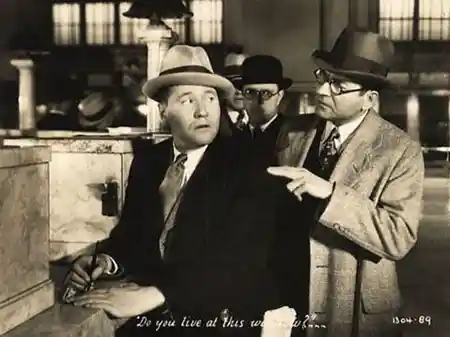
They have this conversation about windows and seats that goes on for a bit too long, but it’s cute in a dusty way.
You can tell Fred isn't the brightest bulb because he keeps talking about his 'big breaks' before he even gets off the train.
Once he gets to the city, the movie stops being a romance and starts being a bit of a satire.
The music business in 1931 looks incredibly stressful.
Everyone is huddled around pianos in tiny offices trying to find a rhyme for 'moon'.
It reminded me of the energy in Don't Call It Love, just with more cigar smoke.
Fred gets taken under the wing of a professional songwriter who is basically broke and miserable.
The way they talk about 'hits' sounds exactly like how people talk about 'viral videos' now.
It’s kind of depressing to realize nothing has changed in a hundred years.
There is a scene in a music publishing office where three different people are playing three different songs at once.
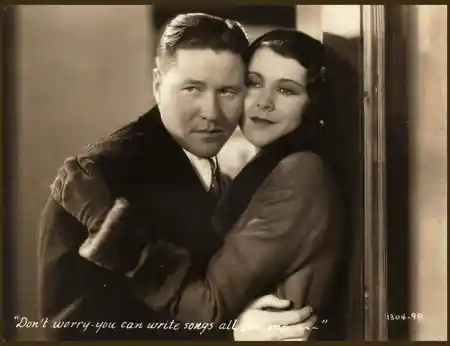
It gave me a bit of a headache, but I think that was the point.
The movie is very loud whenever there is a piano nearby.
The song they eventually write, "June Moon," is actually kind of terrible on purpose.
I found myself humming it anyway, which is probably a bad sign for my taste in music.
The lyrics are so basic they feel like they were written by a robot from the future.
Fred gets involved with this woman named Eileen who is a total gold-digger.
Wynne Gibson plays her with this sharp edge that makes you want to yell at the screen for Fred to run away.
She doesn't even like him; she just likes the idea of his royalties.
There is a party scene at an apartment that feels very crowded and chaotic.
People are just throwing insults at each other while drinking out of tiny glasses.
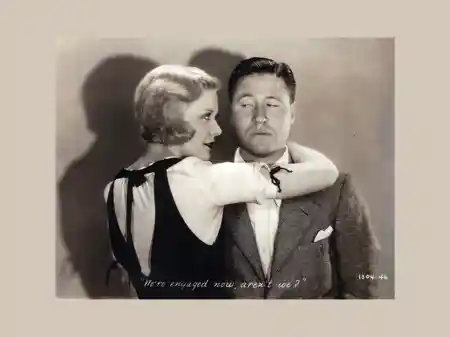
It’s much more cynical than I expected for a movie this old.
Usually, these movies are all sunshine, but this one has a bit of a bite.
I noticed that the microphones back then must have been hidden in the flower pots or something.
Sometimes a character will walk two feet to the left and their voice just disappears for a second.
It adds to the charm, I guess.
Or maybe it’s just annoying if you’re trying to catch every joke.
The writing is by George S. Kaufman and Ring Lardner, so the jokes are actually smart.
They move so fast you might miss them if you blink.
I missed a few because I was looking at a particularly weird hat a lady was wearing in the background.
There’s a side character named Maxie who is just over everything.
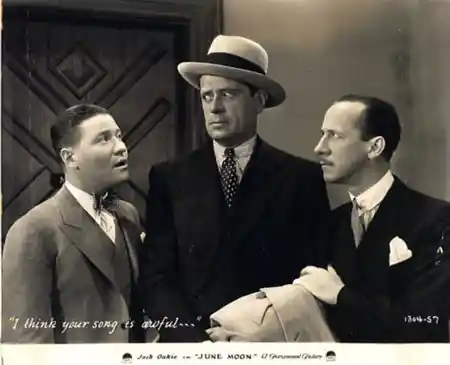
He sits at the piano and looks like he hasn't slept since 1925.
His dry delivery is the best part of the whole movie, honestly.
He’s like the ghost of what Fred will become if he stays in New York too long.
It’s similar to some of the weary characters you see in You Never Can Tell.
The ending happens very quickly.
Like, one minute everything is a mess, and the next minute, it’s all sorted out.
Movies back then really didn't believe in long goodbyes.
Fred realizes who he really loves, and there’s a bit of a chase to the train station.
It’s predictable, but I was rooting for the guy by then.
Even if he is a bit of a dummy.
I think the most interesting thing is how the movie treats the 'art' of songwriting.
It treats it like a factory job.
There’s no magic to it; just finding words that rhyme and hope someone buys it.
That feels more real than most movies about 'star-born' geniuses.
The sets look a bit cheap, like they were borrowed from another production.
The wallpaper in the apartment is aggressive.
It’s so busy it almost distracts you from the actors.
Overall, it’s a solid little film that doesn't overstay its welcome.
It’s short, punchy, and a little bit mean.
Just like New York, I guess.
If you see it on a streaming service or a late-night channel, give it twenty minutes.
You’ll know pretty fast if the vibe is for you.
It’s not a masterpiece, but it’s got a lot of spirit. 🌙
I’d watch it again just for the cynical jokes about the music industry.
IMDb —
1920
Community
Log in to comment.