DbcultAccessing Vault...
Cult Review
Senior Film Conservator
The first time we see Madison Hale, he is little more than a silhouette against a wall of ledgers, his profile sharpened by the nickelodeon flicker that loves to devour top-hat shadows. Yet even in that monochrome hush, the man radiates the chill certainty of someone who has already bought tomorrow at wholesale and intends to flip it at retail. George Broadhurst’s screenplay—adapted from his own stage melodrama—refuses to grant the financier a mustache to twirl; instead, the villainy is woven into the starch of his collar, the metronomic tap of his cane against marble. The film understands, with a sophistication rare for 1917, that capitalism’s most photogenic evil is its banality.
Enter Maritizia, a Ruritanian fever-dream of snow-dusted battlements and operetta uniforms, shot on the back-lot of Lasky’s Famous Players with just enough matte paintings to make the alps feel imported. The kingdom is less a place than a ledger entry: its solvency depends on a single rail concession, its sovereignty mortgaged to Texler’s promissory notes. The screenplay’s genius is to stage geopolitics as a parlor game—every handshake contains a foreclosure, every waltz a tariff. Viewers weaned on House of Cards will recognize the genealogy of power here: the same metallic taste of negotiation that turns love into leverage.
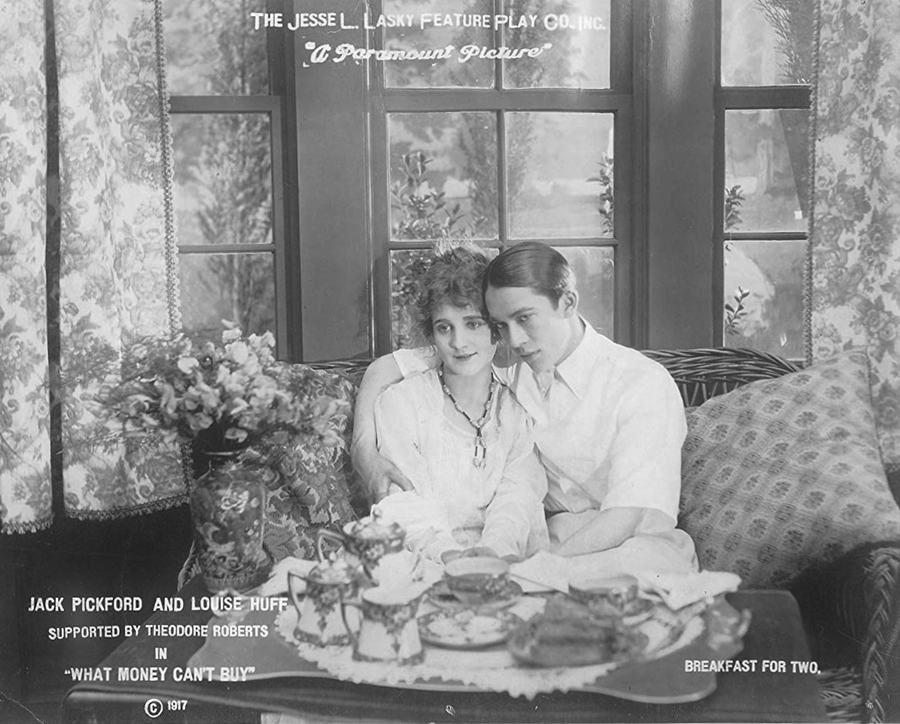
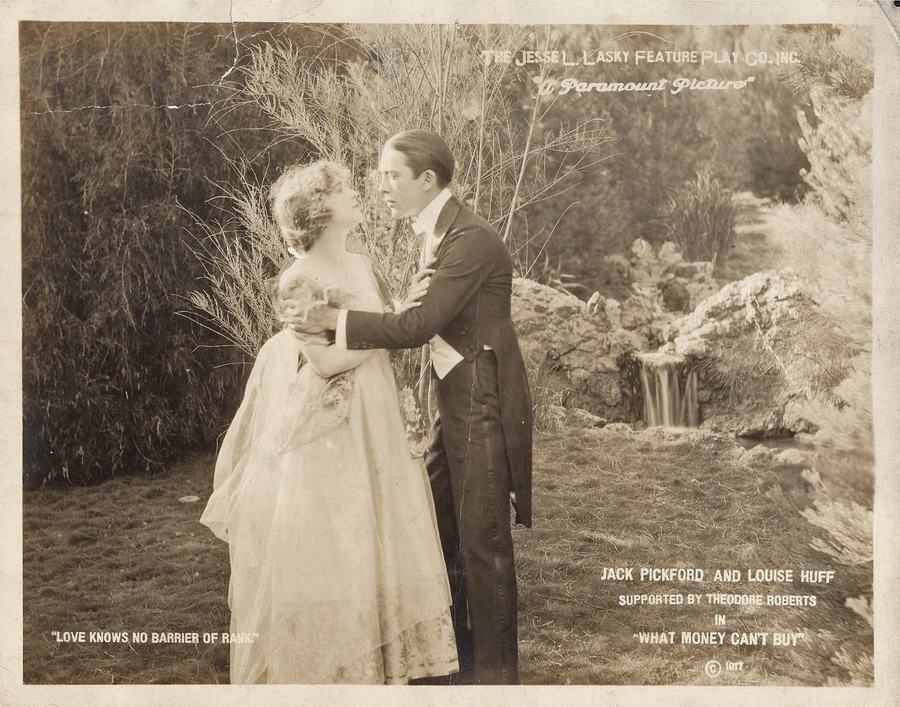
Jack Pickford, still carrying the perfume of America’s Sweetheart sister on his lapels, plays Dick with the restless hips of someone who has been told the world is his but has never been told why. Watch the way he enters the frame: a cigarette half-lit, eyes already halfway to the next thrill. His Maritizian pilgrimage is ostensibly to trace the lineage of a rogue great-grandfather, yet the subconscious quest is to discover whether identity can be purchased like a railway share or must be suffered like a debt. When he first sees Princess Irenia (Louise Huff), the cut is swift—Cecil B. DeMille will later borrow the same meet-cute for The Midnight Wedding, but here it feels less like pageantry and more like cardiac arrest.
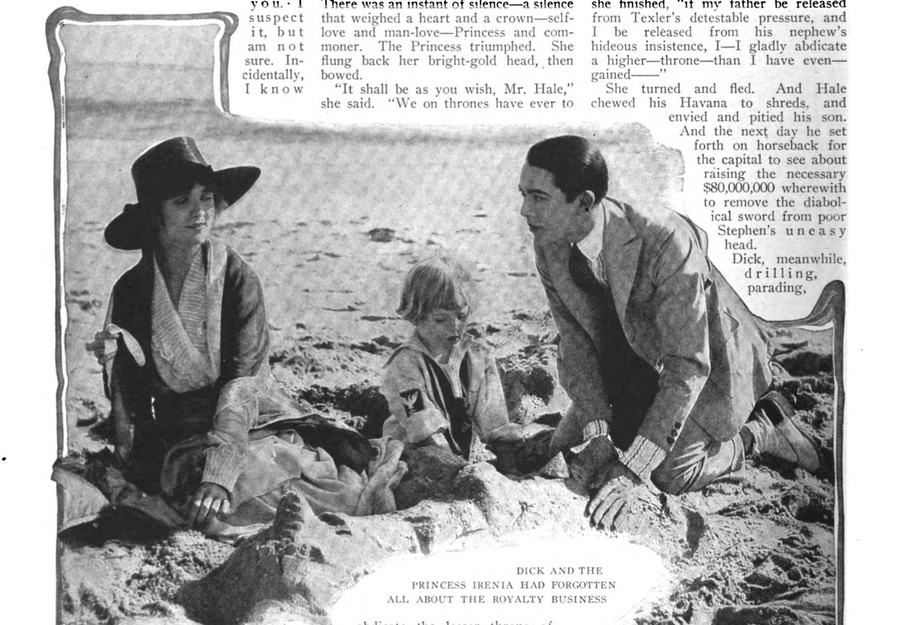
Huff, swaddled in veils that weigh more than she does, plays Irenia as though she has already read the ending and decided to feel it anyway. Her close-ups—rare for an era that preferred the ensemble tableau—are miniature revolutions: the iris-in isolates her pupils, and in their tremor you can watch a monarchy reconsider itself. The chemistry between Pickford and Huff is not the polite spark of drawing-room comedy but the combustive arc of nitrate across skin. When Ferdinand Vaslof (James Cruze, also directing) spies on their garden tryst, the camera tilts a fraction—enough to make the shrubbery seem carnivorous. Jealousy, the film whispers, is only love that has discovered its price.
Ferdinand’s revenge is swift, bureaucratic, and utterly believable: Dick is clapped into a dungeon whose walls sweat the same green as old dollar bills. The intertitle reads merely “A charge of trespass upon the royal honor.” Nothing more is needed; the ellipsis is the indictment. DeMille’s The Doom of Darkness will later fetishize torches and shackles, but Cruze keeps the frame almost empty: a stone bench, a slit of sky, the rhythmic drip of water that might be counting down both minutes and coins. The absence of score (modern festivals often accompany it with a single sustained viola drone) forces the audience to become eavesdroppers on its own pulse.
It is here that the film’s class consciousness sharpens to a scalpel. Dick’s crime is not seduction but transgression of capital: he has attempted to enter a market where titles are collateral and blood is the only acceptable currency. Ferdinand, himself a mere nephew-of-finance, understands that the cruelest punishment is to remind the American how porous his citizenship becomes once offshore. The jailer’s key turns with the same sound as a stock-ticker; both signify transactions that erase names.
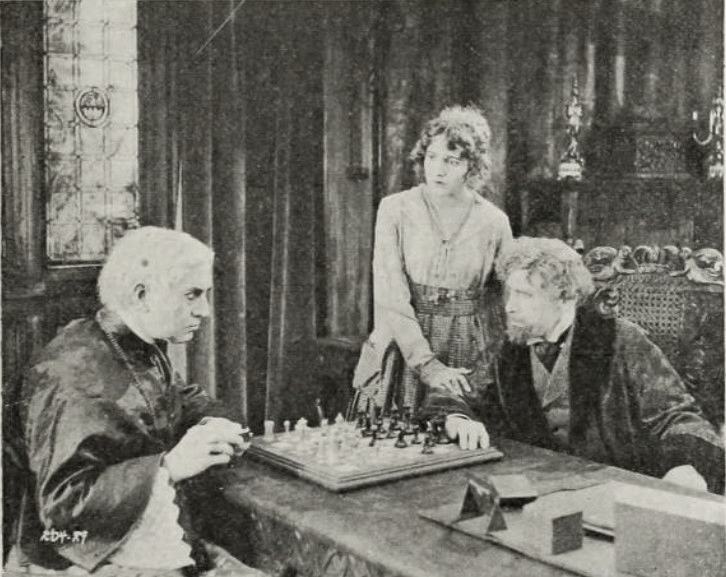
The narrative pirouettes into farce, then into something oddly heroic: Irenia proposes that old Hale kidnap her—willingly—as collateral for her lover’s life. The scene is staged like a reverse coronation: she kneels, yet commands; he towers, yet obeys. Hobart Bosworth’s Hale, weathered face a ledger of earlier recessions, allows a microscopic tremor at the corner of his mouth—enough to suggest that even Midas sometimes wishes to be surprised by his own touch. The kidnapping itself is a fever of sleigh bells and torchlight, prefiguring the icy set-pieces of Champagneruset but suffused here with the ache of lovers who may yet pay for their escape with a kingdom.
Texler, meanwhile, is summoned to the Council Chamber for a reckoning worthy of a boardroom coup. The screenplay stages the confrontation as a silent aria of paperwork: Hale slaps down the promissory note that has kept the king in vassalage, the ink still wet enough to reflect Texler’s own horrified pupils. A single intertitle—“Your collateral has matured, sir.”—lands like a slap. The king, a figurehead so ornamental he might as well be a subtitle himself, signs Dick’s release with the same flourish he once reserved for death warrants. Power changes hands not with cannonade but with fountain pen; the film has the audacity to make bureaucracy feel biblical.
The 2023 4K restoration by Paramount Preservation harvests two incomplete negatives—one from the Library of Congress, one from a Parisian basement—into a single breathing print. The tints obey emotional, not geographic, logic: teal for jealousy, amber for nostalgia, a bruised lavender for the dungeon. The famous iris-in on Irenia’s eyes now reveals a faint pulse at the sclera, as though the film itself is remembering. The railway montage—once a staccato flicker—has been re-timed to 18 fps, turning the locomotive into a stately steel monarch that swallows horizons whole. The grain is still audible, like parchment whispering state secrets.
The score commissioned from Kronos Quartet opts for tremolo rather than tremolo cliché: cellos scrape against glass harmonica, producing the sound of coins rubbed against bone. During the hostage sleigh-ride, the violins hold a single note so long it seems to freeze the frame itself; the audience becomes conspirator to the lovers’ escape, complicit in the felony of hope.
Pickford’s reputation has suffered from comparison to his sister’s incandescence, but here he is ruthlessly alive. Watch the way his shoulders sag when the prison door clangs—not a collapse, but a recalibration, as though he is subtracting square footage from his own ego. Huff, for her part, weaponizes the princess’s fragility: when she removes her tiara to bargain with Hale, the gesture is both surrender and seduction. Cruze the director lets Cruze the actor linger just long enough in the shadows that Vaslof’s smile seems to arrive a second before his face; the effect is uncanny, like watching a debt collector practice benevolence in the mirror.
Bosworth, granite-jawed and sorrow-eyed, carries the moral weight of the entire Gilded Age. In the final shot, as the lovers embrace on the station platform, he turns away—not in disapproval but in recognition that every transaction, even mercy, extracts interest. The camera stays on his retreating back longer than on the kiss, implying that the real romance was between power and its own reflection.
Beneath the corsets and court intrigues lies a sly meditation on American expansionism. The proposed railway is a double-edged spike: it promises modernity, yet its route is drawn with the same ruler that carved up the Congo. The film does not condemn Hale outright; instead, it lets the audience taste the metallic tang of complicity. When the final contract is signed, the ink smudge looks suspiciously like a map of the Panama Canal—an anachronism that feels deliberate, a ghost of interventions yet to come.
Compare this to Spartacus, where the revolt is frontal; here, the empire buys its rebellion retail. The prisoners released in the final reel are not merely lovers but indentured futures, unshackled only because their ransom was denominated in another man’s debt. The film winks: every freedom has a majority shareholder.
Long before Succession pitted dynasty against decadence, What Money Can’t Buy staged the primal scene: patriarch as portfolio, heir as hostage, love as leveraged buyout. The film’s DNA can be traced in the chilly boardrooms of Follow the Girl and the gothic capitalism of Vultures of Society. Even the rotating-door loyalties of Artie, the Millionaire Kid owe a debt to the way Cruze films allegiance as a liquid asset, convertible at the first whiff of better terms.
Yet the film refuses nihilism. In its final gesture—the lovers’ train disappearing into a vanishing point that might be marriage or exile—it grants the audience a moment of uncommodified breath. The steam from the locomotive fogs the lens, and for six seconds the frame is a blank white iris, as though the cinema itself has forgotten to invoice us. Then the credits roll, the house lights rise, and we return to our own debts—monetary or otherwise—haunted by the realization that every ransom paid merely renegotiates the terms of the next.
Watch it for the railway intrigue, rewatch it for the way Huff’s eyelid flutters like a stock-ticker, then watch it once more to notice Bosworth’s final blink—an entire capitalist epic condensed into a single reflex. What Money Can’t Buy knows the cruelest truth: the things we cannot purchase are the very things that end up owning us.
IMDb —
1924
Community
Log in to comment.