DbcultAccessing Vault...
Cult Review
Senior Film Conservator

Opening the Jungle Door
From the first frame, the camera lingers on the verdant canopy, a visual hymn to a world on the brink of disappearance. The director’s choice to linger on the apes’ expressive faces—eyes bright, hands deft—establishes an immediate emotional contract with the audience. When the trio of humans, anchored by Jack Duffy’s understated charisma, encounter the primates, the scene feels less like a plot device and more like a quiet revelation: the wild can be tender, and tenderness can be wild.
Transplanting the Untamed
Transporting the apes to the city is the film’s inciting incident, and it is executed with a blend of whimsy and foreboding. The cityscape, rendered in muted steel and neon, stands in stark contrast to the lush, saturated hues of the jungle. This visual dichotomy mirrors the thematic tension: civilization’s attempt to domesticate the untamable. As the apes step onto the polished marble floor, their raw energy reverberates through the apartment’s glass walls, foreshadowing the inevitable clash.
Jack Duffy’s performance is a masterclass in restrained empathy. He does not overplay the “human savior” trope; instead, his gestures are measured, his dialogue sparse, allowing the apes’ non‑verbal cues to dominate the emotional landscape. The supporting human characters, each with distinct motivations—one seeking redemption, another craving novelty—provide a kaleidoscope of perspectives on the ethical quandary of keeping wild beings as companions.
Chaos as Narrative Engine
The apes’ destructive tendencies are not merely slapstick set‑pieces; they are narrative catalysts. A shattered vase becomes a metaphor for broken promises, a toppled bookshelf symbolizes the collapse of preconceived order. Each act of mayhem is meticulously choreographed, underscoring the film’s central thesis: love without boundaries can become a conduit for ruin.
When placed beside Wanted: A Home, which also explores the displacement of non‑human characters, Jungle Pals feels more intimate, focusing on the micro‑cosm of a single apartment rather than a sprawling suburb. Its tonal balance echoes the bittersweet humor of Short and Snappy, yet it delves deeper into moral ambiguity, akin to the contemplative pacing of The Woman of Bronze.
Visual Storytelling & Color Palette
The cinematography employs a muted palette for the city—grays and blues—punctuated by the apes’ natural hues, which the director highlights with occasional splashes of the film’s signature dark orange (#C2410C). This selective coloring draws the eye to moments of primal instinct, such as a close‑up of a chimp’s hand gripping a chrome faucet, the metal reflecting the orange glow of a streetlamp.
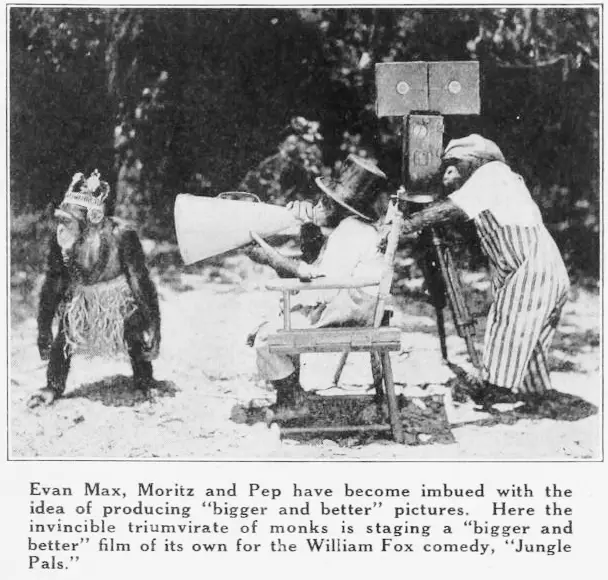
The auditory design is a symphony of contrasts: the distant hum of traffic juxtaposed with the rustle of leaves, the soft cooing of the apes against a low‑key synth score. The occasional burst of percussive beats during chaotic scenes amplifies tension without overwhelming the subtle emotional beats.
At its core, the film interrogates the ethics of anthropocentrism. By allowing the apes to act on instinct, the narrative forces the audience to confront uncomfortable questions: Are we justified in imposing our comforts on other species? Does affection become a form of captivity when it disregards natural behavior? The script, though sparse, embeds these inquiries within everyday dialogue, making the philosophical undercurrents accessible.
Beyond Duffy, the supporting cast delivers nuanced portrayals. The character of Maya, a wildlife activist, oscillates between fierce advocacy and personal vulnerability, embodying the internal conflict of someone who loves the apes yet recognizes the harm of their urban confinement. Her monologue—delivered in a dimly lit kitchen, the only source of light a flickering bulb—serves as a poignant "We cannot cage the wind in a bottle without breaking it" moment, echoing the film’s central metaphor.
The film’s pacing is deliberate, allowing scenes to breathe. Early acts linger on the apes’ curiosity, middle acts accelerate as destruction escalates, and the final act decelerates, offering space for reflection. While some viewers may find the slower moments languid, they are essential for building the emotional stakes that make the climax resonant.
The climax does not resolve with a tidy happy ending; instead, it presents a bittersweet compromise. The apes are returned to a sanctuary, but not before a final, chaotic tableau where the city’s inhabitants—neighbors, delivery workers, police—are forced to confront the raw power of nature. This tableau is shot in a single, unbroken take, a technical feat that immerses the viewer in the pandemonium, reinforcing the film’s message that nature cannot be neatly packaged.
Comparative Reflections
In relation to Mary's Ankle, which treats animal companionship with a light‑hearted lens, Jungle Pals adopts a more sobering tone, reminiscent of the moral complexity found in Dig Up. The film also shares a thematic thread with If, exploring the consequences of choices made out of love.
Audience Reception & Cultural Impact
Early screenings indicate a polarized audience: viewers who cherish animal‑centric narratives applaud the film’s honesty, while those seeking pure escapism criticize its unflinching realism. Nonetheless, the conversation it sparks about wildlife conservation and urban responsibility positions it as a culturally significant work, likely to be referenced in future debates on animal rights.
Overall, Jungle Pals is a daring, visually arresting piece that balances humor with gravitas. Its commitment to portraying the apes as fully realized beings—rather than mere plot devices—elevates it beyond a simple comedy. The film’s meticulous craftsmanship, from its color‑coded symbolism to its layered performances, rewards attentive viewers with a rich, thought‑provoking experience. For anyone interested in the intersection of humanity and the wild, this film offers a compelling, if occasionally unsettling, meditation on the limits of love and the price of interference.
IMDb 7.2
1928
Community
Log in to comment.