DbcultAccessing Vault...
Cult Review
Senior Film Conservator
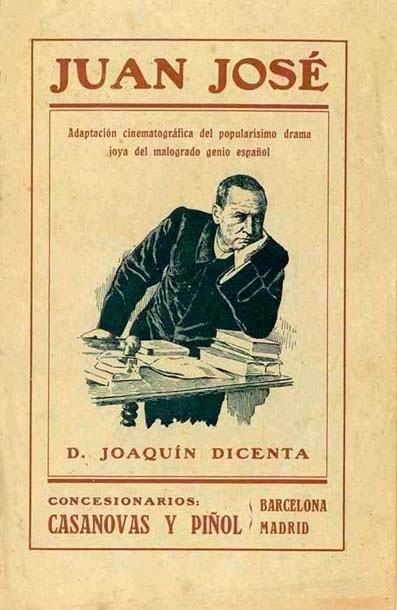
In the annals of early Spanish cinema, a film like Juan José emerges not merely as a historical artifact but as a potent echo of societal anxieties and primal passions. Though often relegated to the realm of the lost or rarely seen, its narrative skeleton, derived from Joaquín Dicenta's celebrated play, promises a melodrama of staggering emotional intensity, a testament to the raw power of silent storytelling. Ricardo de Baños, at the helm, alongside Dicenta's own adapted screenplay, crafts a world where love is a double-edged sword, capable of both transcendent joy and devastating ruin. The film, starring Francisco Aguiló as the titular, tormented protagonist and Julia Delgado as the alluring yet ultimately tragic Rosa, delves into the brutal realities of class disparity and the destructive force of obsessive love, themes that resonate with an almost terrifying prescience even today.
Aguiló’s portrayal of Juan José is, by all accounts, a masterclass in silent film acting. His eyes, one imagines, would have conveyed the searing intensity of a man whose entire existence is predicated on a single, all-consuming affection. We see him, through the lens of critical interpretation, as a figure born of the earth, a factory worker whose hands are calloused by labor but whose heart beats with an almost poetic ferocity. His love for Rosa is not a gentle affection but a tempestuous storm, an undeniable force that defines his very being. This visceral connection makes his eventual descent into jealousy and rage not just plausible but tragically inevitable. The film, even in its absence, paints a portrait of a man driven to the brink by forces both internal and external, a poignant exploration of masculinity under duress. His passion, initially his greatest strength, becomes his gravest vulnerability, a narrative arc expertly woven by Dicenta’s original vision and adapted for the screen with a presumed keen eye for emotional escalation.
Julia Delgado, as Rosa, embodies the complex plight of a woman navigating the treacherous waters of societal expectation and personal yearning. Her beauty is not merely a physical attribute; it's a currency, a potential escape route from the grim realities of her working-class life. She is not a villain, nor is she purely a victim, but rather a woman caught in a maelstrom of conflicting desires. Her initial reciprocation of Juan José's ardent affection is genuine, yet the glittering promise of a life beyond the factory walls, offered by Paco, the suave and manipulative owner, proves too powerful to resist. Delgado's performance, likely characterized by subtle gestures and expressive facial work, would have conveyed this internal struggle with heartbreaking clarity. We witness her gradual drift, not out of malice, but out of a desperate, perhaps naïve, hope for a better future. This moral ambiguity elevates Rosa beyond a mere plot device, transforming her into a symbol of the difficult choices faced by women in an era of rigid social stratification. Her story echoes the tragic allure of the 'fallen woman' archetype explored in films like A Fool There Was, where a woman's desire for luxury ultimately leads to her ruin, albeit with a unique Spanish flavor of class struggle interwoven into the fabric of her choices.
Paco, the antagonist, played by an actor whose name is not explicitly provided in the initial prompt, would have needed to exude a charm both superficial and menacing. His power is not just personal magnetism but economic might, a tool he wields with cold, calculating precision. He represents the corrupting influence of wealth and privilege, a stark contrast to Juan José's raw, unvarnished passion. The clandestine affair, initially a secret, slowly unfurls into public scandal, a testament to the oppressive scrutiny of a small community. The film effectively uses this social pressure to ratchet up the tension, creating an atmosphere of impending doom that permeates every frame. The stark visual contrast between the grimy factory setting and the opulence associated with Paco’s world would have been a powerful, unspoken commentary on the chasm between the classes, a visual language that speaks volumes without a single intertitle.
As Juan José's devotion curdles into a corrosive jealousy, the film meticulously charts his psychological disintegration. His fervent pleas and desperate attempts to reclaim Rosa are met with her growing detachment, a betrayal that cuts deeper than any physical wound. The narrative avoids simplistic villainy, instead portraying a complex web of human failings and societal pressures. Juan José's rage is not merely a reaction to infidelity but a desperate cry against a system that allows men like Paco to exploit and discard, while men like him are left with nothing but their pride and their pain. This societal critique elevates Juan José beyond a mere love triangle, situating it firmly within the tradition of social realist melodramas. The film's ability to imbue its characters with such profound emotional depth, even within the confines of silent cinema, is a testament to the directorial prowess of Ricardo de Baños and the compelling performances of the cast, including J. Agustín, José Latorre, and Ramón Quadreny, who would have filled out the supporting roles with gravitas and authenticity.
The climax of Juan José is a masterstroke of dramatic tension, an explosion of pent-up emotion and societal injustice. Witnessing Rosa's public humiliation and subsequent abandonment by Paco, Juan José is pushed beyond the brink. His rage, a raw, primal force, consumes him entirely. The confrontation with Paco is not just a personal vendetta but a symbolic clash between the oppressed and the oppressor, a violent rejection of the societal norms that have dictated their fates. This scene, undoubtedly shot with dramatic chiaroscuro lighting and dynamic blocking, would have left audiences breathless, much like the intense emotional climax in films such as The Slave or A Soul Enslaved, where characters are pushed to their breaking point by external pressures and internal turmoil. The ensuing violence, while tragic, is presented not as a triumph but as a devastating, self-destructive act, leaving a trail of irrevocable consequences. Rosa, stripped of her illusions and left to grapple with the profound weight of her choices, becomes a figure of immense pathos, a stark reminder of the devastating human cost of ambition and betrayal. The film, in its final moments, offers no easy resolutions, no comforting platitudes, but rather a searing indictment of a society that allows such tragedies to unfold.
While Juan José might be a challenging film to access today, its historical significance cannot be overstated. It stands as a powerful example of early Spanish cinema's engagement with profound social themes, moving beyond simple spectacle to explore the complexities of human nature and societal structures. The film's visual style, typical of the era, would have relied heavily on expressive performances, elaborate sets (even if confined to studio backlots), and a dramatic use of light and shadow to convey mood and emotion. The choice of a dark, almost oppressive palette for the factory scenes, contrasted with perhaps a brighter, yet ultimately superficial, portrayal of Paco's world, would have underscored the film's central conflict. This visual storytelling, devoid of spoken dialogue, demands a heightened level of engagement from the audience, inviting them to interpret every gesture, every glance, every subtle shift in posture. The film's influence, even if largely unacknowledged due to its rarity, would have contributed to the evolving cinematic language of its time, pushing boundaries in emotional realism and narrative complexity.
The enduring power of stories like Juan José lies in their universality. The themes of unrequited love, class struggle, and the destructive nature of jealousy transcend time and culture. While the specific social context might be rooted in early 20th-century Spain, the emotional core remains intensely relatable. One can draw parallels to other silent era dramas that explored similar depths of human despair and passion, such as The Wasted Years or En Søns Kærlighed, each grappling with the harsh realities of life and love in their respective settings. The film's commitment to portraying the raw, unfiltered emotions of its characters, even at their most uncomfortable, is what cements its place as a significant, albeit elusive, piece of cinematic heritage. It reminds us that even in an age of technological limitation, the human heart remained the most compelling subject for the moving picture.
The tragedy of Juan José extends beyond its narrative; it lies also in its status as a potentially lost or severely fragmented work. The inability for modern audiences to fully experience this film in its entirety represents a significant void in our understanding of Spanish cinematic history. What insights could it offer into the social fabric of its time? How did it influence subsequent Spanish filmmakers? These are questions that linger, adding another layer of pathos to the film's already heartbreaking story. The efforts to preserve and restore such early works are crucial, for each rediscovered frame is a window into a past that shaped the present. The film’s existence, even as a ghost in the archives, speaks volumes about the early ambitions of Spanish cinema to tackle complex, emotionally charged narratives, much like Karadjordje did for Serbian cinema or The Tiger for American action-dramas, each carving out a unique national identity through film.
The power of Juan José, even in its spectral form, lies in its ability to provoke thought and emotion. It is a stark reminder of the fragility of human relationships, the corrosive influence of societal inequality, and the ultimate, often devastating, consequences of unchecked passion. The performances of Francisco Aguiló and Julia Delgado, guided by Ricardo de Baños, would have been pivotal in translating Dicenta’s powerful stage drama into a compelling cinematic experience. The film’s enduring relevance lies not just in its historical context but in its timeless exploration of the human condition, a testament to the fact that some stories, no matter how old or how obscured by time, continue to resonate with an undeniable force. It stands as a beacon for the preservation of cinematic heritage, a silent cry from the past urging us to remember the narratives that shaped our understanding of ourselves and our world. The profound impact of such a film, even if only through its plot summary and critical discourse, underscores the importance of every reel, every frame, in the grand tapestry of global cinema. It's a testament to the fact that some stories, even when merely recounted, possess an undeniable, haunting power that transcends the visual medium itself, much like the evocative narratives found in Dulcie's Adventure or The Scales of Justice, each reflecting their own era's moral compass and dramatic sensibilities.
In conclusion, while Juan José may largely exist as a narrative whispered through time, its thematic resonance and the sheer force of its dramatic core solidify its position as a significant work in early Spanish cinema. It offers a poignant, if heartbreaking, glimpse into the societal tensions and personal tragedies that defined an era, masterfully crafted by its creators to elicit a visceral emotional response. The film serves as a powerful reminder of the enduring human capacity for both profound love and destructive passion, all set against a backdrop of unforgiving social realities. Its legacy, though perhaps more felt than seen, continues to inform our understanding of the rich and complex history of film.
IMDb 6.1
1931
Community
Log in to comment.