DbcultAccessing Vault...
5.7/10
Senior Film Conservator
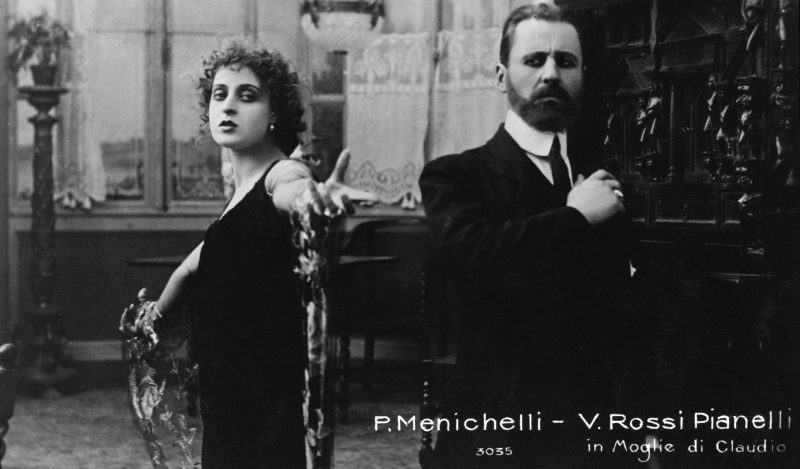
A definitive 5.7/10 rating for a film that redefined the boundaries of cult cinema. La moglie di Claudio remains a cornerstone of transgressive art.
In the grand tapestry of silent cinema, where emotions were writ large across the screen and human drama unfolded with an almost operatic intensity, certain films stand as towering monuments to the era's unique storytelling prowess. Dante Signorini's La moglie di Claudio (Claudio's Wife), a cinematic adaptation of Alexandre Dumas fils' enduring play, emerges as precisely such a work. It is not merely a film; it is a meticulously crafted psychological study, a searing indictment of societal hypocrisy, and an exquisite showcase for the period's most electrifying performers, particularly the incandescent Pina Menichelli. Its narrative, steeped in the grand traditions of Italian melodrama, navigates the tumultuous waters of forbidden love, social ostracization, and the devastating cost of personal freedom against the backdrop of rigid moral codes.
The film introduces us to Isabella, portrayed with breathtaking intensity by Pina Menichelli, a woman whose inner world pulsates with an artistic sensibility and an unquenchable thirst for genuine connection, starkly contrasting with her outwardly conventional existence. She is Claudio's wife, yes, but her soul remains untethered, yearning for a liberation that her society, and indeed her marriage to the respectable but emotionally detached Claudio (Arnaldo Arnaldi), cannot provide. Claudio, a man of intellect and standing, embodies the patriarchal order, his life a testament to decorum and reputation, yet utterly devoid of the passionate spark Isabella so desperately craves. This fundamental misalignment forms the bedrock of the tragedy to come. It's a classic setup, certainly, but one that La moglie di Claudio elevates through its nuanced characterizations and the sheer force of its visual storytelling.
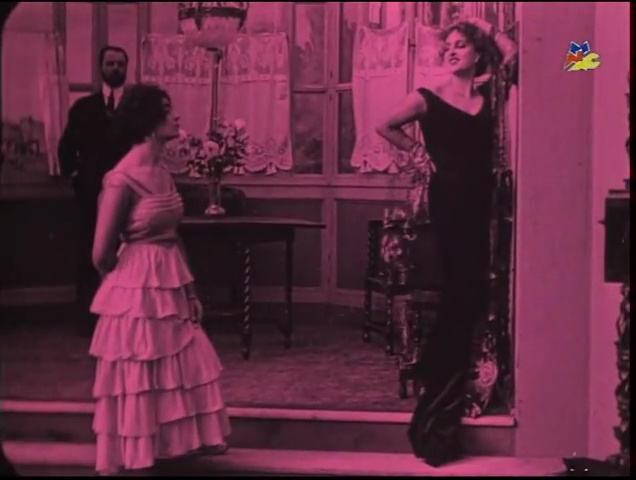
Into this suffocating milieu strides Giorgio (Gabriel Moreau), a bohemian artist whose very presence exudes a vibrant, almost dangerous, charisma. Moreau, with his expressive features and languid grace, perfectly embodies the romantic ideal, the antithesis of Claudio's staid respectability. His gaze, lingering on Isabella, ignites a dormant fire within her, a passion that had been carefully suppressed under layers of societal expectation. The camera, often lingering on Menichelli's face, captures every fleeting emotion – the initial flicker of recognition, the dawning realization of mutual attraction, and the eventual surrender to an overwhelming desire. This slow-burn development of their illicit affair is handled with a delicate touch, allowing the audience to witness the inexorable pull between them, a gravitational force that transcends mere flirtation.
As Isabella and Giorgio's clandestine romance deepens, it becomes a perilous dance on the precipice of social ruin. The vibrant artistic circles of Rome, initially a haven for their burgeoning love, eventually become the very stage upon which their downfall is enacted. Signorini masterfully uses contrasts: the intimate, shadowy spaces where their love blossoms versus the harsh, unforgiving glare of public scrutiny. The revelation of their liaison is not merely a plot point; it is a cataclysmic event, shattering Isabella's delicate social standing and unleashing a torrent of scandal that threatens to engulf all three protagonists. The film meticulously portrays the brutal efficiency with which society, particularly in that era, could ostracize and condemn those who dared to transgress its rigid moral boundaries. It's a stark reminder of the immense pressure individuals, especially women, faced to conform to prescribed roles, a thematic resonance that echoes in other films depicting female rebellion, such as The Wild Girl, where protagonists similarly grapple with societal expectations.
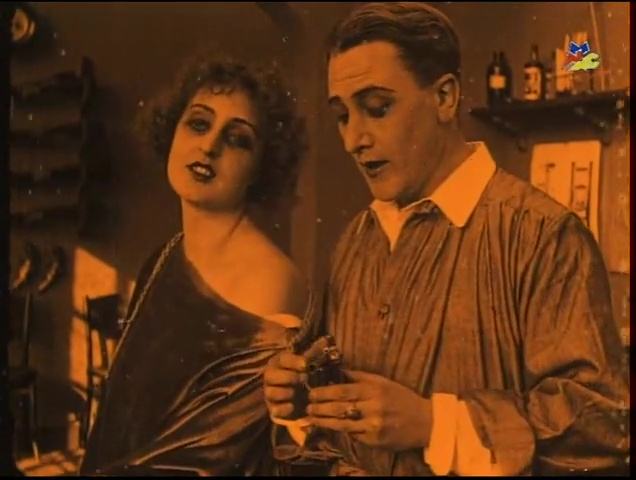
Arnaldo Arnaldi's portrayal of Claudio is particularly noteworthy here. His initial reaction is not one of explosive rage, but a chilling blend of wounded pride, calculated pragmatism, and a desperate desire to salvage his meticulously constructed reputation. He is a man who understands the currency of public opinion, and his actions are often dictated by a need to restore order, even if it means sacrificing genuine human connection. This nuanced performance prevents Claudio from becoming a mere villain, instead presenting him as a product of his time, constrained by his own societal expectations and emotional limitations. The ensuing confrontation between the trio is a masterclass in silent film acting, with each gesture, each anguished expression, conveying volumes of unspoken pain and accusation.
One cannot discuss La moglie di Claudio without paying homage to the unparalleled artistry of Pina Menichelli. Her performance as Isabella is nothing short of mesmerizing. Menichelli was one of the quintessential 'divas' of Italian silent cinema, known for her dramatic flair, her ability to convey intense emotion with a single glance, and her often tragic, passionate roles. Here, she embodies Isabella with a magnetic force that is both vulnerable and defiant. Her eyes, often rimmed with kohl, speak volumes, shifting from luminous joy in Giorgio's presence to profound despair as her world crumbles. Her physical presence, from the sweeping gestures to the subtle inclinations of her head, is meticulously choreographed to convey Isabella's inner turmoil. She doesn't just act; she inhabits the character, allowing the audience to feel the full weight of Isabella's choices and their devastating consequences.
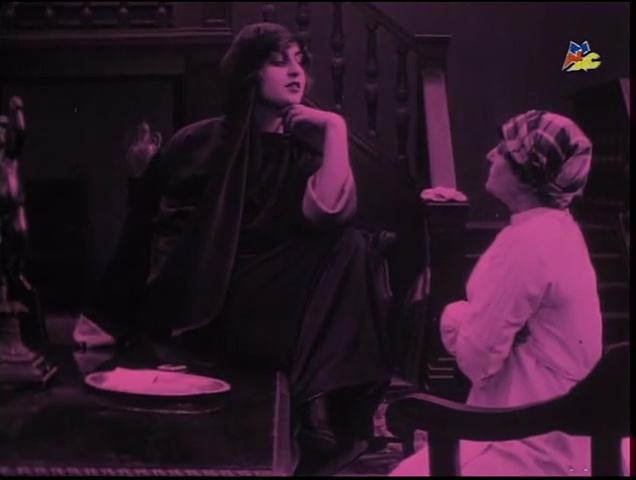
The film leverages Menichelli's iconic status, placing her at the emotional epicenter of every scene. Her costume changes, often elaborate and symbolic, reflect Isabella's changing fortunes and psychological states. From the elegant, restrictive gowns of her married life to the more flowing, artistic attire she adopts during her affair, each sartorial choice subtly reinforces the narrative. This attention to detail, common in the 'diva films' of the period, is part of what makes La moglie di Claudio such a rich visual experience. Her performance here, much like her work in other melodramas, solidified her reputation as an actress capable of conveying grand passion and profound suffering, making her a compelling figure to watch even a century later.
Dante Signorini's direction is a testament to the sophisticated visual language developing in silent cinema. He employs a keen understanding of framing and mise-en-scène to heighten the emotional impact of the narrative. Close-ups are used sparingly but effectively, drawing the audience into the characters' inner worlds, particularly during moments of intense emotional distress. The use of lighting is particularly striking; chiaroscuro effects are often employed to underscore the moral ambiguity and the shadows lurking beneath the veneer of respectability. The film's sets, whether the opulent interiors of Claudio's home or the more bohemian studios of Giorgio, are meticulously designed, serving not merely as backdrops but as extensions of the characters' psychological states. The contrast between these spaces visually reinforces the central conflict between duty and desire.
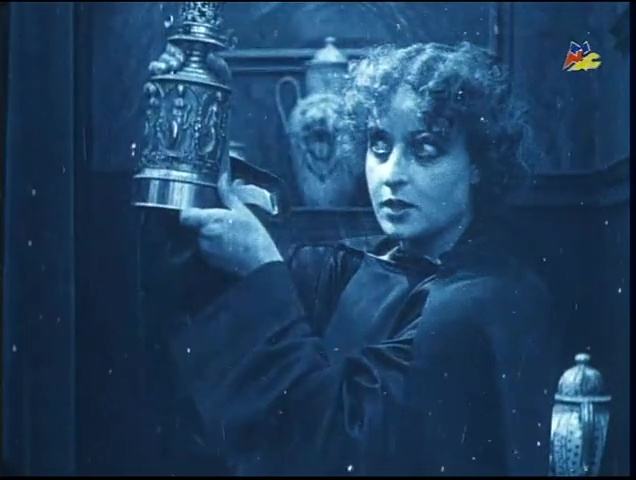
The pacing of the film, while deliberate, never drags. Signorini understands how to build tension, allowing scenes to breathe and emotions to simmer before erupting into dramatic crescendos. The use of intertitles is artful, providing necessary exposition without interrupting the flow of the visual narrative. In an era where technological limitations often dictated creative choices, Signorini manages to create a visually rich and emotionally resonant film. His work here stands as a strong example of Italian silent cinema's ability to combine theatricality with an emerging cinematic grammar, creating a distinct style that influenced subsequent generations of filmmakers. This focus on visual storytelling, where every element contributes to the overall mood and message, is a hallmark of the period's best works, much like the intricate compositions seen in The Fortunes of Fifi, albeit with a dramatically different thematic focus.
At its heart, La moglie di Claudio is a profound exploration of sacrifice. Isabella's journey is one of agonizing choices, each step taking her further from societal acceptance and closer to a truth that is both liberating and devastating. The film delves into the question of whether true happiness can be found at the expense of others, and whether societal judgment can ever be truly escaped. The climax of the film, without revealing too much, forces Isabella to make a decision of immense personal cost, a choice that irrevocably alters the destinies of all three protagonists. It is a moment of raw emotional power, executed with a gravitas that leaves an indelible mark upon the viewer. The film does not offer easy answers; instead, it presents the complex, often heartbreaking, reality of human relationships and the unforgiving nature of a world bound by strict moral codes.
The themes resonate beyond the specific historical context, touching upon universal questions of love, betrayal, and the search for identity. While rooted in a specific era, the emotional core of Isabella's struggle remains profoundly relatable. It’s a narrative that probes the very essence of what it means to be alive, to love, and to suffer the consequences of one's passions. The film implicitly critiques the societal structures that create such tragic dilemmas, highlighting the hypocrisy of a world that demands conformity while stifling individual expression. This critical lens on societal constraints is a recurring motif in cinema, seen in various forms from the moral quandaries of The Toll of Mammon to the social critique embedded in The Walls of Jericho, each exploring the pressures that shape human fate.
Even a century after its initial release, La moglie di Claudio retains its power to captivate and provoke. Its enduring appeal lies not just in its dramatic plot or its star-studded cast, but in its masterful execution of silent film aesthetics. It serves as a vital historical document, offering a window into the social mores, fashion, and cinematic techniques of its time. For film historians and casual viewers alike, it provides a compelling argument for the artistic merit and emotional depth that silent cinema was capable of achieving. The film's contribution to the 'diva film' genre, in particular, is significant, showcasing how these narratives centered around powerful female figures could explore complex psychological terrain and challenge, however subtly, prevailing gender norms. It is a work that deserves rediscovery, a testament to the timeless allure of human drama and the extraordinary artistry of a bygone cinematic era.
The performances, especially Menichelli's, are a masterclass in non-verbal communication, reminding us of the profound impact of physical acting and facial expression. The film invites us to engage actively, to interpret the nuanced gestures and the unspoken dialogue that fills the screen. It is a sensory experience, enhanced by the absence of spoken words, pushing the audience to delve deeper into the visual and emotional cues. This engagement fosters a unique connection with the characters, making their triumphs and tragedies all the more poignant. La moglie di Claudio is more than just a film; it is a meticulously preserved piece of cinematic history, a vibrant illustration of the power of visual storytelling, and a moving exploration of the human heart's capacity for both boundless love and profound sorrow.
In an age of constant digital chatter and rapid-fire narratives, there's a profound beauty in revisiting a film like this. It forces a different kind of viewing, a more contemplative and immersive experience. The deliberate pacing, the expressive acting, the stunning visual compositions – all contribute to a sensory richness that is often lost in contemporary cinema. It stands as a powerful reminder that compelling storytelling transcends language, evolving technologies, and the passage of time. The film's legacy is secure not just in academic texts, but in the hearts of those who appreciate the enduring power of classic melodrama, meticulously crafted and passionately performed. It speaks volumes about the human condition, about the eternal struggle between societal expectations and individual desires, a narrative thread that continues to weave its way through cinema even today, proving its timeless relevance.
IMDb 5.3
1934
Community
Log in to comment.