DbcultAccessing Vault...
Cult Review
Senior Film Conservator
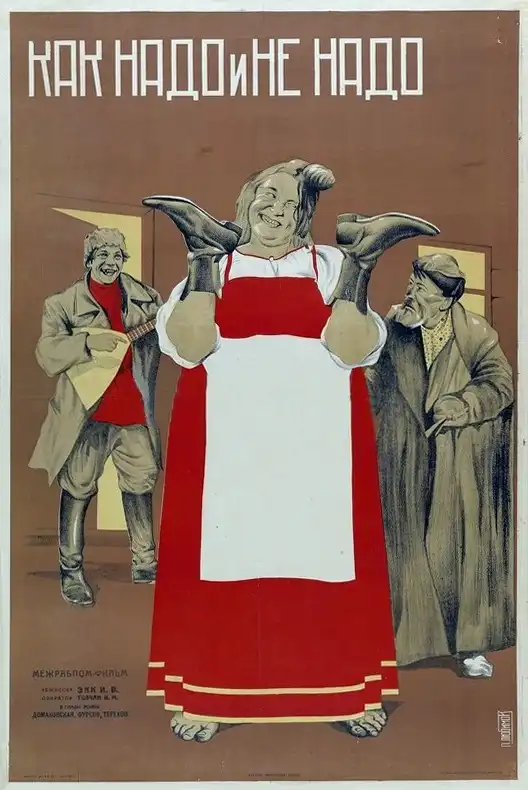
So, 'Kak nado i ne nado' is *definitely* one of those films. If you're into early Soviet propaganda or silent film history, you might find some real curious bits here. But if you're just looking for a casual movie night, or something with a strong story, you'll probably bounce off this hard. It's more of a historical document than a 'film' in the modern sense, you know? 🧐
You watch this, and it’s like stepping into a time capsule, not just for the film itself, but for the *idea* of what a film could be back then. Is really something.
The 'kak nado' (how it should be) parts are all sunshine and organized labor. Everyone’s got a role, moving in unison. It's almost balletic, if everyone in the ballet was carrying tools and smiling a bit too widely. You see folks building things, hands dirty but faces beaming.
Then there's the 'ne nado' (how it should not be) side, and that’s where things get kinda messy and chaotic. The characters here, they’re just… *disorganized*. Like, really. One guy just keeps bumping into things, spilling his whatever. *Such* a mess. It's a clear visual cue, not subtle at all. A little bit on the nose, but hey, it's 1927.
N. Fursov, he’s got this honest, solid presence. You believe him as the guy trying to do right. His gaze, it’s always so *direct*. Like he’s looking right through the camera at you, telling you to get it together. A real stern look. Anna Dmokhovskaya, she gets to do a lot of worried expressions. Her eyes really sell the struggle before the big 'aha!' moment. 👀
There's this one scene, very early on, where a bunch of paperwork just *explodes* off a desk. It's meant to show chaos, I guess, but it looks more like someone just sneezed really hard near a pile of documents. A bit silly, but it sticks with you. You almost wonder if it was an accident they kept in. 😂
The movie often repeats its central ideas, just with slightly different backdrops. Like, we get the 'good work vs. bad work' idea, then a different scene that's also 'good work vs. bad work.' It’s effective for its purpose, I suppose, but can feel a touch… *long*.
You can tell Nikolai Ekk, the writer, really wanted to make sure everyone got the point. The visual metaphors are *loud*. There's no room for misinterpretation, which I guess is the whole point of agitation film. Everything is spelled out, plain as day.
I kept thinking about how much effort went into making these simple messages clear without sound. The way they use intertitles, and the almost theatrical gestures… it’s a lost art, really. Imagine trying to explain complex political theory just with body language and a few written cards. Wild.
It makes you appreciate how much film language has evolved. You think of something like The White Eagle from a few years later, and even that feels light-years ahead in terms of narrative sophistication, even though it's also silent. This is a much rawer, more direct form of storytelling.
There’s a shot of some broken machinery, and the way the light hits it, it almost makes it look like a sculpture. A broken, sad sculpture. Then the 'good' workers come in, and suddenly it's all fixed and shiny. A bit too clean, maybe, for something just broken. ✨
The whole thing is a fascinating look at how a society tries to define itself through art, or at least through moving pictures. It's a statement, more than a story.
So yeah, 'Kak nado i ne nado' is a curious watch. Not for a casual Friday night, but if you’re keen on seeing a very particular kind of early cinema, it offers some real insights. Just be ready for the message, loud and clear. 📢
IMDb 6.4
1937
Community
Log in to comment.