DbcultAccessing Vault...
4.1/10
Senior Film Conservator
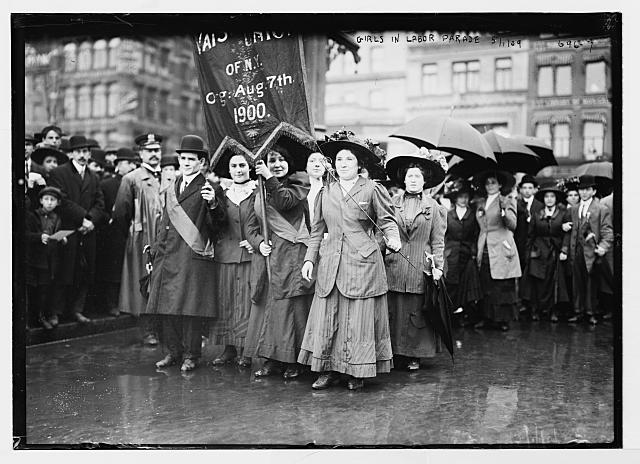
A definitive 4.1/10 rating for a film that redefined the boundaries of cult cinema. May Day Parade remains a cornerstone of transgressive art.
In the nascent dawn of cinematic art, when the camera was still largely a scientific marvel rather than a storytelling instrument, films like 'May Day Parade' emerged as vital, often accidental, historical documents. Devoid of intricate plots, professional actors, or elaborate sets, these early 'actualités' captured life as it unfolded, offering an unfiltered window into a bygone era. Our titular film, 'May Day Parade,' stands as a poignant testament to this period, an unassuming yet profoundly significant artifact that transcends its rudimentary technical limitations to offer a glimpse into the collective consciousness of its time. It is not merely a record of an event but a visual echo of a social movement, a fleeting moment of solidarity immortalized on celluloid.
The very concept of a 'May Day Parade' carries with it a weight of history, a global tradition rooted in the struggle for workers' rights and social justice. The film, likely shot in the late 19th or early 20th century, captures precisely this spirit. We are presented with a continuous, unbroken shot of a procession, a river of humanity flowing through what appears to be an urban street. The camera, fixed in its position, becomes a silent observer, a witness to the rhythmic march of countless individuals. There is no directorial intrusion, no dramatic close-ups or artful cuts; simply the raw, unadulterated reality of men and women moving with a singular purpose. This unvarnished approach, far from being a flaw, is precisely where the film's power lies. It forces the viewer to engage with the sheer scale and presence of the event, to feel the silent hum of collective will emanating from the screen.
Comparisons to other early actualités are inevitable and illuminating. Like Saída dos Operários do Arsenal da Marinha (Workers Leaving the Naval Arsenal) or even the iconic Workers Leaving the Lumière Factory, 'May Day Parade' captures the mundane yet monumental act of people assembling and moving. However, it distinguishes itself by the inherent political and social undertones of its subject matter. While the Lumière film documented the daily routine of labor, 'May Day Parade' documents labor's assertion of its presence, its demands, and its solidarity. It’s not just workers existing; it’s workers demonstrating. The banners, though illegible in their grainy representation, are symbolic of articulated grievances and aspirations, transforming a simple act of walking into a declaration.
The cinematographic technique, if one can call it that for such an early work, is characterized by its stark simplicity. The static camera, a hallmark of early cinema, positions the viewer as an unmoving spectator on the sidelines of history. This lack of camera movement, while limiting in terms of modern cinematic expression, imbues the film with an almost anthropological gaze. We are invited to observe, to scrutinize the details that emerge from the flickering frame: the varying attire of the participants, the subtle differences in their gaits, the expressions that hint at their individual stories within the collective. The depth of field, often rudimentary, still manages to convey the scale of the crowd, stretching into the background, suggesting an endless stream of participants. It's a testament to the power of pure observation, where the subject itself provides the drama and the meaning.
The film’s historical context further amplifies its significance. The late 19th and early 20th centuries were periods of immense social upheaval, marked by industrialization, urbanization, and the rise of organized labor movements. May Day, as an international workers' holiday, symbolized these struggles and aspirations. To capture such an event on film was to document not just a parade, but a societal pulse. It's a visual record of a moment when the working class began to assert its collective identity and demand recognition for its contributions and rights. In this sense, 'May Day Parade' serves as a crucial primary source for understanding the visual culture of social movements in the nascent years of mass media.
When contrasted with other parade or crowd films of the era, such as 69th Regiment Passing in Review or even A Rua Augusta em Dia de Festa, the political undercurrents of 'May Day Parade' become particularly salient. While military parades and street festivals celebrate national pride or civic joy, a May Day Parade embodies a more contentious, often revolutionary, spirit. The film, therefore, is not just a spectacle; it's a statement. It captures the energy of dissent and the quiet power of organized labor, distinguishing it from purely ceremonial or celebratory crowd scenes.
The absence of a conventional plot or identifiable characters in 'May Day Parade' shifts the focus entirely onto the collective. The 'protagonist' is the crowd itself – a singular, multifaceted entity. Each individual face, though blurred by the resolution of the era, contributes to the overall impression of a unified force. This emphasis on the collective prefigures later cinematic movements that would explore the dynamics of crowds and masses, from Soviet montage films to more modern documentaries. The film, in its simplicity, inadvertently becomes a study in crowd psychology, capturing the subtle nuances of group behavior: the shared rhythm of footsteps, the occasional glance towards the camera, the general forward momentum that speaks of purpose and direction.
The duration of the film, likely quite short, dictates a certain intensity of observation. One is not afforded the luxury of a prolonged gaze, but rather a concentrated burst of visual information. This brevity enhances its impact, leaving the viewer with a vivid impression rather than an exhaustive account. It's a snapshot, a fleeting moment that, through the magic of cinema, is stretched into an eternal present. This immediacy is a defining characteristic of early cinema, where the novelty of moving images often overshadowed any complex narrative ambitions.
While fight films like The Corbett-Fitzsimmons Fight or Jeffries-Sharkey Contest captured a different kind of public spectacle – one of individual prowess and gladiatorial combat – 'May Day Parade' delves into the spectacle of organized social action. The energy is different: less about individual triumph and more about collective assertion. Even early religious processions like A Procissão da Semana Santa, while demonstrating collective ritual, serve a different spiritual purpose. 'May Day Parade' is distinctly secular in its immediate aims, though deeply imbued with a sense of shared belief in a better future.
The enduring relevance of 'May Day Parade' lies not just in its historical documentation but in its subtle commentary on the power of visual media. Even in its most nascent form, cinema proved capable of capturing and disseminating images that could inform, inspire, and perhaps even provoke. The very act of filming a May Day Parade, whether intended for purely informational purposes or as a curiosity, implicitly validated the event and its participants. It elevated a street demonstration to a subject worthy of preservation, placing it within the nascent public consciousness being shaped by new technologies.
For modern viewers, 'May Day Parade' serves as a potent reminder of the origins of both documentary filmmaking and the visual representation of social movements. It's a foundational text, stripped bare of later cinematic conventions, revealing the raw essence of observation. We see the city as it was, the people as they were, and a movement as it was unfolding. The film stands as a testament to the idea that even the simplest act of pointing a camera at reality can yield profound insights into the human condition and the march of history. Its influence, though indirect, can be felt in every subsequent documentary that seeks to capture the spirit of an event, the mood of a crowd, or the struggle of a community.
The absence of sound in these early films also plays a crucial role in shaping our experience. Without the clamor of the crowd, the shouts, the music, or the speeches, our focus is entirely on the visual. The silence amplifies the visual rhythm of the march, allowing the mind to project its own sounds onto the scene, perhaps imagining the distant murmur of voices, the shuffle of feet, or the rustle of banners. This auditory void paradoxically deepens the visual immersion, inviting a more active and imaginative engagement from the viewer. It transforms a historical record into a meditative experience, a quiet contemplation of past struggles.
In conclusion, 'May Day Parade' is far more than a mere historical curiosity. It is a vital document of early cinema, a powerful actualité that captures the spirit of a significant social movement. Its unadorned aesthetic, its focus on the collective, and its inherent political resonance make it an invaluable piece for understanding the origins of film and its enduring capacity to reflect and shape our perception of history. It reminds us that even in the rudimentary flickering images of the past, there lies a profound depth, an echo of human endeavor that continues to resonate today. It is a silent film that speaks volumes about labor, solidarity, and the indelible mark of collective will on the urban landscape and the cinematic canvas.
IMDb 6.3
1935
Community
Log in to comment.