DbcultAccessing Vault...
Cult Review
Senior Film Conservator

In the annals of early cinematic thrillers, certain narratives transcend mere plot mechanics, delving instead into the intricate dance of human ambition, ego, and the corrosive effects of unchecked malice. Such is the case with 'The Price of Malice,' a film that, despite its vintage, offers a surprisingly potent exploration of character-driven conflict wrapped in the high-stakes world of diplomatic intrigue. It's a testament to the enduring power of a well-crafted story, where the personal vendetta of one man ripples through national security, ultimately exposing the fragility of reputations built on deceit.
The film opens with an air of professional decorum, as the esteemed Colonel Brendon, Chief of the English Diplomatic office, prepares for his departure to France. His successor, Captain Mills, is introduced, ostensibly a man of capability, yet one quickly senses a hidden current of insecurity beneath his composed exterior. Brendon’s parting instruction – that Mills should rely on the assistance of Jim Clifford, an operative celebrated as one of the Secret Service’s most capable minds – inadvertently sows the initial seeds of discord. This directive, intended to ensure a smooth transition and bolster Mills’s tenure, instead becomes a perceived slight, a tacit suggestion of Mills’s own inadequacy when juxtaposed against Clifford’s undeniable brilliance. Among the critical documents entrusted to Mills’s temporary stewardship is ‘File 117,’ a designation that immediately imbues it with an air of paramount importance, a MacGuffin whose true contents remain tantalizingly vague but whose significance is unquestionable. This setup masterfully establishes the professional landscape, but more importantly, it lays the psychological groundwork for the escalating personal drama that will soon unfold. The stage is set not just for a search for a missing document, but for a visceral clash of personalities, a battle of wits born from a perceived challenge to authority and competence.
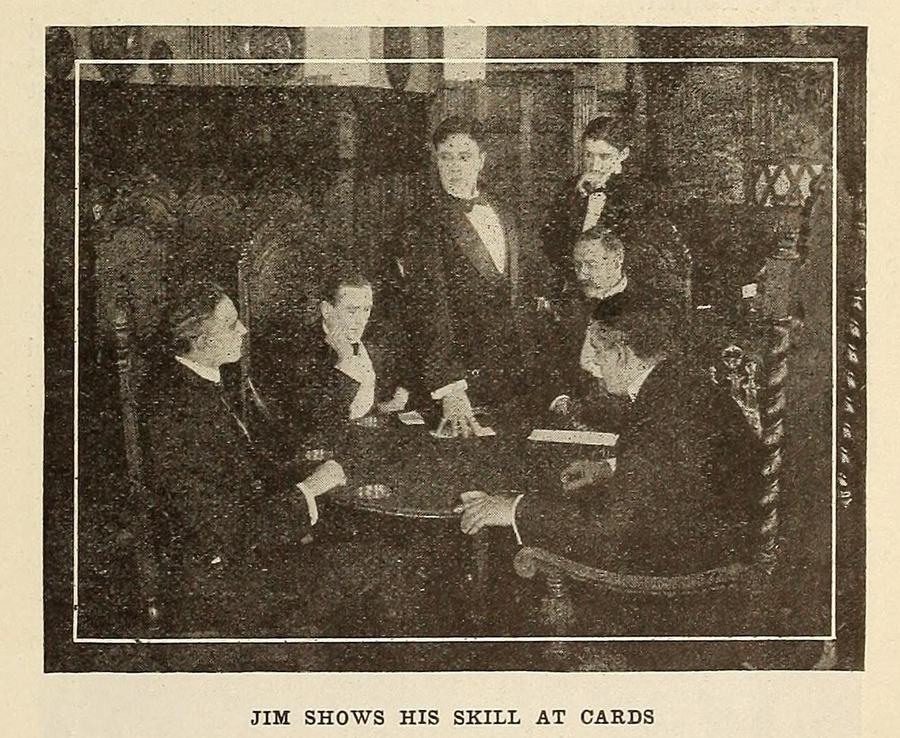
The catalyst for Captain Mills’s descent into outright malice is a seemingly innocuous evening of cards hosted at his apartment, attended by several colleagues from the war office. Jim Clifford is present, a quiet observer rather than an active participant in the game. It is here that Clifford unwittingly, yet devastatingly, punctures Mills’s fragile ego. Exhibiting an almost preternatural ability to discern the value of his opponents’ hands, Clifford’s casual demonstration of skill is perceived by the increasingly frustrated Mills as a calculated act of humiliation. As Mills’s losses mount, his composure frays, giving way to a volatile outburst. He lashes out, accusing Clifford of being a ‘sharp,’ alleging that he has been surreptitiously coaching another player from behind, a blatant and unfounded charge designed to discredit Jim in front of his peers. Clifford, a man of integrity, naturally resents this egregious accusation, leading to a heated exchange. The tension culminates in a dramatic moment of irrational fury: Mills, in a fit of uncontrolled rage, hurls a glass of whiskey directly into Clifford’s face. This act of public degradation is not merely a personal affront; it is a declaration of war, a line crossed from professional rivalry into outright personal enmity. Later, swayed by the counsel of more rational friends, Mills offers a perfunctory apology, a hollow gesture devoid of genuine remorse. This insincere act merely masks a deeper, more insidious design. Rather than seeking true reconciliation, Mills resolves to engineer Clifford’s downfall through an elaborate and cruel deception. He devises an ‘impossible task,’ a mission designed not for success, but for public failure, to forever tarnish Clifford’s sterling reputation. This pivotal sequence masterfully sets the tone for the ensuing narrative, transforming a simple card game into the crucible of a bitter and dangerous rivalry. It underscores the film's central theme: the devastating consequences that can arise from wounded pride and the vengeful spirit it can engender.
Mills's plan to discredit Clifford is put into motion with chilling precision. Under the cloak of night, he slips into the war office and abstracts the vital ‘File 117’ – the very document entrusted to his care. The following day, with a veneer of official concern, he instructs Jim Clifford to embark upon a search for the now 'missing' papers. This is a cruel irony, a cynical manipulation designed to consume Clifford’s energies in a futile quest for something Mills himself has hidden. A week passes, marked by Clifford’s diligent but fruitless efforts. Mills, feigning disappointment, rebukes Jim for his lack of success, further attempting to cement the narrative of Clifford’s incompetence. However, Jim Clifford is no ordinary operative. His keen observational skills and relentless dedication soon unearth the first thread of Mills’s deception. A chance encounter with a cabman, who attempts to return a cigarette case Mills had left in his vehicle a week prior, provides a crucial clue. The cabman's recollection of Mills's late-night visit to the war office immediately after the card game ignites a spark of suspicion in Jim's mind. The pieces begin to fall into place, revealing a pattern of calculated malfeasance. Recognizing the gravity of the situation, Jim takes decisive action. He breaks into Captain Mills’s apartment, a daring move that underscores his commitment to uncovering the truth, regardless of the personal risk. With a calculated boldness, he even goes so far as to drug the butler, ensuring his search can proceed unhindered. Yet, despite his meticulous efforts, the missing papers remain elusive. The apartment yields no answers, only deepening the mystery and confirming the cunning nature of his adversary. This segment of the film transforms into a taut, almost noir-esque investigation, showcasing Clifford's resourcefulness and unwavering pursuit of justice, even as the walls of Mills's deceit grow thicker. The stakes are raised, and the audience is drawn into the intricate web of espionage and personal vendetta, eager to see how Clifford will navigate this increasingly dangerous labyrinth. The comparison to other films like The Hound of the Baskervilles, where intricate detective work drives the plot, becomes particularly apt here, highlighting Clifford's methodical approach to unraveling a complex mystery.
The narrative then takes an unexpected turn, shifting from urban espionage to maritime adventure. Jim learns that Captain Mills is to join a weekend party, hosted by Lady Marion, aboard the elegant yacht of the beautiful Grace Weston for a short cruise. Sensing an opportunity, or perhaps an instinct that the truth lies intertwined with Mills’s movements, Jim makes the bold decision to infiltrate the party. Employing a clever disguise, he successfully gets aboard the yacht, becoming an unseen observer in the midst of the merriment. The tranquility of the cruise, however, is short-lived. The next day, fate, or perhaps a cruel coincidence of nature, intervenes dramatically. The yacht, cruising through treacherous waters, collides violently with drift ice, tearing a catastrophic hole in her side. The ensuing chaos is palpable, a desperate scramble for survival as the vessel begins its rapid descent. In the ensuing pandemonium, the entire party and crew, save for Grace and Jim, manage to escape in lifeboats and are eventually rescued by a passing steamer, whisked back to the safety of England. Jim, demonstrating courage and quick thinking, plunges into the frigid waters, rescuing an unconscious Grace Weston. He manages to secure them both on a precarious life raft, adrift in the vast, unforgiving ocean. Their survival ordeal on a desolate island along the coast becomes a crucible, stripping away the veneers of society and revealing raw human need. As hunger gnaws at them, Jim proposes a desperate solution: fishing. He asks Grace if she can spare anything from her apparel to fashion a makeshift fishing line. It is in this moment of vulnerability and necessity that the truth, long hidden, dramatically surfaces. As Grace unlaces a string from her corset, a small, tightly folded bundle of papers accidentally slips from her bodice. It is ‘File 117,’ the missing document, which Mills had cunningly entrusted to her, believing it would be safe and unsuspected in her possession. Grace, startled, quickly attempts to recover the papers, but Jim’s sharp eyes have already registered their presence and, more importantly, their identity. The revelation is a thunderclap, a moment of profound understanding that instantly clarifies the entire treacherous scheme. This sequence is a masterclass in narrative tension and dramatic irony, transforming a disaster at sea into the very mechanism of truth’s unveiling. The perils faced by Jim and Grace on the island serve not only as a test of their resilience but as the stage for the climactic discovery that will ultimately vindicate Jim and expose Mills’s perfidy. The sheer audacity of the yacht disaster and island survival storyline reminds one of adventure serials like A Lass of the Lumberlands, which often placed protagonists in extreme, life-threatening situations, highlighting their ingenuity and grit.
The climax of ‘The Price of Malice’ unfolds with a precision that belies the preceding chaos. Jim and Grace are eventually rescued, returning to England just as the diplomatic office is in an uproar over the missing ‘File 117.’ Colonel Brendon, back from France, has been apprised of the grave situation and immediately calls Captain Mills to account. Mills, still under the delusion that the papers are lost forever in the shipwreck with Grace, and confident that Jim is mysteriously missing, seizes the opportunity to cement his fabricated narrative. With feigned regret and a calculated air of solemnity, he places the blame squarely upon Jim Clifford, painting him as a negligent, perhaps even traitorous, operative responsible for the loss of the vital document. It is a moment of profound dramatic tension, as Mills’s lies hang heavy in the air, threatening to permanently destroy Jim’s career and reputation. However, the carefully constructed edifice of Mills’s deceit crumbles with Jim’s dramatic, well-timed arrival. Stepping into the Colonel’s office, Jim’s presence alone is a shock to Mills, who believed him lost at sea. With an unwavering gaze and the damning evidence in hand, Jim recounts his harrowing experience, detailing the shipwreck, the survival, and most importantly, the accidental discovery of ‘File 117’ in Grace Weston’s possession, thereby exposing Mills’s elaborate frame-up. The truth, once revealed, is undeniable and devastating for Mills. The Colonel, a man of integrity and sharp judgment, sees through Mills’s duplicity instantly. The tables are turned with swift and decisive justice. Jim Clifford, whose character and competence were so maliciously impugned, is not only exonerated but promptly promoted, his resilience and dedication unequivocally recognized. Captain Mills, stripped of his rank and authority, faces the ignominious consequence of his actions: dismissal from the service. The price of his malice, his petty jealousy, and his calculated betrayal is paid in full, leaving him utterly disgraced. In the aftermath of this dramatic unraveling, Grace Weston, who had been an unwitting pawn in Mills’s scheme, learns the full, unvarnished truth of his treachery. Her initial association with Mills is replaced by a profound understanding and admiration for Jim. The shared ordeal, the discovery of his true character, and the stark contrast with Mills’s deceit ignite a new, undeniable interest in Jim, hinting at a burgeoning romance. This resolution not only provides a satisfying sense of justice but also offers a glimmer of hope and a new beginning for the hero, cementing the film’s narrative as a compelling triumph of virtue over villainy. The swift and decisive justice meted out to Mills echoes the definitive resolutions often found in films like Ultus, the Man from the Dead, where the protagonist ultimately overcomes adversity and brings wrongdoers to justice.
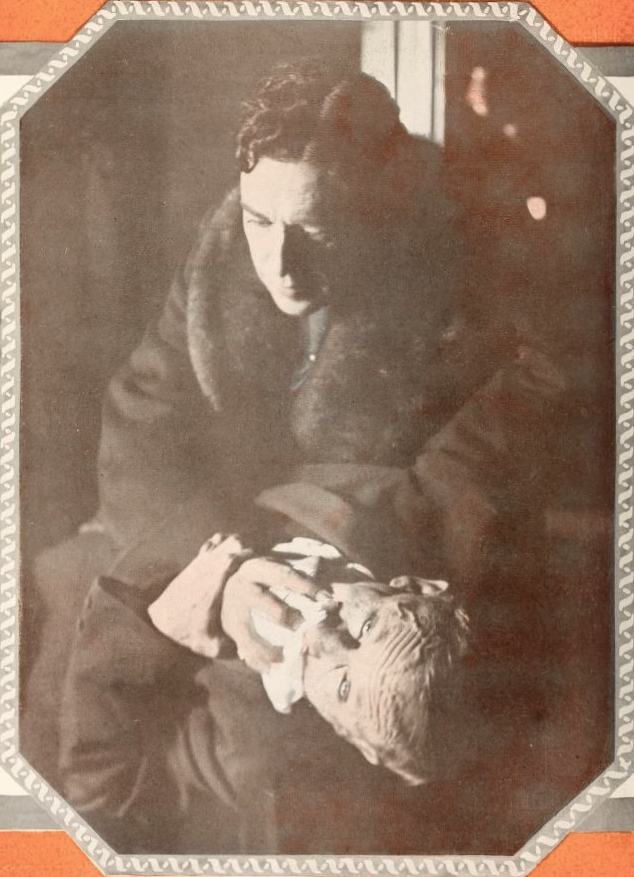
At its heart, 'The Price of Malice' is a character study, particularly of the stark contrast between its two central male figures. Jim Clifford, portrayed by J. Frank Glendon, embodies the quintessential resourceful hero. He is intelligent, possessing an almost Sherlockian deductive prowess, as evidenced by his card-playing ability and his methodical investigation. His resilience is unwavering, whether facing a public insult, a seemingly impossible task, or the harsh realities of shipwreck and survival. Clifford’s integrity shines through every challenge, making his eventual triumph all the more satisfying. He represents the ideal of the Secret Service agent: calm under pressure, morally upright, and dedicated to truth. In stark opposition stands Captain Mills, brought to life by William Calhoun. Mills is a deeply flawed individual, driven by insecurity and a petty, corrosive jealousy. His initial resentment of Clifford's competence escalates into a full-blown vendetta, revealing a character incapable of self-reflection or magnanimity. Mills's actions are motivated by a desire to preserve his own fragile ego and position, even if it means resorting to outright criminal deception. His downfall is a direct consequence of his own malice, a compelling illustration of poetic justice. He is a cautionary tale, a man consumed by his own smallness. Grace Weston, played by Barbara Tennant, initially appears as a beautiful, somewhat naive socialite, an unwitting pawn in Mills's scheme. Her journey, however, transforms her. The shared trauma of the shipwreck and island survival, coupled with the shocking revelation of Mills's true character, forces her to confront harsh realities. Her growing interest in Jim is not merely romantic; it signifies her awakening to genuine character and integrity, a shift from superficial admiration to a deeper appreciation of substance. The film's thematic core revolves around several powerful ideas: the corrosive nature of jealousy, the triumph of truth over deception, and the inherent value of integrity. It explores how personal resentments can escalate into matters of national importance, and how the 'price' of malice is ultimately paid not just by the victim, but by the perpetrator themselves, in the currency of reputation, career, and personal dignity. The narrative structure, with its clear delineation of hero and villain, and its emphasis on moral rectitude, places it firmly within the traditions of early adventure and espionage cinema, where clear moral lines often prevailed, offering audiences a satisfying resolution where justice is unequivocally served.
While specific details about the film’s direction and cinematography are scarce for such early works, the narrative itself suggests a compelling visual language. The contrast between the confined, tense spaces of the diplomatic office and Mills’s apartment, and the expansive, perilous environment of the open sea and desolate island, would have offered rich opportunities for visual storytelling. The pacing, as implied by the plot, would have built suspense gradually, from the initial, subtle hints of animosity to the escalating stakes of the investigation and the dramatic climax. The use of disguise, the daring break-in, and the harrowing shipwreck are all classic tropes of the adventure genre, designed to keep audiences on the edge of their seats. The film's ability to blend a personal vendetta with a national security crisis is particularly effective, elevating the stakes beyond mere individual conflict. In comparison to its contemporaries, 'The Price of Malice' stands out for its well-structured plot and its clear moral compass. Films like The Man Who Came Back often explored themes of redemption and vindication, much like Jim Clifford's journey from being falsely accused to triumphantly clearing his name. The element of high-stakes espionage and the desperate search for a vital document can be seen in thrillers such as The House of Fear, where secrets and danger lurk in every shadow. Even the romantic subplot, while secondary, provides a human element, akin to the dramatic relationships found in films like Captivating Mary Carstairs, where personal connections are woven into broader narratives of intrigue. The film also touches upon the darker side of human nature, much like Forbidden Fruit or Coral, which often explored themes of deceit and moral compromise, albeit in different social contexts. The dramatic tension and the psychological unraveling of Captain Mills offer a compelling precursor to the more nuanced villains seen in later cinema. The film's title itself, 'The Price of Malice,' serves as a potent summary of its core message. It's a reminder that ill will, jealousy, and vengeful actions inevitably carry a steep cost, not just for those targeted, but for the perpetrator themselves. In an era often characterized by simpler narratives, this film offers a surprisingly intricate web of personal and professional conflict, making it a noteworthy example of early cinematic storytelling. It reminds us that while technology and cinematic techniques evolve, the fundamental human dramas of ambition, betrayal, and the quest for justice remain eternally compelling. This timeless quality ensures its continued relevance for those interested in the foundational narratives of the thriller genre and the psychological complexities of human interaction.
'The Price of Malice' ultimately delivers a deeply satisfying narrative arc. It is a story that champions the enduring power of truth and the unwavering resolve of a principled individual against the machinations of a petty, vindictive adversary. Jim Clifford’s journey from falsely accused to celebrated hero resonates with a timeless appeal, proving that integrity, even when tested by the most treacherous circumstances, ultimately prevails. The film’s conclusion, with Mills’s well-deserved disgrace and Clifford’s ascendance, coupled with the burgeoning romantic interest from Grace, leaves the audience with a profound sense of justice served. It's a testament to the idea that while malice may sow chaos and inflict temporary harm, its true cost is always borne by the one who wields it, leaving them with nothing but the bitter taste of their own undoing. For connoisseurs of classic cinema and enthusiasts of the espionage thriller, 'The Price of Malice' remains a compelling watch, a vivid reminder of the foundational elements that continue to define the genre. Its exploration of human frailty, resilience, and the relentless pursuit of justice ensures its place as a significant, if perhaps unsung, contribution to early cinematic storytelling.
IMDb —
1917
Community
Log in to comment.