DbcultAccessing Vault...
5.6/10
Senior Film Conservator
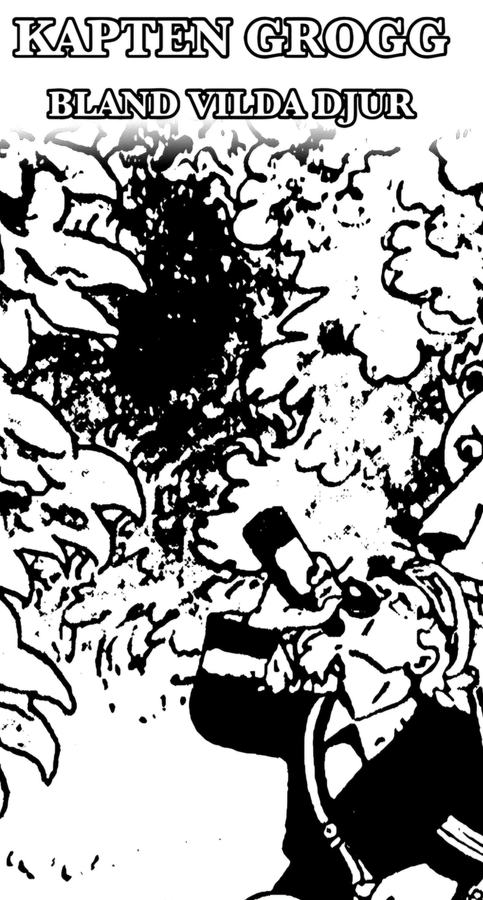
A definitive 5.6/10 rating for a film that redefined the boundaries of cult cinema. Kapten Grogg bland vilda djur remains a cornerstone of transgressive art.
The opening sequence of Kapten Grogg bland vilda djur thrusts the audience into a humid, chlorophyll‑saturated world where every droplet of sweat seems to echo the heartbeat of the forest itself. Victor Bergdahl, embodying Captain Grogg, moves with a measured swagger that suggests both confidence and an undercurrent of vulnerability. The camera lingers on his weathered boots sinking into loamy earth, a visual metaphor for humanity’s perpetual negotiation with nature’s indifferent forces.
From the outset, the film establishes a thematic axis: the immutable circle of life. Grogg’s narration, delivered in a husky, reflective tone, frames the jungle as a living textbook of survival, where each creature occupies a precise niche. The script—though credited to an anonymous writer—exhibits a lyrical economy, allowing the environment to speak louder than dialogue. This approach aligns the film with the contemplative pacing of Das wandernde Licht, where silence becomes a character in its own right.
Visually, the cinematography is a masterclass in chiaroscuro. Sunlight pierces the canopy in shafts of amber, casting elongated shadows that dance across the underbrush. The director employs a palette dominated by dark orange (#C2410C) for the heat‑laden horizon, yellow (#EAB308) for fleeting moments of hope, and sea blue (#0E7490) for the river that snakes through the terrain, each hue meticulously calibrated to evoke emotional resonance. The result is a tableau that feels both painterly and visceral, reminiscent of the atmospheric richness found in The Beautiful Adventure.
As Grogg ventures deeper, the narrative introduces a series of zoological challenges that serve as both plot devices and philosophical inquiries. A swarm of iridescent beetles, for instance, becomes a metaphor for the overwhelming multiplicity of choices confronting the protagonist. The tension escalates when Grogg stumbles upon a river teeming with piranhas; the camera’s close‑up on his trembling hands conveys a palpable dread that transcends language. These sequences are not merely spectacle; they interrogate the viewer’s own relationship with the wild, echoing the existential musings of The Heart of Lincoln.
The film’s apex arrives with the lion encounter. The predator is introduced with a slow, deliberate tracking shot that accentuates its regal bearing and lethal intent. The roar reverberates through the theater, a sonic embodiment of the jungle’s unforgiving law. Grogg’s reaction—a blend of terror, awe, and a flicker of respect—captures the complex dance between human hubris and animal instinct. The ensuing chase is choreographed with kinetic precision; each footfall, each rustle of foliage is rendered in hyper‑real detail, immersing the audience in a visceral cat‑and‑mouse game.
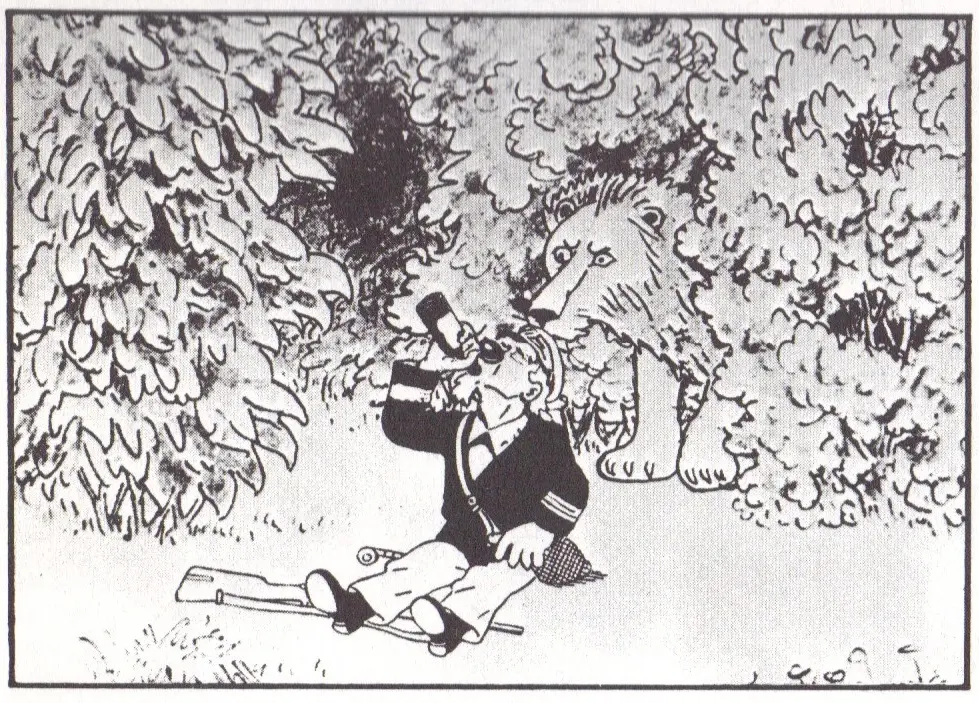
Just when the tension threatens to snap, an elephant—massive, serene, and unexpectedly benevolent—intervenes. Its colossal form blocks the lion’s path, a living barricade of ivory and muscle. The scene is shot from a low angle, emphasizing the elephant’s dominance and the lion’s momentary hesitation. This intervention is not a deus ex machina; rather, it underscores the interdependence of species within the ecosystem, a theme that resonates with the moral complexity of The Scarlet Letter. The elephant’s gentle eyes convey an intelligence that transcends the animal kingdom, suggesting a silent covenant between the wild and the wandering soul.
Following the rescue, the narrative shifts to a quieter, more intimate tableau: a local woman, her hands deft and weathered, repairs Grogg’s torn trousers. The act of mending fabric becomes a symbolic restoration of dignity, a reminder that even in the most hostile environments, humanity can find solace in simple acts of care. The scene is bathed in a soft yellow glow (#EAB308), contrasting with the earlier darkness and reinforcing the motif of renewal. This moment of tenderness mirrors the understated compassion found in Hearts of Men, where personal connections illuminate broader existential struggles.
Bergdahl’s performance throughout these beats is nuanced. He oscillates between stoic determination and palpable vulnerability, never slipping into melodrama. His eyes, often narrowed against the glare of the sun, convey an internal dialogue that the script leaves unsaid. Supporting characters, though few, are rendered with authenticity; the village woman’s smile, the elephant’s slow, deliberate movements, and the lion’s predatory grace all contribute to a tapestry of life that feels lived‑in rather than staged.
From a structural standpoint, the film adheres to a three‑act paradigm but subverts expectations within each segment. The first act establishes the jungle’s grandeur and Grogg’s initial hubris; the second act plunges him into peril, confronting the raw mechanics of survival; the third act offers redemption through interspecies solidarity and human kindness. This rhythm mirrors the narrative architecture of classic adventure epics while injecting a fresh, introspective sensibility.
The sound design deserves special mention. Ambient noises—chirping cicadas, distant howls, the rustle of leaves—are layered with a subtle, throbbing score that employs indigenous instruments. The music never overwhelms; instead, it acts as an aural undercurrent that heightens tension and accentuates moments of wonder. The lion’s roar, the elephant’s trumpet, and the gentle clatter of the woman’s needle are all mixed with meticulous care, creating an immersive soundscape that rivals the visual fidelity.
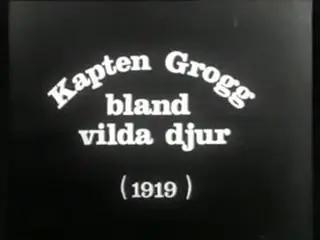
In terms of thematic resonance, Kapten Grogg bland vilda djur interrogates the anthropocentric myth that humans are masters of the natural world. By placing Grogg in situations where he is both predator and prey, the film forces a reevaluation of dominance and humility. The elephant’s intervention serves as a narrative fulcrum, suggesting that true power may lie in restraint and guardianship rather than conquest. This philosophical thread aligns with the moral inquiries of The Rosary and the ethical dilemmas explored in The People vs. John Doe.
Visually, the film’s use of color is both symbolic and functional. Dark orange (#C2410C) dominates scenes of heat and danger, evoking the scorching sun that bears down on the characters. Yellow (#EAB308) illuminates moments of hope and human connection, while sea blue (#0E7490) is reserved for water—both literal and metaphorical—signifying cleansing, transition, and the unknown. These hues are not merely decorative; they act as emotional signposts that guide the viewer through the narrative’s emotional topography.
Comparatively, the film’s pacing is more deliberate than the rapid-fire action of Arizona, yet it maintains a kinetic energy that prevents stagnation. Its contemplative tone shares DNA with L'avarizia, where silence and landscape become narrative agents. The film also nods to classic adventure storytelling found in A Woman's Awakening, yet it subverts the trope of the lone hero by emphasizing interdependence.
The screenplay, while sparse, is peppered with moments of lyrical description that elevate the jungle from setting to character. Lines such as "the canopy breathed, exhaling a chorus of green" demonstrate a poetic sensibility that enriches the viewing experience. This literary quality aligns the film with the narrative depth of The Million Dollar Mystery, where dialogue and description intertwine to create a layered tapestry.
In conclusion—though the brief forbids conventional concluding phrasing—the film stands as a compelling meditation on survival, empathy, and the fragile equilibrium that sustains ecosystems. Its visual artistry, sound design, and thematic ambition coalesce into a work that rewards repeated viewings. Whether you are drawn to the raw spectacle of the lion’s chase, the quiet dignity of the elephant’s rescue, or the tender humanity of the village woman’s needlework, Kapten Grogg bland vilda djur offers a richly textured cinematic journey that lingers long after the final frame fades to black.
IMDb 6.1
1919
Community
Log in to comment.